

This information was discussed at the working session on the afternoon of December 11th between the delegation of media agencies responsible for disseminating information about the Agriculture and Environment sector and the Department of Agriculture and Environment of Tuyen Quang province.
The delegation was led by Mr. Le Xuan Dung, Deputy Editor-in-Chief of the Agriculture and Environment Newspaper. Representing the local authorities were Mr. Pham Manh Duyet, Director of the Department of Agriculture and Environment, along with leaders from various specialized units.
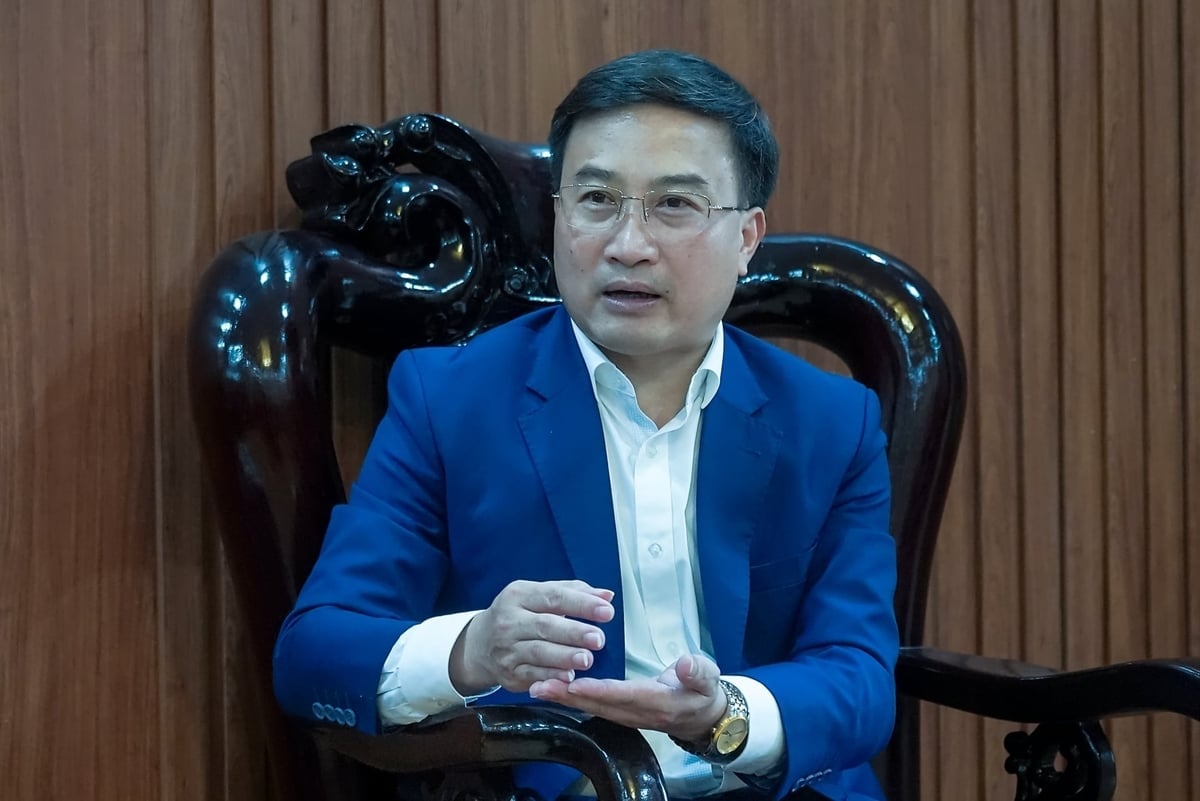
Mr. Pham Manh Duyet, Director of the Department of Agriculture and Environment of Tuyen Quang Province . Photo: Bao Thang.
According to the Tuyen Quang Department of Agriculture and Environment, the reorganization of professional activities is taking place in the context of the province implementing a two-tiered government model, with an increasing volume of work transferred from the (former) district and provincial levels down to the communes. During this process, agricultural extension services are being restructured to focus on strengthening on-site engagement and working directly with communes and wards.
Currently, the province maintains a regional force system to ensure interoperability. The forest ranger force is organized into 16 regions and 2 mobile teams. Agricultural extension, livestock, veterinary, and plant protection are organized into 8 regions. This organizational structure aims to both stay close to the grassroots and maintain the ability to provide inter-communal support when needed.
According to the head of the Department of Agriculture and Environment, one advantage in Tuyen Quang is the relatively stable morale of agricultural officials when they work at the grassroots level. Working close to the people and production helps officials understand the actual situation, handle work more quickly, and reduce delays in policy implementation.
However, the operation of the two-tiered government system has also revealed many obstacles. According to the Department, there are three main groups of problems. Firstly, the database, as the specialized management information system is not yet synchronized between levels. Secondly, human resources, both in terms of quantity and professional structure at the commune level. Thirdly, the legal system, especially regulations related to the deployment and coordination of specialized forces vertically.
Based on that reality, Tuyen Quang does not aim for each commune to have personnel in every specialized field, but rather organizes its workforce in a flexible manner. The Director of the Department emphasized the difference between "specialization" and "professionalism" at the grassroots level. Commune agricultural officials do not necessarily need to be "specialized" and capable of doing everything, but they must be "professional," knowing who can perform specific specialized tasks and connecting promptly when needed.
For example, crop management officials do not need to directly perform veterinary duties, but they must be familiar with vaccination and disease control procedures to ensure effective coordination. This approach is considered suitable given the available human resources and management requirements at the commune level within the two-tiered model.
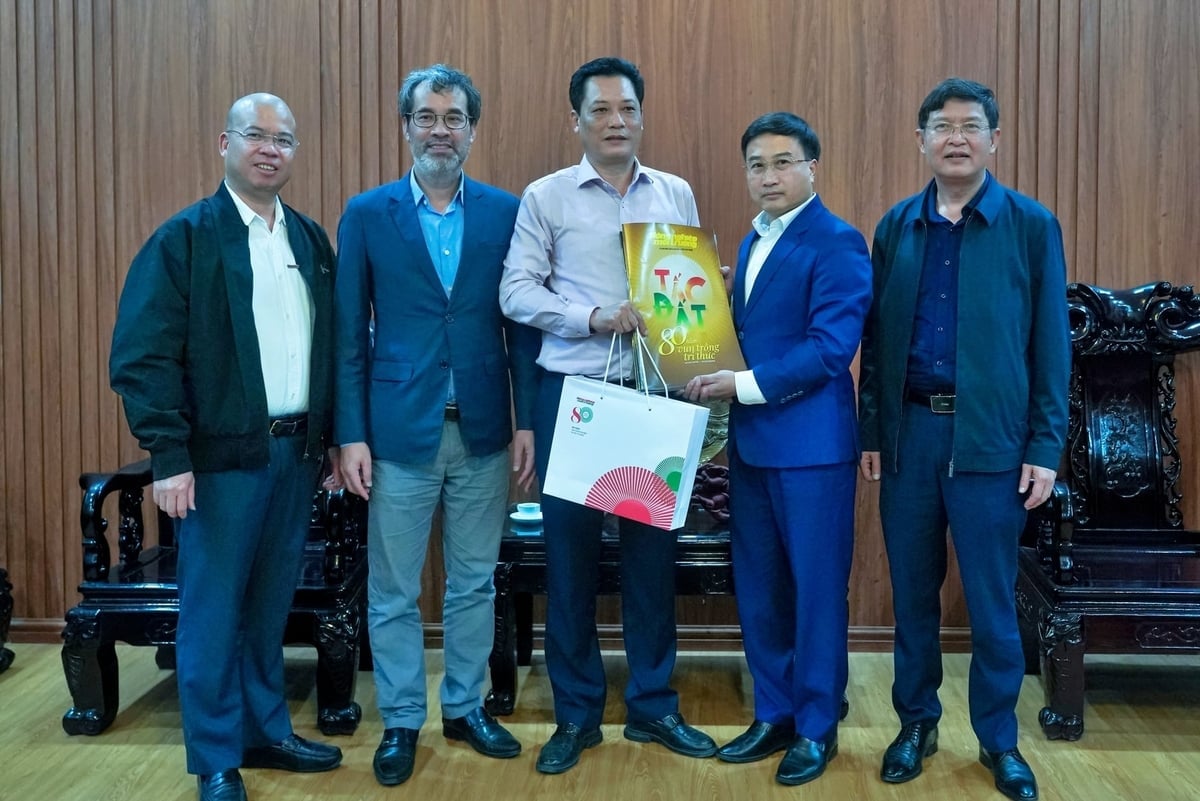
The delegation, led by Deputy Editor-in-Chief Le Xuan Dung, worked with the Department of Agriculture and Environment of Tuyen Quang province. Photo: Bao Thang.
The issue of personnel management is also being addressed from a practical perspective. According to the Department of Agriculture and Environment, the placement of staff must take into account geographical location, living conditions, and the ability to commit to long-term employment. It is not feasible to transfer a staff member to a commune hundreds of kilometers away from their residence, as this would compromise their morale and work efficiency. Currently, some communes still lack specialized personnel. The Department has issued a document requesting the People's Committees at the commune level to proactively recruit and accept personnel suitable to their actual needs.
To support local communities during the transition period, the Tuyen Quang Department of Agriculture and Environment established eight working groups, led by Deputy Directors, to directly work in 124 communes and wards. In addition, online communication groups were set up between the Department and local communities to update information and address issues promptly.
According to the Director of the Department, with the implementation of a two-tiered government system, the commune level is having to simultaneously undertake many new tasks. The Department is committed to working alongside the grassroots level, especially key communes and wards. If necessary, specialized staff can be assigned to directly support the commune level in resolving specific issues, following the principle of addressing problems step by step, with someone taking the lead.
Another issue, which the province is continuing to refine, is the mechanism for deploying agricultural extension personnel. If agricultural extension officers are only directly deployed by the commune People's Committee, it will be difficult to provide support to other areas when needed. Therefore, the Department is proposing a vertical deployment mechanism, ensuring that the Director of the Department can mobilize personnel when necessary, while still maintaining the regular management role of the commune level.
Along with reorganizing its workforce, Tuyen Quang province is focusing on improving the capacity of its grassroots agricultural extension staff. Nearly 100 agricultural extension officers have received training and professional development to meet new requirements, including content related to decentralization, coordination, and production support within the two-tiered government model.
The experience in Tuyen Quang shows that grassroots agricultural extension is not just about adjusting work locations, but about adapting the agricultural system to a new management model. When technical personnel are close to the communes and the people, policies and guidelines can be implemented more quickly, while also creating a foundation for further improving the two-tiered government model towards efficiency and stability.
Director Pham Manh Duyet requested that the delegation, including the Agriculture and Environment Newspaper, pay more attention to and support Tuyen Quang province in promoting the image of local agricultural products. He hoped that the newspaper would organize a number of conferences, seminars, and forums in Tuyen Quang in the near future, helping to increase trade connections for farmers in the area.
Source: https://nongnghiepmoitruong.vn/nong-nghiep-tuyen-quang-viec-ve-xa-khuyen-nong-bam-co-so-d789121.html


![[Photo] Prime Minister Pham Minh Chinh attends the Conference summarizing and implementing tasks of the judicial sector.](/_next/image?url=https%3A%2F%2Fvphoto.vietnam.vn%2Fthumb%2F1200x675%2Fvietnam%2Fresource%2FIMAGE%2F2025%2F12%2F13%2F1765616082148_dsc-5565-jpg.webp&w=3840&q=75)







































































Comment (0)