

On December 13th, the Ho Chi Minh City Ear, Nose and Throat Hospital held its 2025 Annual Scientific and Technical Conference with the theme "Diagnosis and Treatment of Ear, Nose and Throat Diseases in the Digital Transformation Era".
Developing a comprehensive and integrated ENT specialty to meet the expanding healthcare needs of Ho Chi Minh City.
Speaking at the conference, Assoc. Prof. Dr. Nguyen Anh Dung – Deputy Director of the Ho Chi Minh City Department of Health – assessed that, over 50 years of development of the city's health sector, the Ho Chi Minh City Ear, Nose and Throat Hospital is one of the leading specialized units, playing an important role in the city's and Southern region's health system.
The hospital has implemented many advanced techniques such as endoscopic sinus and skull base surgery, ear surgery, cancer treatment, and head and neck cosmetic surgery, contributing to improving the quality of medical examination and treatment.
According to Associate Professor, Doctor Nguyen Anh Dung, Ho Chi Minh City is entering a new phase with a two-tiered government model, expanding geographically, with a population of approximately 14 million people and its area tripling. This places increasingly high demands on high-quality, specialized medical services, not only in treatment but also in screening, prevention, and rehabilitation, especially for vital functions such as hearing, speech, and breathing. Therefore, the role of the Ho Chi Minh City Ear, Nose, and Throat Hospital in building a comprehensive specialized network, ensuring that people receive continuous care from basic to advanced levels, is crucial.
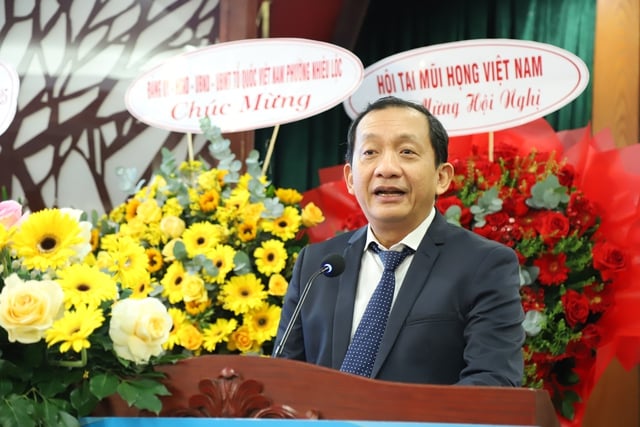
Assoc. Prof. Dr. Nguyen Anh Dung – Deputy Director of the Ho Chi Minh City Department of Health, delivered a speech giving directions.
In the context of the city implementing Resolution 72 of the Politburo , the Department of Health has collaborated with the Ho Chi Minh City Medical Association and experts to develop action programs aimed at putting the resolution into practice, improving the effectiveness of protecting, caring for, and enhancing the health of the people.
In that spirit, the Department of Health aims and expects the Ho Chi Minh City Ear, Nose, and Throat Hospital to develop into a specialized center, participating in the national, regional, and international specialized network.
The Deputy Director of the Ho Chi Minh City Department of Health requested that hospitals accelerate digital transformation, apply science and technology, innovate, and develop new specialized techniques such as advanced endoscopy and robotics; improve electronic medical records, conduct remote consultations and examinations, and connect data across all specialties.
At the same time, we need to strengthen training, research, and technology transfer, expand domestic and international cooperation, train high-quality human resources, and transfer technology to lower-level facilities so that people can receive treatment right in their local area.
The Deputy Director of the Ho Chi Minh City Department of Health added that after one month of implementing the joint general hospital model in Can Gio, the hospital recorded 5,500 outpatient visits, of which 35% were related to ear, nose, and throat conditions.
Increased respiratory and ear, nose, and throat illnesses due to air pollution.
Recently, healthcare facilities in Ho Chi Minh City have recorded a significant increase in the number of patients suffering from diseases related to environmental pollution, with respiratory diseases, especially ear, nose, and throat conditions, accounting for a high percentage.
According to Associate Professor, Doctor Le Tran Quang Minh – Director of the Ho Chi Minh City Ear, Nose and Throat Hospital, the hospital currently receives approximately 1,200 outpatient visits per day, reaching up to 2,000 patients per day during peak summer periods. Compared to previous years, the total number of outpatient visits has increased by about 3%, while the number of surgical cases has increased even more significantly.
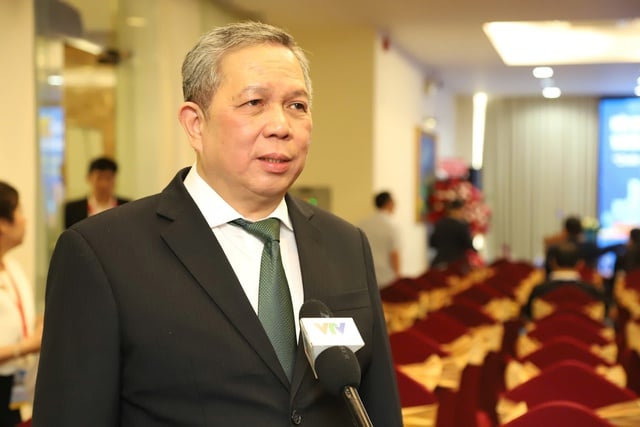
Associate Professor, Doctor Le Tran Quang Minh – Director of the Ho Chi Minh City Ear, Nose and Throat Hospital, shared this at the conference.
According to the Director of the Ho Chi Minh City Ear, Nose, and Throat Hospital, the ear, nose, and throat are the "gateway to the respiratory system," so pollutants entering the body often cause damage there before spreading to the lungs.
Besides weather changes and seasonal transitions, air pollution, especially fine dust, is becoming a leading cause of increased ear, nose, and throat (ENT) diseases.
Many times in the morning, the hazy layer of air is easily mistaken for fog, but it is actually fine dust pollution. Worryingly, this fine dust can also contain heavy metal crystals which, when inhaled, can cause sinusitis, pharyngitis, otitis media, and in the long term increase the risk of lung disease and respiratory tract cancer. In addition, the aftermath of epidemics like COVID-19 has weakened many people's immune systems, further increasing their risk of illness.
The initial symptoms of ear, nose, and throat infections caused by air pollution are easily mistaken for the common cold. However, if symptoms such as sore throat, nasal congestion, greenish-yellow phlegm cough, and sinus headaches do not improve after 48–72 hours, patients should seek medical attention for timely diagnosis and treatment to avoid serious complications.
Given this situation, experts recommend implementing a comprehensive set of solutions. In the long term, it is necessary to improve the living environment and reduce air pollution in urban areas. In the short term, people should wear masks in crowded places and polluted areas, focus on boosting their immune system, proactively take care of their health, and seek early medical attention when experiencing any unusual symptoms.
According to Associate Professor, Doctor Le Tran Quang Minh, although the number of air pollution-related illnesses continues to increase, thanks to improved public awareness and initial preventive measures, people have become more proactive in protecting their health, contributing to reducing the burden on the healthcare system.
Source: https://suckhoedoisong.vn/tphcm-gia-tang-benh-ho-hap-tai-mui-hong-do-o-nhiem-khong-khi-169251213130334527.htm


![[Photo] Prime Minister Pham Minh Chinh attends the Conference summarizing and implementing tasks of the judicial sector.](/_next/image?url=https%3A%2F%2Fvphoto.vietnam.vn%2Fthumb%2F1200x675%2Fvietnam%2Fresource%2FIMAGE%2F2025%2F12%2F13%2F1765616082148_dsc-5565-jpg.webp&w=3840&q=75)





























































































Comment (0)