

The conditions for receiving land use rights transfer for commercial housing projects need to be expanded.
At the 8th session of the 15th National Assembly , the Government submitted to the National Assembly a draft resolution on piloting the implementation of commercial housing projects through agreements on land use rights (or existing land use rights), with nationwide application, in order to remove legal difficulties for commercial housing projects under the scale of urban areas (under 20 hectares). If approved by the National Assembly, it will be implemented for a period of 5 years, starting from January 1, 2025.
Untangling knots in multiple projects
According to Minister of Natural Resources and Environment Do Duc Duy, from July 1, 2015, the 2014 Housing Law stipulates differently from the Land Law. Accordingly, the conditions for land use to implement social housing projects are that the land must already have a land use right for residential land or residential land and other land; in the case of receiving a transfer of land use right, it must be residential land.
This regulation, continued in point b, clause 1 and clause 6 of Article 127 of the 2024 Land Law, has narrowed the cases for implementing social housing projects on an urban scale, especially in new areas or areas without existing residential land.
"In fact, the maximum land allocation limit for residential land for households and individuals over the years has been 400 m2, with the remainder being agricultural land within the same plot. Therefore, if investors acquire land use rights in residential areas, they cannot do so," said the Minister of Natural Resources and Environment.
Furthermore, the majority of real estate projects are developed on land that was initially not designated as residential land, and the detailed project plans include various land types such as residential land, transportation land, green space, etc. Therefore, according to the provisions of point b, clause 1, article 127 of the 2024 Land Law, many projects cannot be implemented in practice.
The draft resolution was developed to address the supply difficulties of real estate projects amidst rising real estate prices, partly due to investors' limited access to land. "It is necessary to expand the conditions for receiving land use rights transfers to implement commercial housing projects, contributing to reducing citizen complaints; ensuring fairness in land access among investors and localities, and maintaining a stable supply of commercial housing," Minister Do Duc Duy stated.
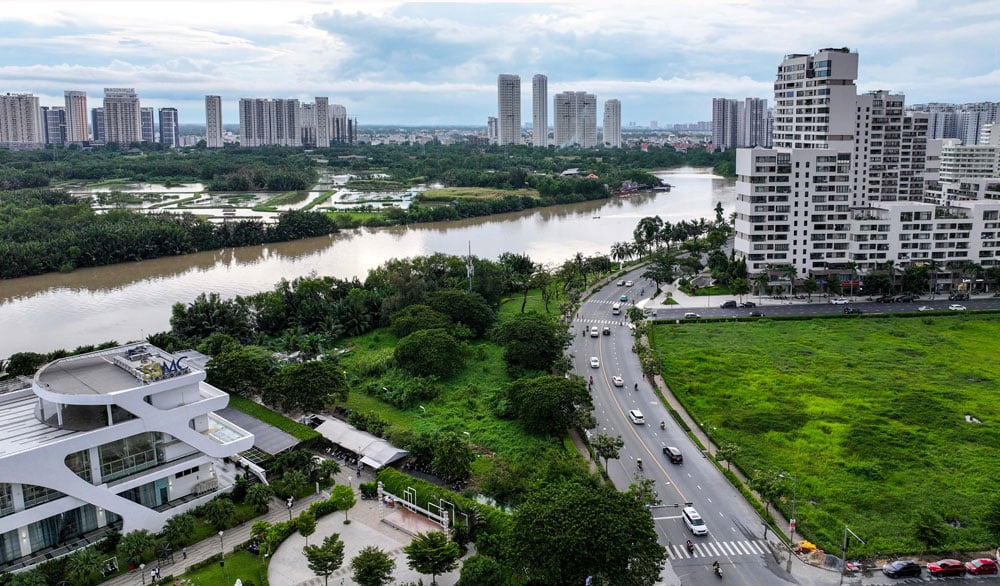
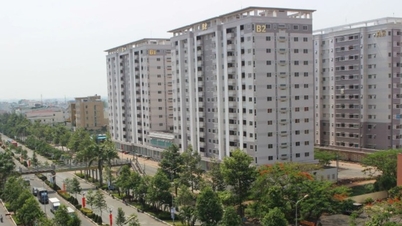
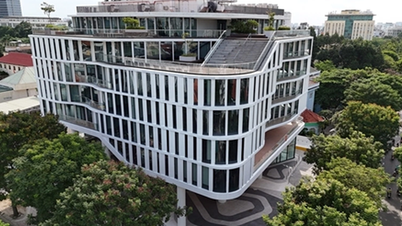
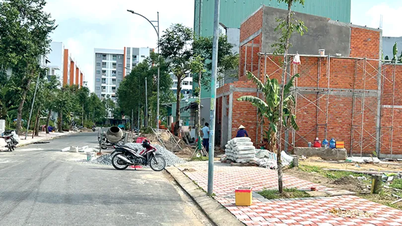
A commercial residential area in District 7, Ho Chi Minh City. Photo: HOANG TRIEU
According to the government's submission, this resolution will be applied nationwide to real estate business projects in four cases: receiving land use rights; existing land use rights; existing land use rights and receiving land use rights; and implementing commercial housing projects on land owned by facilities that must be relocated due to environmental pollution, or facilities that must be relocated according to construction or urban planning.
Regarding the conditions for implementing a social housing project through an agreement on land use rights or existing land use rights, investors implementing social housing projects must utilize one or more of the following types of land: agricultural land; non-agricultural land other than residential land; residential land and other land within the same plot, in the case of an agreement on land use rights; and must meet specific criteria.
It should be piloted on a small scale.
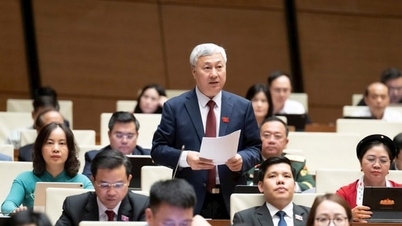
Discussing this issue, many National Assembly deputies basically agreed on the necessity of issuing a resolution to remove difficulties and obstacles in the implementation of investment and business projects in the construction of new housing. Deputy Tran Hoang Ngan (from Ho Chi Minh City delegation) acknowledged that piloting this policy would have a ripple effect in supporting the socio-economic development of the country, especially in removing difficulties in the construction of new housing, creating favorable conditions for land users and investors to proactively implement new housing projects and urban development projects, contributing to solving the housing needs of the people.
However, there were also quite a few concerns raised. Representative Do Van Yen (from Ba Ria - Vung Tau province) argued that the draft resolution's proposal to include a very broad range of land for piloting is inconsistent with the Land Law. Furthermore, he suggested that if a pilot program is to be implemented, it should be on a smaller scale, focusing on provinces and cities with urgent housing needs, and not expanding nationwide.
Representative Yen also suggested that the Government should conduct an impact assessment to avoid situations of "abusing policies to accumulate agricultural land" or "legalizing violations," in order to introduce stricter, more reasonable, and more effective regulations.
Expressing the view that the current state of social housing in all localities needs to be reassessed, National Assembly Deputy Nguyen Thi Thu Ha (Quang Ninh delegation) affirmed that many social housing projects and constructions remain unoccupied, vacant, or have incomplete legal procedures. The supply and demand of the social housing market varies from local to local, and "not every locality has the same demand."
Representative Ha suggested that an assessment of the current state of social housing is necessary to understand the supply and demand of the market in localities before approving the draft. The government and relevant agencies must conduct a thorough assessment; consider whether the pilot program should be selected based on suitable regions or localities and areas, and specify the locations.
"The pilot program as proposed in the draft could lead to the formation of organizations, individuals, and real estate businesses that exploit the buying, selling, and transfer of land, accumulating and consolidating land without using it efficiently, then profiting and turning means of production into inputs to await the implementation of social housing projects," Ms. Ha warned.
In the verification report, the Chairman of the Economic Committee, Vu Hong Thanh, also stated that some committee members were concerned that allowing agreements to acquire land use rights for non-residential land for social housing projects would lead to a surge in agricultural land prices and other types of land. This could cause many difficulties for people and businesses, as well as the State when it comes to land acquisition and compensation.
The Chairman of the Economic Committee requested the Government to review and clarify the application of the pilot mechanism through agreements on the acquisition of land use rights or existing land use rights for agricultural and non-agricultural (commercial, service) land to avoid abuse of the policy.
Avoid widespread conversion.
Deputy Chairman of the National Assembly's Committee on Science, Technology and Environment, Nguyen Phuong Tuan, agreed that the resolution should be implemented nationwide to ensure fairness among localities, avoid complexity in regulating criteria and conditions, and prevent the emergence of a "request-and-grant" mechanism. However, he suggested that the drafting agency should include specific regulations to prevent widespread land-use conversion after the regulation comes into effect, which could affect not only social welfare but also food security.
Review the land use plans of each locality.
Representative Nguyen Truc Son (Ben Tre delegation) stated that the draft resolution has some differences from the recently passed Investment Law (amended), Land Law (amended), and Housing Law (amended) by the National Assembly. When piloting projects, the national land use plan, land use planning, and especially local land use plans must be reviewed. He questioned whether projects not included in residential or urban land planning would be feasible if piloted.
Mr. LE HOANG CHAU , Chairman of the Ho Chi Minh City Real Estate Association (HoREA):
Regulations detailing the determination of investment areas.
HoREA has submitted a proposal to the Ho Chi Minh City People's Committee and relevant departments for comments on Decision 83/2024/QD-DT of the Ho Chi Minh City People's Committee. Accordingly, it is suggested that the regulation in Clause 1, Article 2 be reviewed and amended to specify in detail the areas where real estate and housing project investors are allowed to transfer land use rights for land with technical infrastructure to individuals for self-construction of houses in communes, excluding towns in the five districts of Binh Chanh, Nha Be, Hoc Mon, Cu Chi, and Can Gio, and not subject to land use right auction for housing construction projects as stipulated.
Because, according to Clause 6, Article 31 of the 2023 Law on Real Estate Business, the investor of a real estate project or housing construction project is allowed to transfer land use rights with technical infrastructure for land not located in wards, districts, or cities of special, type I, type II, and type III urban areas; and not subject to auction of land use rights for housing construction projects as stipulated in the Land Law. For other areas, the provincial People's Committee will determine, based on local conditions, the areas where the project investor is allowed to transfer land use rights with technical infrastructure to individuals for self-construction of houses.
Mr. NGO DUC SON , General Director of DRH Holdings JSC:
Creating opportunities for homebuyers.
Historically, to implement housing projects, the implementation of social housing projects has required meeting conditions such as: conformity with district-level land use planning; conformity with construction and urban planning; and conformity with approved local housing development programs and plans. In practice, the overlapping and conflicting nature of the Land Law and Housing Law has increased, distorting the capital and real estate markets, and increasing risks for both businesses, investors, and those in need of housing. The government's proposed pilot program will revitalize the capital market, stabilize and reduce the financial burden on businesses, shorten the time and cost of project investment preparation, increase market transparency, and provide homebuyers with access to affordable housing. Removing this bottleneck could potentially "save" millions of businesses that have been waiting for years.
S.Nhung wrote
Source: https://nld.com.vn/go-kho-nguon-cung-bat-dong-san-196241116212105284.htm
![[Photo] General Secretary and President To Lam meets with National Assembly delegates from ethnic minorities.](https://vphoto.vietnam.vn/thumb/1200x675/vietnam/resource/IMAGE/2026/04/20/1776696701056_a1-bnd-8331-3342-jpg.webp)




![[Image] National Assembly discusses the implementation of the socio-economic development plan.](https://vphoto.vietnam.vn/thumb/1200x675/vietnam/resource/IMAGE/2026/04/20/1776696707422_ndo_br_img-20260420-185419-jpg.webp)















































































Comment (0)