

Despite numerous government reforms to mechanisms and policies towards a market economy , the petroleum business has not met expectations. Many opinions suggest the need to establish a physical petroleum trading floor to manage and operate the petroleum market effectively. A reporter from Tin Tuc newspaper interviewed Associate Professor Dr. Dinh Trong Thinh about this issue.
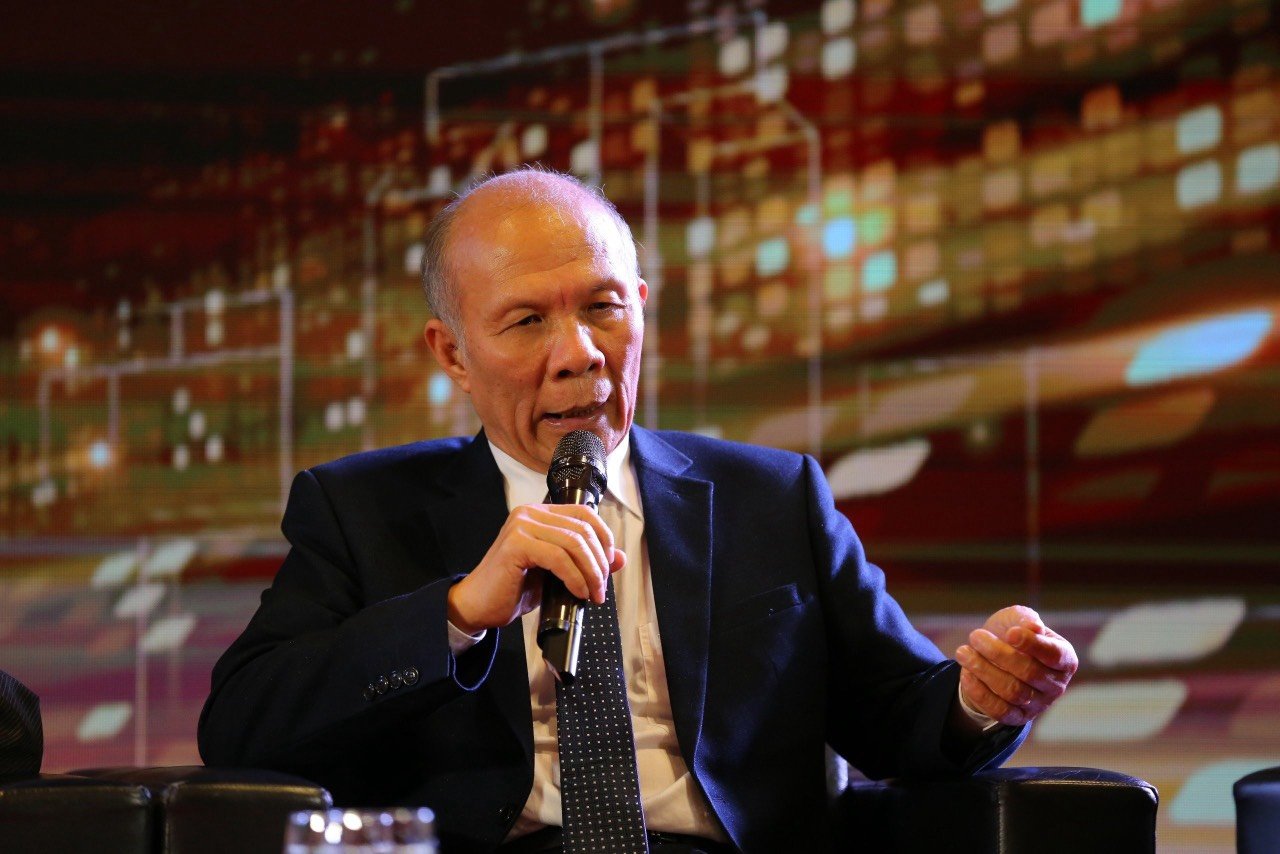
Sir, the "bottleneck" in the regulations on petroleum business remains the administrative mechanism for price regulation. What are your thoughts on establishing a physical petroleum trading floor to increase transparency and openness?
A physical petroleum exchange is a place where petroleum wholesalers, retailers, distributors, and retail businesses can trade petroleum products openly, publicly disclosing prices and volumes, minimizing risks; creating equal opportunities for business entities, lowering petroleum prices, and benefiting consumers by ensuring pricing closely reflects import costs.
The petroleum exchange is a reliable source of information on the volume, price, and quality of goods, helping state management agencies make accurate forecasts to plan and avoid disruptions in the supply chain.
The participating entities include 2 oil refineries, 38 wholesale businesses, over 320 distributors, and representatives of private petroleum businesses in more than 17,000 retail gasoline stations. The State could assign a unit to establish a petroleum exchange, set out principles and policies to supervise operations, and collect taxes and fees appropriate to the volume of transactions on the exchange.
Accordingly, sellers can list the time, location, type of goods, quality, quantity, price, etc., of the items they supply. Buyers can consider entering into contracts to purchase products from sellers at appropriate prices. To ensure legal compliance, the regulations of the Exchange must be strictly enforced to protect the rights of all participating parties. This requires the establishment of an independent supervisory body; and the application of blockchain technology and artificial intelligence (AI) in monitoring to detect unusual transactions.
So, what solutions are needed to effectively manage and operate the physical petroleum exchange, sir?
First, Vietnam needs to quickly establish a legal framework related to the Petroleum Exchange to provide a sufficient legal basis for its operation. The construction and management of the physical Petroleum Exchange could be entrusted to the Vietnam Commodity Exchange, based on regulations from relevant authorities regarding its operational mechanisms. A mechanism for establishing a physical Petroleum Exchange should be in place soon to ensure that this information reaches all entities participating in direct trading and buying/selling on the Exchange.
Regarding pricing, initially, the State authorities must periodically publish the formula for calculating and setting price ceilings for gasoline and diesel, including maximum wholesale and maximum retail prices, to ensure market stability. Sellers will compete fairly in determining their selling prices, but these must be lower than the stipulated ceilings. Buyers can proactively choose to purchase from the seller offering the lowest price and most suitable conditions. In the long term, the market and businesses will gradually be allowed to determine prices themselves.
The Ministry of Industry and Trade needs to allocate minimum production quotas, minimum import quotas for petroleum products, and appropriate supply periods for production plants and eligible petroleum import businesses. These businesses must adhere to the quotas and timelines, ensuring stable consumption within the system and maintaining adequate petroleum reserves for business operations.
In the long term, businesses will determine and calculate the quantity of petroleum products they need to purchase domestically and import internationally to meet market demands. Vietnam needs to innovate its management methods and government intervention in the price fluctuations of the petroleum market. The government should gradually intervene in market prices by increasing or decreasing the supply of petroleum through releasing national reserves or increasing reserve purchases.
It is time to establish national petroleum reserves in each region to serve energy security needs. The establishment, formation, and use of the petroleum price stabilization fund will need to change, with the government focusing on managing and converting it into basic petroleum products in the national reserve so that it can be readily sold to intervene in the market when there are price or supply shocks.
Thank you very much, sir!
According to the News Report
Source: https://doanhnghiepvn.vn/kinh-te/go-nut-that-cho-thi-truong-xang-dau/20240830104555751


![[Photo] “Red Journey” 2026: Vietnamese Youth Continue Building the Bridge of Friendship Between Vietnam and China](https://vphoto.vietnam.vn/thumb/1200x675/vietnam/resource/IMAGE/2026/04/20/1776629730866_4055880775670638308-9618-4200-jpg.webp)
























































































Comment (0)