

Market! Tet Market! Tet is here!
For me, a child who grew up in the kitchens of my mother, grandmother, and aunts, Tet is a journey back to the aromas, sounds, and flavors that shaped my love for food and my love for traditional values.
My most cherished childhood memories are probably the Tet holidays in Hanoi in the late 1980s and early 1990s. At that time, Hanoi was just beginning its period of reform, people's lives were improving, and increased trade made Tet a truly grand and prosperous celebration, no longer as difficult as it had been in the earlier period.
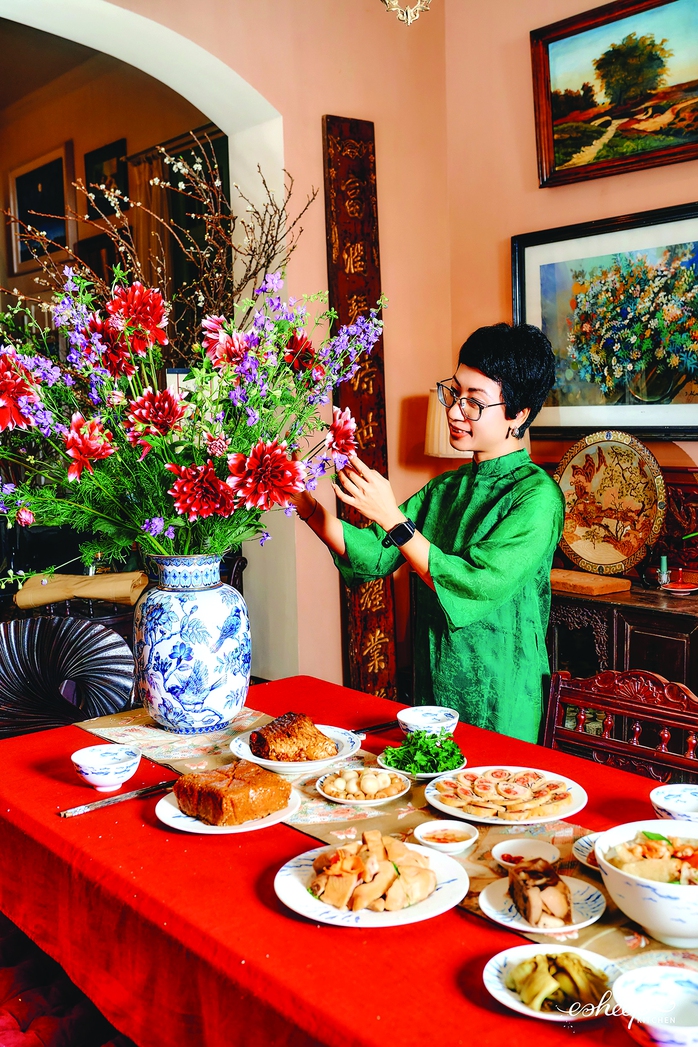
Amidst the bleak, gray winter weather, the vibrant colors of Tet (Vietnamese New Year) begin to bloom in the market at the beginning of the street. Peach blossoms, kumquats, and other Tet flowers gradually appear. The stalls selling Tet clothing start to add more color, and the household goods stalls – where brand-new aluminum pots and pans gleam brightly in a corner of the market – become bustling with buyers and sellers.
Dried goods that were once scarce, such as bamboo shoots, vermicelli, peeled shrimp, and shiitake mushrooms, are now being sold in abundance. Seasonal vegetables are also starting to appear: fragrant bunches of coriander, plump, mature onions, firm, white shallots, kohlrabi, and tender, green cabbage... All promise a lavish Tet feast.
From the market, the spirit of Tet gradually spreads to every corner of the streets, then gently creeps into every small alley, reaching the kitchens of every family.
A joyful song of Tet sweets and preserves
Tet (Vietnamese New Year) first appeared in the kitchen when my mother began skillfully preparing various kinds of Tet jams and preserves. The small kitchen became an art workshop, where the whole family contributed to creating sweet and delightful flavors.
My mother meticulously carved kumquat blossoms, tomatoes, and carrots, then simmered them into a fragrant, chewy, and translucent jam.
As the church bells chimed in the late winter afternoon, my cousins and I huddled around a small fire lined with cast-iron plates, waiting for Aunt Loan and Aunt Chau to pour in the crispy cinnamon wafers.
In Yen Phu village, the houses of Uncle Lan and Uncle Dinh were bustling with activity, making apple and starfruit jam. Back then, we children would ride on bicycles, being taken by adults from the town to the Yen Phu embankment to pick apples from acquaintances' orchards to make jam. Or we would follow others to Ngoc Ha village in the afternoons to pick sour starfruit. Meanwhile, my parents also made bird's eggs (peanut jam) and ginger jam. And my grandmother, when she was alive, always made peanut candy, sesame candy, and other candied fruits herself and sent them to her grandchildren.
The small kitchen was filled with the rich aroma of caramelized sugar, spicy ginger, honey, and the smoky scent of cooking oil. We—the children of those days—were all incredibly excited and proud that our family made such delicious jam, and we were often given a few leftover pieces by the adults. Those were the best New Year's jams in the world! Better than the beautifully packaged jams on the altar during the three days of Tet, and even better than the jam from our neighbors' houses when we visited them during Tet.
Fish ball soup with red bean sprouts: The quintessential Tet feast.
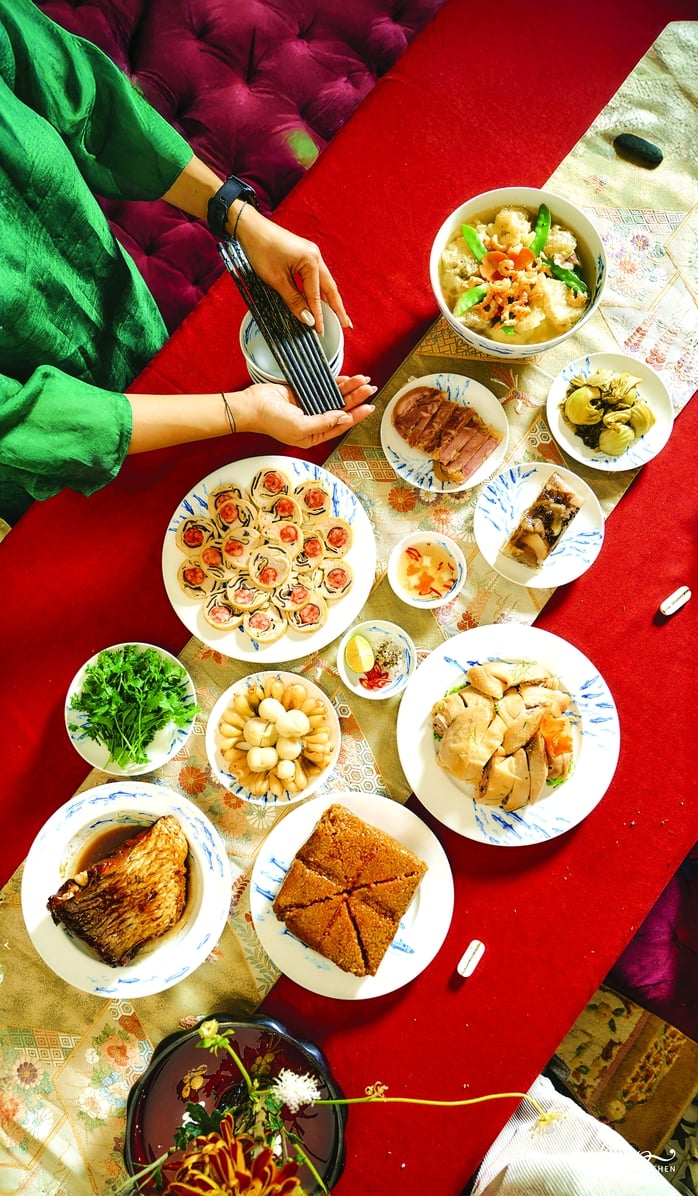
A traditional Hanoi feast cannot be without "four bowls and six plates." Among them, the fish ball soup is always considered a measure of a woman's domestic skills and refinement. My family usually calls this dish by the elegant name: Snow Flower Fish Ball Soup with Red Blossoms.
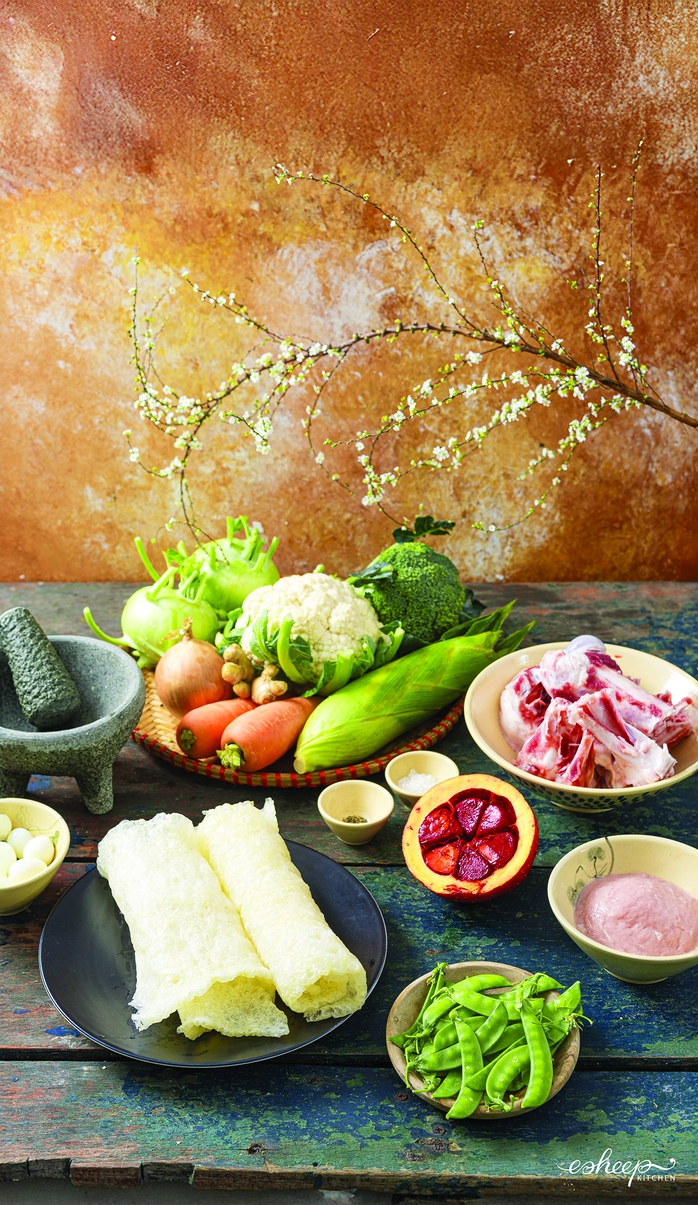
The beauty of this soup lies in its elaborate preparation. In the old days, people prepared for Tet (Lunar New Year) very early. Bamboo shoots, vermicelli, rice, and beans had to be carefully selected from the summer. By the 15th day of the 12th lunar month, they had to have already chosen the best pork skin and shiitake mushrooms. Most importantly, the "snow flower" part. The pork skin had to be scraped clean with boiling water until it was very white, and all the fat attached to the skin had to be removed. The cleaner it was, the more evenly the skin would crackle when grilled, turning white like snowflakes and without any greasy smell.
"Mọc son" is made from minced pork mixed with gac fruit and glutinous rice. The gac fruit flavor is considered the essence of Tet (Vietnamese New Year). A bowl of soup with pork skin and "mọc son," with its sweet, tender, and chewy texture and auspicious red color, often appears on wedding feast tables in Hanoi as a blessing.
One particularly skillful detail in this soup, not widely known, is the "vegetable base." This term refers to the accompanying vegetables such as kohlrabi, carrots, and peas, which are intricately carved and arranged to line the bottom of the bowl or garnish the top. The vegetable base must be selected from the freshest, most vibrant green vegetables of the winter harvest. The harmonious arrangement of the red of the meatballs, the white of the mushrooms, the brown of the mushrooms, and the green of the vegetable base creates a poetic whole, like a beautiful poem.
Traditional Vietnamese New Year celebrations
Preparing for Tet at my house is like a long festival. From the 15th day of the 12th lunar month, we choose ingredients for Tet jam, and from the 23rd day of the 12th lunar month (the day of the Kitchen God) we soak rice and beans for making banh chung (traditional rice cakes). This continues until the first days of the new year with all kinds of Tet cakes, fruits, salads, and offerings.
By the early 1990s, the Tet feast began to feature novel "Western" dishes such as ham, or innovative variations like stir-fried almonds (vegetables cut to almond size and stir-fried with roasted or boiled peanuts). Despite the addition of new dishes, the essence of the Tet feast remained meticulous attention to detail and reverence for every small aspect.
The most joyful part of Tet is receiving lots of lucky money, the second most joyful is going to the peach blossom gardens and flower markets, dressing up in beautiful clothes to buy peach blossoms and kumquats. But the most lasting joy, starting from the days leading up to Tet, is when the whole family is busy preparing and cooking Tet feasts that look like works of art. The feeling of waiting for the adults to finish offering incense to the ancestors so that the whole family can sit down at the New Year's Eve feast is a simple yet incredibly sacred happiness.
Now, as I immerse myself in the kitchen, becoming a culinary researcher, traveling extensively and tasting many delicious dishes around the world , the flavors in my mind always linger in that old kitchen. The dishes my mother cooked, the jams my grandmother made—they are not just food, but a connecting thread between the past and the present, anchored in the traditions of our old home.
This Tet holiday, amidst the hustle and bustle of modern life, I long to return to my small kitchen, meticulously prepare a bowl of snowdrop soup with red plum blossoms, and simmer a batch of warm, fragrant ginger jam. Because I believe that as long as we keep the fire burning in the kitchen, the values of family and the soul of Vietnamese Tet will always live on, fragrant and sweet in the memories of future generations.
Source: https://nld.com.vn/goi-mui-tet-trong-nep-nha-19626021014580427.htm






















































































Comment (0)