

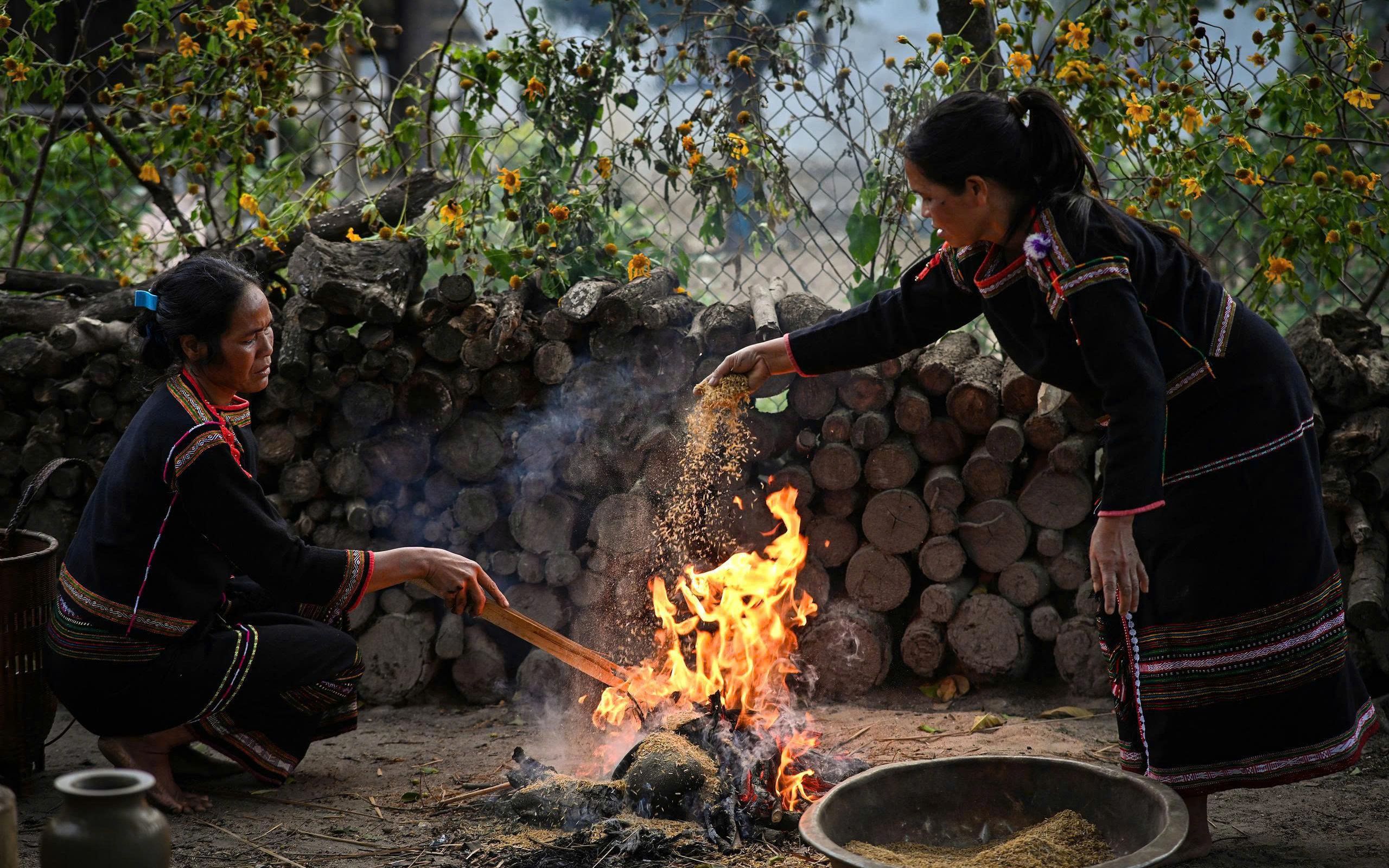
M'nong Rlăm Pottery - A journey from the hearth to the tourist map.
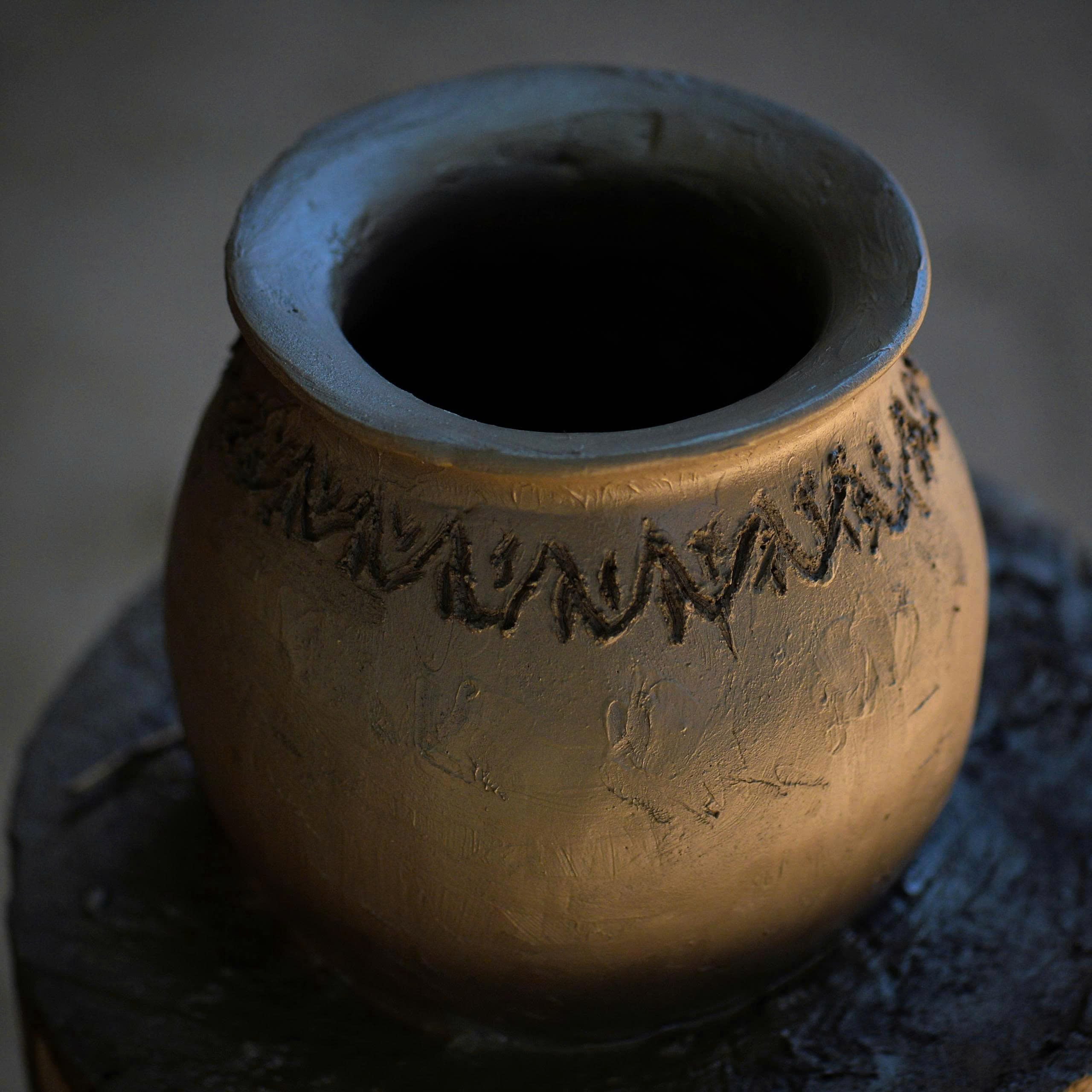
M'nong Rlăm Pottery - A journey from the hearth to the tourist map.
At the foot of the majestic Chu Yang Sin mountain, the Yang Tao area (Lien Son Lak commune, Dak Lak province) has for generations preserved a "treasure" molded from earth and fire: the pottery of the M'nong Rlam people. Not flashy with vibrant glazes or elaborate carvings, M'nong Rlam pottery captivates hearts with its rustic, pristine beauty, like the breath of the ancient forest and the genuine nature of the people living in the heart of the wilderness.
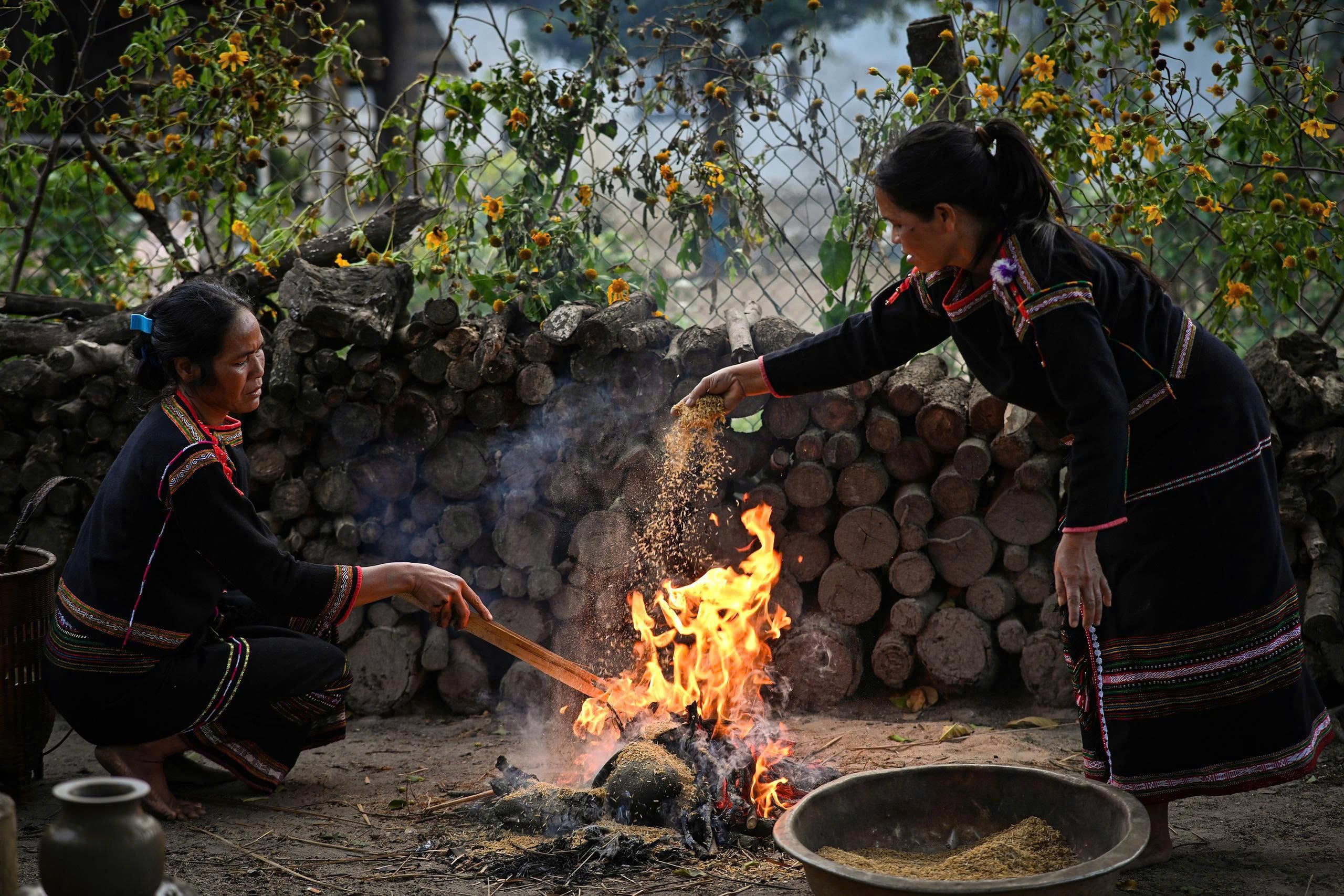
For generations, the Yang Tao region has preserved a "treasure" crafted from earth and fire: the pottery of the M'nong Rlam people.
Originating from Mother Earth
The soul of the pottery comes from a unique type of clay sourced from the streams or banks of the Krông Ana River. This clay is yellowish-brown, pliable, smooth, and unusually clean. After harvesting, the women carefully preserve the clay, watering it daily to maintain its quality. Remarkably, in the vast red soil plateau, only the Yang Tao area has the suitable clay for creating this traditional pottery. Each artisan cherishes and values every lump of clay. When making pottery, the artisan "extracts" the clay, meaning they take just the right amount for each product; this is also considered a spiritual ritual of the M'nông Rlăm people. The artisan must estimate precisely from the beginning because, according to the rules, they are not allowed to add or subtract clay once they have started shaping.
Artisan H'Phiet Uong, who has spent over 75 farming seasons diligently shaping pottery every day in the village of Dong Bac, shared while meticulously smoothing the rim of an earthenware pot: "This clay must be taken from the stream banks, choosing the cleanest and most pliable soil. We women don't use machinery; our souls are the beauty, our hands are the mold, and our feet are the potter's wheel. We have to walk and shape, holding our breath as we smooth it, so that the pot is round and the jar is shiny."
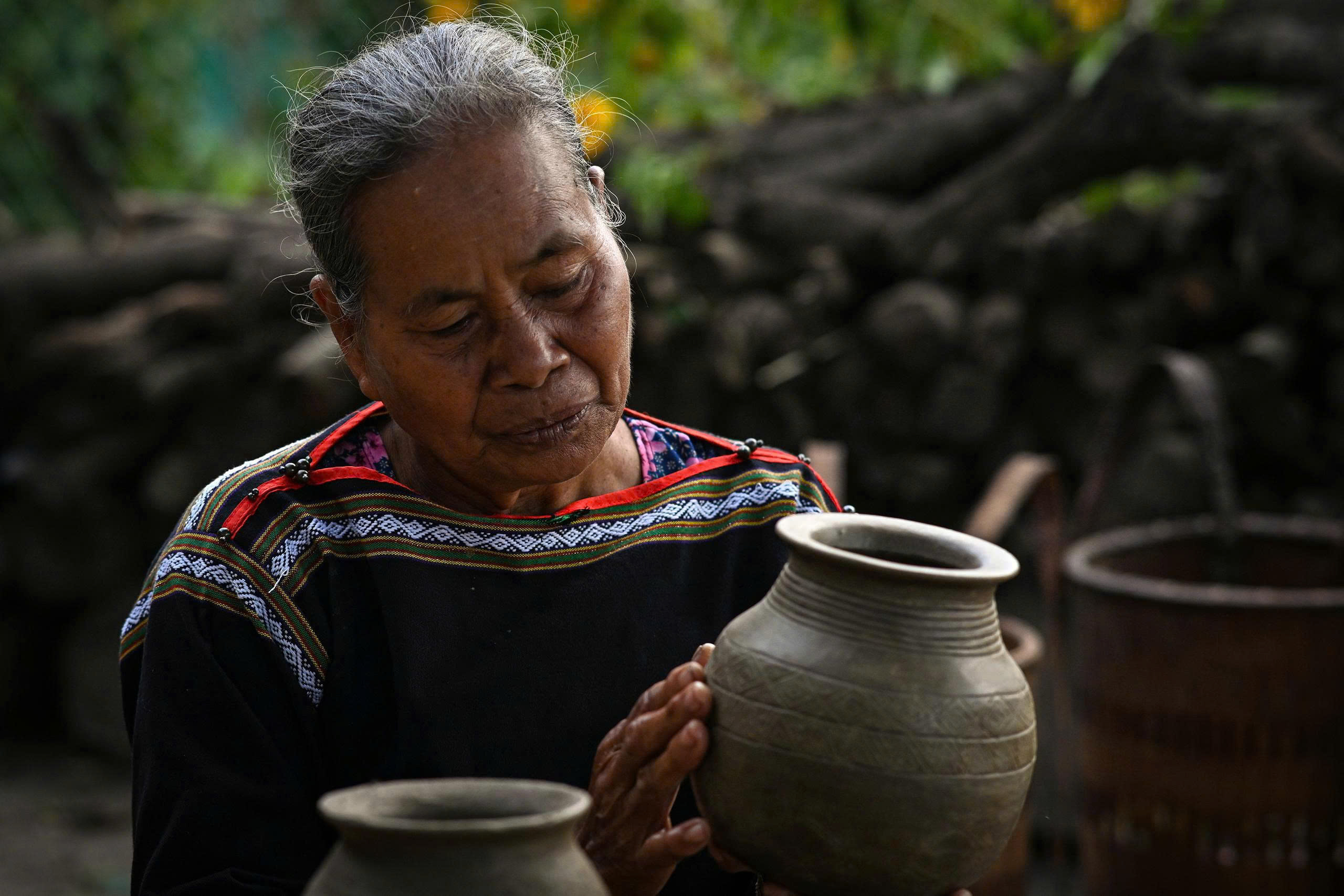
Artisan H'Phiet Uong, who has lived through more than 75 farming seasons, still diligently makes pottery every day.
Unlike Bat Trang or Chu Dau pottery, which use a potter's wheel, the pottery of the M'nong Rlam people in Yang Tao commune retains the original shaping technique of placing clay on a high wooden platform, with the artisan walking around to shape it. Each product, from the earthenware pot (go), the cup (pet), or the jar (yang)... is created from the emotions and simple hands of the craftsman.
The most distinctive feature that defines the M'nong Rlăm pottery brand is its "open-air" process. The pottery isn't placed in a closed kiln but is piled up in an open courtyard, covered with dry firewood, rice husks, and straw, and then fired directly. In the hot smoke, one can clearly see the patience of the women and mothers watching over the fire, because even a slight mistake could cause the clay to crack, and a whole day's work would vanish into thin air.
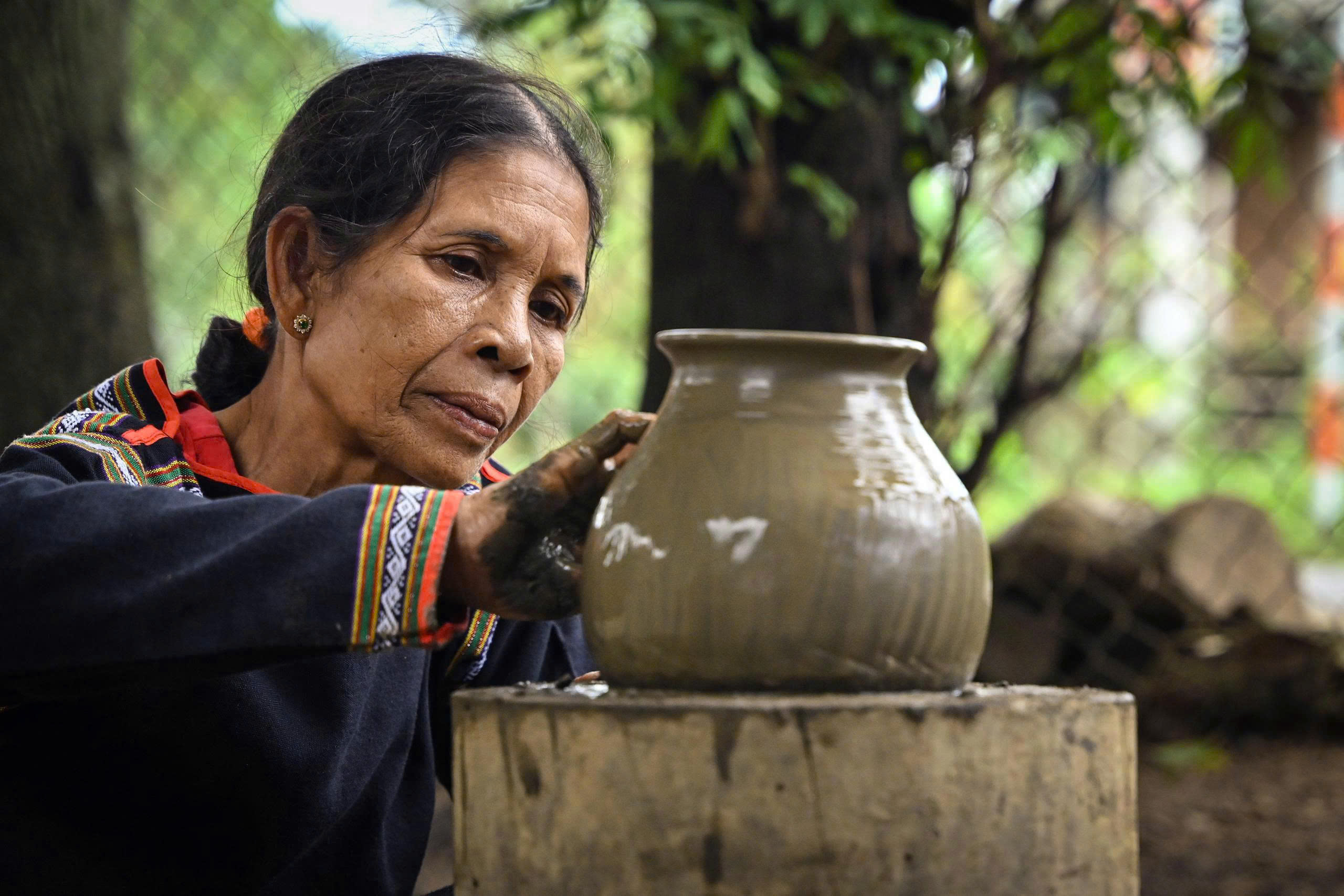
Each ceramic product is created from the emotions and simple hands of the craftsman.
When the pottery is just "finished," the product is immediately buried in a pile of burning rice husks. The smoke from the rice husks adheres to the surface of the pottery, creating a distinctive glossy black color – this is a striking difference between M'nong Rlăm pottery and many other types of pottery. Some products have a uniform black color, while others show streaks of smoke, yellowish or brownish hues depending on the intensity of the fire and the firing time.
Common traditional items such as jars, pots, bowls, cups, and water containers are all highly durable, heat-resistant, and unglazed. Many people mistakenly believe that M'nong pottery is glazed, but this is actually the result of traditional clay processing techniques, rice husk firing, and polishing methods.
A new direction for M'nong Rlam pottery.
In the cultural space of the Central Highlands' gong culture, the earthenware pot (go), the bowl (pết), or the jar (yang) are indispensable items in the life cycle rituals of the M'nong people. They are not only used for cooking rice and brewing medicine but also as spiritual objects in religious ceremonies. Yang Tao pottery is not polished with blue glaze or vibrant colors; it possesses a quiet, rustic beauty, reflecting the character of the people of this region.
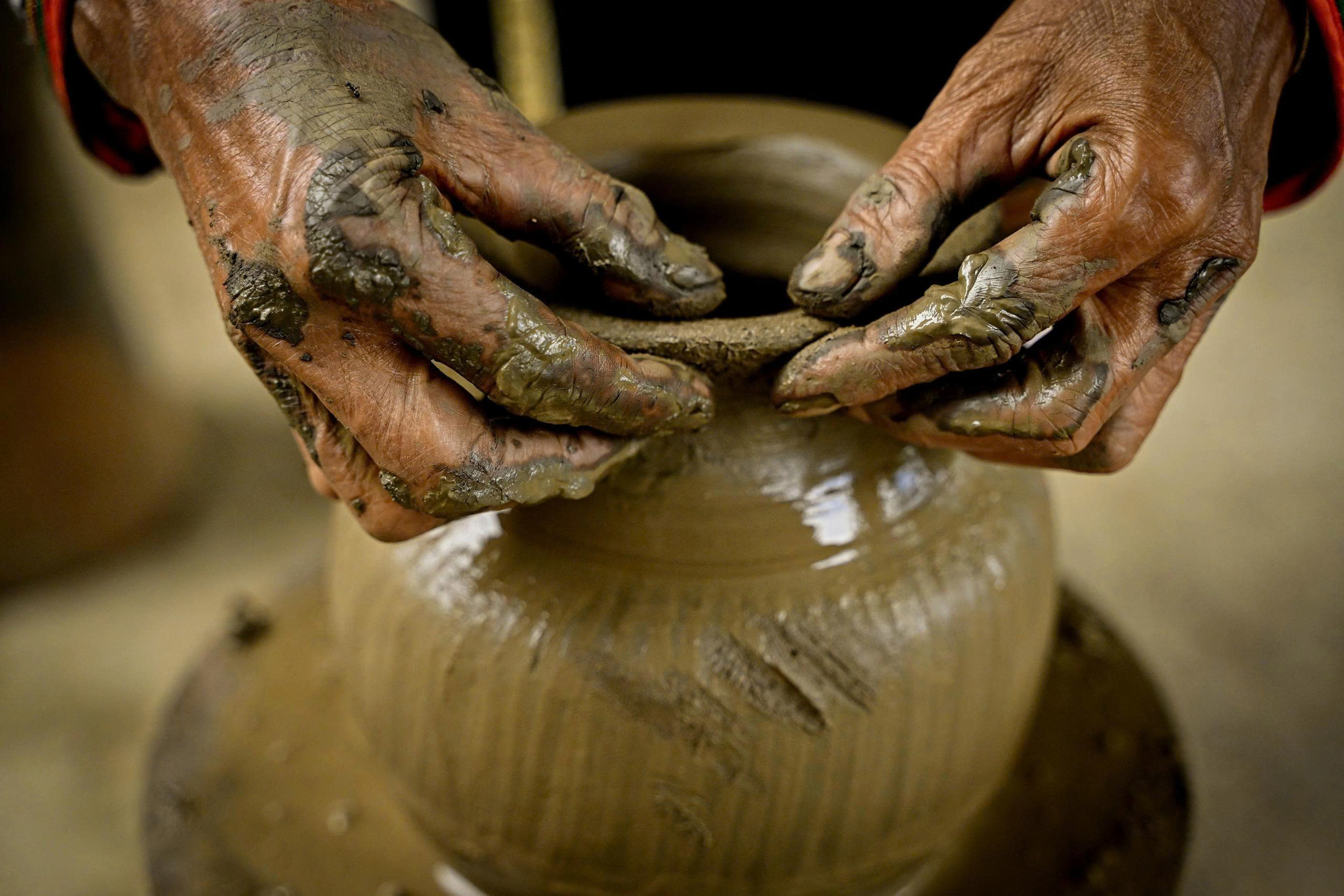
Yang Tao pottery is not flashy with blue glaze or vibrant colors; it possesses a quiet, rustic beauty, much like the character of the people who live there.
However, in the whirlwind of the market economy , cheaper plastics and metals have put traditional pottery making in a difficult position. Many families are no longer interested in collecting clay and carrying firewood. The number of skilled artisans can be counted on the fingers of one hand, and the areas with the unique clay raw materials are gradually shrinking due to urbanization.
In recent years, with the development of community tourism, M'nong Rlam pottery has found a new path. In particular, the traditional pottery craft of the M'nong Rlam people in Dong Bak village was officially recognized as a National Intangible Cultural Heritage by the Ministry of Culture, Sports and Tourism at the end of 2024. M'nong Rlam pottery officially has its name on the map of Vietnamese heritage, becoming a destination for domestic and international tourists.
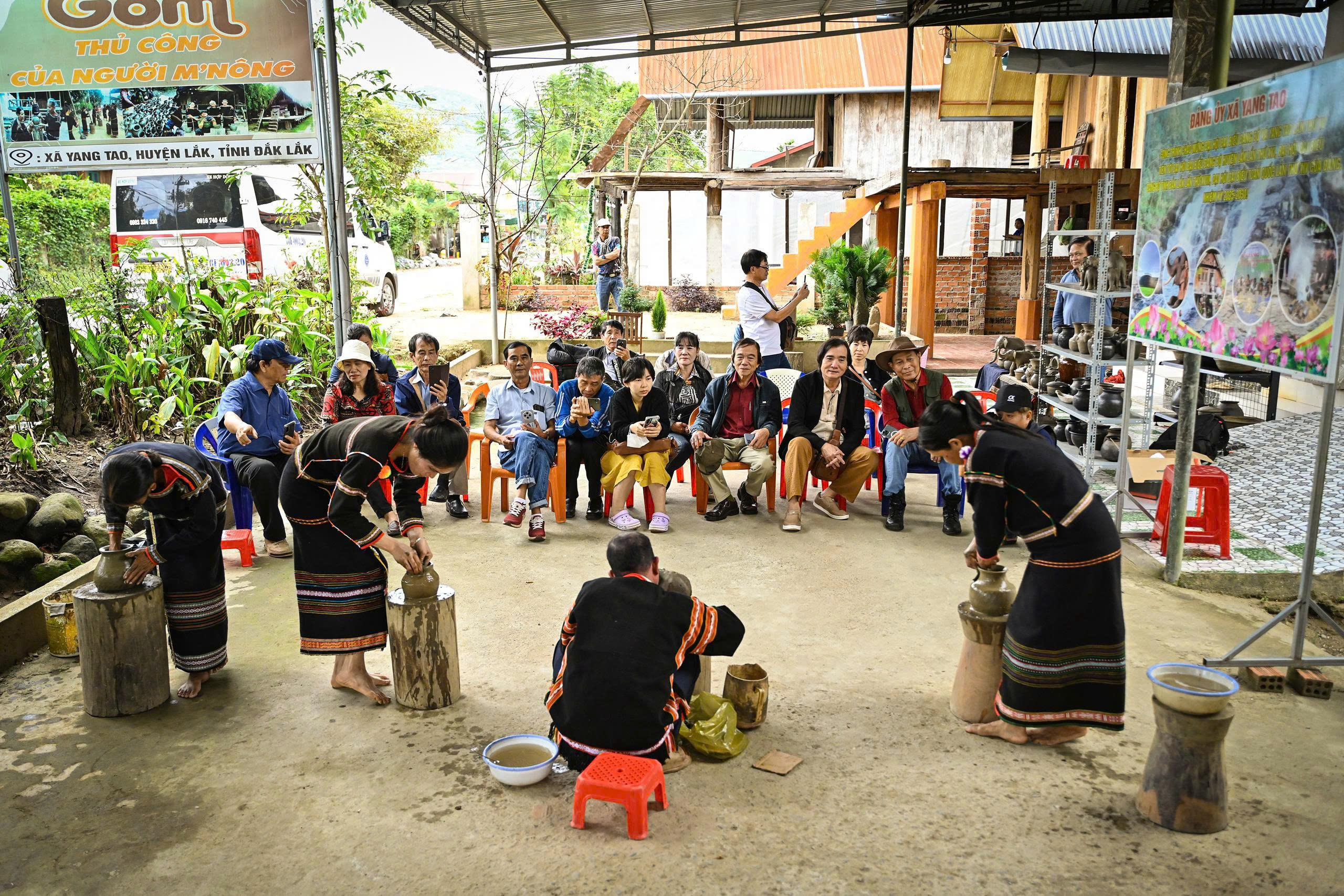
M'nong Rlam pottery has officially been added to the map of Vietnamese heritage, becoming a destination for domestic and international tourists.
The artisans in Dơng Bắk village make pottery in a natural way, each with their own strengths in creating different types of products. Initially, they were only familiar with making common household items. But since tourists started visiting, their pottery products have become more closely linked to tourism and the promotion of their local culture. The dugout canoes, elephants, and baskets they create are now more distinctive and impressive.
Artisan H'Thuyên Uông happily said: "Since tourists started visiting, our family has sold more pottery. Visitors enjoy making their own little elephants and small cups to take home as souvenirs. Thanks to that, the children in the village are also starting to want to learn the craft from their grandmothers and mothers."
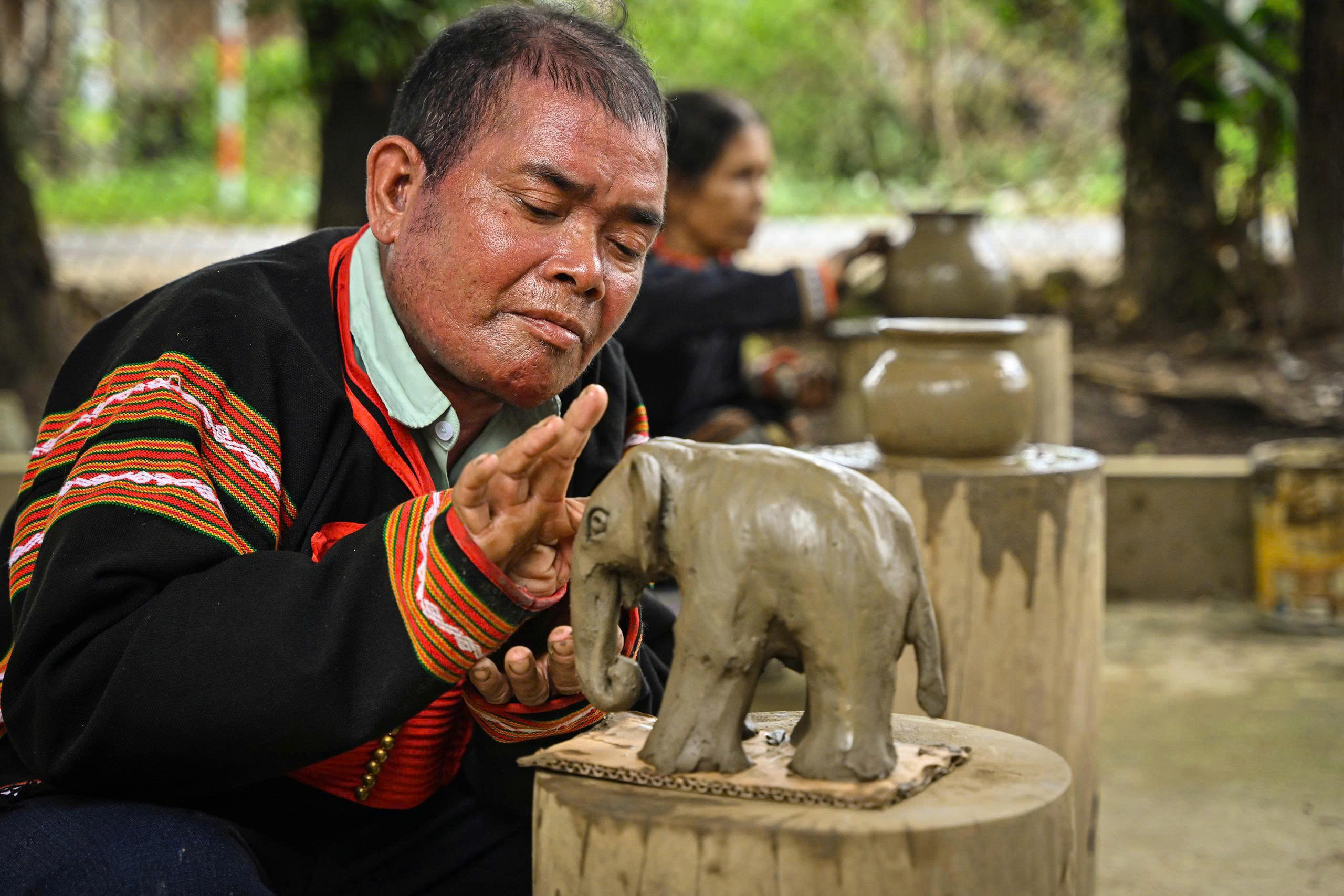
From familiar household items, M'nong Rlăm pottery is now infused with tourism-inspired imagery of dugout canoes, elephants, and baskets, contributing to the impressive promotion of local culture.
Preserving pottery is not just about maintaining a livelihood, but about preserving the cultural "identity" of an ethnic group and the sun-drenched, windswept Central Highlands. However, for sustainable development, a close collaboration between the State, artisans, and tourism businesses is needed. Planning for specialized clay raw material areas and supporting spaces for displaying and experiencing the heritage are essential steps to protect this "treasure."
Under the skillful hands of the M'nong Rlăm women by the picturesque Lake Lắk, lifeless lumps of earth have been transformed into works of art imbued with the spirit of the forest. When traditional values are infused with modern thinking, the song of earth and fire will surely resonate even further on the international tourism map.
Visitors to Dak Lak now come not only to see elephants or take a dugout canoe ride on Lake Lak, but also to try their hand at molding clay and listen to stories about the land and its people from the artisans.
Source: https://vtv.vn/gom-mnong-rlam-hanh-trinh-tu-bep-lua-den-ban-do-du-lich-10026052913505716.htm

![[Image] A brilliant symphony and explosive power in the skies of Da Nang.](https://vphoto.vietnam.vn/thumb/1200x675/vietnam/resource/IMAGE/2026/05/31/1780196945787_anh-man-hinh-2026-05-31-luc-10-08-51.png)



















![[Video] Sunset at Lap An Lagoon – Where the sun sets over the fishing nets](https://vphoto.vietnam.vn/thumb/340x192/vietnam/resource/IMAGE/2026/05/31/1780192137701_beach-landscape-sea-water-nature-grass-745871-pxhere-com.jpeg)





































































Comment (0)