

Smart education is a model that uses information technology to transform education by expanding learning time, space, materials, and methods. Going beyond the limitations of traditional classroom lectures, building a smart school model is a requirement of the Hanoi Department of Education and Training, and some schools are beginning to show promising results.
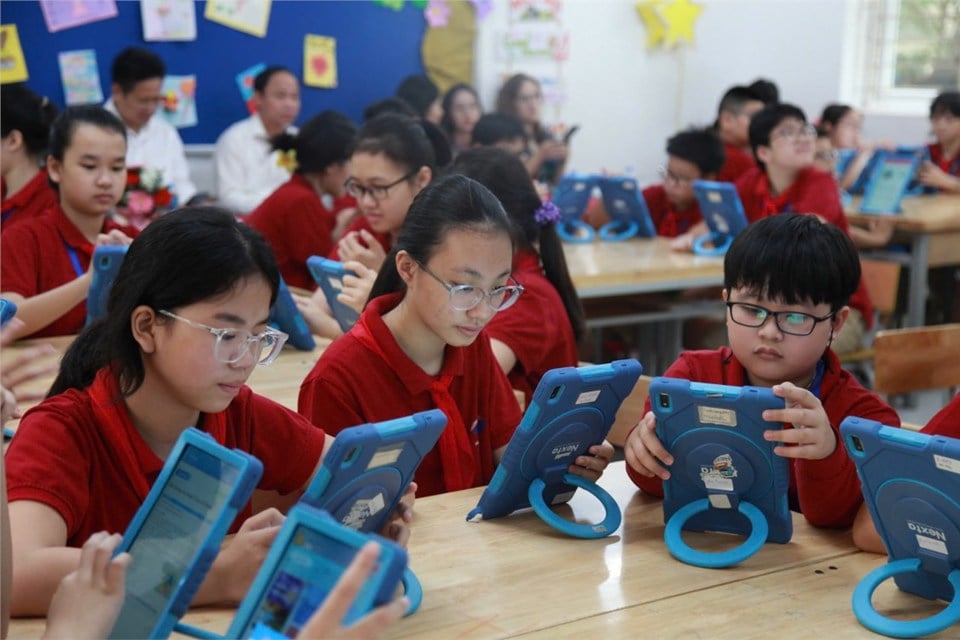
Reportedly, to pilot this model, the Hanoi Department of Education and Training selected five schools, including: Kindergarten B (Hoan Kiem District), Le Van Tam Primary School (Hai Ba Trung District), Chu Van An Secondary School (Long Bien District), Phan Huy Chu High School (Dong Da District), and Nguyen Dinh Chieu Junior High School (Hai Ba Trung District).
Sharing about the project, Nguyen Quang Tuan, Deputy Director of the Hanoi Department of Education and Training and the project leader, said that the purpose of the project is to apply digital transformation to all levels of education in Hanoi, from preschool to high school.
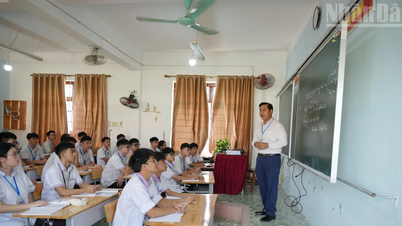
The core of a smart school is the smart classroom. A smart classroom incorporates smart devices such as interactive screens and tablets. Particularly noteworthy is the use of artificial intelligence, which enables facial recognition, assessment of student emotions, and evaluation of teacher effectiveness.
During the implementation process, the team of experts researched smart education platforms around the world, including theories and lessons learned, then developed a model and applied it specifically to each school and educational level, encompassing artificial intelligence, digital technology , interactive devices, tablets, interactive screens, virtual reality devices, and the production of 3D virtual reality content.
According to Associate Professor Dr. Nguyen Chan Hung (Hanoi University of Science and Technology) - Head of the expert team carrying out the project, the characteristics of a smart classroom include high-end infrastructure, high-speed network allowing more than 50 tablets to connect simultaneously; new generation interactive screens that allow teachers to write, draw, and connect with tablets in a unified ecosystem; and students' test results are sent directly to the teacher, increasing interaction.
In particular, the integrated artificial intelligence automatically measures the average emotional state of the class and the emotions of each student, helping the teacher know which students are interested in learning and what their current state is, thereby adjusting teaching methods so that students always feel engaged in the lesson.
The smart classroom also has the function of automatically converting the entire lecture into digital material, turning the teacher's screen, student cameras, and teacher's camera into a video book to upload to the library. After class, students can open it up and review it. This helps students master the lesson and allows absent students to still receive the lecture.
Following successful pilot programs at the five aforementioned schools, the project is expected to be evaluated in November 2024; after which the Hanoi Department of Education and Training will hold a summary meeting to expand the model to other schools in the city.
Source: https://kinhtedothi.vn/ha-noi-thi-diem-su-dung-tri-tue-nhan-tao-ai-tai-5-truong-hoc.html




























































































Comment (0)