

Ho Chi Minh City should be a "shopping paradise".
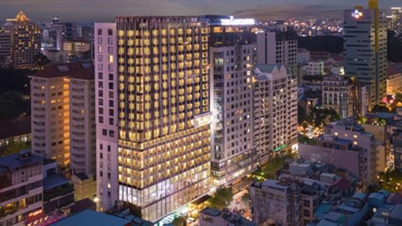
In a document recently sent to the Ho Chi Minh City People's Committee, the Inter Pacific Group (IPPG), owned by billionaire Johnathan Hạnh Nguyễn, stated that the company has been working with Saigon Tourist Corporation ( Saigontourist ) to discuss a proposed business cooperation at the Parkson Saigon Tourist Plaza building (35bis-45 Lê Thánh Tôn, Bến Nghé Ward, District 1).
Accordingly, IPPG Group wishes to take over the entire building's premises so that both parties can collaborate on investment planning, upgrading, equipment, and detailed design. In addition to the space already occupied by Parkson, IPPG proposes to develop additional ground-floor spaces, particularly the corner location at Le Thanh Ton - Dong Khoi, to create a duty-free shop on the street, further enhancing the vibrancy of the central area of Ho Chi Minh City and elevating the status of the Saigon Tourist Plaza building, ensuring economic benefits for both parties.
IPPG's vision is to develop Parkson Saigon Tourist Plaza into a luxurious, world-class all-in-one destination combining shopping, dining, and entertainment services. Essentially, all parties have expressed goodwill, and IPPG is awaiting further information from Saigontourist regarding legal aspects, current planning, and agreements with existing brands and tenants in the building.
Immediately after receiving the information and documents provided by Saigontourist, IPPG will promptly finalize a proposal for an effective cooperation plan to utilize Parkson Saigon Tourist Plaza.
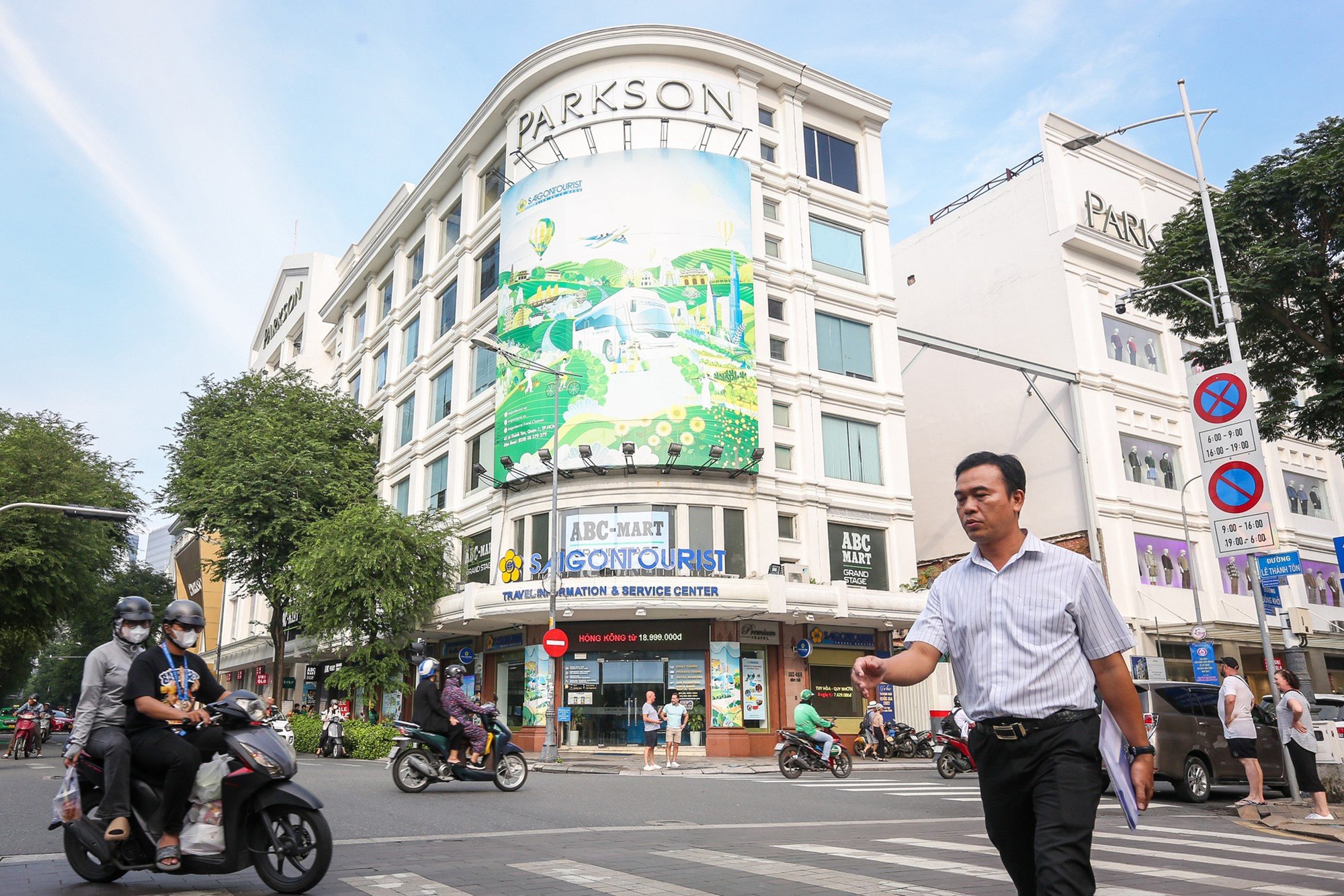
The Parkson shopping center on Le Thanh Ton Street (District 1) is being proposed as Ho Chi Minh City's first duty-free shopping mall located underground.
"Currently, as a leading fashion distributor in Vietnam with over 108 international brands, we need business premises in the heart of Ho Chi Minh City to open downtown duty-free shops and high-end fashion boutiques. From there, we aim for brands to agree to open factory outlets in Thu Duc City to stimulate tourism in Ho Chi Minh City," an IPPG leader stated.
According to our research, the factory outlet in Thu Duc City mentioned by IPPG is part of the overall "Premium Outlet Commercial and Service Urban Area" project that the company has submitted to the People's Committee of Thu Duc City and the People's Committee of Ho Chi Minh City. The planned urban area covers 145 hectares in Truong Tho Ward and includes a world-class Premium Outlet shopping area; a complex of commercial, tourism, and service functions, concentrating branches of financial companies, banks, offices, shopping stores, and entertainment complexes…
Specifically, the main axis of this neighborhood will be developed following the model of the famous Orchard Road commercial street in Singapore, featuring diverse shopping options ranging from designer brands to high-end international cuisine. In addition, there will be a night food street modeled after Clarke Quay in Singapore; and an entertainment street with bars, pubs, super bars, cool bars, and party saunas… all appearing for the first time in Thu Duc.
In fact, since 2020, the "king of luxury brands" has begun its ambition to open large shopping malls and duty-free shops on the streets for tourists by signing cooperation agreements with Trang Tien Plaza Shopping Center (Hanoi) and Lotte PK Duty Free to develop a chain of duty-free shops throughout Vietnam. At the end of 2022, Vietnam's first duty-free shop on the street officially opened in Da Nang, marking a major turning point for the shopping tourism market.
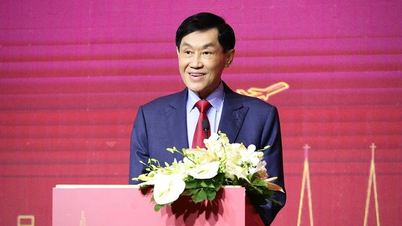
Explaining further the goal of establishing high-class shopping districts in Ho Chi Minh City, Mr. Jonathan Hanh Nguyen said: "Without shopping, tourism and the night-time economy cannot develop. The 10-year socio-economic development strategy (2021-2030) has identified the direction and tasks of promoting Ho Chi Minh City to become an international financial center. The resolution has been approved by the City People's Council along with a strategy to invite international businesses to cooperate. Currently, Long Thanh International Airport is under construction with a capacity of 100 million passengers per year, becoming a hub for the region and the world."
Furthermore, businesses like IPPG have negotiated with suppliers to achieve selling prices that are equal to those in France and Singapore, and lower than those in China, despite being retail and subject to taxes. If given the opportunity to establish factory outlets and duty-free shops on the streets, Vietnam would become a "magnet" attracting international tourists to spend money.
A fertile land left untapped
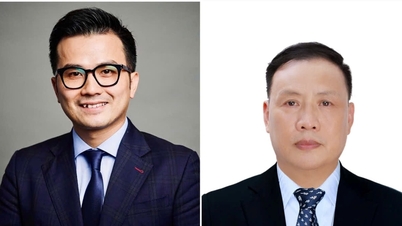
Supporting IPPG's proposal, Dr. Luong Hoai Nam, a member of the Tourism Advisory Board (TAB), assessed that shopping tourism is a huge market, a fertile ground that Vietnam is still neglecting. "Travel enthusiasts" can spend more than half of their trip time shopping. Vietnamese people themselves invest a lot of time shopping when traveling abroad. However, in Vietnam, duty-free shopping areas and factory outlets have been discussed for decades but have yet to be implemented.
The duty-free shop model in Vietnam has traditionally been confined to international airports, facing certain limitations as passengers arriving and departing at the airport sometimes don't have the need or time to shop. The VAT refund process for tourists who shop upon returning home is still in its very early stages, with many shortcomings, and few people are able to take advantage of it.
Meanwhile, tourist destinations like Singapore, Japan, and Thailand are doing very well and are increasingly improving their tax refund policies and solutions for tourists with a convenient system. As a result, when people think of shopping paradises, they immediately think of Singapore, Thailand, and even China, but no one mentions Vietnam.
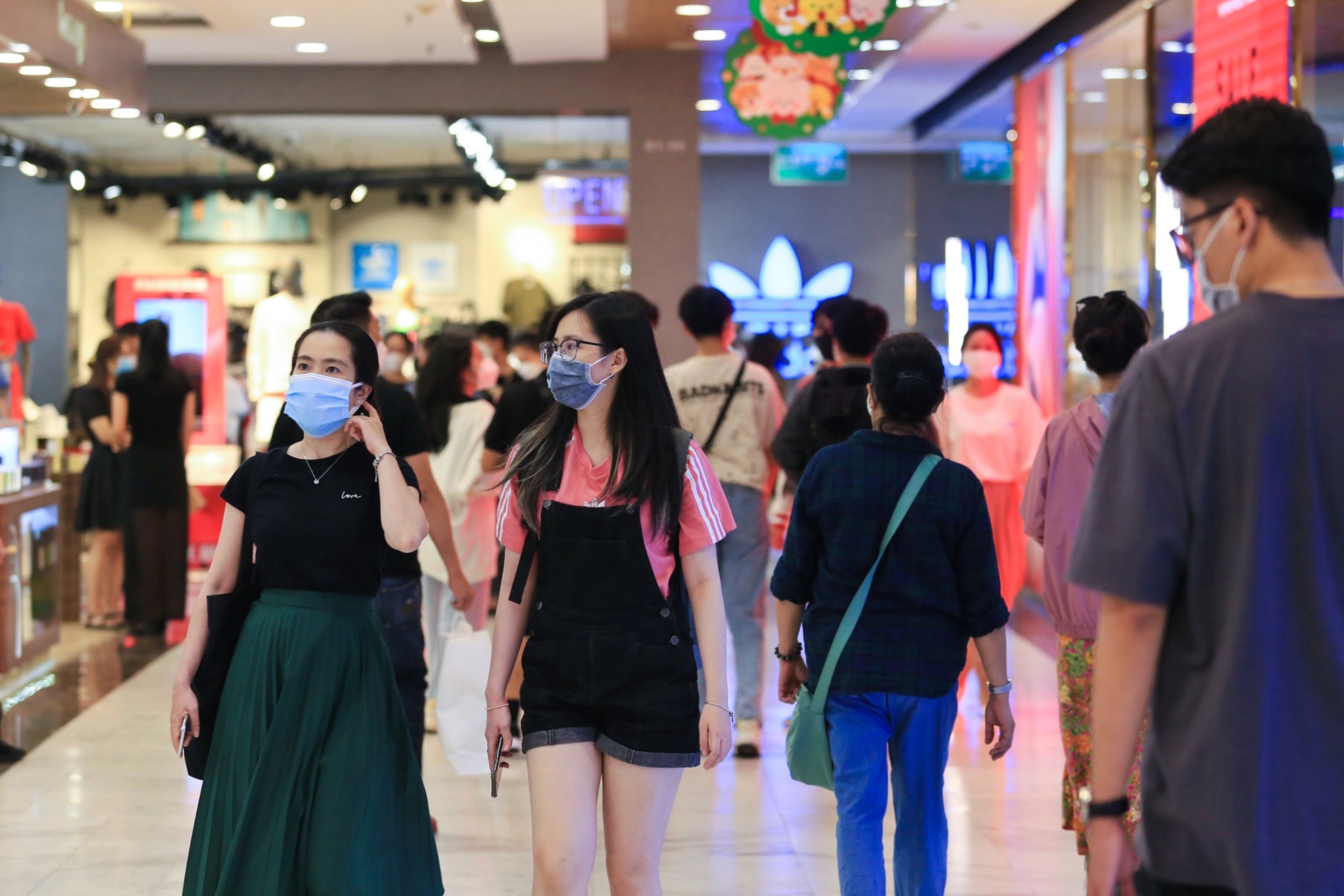
Ho Chi Minh City needs high-class shopping and entertainment areas to attract international tourists to spend money.
In fact, every year, Vietnamese travel companies organize tens of thousands of tours taking Vietnamese tourists to Singapore, Thailand, Japan, South Korea, etc., simply to stimulate consumer spending in those countries. Many lessons around the world have shown that duty-free shops right in the city are an opportunity to attract wealthy tourists.
Many countries have successfully established duty-free shops right in shopping malls, far from seaports and airports, and have earned billions of foreign currency annually from this business activity even though… they don't collect taxes.
For example, in South Korea, the duty-free market reached over $17 billion, while in China it reached $6 billion in 2018. In Singapore, Changi Airport alone, considered a shopping paradise, generated $1.5 billion in revenue from duty-free goods in 2018, placing it among the top three airports with the highest tourist spending.
In Japan, international student Nguyen Vu noted that duty-free shops are a major attraction in Tokyo's Akihabara electronics district. These shops are always bustling with foreign shoppers due to the low prices and the absence of consumption tax. The Philippines has a shopping mall called Duty Free Philippines Fiestamall. The goods sold there are imported from around the world, and what's special is that these items are not sold in any other shopping mall in the country. Similarly, the island nation of Singapore is considered a "shopping paradise" for tourists due to its system of duty-free shops in its shopping centers.
According to Mr. Luong Hoai Nam, for the tourism industry, services and trade must be identified as key products. Only a service system can truly resonate with the people and promote the development of other industries alongside tourism. For tourism to thrive, there must be clusters of diverse entertainment and recreational services that create immense appeal and generate huge revenues, like Marina Bay and Sentosa in Singapore. Vietnam is currently lacking such places to meet the needs of tourists who want to spend their time and money safely and in a civilized manner.
To make Ho Chi Minh City and Vietnam a shopping paradise, we must address all current shortcomings comprehensively, from land allocation for retail outlets within the city, factory outlet systems near the city or in the suburbs… to tax exemption and reduction policies, and an on-site VAT refund system at shopping locations with simple and easy procedures.
Dr. Luong Hoai Nam, member of the Tourism Advisory Council
Source link
![[Photo] General Secretary and President To Lam presides over the meeting to approve the draft report on the results of the second inspection by the Politburo of the Standing Committee of the Hanoi City Party Committee.](https://vphoto.vietnam.vn/thumb/1200x675/vietnam/resource/IMAGE/2026/05/26/1779789811432_a2-bnd-4430-9620-jpg.webp)

















































Comment (0)