

The Tho ethnic group in Nhu Xuan district has always been united and lived together harmoniously, showing love and support for one another, creating a beautiful tradition in their community life. Many fine customs and traditions regarding relationships and interactions between people and between people and nature have been passed down from generation to generation, becoming a way of life and a beautiful way of behaving within the community.
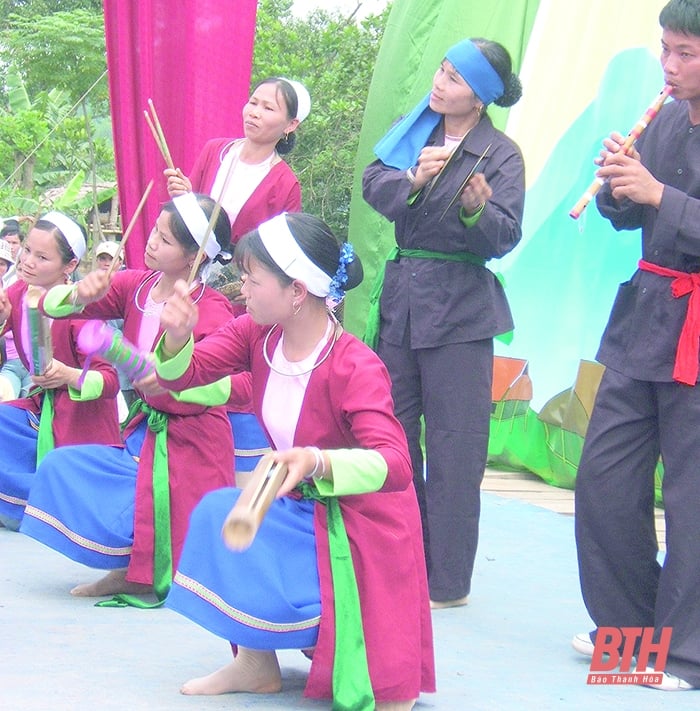
The folklore of the Tho people is quite rich. It includes a number of myths, legends, stories, poems, folk songs, proverbs, and idioms... Although there is cultural exchange with the Kinh and Muong people, it still possesses its own unique characteristics.
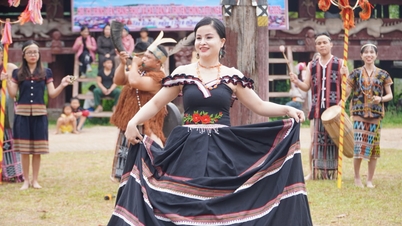
Music is also used by the Tho people in festivals, for singing love songs and expressing affection. The Tho are skilled in playing the mouth harp, flute, horn, and earthen drum. In particular, gongs are used in daily life; this traditional instrument, combined with drums, is used in festivals, celebrations, welcoming guests, housewarming parties, welcoming the newborn, weddings, call-and-response singing between men and women, and bidding farewell to the deceased.
The Tho people possess a rich collection of folk songs in various genres and melodies, reflecting the soul and emotions of the local people with their optimism, love of life, and affection for the scenery—forests, streams, fields, and farmlands—and the people and landscapes that have been intimately connected for generations. Although life is still difficult, their songs and melodies do not lose their heartfelt and profound meaning.
The Thổ Như Xuân people are fond of culture and arts, passionately singing to forget the hardships and toil of their daily lives. They sing while working in the fields, whether in the highlands or lowlands; while threshing rice, pounding rice, or making puffed rice; singing lullabies to their children; and singing love songs to express their affection and longing for their loved ones. They sing anytime, anywhere: in the forest, in their homes, on moonlit nights, during festivals, and not only when happy but even when sad, to ease the emptiness and loneliness in their souls.
The folk songs of the Tho people are quite rich in form, content, and expression. Lullabies are one of the most popular forms, sung by people of all ages, from young to old, male to female. Lullabies not only lull babies into a deep sleep, but through the warm and heartfelt words of parents, grandparents, and older siblings, they help children become acquainted with and connect with the natural world and familiar animals: Oh...oh...oh.../ Oh...oh...oh.../ The short-tailed fish/ The tailless fish.../ Criticizing the tadpole/ The hunched horse's hoof/ The close-knit bee/ Praising the diligent bee/ Listening to the crow's mating/ Listening to the crow's care for its young/ Carrying its young to the sky/ Where the deer descends the slope/ Clearing the field/ On this side of the valley/ The bananas are ripening yellow/ The rambutan fruit is ripening red/ Cutting a mulberry branch/ Cutting three branches of the bứa leaf...
A lullaby sung in a hammock lulls the baby into a deep sleep, transporting the child to a world of fairy tales and stories, telling them not to cry or sulk: Sleep so Daddy can go to the fields / Sleep so Mommy can go to the rice paddies...
Many people remember and know these folk songs, and they are also the creators of these songs. Folk songs are not only popular for children, but this genre is also sung with great enthusiasm by adults: ...Want to drink well water/ Climb the canal/ Want to drink stream water/ Climb the banyan tree/ The phoenix tree is red/ Cicadas sing/ Climb the tangerine tree/ Catch the brown beetle/ A pair of magpies/ Hopping and dancing on branches/ Sweet banana blossoms/ Calling the sparrows/ A pair of doves/ Cuckoos in the alley/ That's slow, ho.
In the folk songs of the Tho people, call-and-response singing is popular and is always sung between a man and a woman, or between a man and a woman. They sing among themselves within the village and often between people from different villages. Call-and-response singing has many contents such as: songs praising the beauty of the homeland, songs recounting the merits of national heroes, songs expressing gratitude to ancestors, songs inviting betel chewing, songs of inquiry, songs of riddles, songs of pounding rice, songs of vows, songs of separation, songs of reproach... expressing many emotional nuances of men and women, couples. "Love knows no distance / We will cross deep ravines and overcome rapids / Stay here / When the roots grow green, then return..."
Folk singing often features musical instruments such as horns, zithers, mouth harps, large drums, small drums, flutes, etc., as accompaniment. In call-and-response singing between a man and a woman, they use mouth harps and flutes to express their feelings to their partner. Group call-and-response singing between men and women often uses instruments like drums and gongs. The drum and gong ensemble consists of one large drum and two or three gongs/cymbals, played by one person using both hands, beating in rhythm. Along with the large drum and small drum made of leather, the Tho people also have the earthen drum. An earthen drum is made by digging a moderately sized circular hole in the ground, with a small opening and a wider bottom, about 30-40 cm deep, and a diameter of any size. A piece of palm sheath or bamboo sheath is used to cover the hole, securing it tightly. A length of vine is stretched perpendicularly from the surface of the sheath upwards, with both ends secured. This hole is about 0.5-1 meter from the next hole, and two sticks about 30-45 cm long are used to support the vine and keep it taut. Each end of the drumstick touches the outer hole, and a bamboo stick is used to strike the middle of the string, producing a deep, resonant sound at a fast or slow rhythm depending on the drummer. Earthen drums are used in festivals and for call-and-response singing between men and women. These drums are also often made by young buffalo and cattle herders who sing folk songs together in the forest or by the stream.
Besides the instruments mentioned above, the Tho people also have the Tinh Tang lute. The Tinh Tang lute is made from a bamboo tube with two horizontal strings made of bamboo pith. When played, one or two bamboo sticks are used to strike these strings, creating accompanying sounds for folk art performances. Everyone plays it skillfully. Along with bamboo instruments, the Tho people also use dried reed tubes. Holding the tube in one hand and a stick in the other, they strike the strings in rhythm, creating very distinctive sounds of the mountains and forests, such as the roar of waterfalls, the sound of flowing streams, the rustling of dry leaves, the cries of monkeys, and the calls of birds.
In the autumn, under the bright moonlight, after the first harvest of glutinous rice, young men and women in the village would make promises and gather to pound rice flakes, singing call-and-response songs. They would savor the flavor of the first rice flakes and the blossoming love of their young couple under the perfect moonlight. As they pounded the rice flakes, they sang: "Not going down to the deep fields / Not going up to the shallow fields / I'll go home and invite my friends / To the outer fields / To the mango tree / To find the purple glutinous rice flowers / Don't be tempted by ripe flowers / Don't choose unripe flowers / Wait for the full moon / Roast them until crispy and put them in the mortar / Five pestles, four pestles / I pound loudly / The sound of the pestles echoes / Lung Nghênh, Lung Ngái / The sound reverberates / Reaching all nine villages / Young men and women understand / They invite each other to find friends / The moon rises and sets / The sound of the pestles still echoes / Thump, thump, tong tong / The pestles become more rhythmic / A beautiful destiny / Remembering the full moon..."
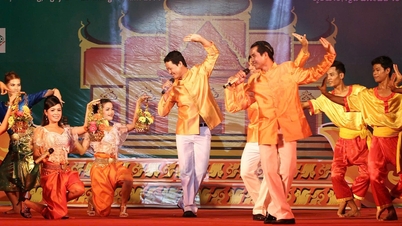
The folk songs of the Tho ethnic group in Nhu Xuan district are steeped in cultural and historical values, reflecting the feelings and souls of the Tho people from ancient times to the present. These folk songs are sung both during working life and in festivals and celebrations, "spring and autumn," and resonate throughout daily life. Wherever you go, at any time, in nearby villages and hamlets, you will find the warm, gentle, and heartfelt melodies of the Tho people, a whole region filled with heartfelt singing. Through cultural exchange, the Tho people have both absorbed the cultural values of the Muong, Kinh, and Thai people, while simultaneously creating, preserving, and promoting many traditional cultural values. Among these, folk songs stand out as a unique "oral tradition," contributing to the distinct cultural identity of the Tho people within the rich and diverse cultural landscape of Thanh Hoa province.
Text and photos: Hoang Minh Tuong
Source




























































Comment (0)