|
Hanoi police discovered a large quantity of chicken feet that were about to be smuggled onto the market and had a foul odor. Photo: Hanoi Police . |
Concerns about food safety regarding chicken feet are receiving significant public attention following the Hanoi City Police Investigation Agency's initiation of a criminal case involving over 10,000 tons of frozen chicken feet allegedly sold illegally. Notably, authorities discovered a large quantity of expired chicken feet, showing signs of mold and emitting a foul odor, in the related cold storage facilities.
The incident has led many to question the potential health risks of inadvertently consuming spoiled chicken feet. This is not just a matter of food quality, but also carries the risk of food poisoning and other worrying health complications.
Eating spoiled chicken feet carries the risk of dangerous bacterial infections.
According to Baidu Health, when chicken feet spoil, pathogenic bacteria can multiply rapidly. The most common of these are Salmonella, Campylobacter, Escherichia coli (E. coli), and Clostridium perfringens.
These agents are commonly associated with food poisoning incidents worldwide . Once inside the body, they can cause gastrointestinal inflammation with symptoms such as abdominal pain, diarrhea, nausea, vomiting, and fever.
During the spoilage process of meat, bioactive amines such as histamine can be produced. Eating spoiled chicken can cause allergic reactions such as itchy skin, redness and swelling, and difficulty breathing. If spoiled chicken feet are contaminated with Clostridium botulinum, its toxins can cause nerve paralysis and even be life-threatening.
Rotten chicken feet also contain large amounts of microbial metabolites (such as cadaverine and putrescine), which can irritate the gastrointestinal mucosa and cause acute inflammatory reactions such as nausea, abdominal pain, and diarrhea. Symptoms may be more severe in the elderly, children, or people with weakened immune systems.
Toxic substances in spoiled food (such as aflatoxin and nitrite) need to be metabolized by the liver and kidneys. Long-term or excessive consumption increases the burden on the liver and kidneys, and in severe cases, can cause dysfunction of these organs.
Even more concerning, many companies and production facilities are illegally using industrial hydrogen peroxide (commonly known as "hydrogen peroxide") to bleach chicken feet. This substance can mask signs of spoilage, making chicken feet from diseased poultry or expired products appear whiter, cleaner, and more appealing in a short period of time.
Furthermore, hydrogen peroxide is a strong oxidizing agent. During decomposition, it produces a large number of reactive oxygen species, such as free radicals and atomic oxygen, which destroy the spatial structure of proteins, causing them to lose their inherent biological activity and become denatured.
In particular, if residues remain in food, these substances can cause irritation or chemical burns to the mucous membranes of the mouth, esophagus, and stomach after ingestion.



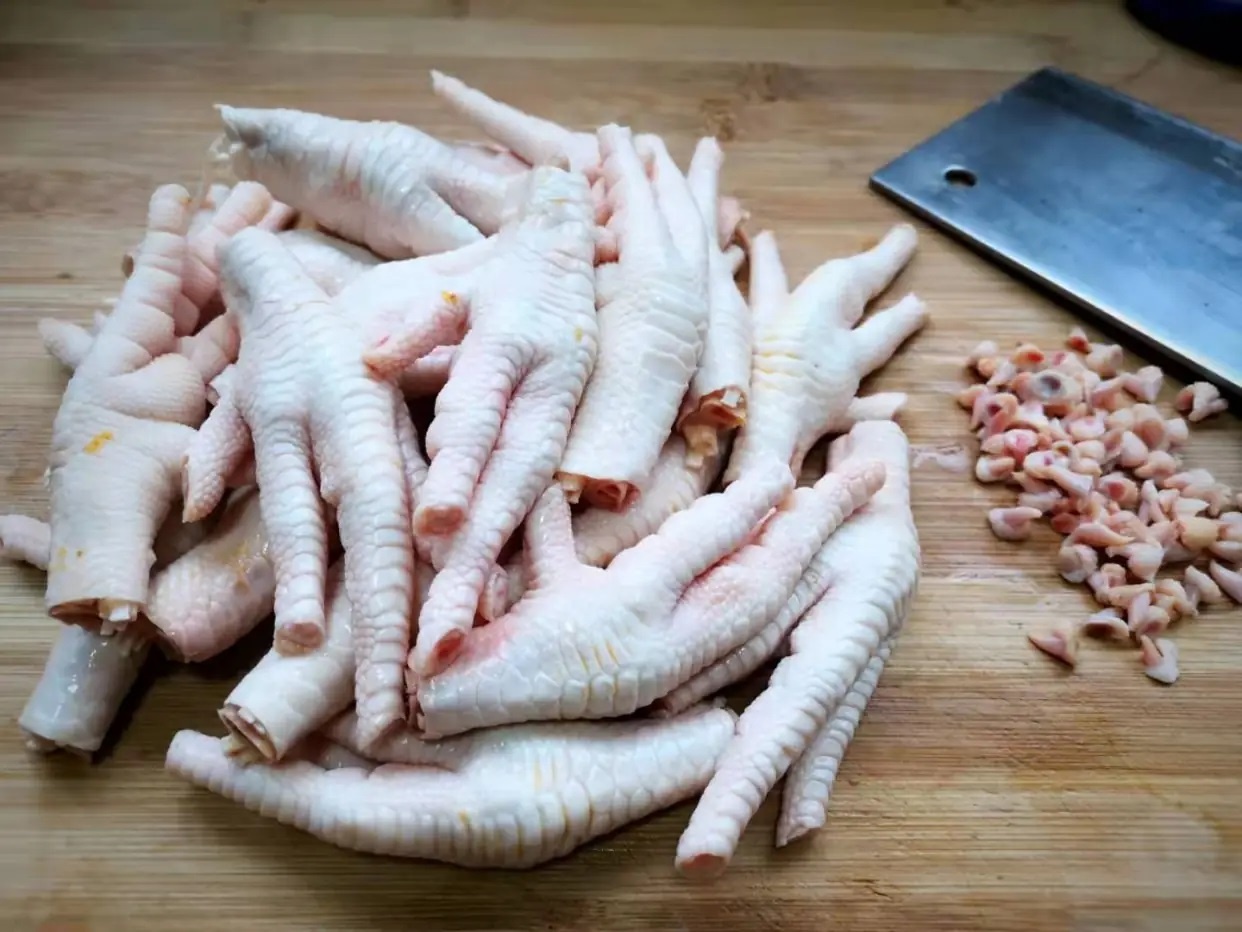 |
Damaged chicken feet, from diseased or expired poultry, can be bleached to appear clean, white, and more appealing in a short time. Photo: Baidu. |
Cooking does not completely eliminate the risk.
Many people believe that simply reheating spoiled food thoroughly is sufficient for consumption. However, experts warn that this is not entirely accurate.
High temperatures can kill most living bacteria, but during decomposition, some microorganisms produce toxins. Some of these toxins are relatively heat-resistant, meaning they remain present even after the food has been cooked.
Therefore, if chicken feet show clear signs of spoilage, reprocessing them cannot guarantee absolute safety. The risk of food poisoning still exists and can affect the health of consumers.
Food safety experts advise people against trying to reuse spoiled food to avoid unnecessary risks.
How to recognize spoiled chicken feet
According to The Paper, early recognition of signs of spoilage can help reduce the risk of food poisoning. Typically, spoiled chicken feet will show signs such as:
- The appearance of foul odors, sour smells, or unusual odors;
- The surface is viscous, sticky, and no longer naturally dry;
- The color changes to gray, blue, or strange spots appear;
- The texture is softer than usual;
- It has been stored for too long or left at room temperature for many hours.
If the chicken feet are unusually white, shiny, or excessively bright white, they have most likely been treated with hydrogen peroxide bleach. If the product has a pungent, acrid, or unpleasant odor, that could be a sign of chemical treatment.
For pre-packaged products, consumers need to pay special attention to the expiration date, packaging condition, and storage conditions. Abnormally bulging packaging or signs of leakage can also indicate that the food is no longer of good quality.
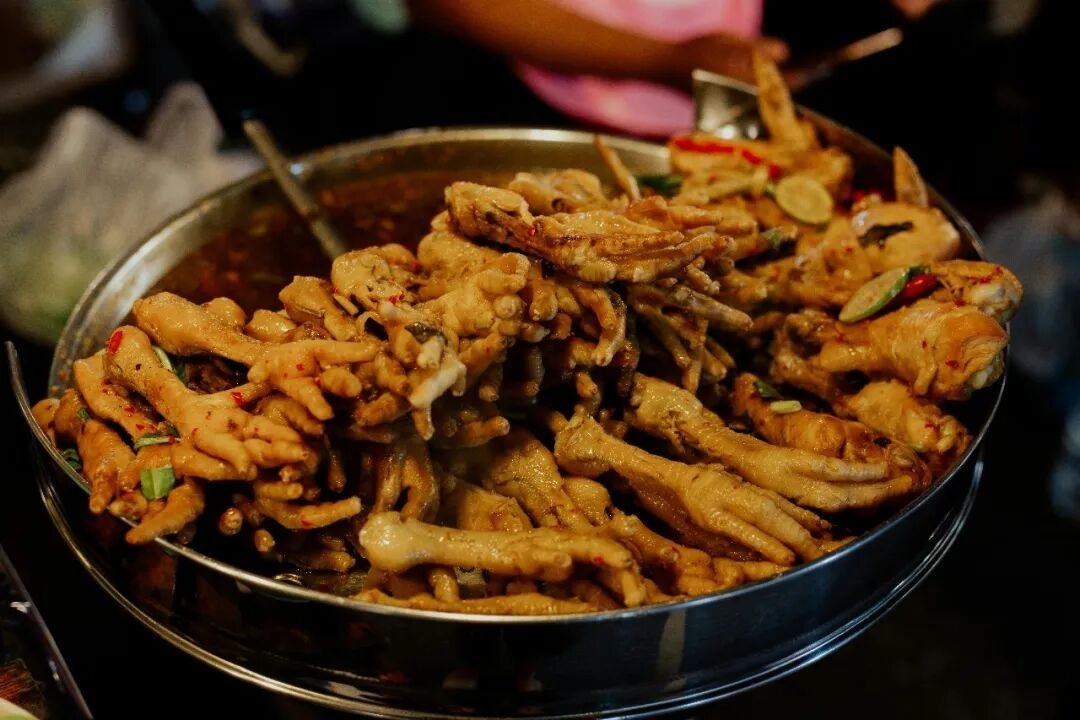 |
Chicken feet are a popular ingredient in many delicious street food dishes. Photo: Pexels. |
If symptoms such as abdominal pain, nausea, diarrhea, or fever appear after eating chicken feet, patients should closely monitor their health.



In mild cases, rest and hydration can help the body recover. However, if symptoms such as prolonged diarrhea, frequent vomiting, high fever, dehydration, or blood in the stool appear, the patient needs to go to a medical facility for examination and treatment.
To prevent the risk of food poisoning, chicken feet and other poultry products should be properly refrigerated, processed immediately after purchase, or frozen if not used immediately. Most importantly, when food shows signs of spoilage, consumers should discard it rather than be tempted to save it, because the price to health can be far greater than the value of the food itself.
Source: https://znews.vn/hiem-hoa-tu-mon-chan-ga-post1661474.html

![[Image] Ho Chi Minh City: Ma Lang area, Chicken-Rice Market about to change its appearance](https://vphoto.vietnam.vn/thumb/1200x675/vietnam/resource/IMAGE/2026/06/25/1782377698627_ndo_br_m1-jpg.webp)
![[Image] Schools organize meetings and introduce teaching models to students admitted to grade 10.](https://vphoto.vietnam.vn/thumb/1200x675/vietnam/resource/IMAGE/2026/06/25/1782368077271_ndo_br_z7970052192242-1ec8daeb77a6eed1a4e9f58c564ddd3e-jpg.webp)
![[Photo] General Secretary and President To Lam receives Palestinian Ambassador Saadi Salama](https://vphoto.vietnam.vn/thumb/1200x675/vietnam/resource/IMAGE/2026/06/25/1782365384740_a1-bnd-9423-8322-jpg.webp)















![[Video] Weather forecast for tonight and tomorrow, June 26, 2026: Northern Vietnam to end heatwave from tomorrow, Central Vietnam to continue experiencing a heatwave.](https://vphoto.vietnam.vn/thumb/402x226/vietnam/resource/IMAGE/2026/06/25/1782392692278_thumb-dem-png.webp)