

A series of concerts that dominated the year-end performance market with historic ticket sales have shown signs of the "butterfly effect" in the performing arts industry.
Butterfly effect
The Butterfly Effect is defined as small, seemingly insignificant events that can ultimately lead to unpredictable and far greater consequences than anticipated.
To put it simply, the "butterfly effect" is a metaphor describing the movement of tiny butterflies in a dense forest that can create a chain reaction of changes. environment The changes led to the formation of a major storm.
Using that frame of reference, we can see the "butterfly effect" in The performing arts industry.
Kpop is currently one of the most powerful empires in the world , producing music groups that can take the globe by storm and exert widespread influence around the globe.
The Kpop industry began with a very small "butterfly," the boy group Seo Taiji and Boys, who were formed with a random formula in 1992.
Seo Taiji and Boys became a strange phenomenon in the eyes of Korean audiences upon their debut. Before that, Koreans rarely listened to rap and there were almost no groups performing in flamboyant costumes, singing, dancing, and seemingly speaking (rap) at the same time. The group was formed using a novel formula where the singer collaborated with dancers, and they performed in an unprecedented style.
From the formula of Seo Taiji and Boys, a multi-billion dollar industrial empire was born. Kpop is a well-structured, professional system for groups that can sing, rap, and perform skillful dance routines.
According to the Korea Tourism Organization, experts estimate that each BTS concert can generate between $500 million and $984 million for the South Korean economy .
Concerts by BTS, Blackpink, or any other popular group generate enormous profits for many industries, from tourism, cosmetics, and fashion to the businesses of the groups' management companies.
"The Butterfly Dream" in the Vietnamese performing arts market.
It seemed that the power of Kpop had "manipulated" the majority of Vietnamese audiences, until a series of music-related reality TV shows aired in 2024.
During its initial launch, the "butterfly" drama "Brother Says Hi" received almost no attention. "Brother Overcomes a Thousand Obstacles" also faced numerous "obstacles," failing to achieve the expected popularity due to its cast of artists past their peak.
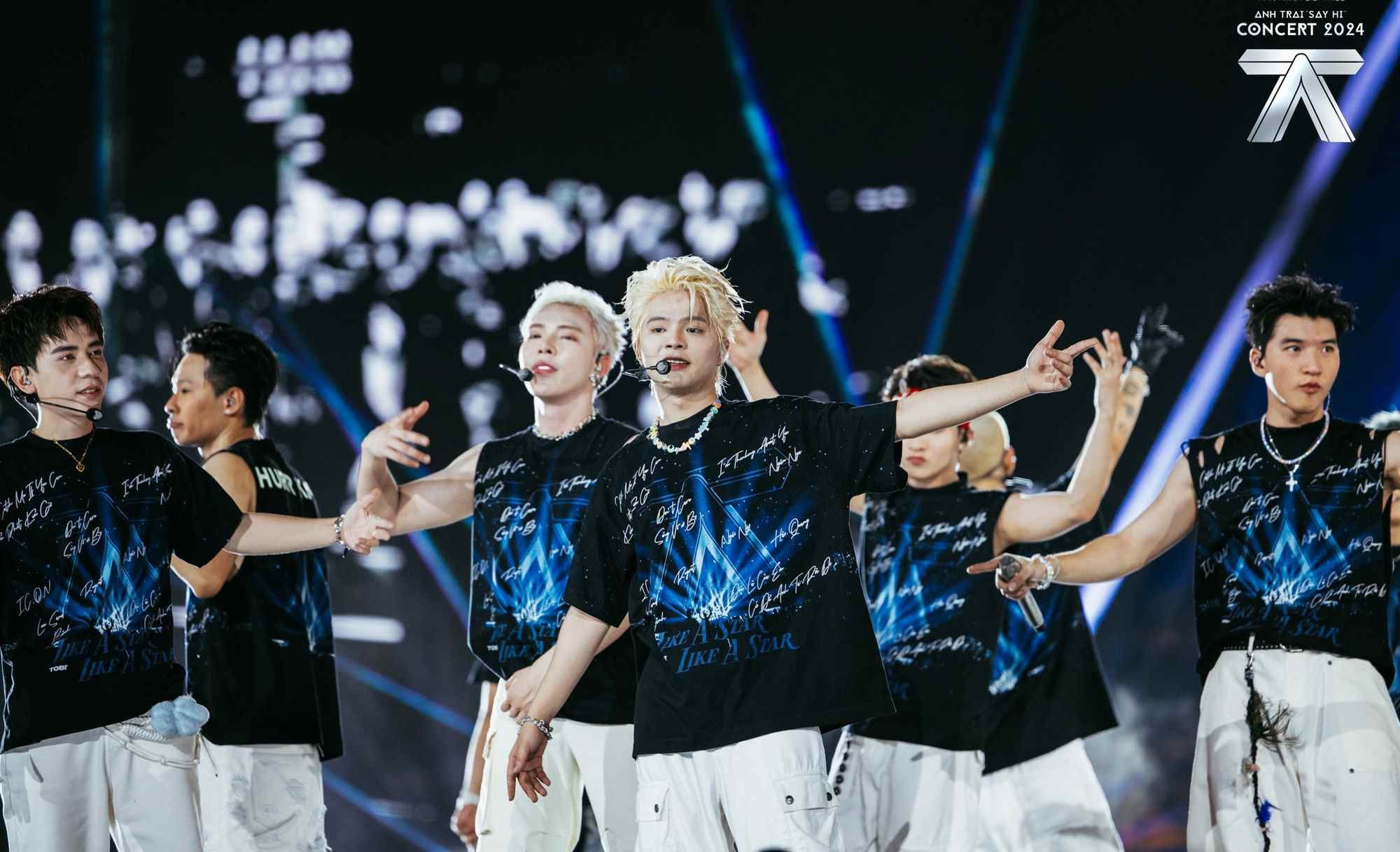
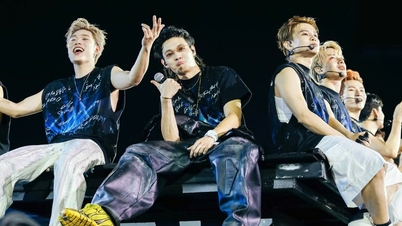
Through each episode and each live stage performance, the power of these handsome men, who can sing, rap, and perform professional dance moves, gradually began to emerge, creating a strong appeal and becoming a "storm" in the final episodes.
With a formula similar to Kpop, investing in the seamless combination of artists with good looks and talent, supporting each other in group performances, has brought unpredictable appeal to the two shows, "Brotherhood."
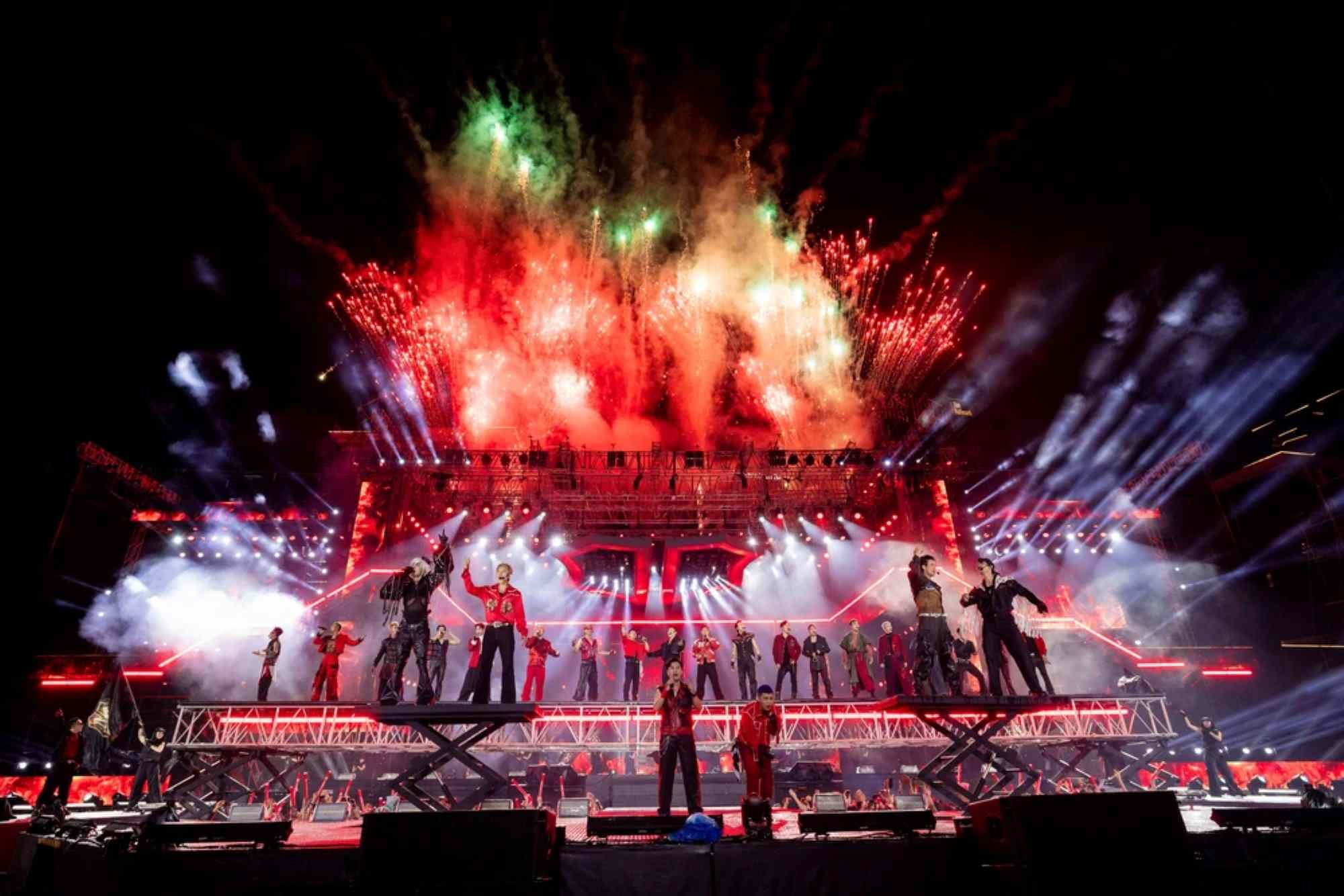
According to Mr. Nguyen Xuan An, the communications director of "Brother Overcoming a Thousand Obstacles," who shared with Lao Dong newspaper, they needed a huge workforce to produce the program over more than 3 months of broadcasting. For the concert alone, they needed more than 1,000 staff members to organize.
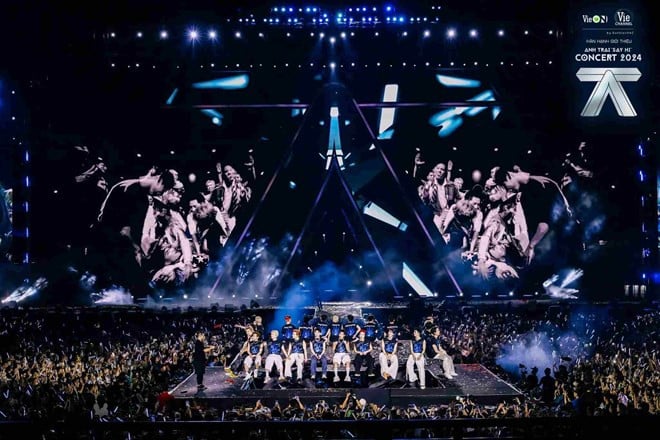
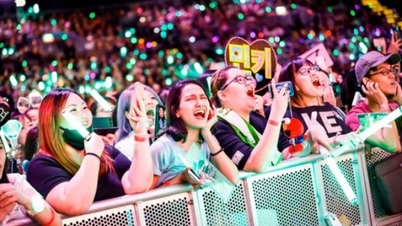
From a "butterfly" nurtured through reality TV, a series of concerts attracting 20,000-30,000 attendees were held continuously in Ho Chi Minh City and Hanoi at the end of 2024, creating an unprecedented phenomenon in Vietnamese music.
Vietnamese audiences have traditionally only been accustomed to small-scale live shows, with only a handful of artists daring to hold concerts each year due to financial losses and low ticket sales.
It wasn't until 2024, especially in the final months of the year, that the media witnessed unprecedented ticket-hunting frenzies for concerts held in Hanoi. There were consecutive sell-out events, website crashes, and congestion of buyers for up to 40 minutes. Black market tickets were in high demand throughout the period leading up to the December concerts.
The investment in reality television, like a "butterfly" whose "wingbeat" has changed in terms of format, has created unprecedented phenomena in the performing arts market in 2024.
Experts have high expectations for the performing arts industry, as many positive signs have emerged. Among the 12 key sectors of the Ministry of Culture, Sports and Tourism's Strategy for the Development of Vietnam's Cultural Industry to 2030 with a vision to 2045, the performing arts sector (including music, circus, dance, etc.) is included.
As musician Quoc Trung said: "To have a performing arts industry like K-Pop requires many factors, from investment from businesses to support mechanisms, market demand, audience tastes... Above all, it requires the unity, hard work, effort, and ambition of artists to reach the global stage."
Source



![[Image] A brilliant symphony and explosive power in the skies of Da Nang.](https://vphoto.vietnam.vn/thumb/1200x675/vietnam/resource/IMAGE/2026/05/31/1780196945787_anh-man-hinh-2026-05-31-luc-10-08-51.png)




![[Video] Sunset at Lap An Lagoon – Where the sun sets over the fishing nets](https://vphoto.vietnam.vn/thumb/340x192/vietnam/resource/IMAGE/2026/05/31/1780192137701_beach-landscape-sea-water-nature-grass-745871-pxhere-com.jpeg)







































































Comment (0)