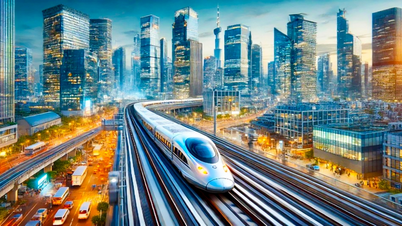
By 2030, along with the metro lines already under construction and those currently underway, the city could have a metro network spanning approximately 400km, nearly 20 times the length of the current operational line.
Imagine how the lifestyles of its citizens and the way the city functions would change if Hanoi were covered by a modern public transportation network?
A technology engineer living in Hoa Lac can commute to work in Cau Giay by metro; a student in Son Tay can travel to the center of Hanoi for classes and return home the same day; and a young family can choose to buy an apartment in Thuong Tin without feeling too far from the city center.
At that time, the metro became the starting point for a completely different Hanoi in terms of its operation, way of life, and development.
When all roads lead to the center
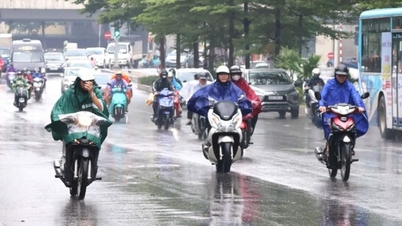
For nearly three decades, the motorbike has virtually shaped how Hanoians live, work, and choose where to live. For many years, living near the center of Hanoi was synonymous with access to better job opportunities, education , and services.
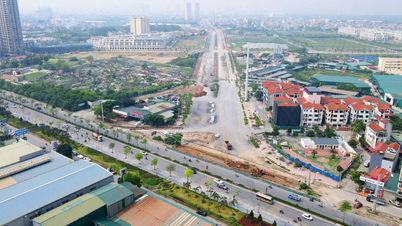
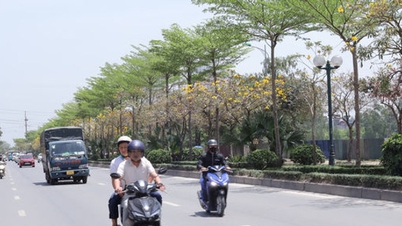
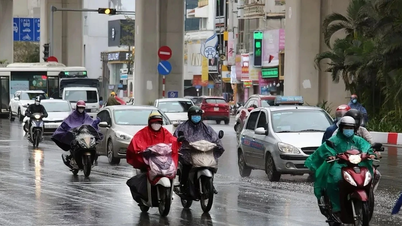
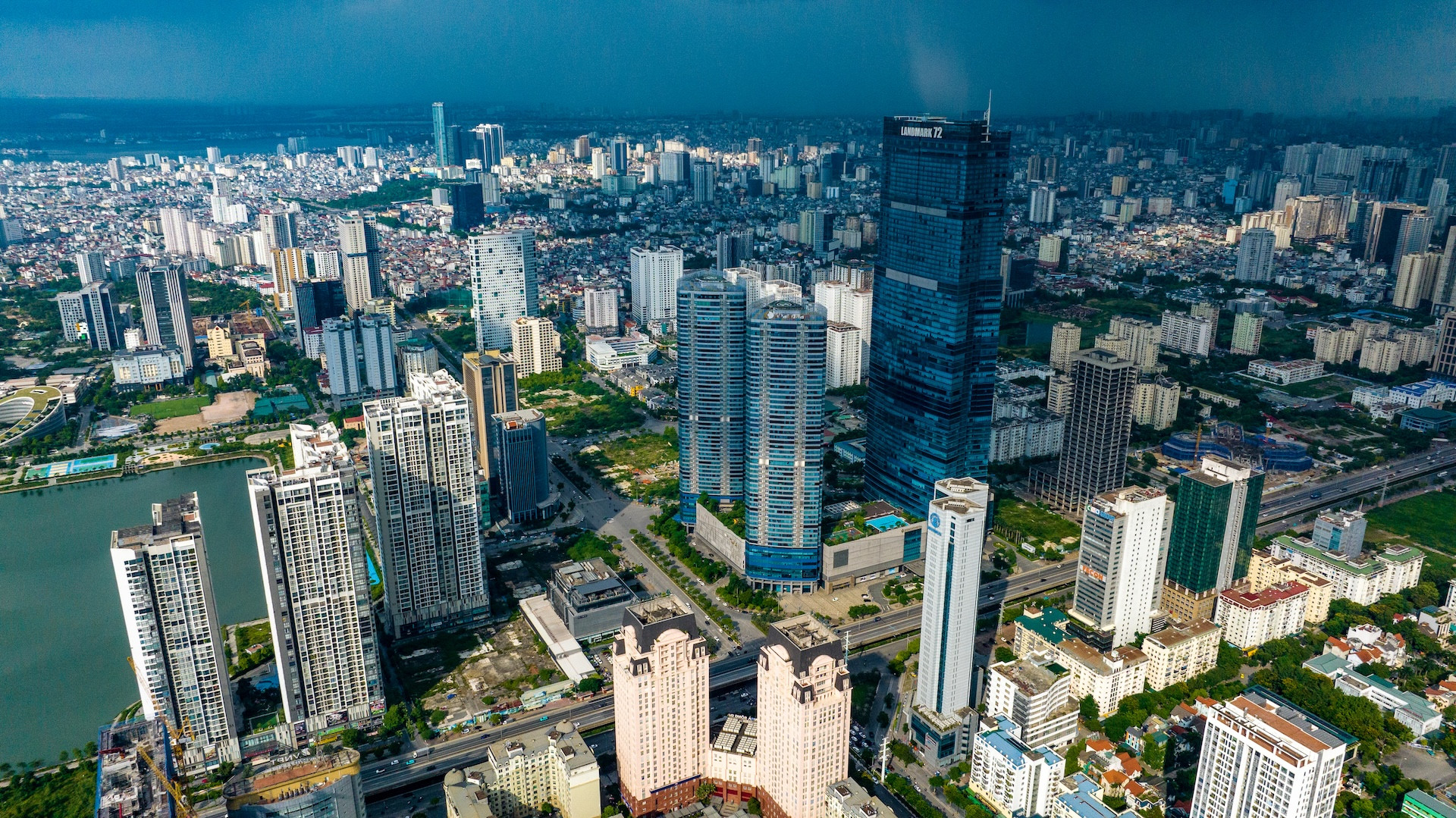
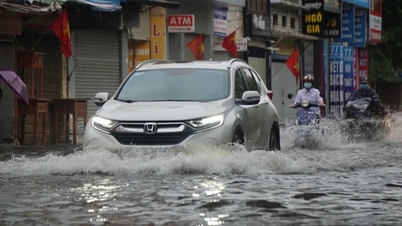
As a result, millions of people flock to the inner city every morning. Real estate prices are skyrocketing. Traffic congestion has become a familiar part of life. Roads like Nguyen Trai, Giai Phong, Cau Giay, and Ring Road 3 are carrying a volume of people exceeding their capacity.
Hanoi today has nearly 9 million permanent residents, over 7 million motorbikes, and more than 1 million cars. According to urban planning, the capital's population could reach 15-20 million people in the coming decades.
Such a city cannot continue to function on a model where each person solves their own transportation needs using private vehicles.
In other words, the metro is not the ultimate goal, but rather the solution to the problem of how a city can continue to accommodate millions of new residents without falling into traffic paralysis.
When talking about metros, people often mention enormous figures: trillions of dong in investment capital, hundreds of kilometers of track, and modern trains.
But perhaps the greatest value of the metro lies in something far harder to measure: time.
Every hour free from traffic jams is an hour for family, for studying, or for yourself.
Because, ultimately, the metro not only transports passengers but also returns to the city the hours of life that are lost each day in traffic congestion.
Multipolar city



While reducing traffic congestion is the most visible effect, the metro is essentially a tool for Hanoi to reorganize its entire development space.
For over a thousand years of development, Hanoi has essentially remained a unipolar city. In its current development model, the majority of jobs, high-quality services, and economic opportunities are still concentrated in the city center.
Every morning, people from all directions flock to the historic inner city, where much of the city's high-quality work and services are concentrated.
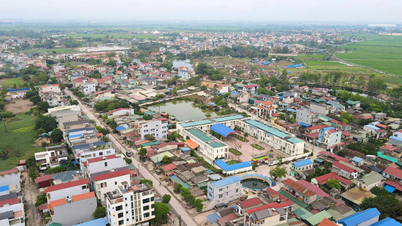
Areas previously considered suburban, such as Hoa Lac, Dong Anh, and Son Tay, have the opportunity to rise to become new development centers instead of merely serving as satellite areas of the inner city.
For the first time in decades, Hanoi has the opportunity to break free from a model where almost all opportunities are concentrated within a few kilometers around Ho Guom Lake.
If today the value of a piece of land is determined by its distance from the city center, in the future, its distance to the train station may become an even more important metric.
One day, Hanoians might care as much about which train station they're near as they do about which ward they live in.
What will be lost?
Perhaps what is more noteworthy is the gradual disappearance of these things from urban life.
It could be long commutes lasting hours each day, expensive apartments simply because they're close to work, huge motorbike parking lots around schools and office areas, and the feeling of having to compromise on life opportunities just because of geographical distance.
The congested traffic on Nguyen Trai, Giai Phong, or Cau Giay roads during rush hour may no longer be a familiar sight as it is today. Even the concept of "commuting long distances" might be redefined.
When it only takes a few tens of minutes for someone to travel from Hoa Lac to Cau Giay or from Dong Anh to the city center by metro, geographical distance will gradually give way to time.
But the value of the metro lies not only in replacing old habits but also in its ability to create a completely new urban structure.
Metro systems can open up more opportunities for people to access jobs, services, and amenities. But without accompanying policies, this very development could also push low-income individuals further away from the areas that could benefit the most.
The big challenge
What makes Hanoi strong is both its highly skilled workforce, including engineers, technology experts, researchers, financial experts, and millions of highly skilled workers, and its workforce itself.
The question also remains whether Hanoi can create a sufficiently large class of knowledge workers to fill the new centers in Hoa Lac, Dong Anh, Gia Lam, or Son Tay.



But training an engineer, a researcher, or a technology specialist typically takes more than a decade.
The gap in workforce quality is far less visible than the kilometers of railway tracks being built, but it may well be the deciding factor in the success of the entire transformation.
The greatest value of the metro network that Hanoi is building lies in the opportunity to redesign how a city of tens of millions of people operates in the 21st century.
If successful, Hanoi in 2030 will have new urban centers, new growth poles, and a public transportation system strong enough to become the backbone of the city.
But the success of this transformation will be measured by the number of hours people no longer have to sacrifice in daily traffic jams. It will also be measured by the number of new opportunities that emerge outside the historic inner city.
More importantly, a modern Hanoi also needs enough tolerance so that no one is left behind. The city of high-speed trains must still be the city of the delivery man working under the midday sun, the cleaning lady sweeping the streets at midnight, the construction worker building new buildings, or the security guard staying awake all night in front of every office gate. They not only witness Hanoi's transformation but are also the ones who contribute to that transformation.
And finally, a livable city is not measured solely by how fast its trains are or how tall its buildings are, but also by how it treats the most ordinary people who quietly keep it running every day.
Source: https://vietnamnet.vn/hinh-dung-ha-noi-nam-2030-2529902.html



![[Photo] "Hanoi Lotus Festival" honors the lotus flower that has been associated with Vietnam for thousands of years.](https://vphoto.vietnam.vn/thumb/1200x675/vietnam/resource/IMAGE/2026/06/27/1782516943048_sen-ha-noi-2026-minh-duy-1-jpg.webp)



![[Photo] "Hanoi Lotus Festival" honors the lotus flower that has been associated with Vietnam for thousands of years.](https://vphoto.vietnam.vn/thumb/402x226/vietnam/resource/IMAGE/2026/06/27/1782516943048_sen-ha-noi-2026-minh-duy-1-jpg.webp)