

The spirit of government supporting and serving businesses is only truly effective when regulatory agencies put themselves in the shoes of business owners, avoiding the creation of additional barriers or unofficial costs for businesses.
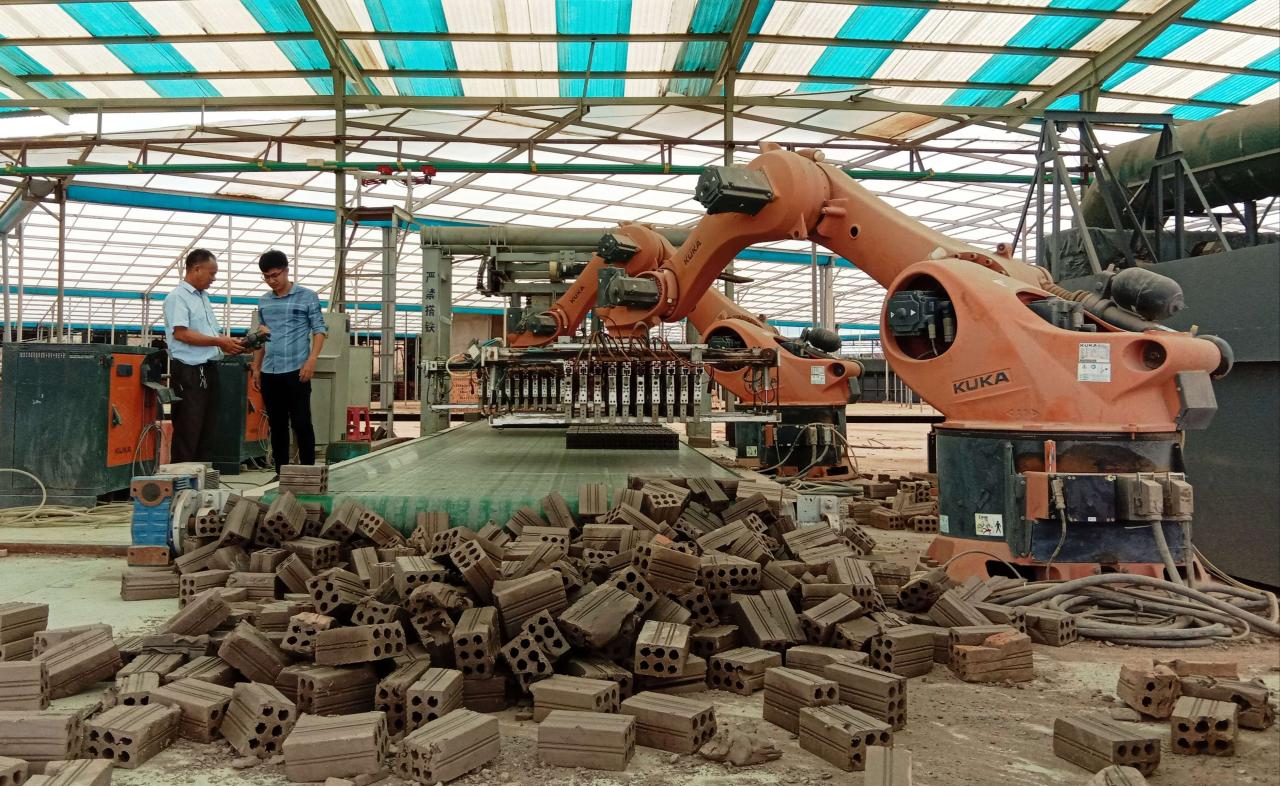
Mr. Nguyen Van Nghia begins his workday with a series of calls to inquire with partners in other localities about their business situation, especially the market for construction materials.
As the owner of a building materials factory, he was almost completely depleted of capital and energy after a long period of battling the Covid-19 pandemic.
During that time, he was almost completely lost. The company was operating at a reduced capacity due to a lack of demand, practically shrinking as much as possible, trying to protect itself. All plans for production and business came to a halt, and Nghia had to consider options for recovering his capital.
In reality, many businesses are facing even greater difficulties, falling into a state of "clinical death," or even ceasing operations and going bankrupt.
|
Nevertheless, even in the most difficult times, I still believe that there is always a rainbow in the rain. The pandemic will be brought under control, and the pandemic prevention policies will shift. What I need to do is persevere and prepare for recovery.
The facts have proven Mr. Nghia's belief correct. When the pandemic was brought under control, the government and local authorities adjusted their strategies, thoroughly implementing the "new normal," with many policies to support and promote economic recovery being deployed.
The Provincial People's Committee is implementing programs and plans to support business development; focusing on implementing policies and solutions of the Government and central ministries and agencies; issuing a plan to implement the program for economic and social recovery and development in the province in accordance with the policies of the National Assembly and the Government; and establishing a special task force to address difficulties for businesses.
Many businesses have proactively adapted to adverse changes, ensuring the maintenance of production and business operations, quickly seizing new business opportunities, and applying digital technology in production and business.
Like other businesses, Mr. Nghia boldly seized the opportunity to start restoring production. However, things were not easy, as the supply chain was disrupted, products accumulated, and the business struggled to recover its capital.
In particular, businesses have recently been hampered by high bank interest rates, while banks remain hesitant to reduce lending rates. Furthermore, obtaining loans involves cumbersome procedures and is difficult to access. In addition, input costs such as raw materials and fuel are increasing. This is when businesses are most vulnerable and desperately need support from the government and relevant sectors.
The question is, what kind of support do businesses need?
|

One positive aspect in recent times is the province's strong emphasis on the spirit of "accompanying and serving," ensuring that businesses undergoing administrative procedures receive comprehensive and easy-to-understand guidance, requiring them to supplement information or amend documents no more than once.
Efforts to create a favorable business environment and reduce costs and time for businesses are spreading. As a result, the phenomenon of businesses having to travel repeatedly, each time just to fulfill a different request, is being overcome.
During dialogues between the Provincial People's Committee and businesses, or in the "Business-Entrepreneur Coffee" program, besides concerns about capital sources, the most frequent requests from businesses concern obstacles related to planning, auctions, investment approval procedures, environmental impact assessments, trademark registration, food safety, and trade promotion.
According to one business owner, the top priority is how to simplify legal regulations, make them easier to understand, and facilitate businesses in fully complying with their obligations.
Some businesses have reported encountering policy shortcomings, but when they raise these issues with the government or relevant agencies, the waiting time for resolution is too long. By the time support is implemented, the businesses have lost business opportunities.
If the business environment were reformed more drastically, if regulatory agencies truly prioritized supporting businesses instead of banning what they couldn't manage or imposing difficult conditions, it would certainly create incentives for businesses.
Of course, much remains to be done to support businesses in overcoming difficulties. First and foremost, it is necessary to urgently review legal obstacles and barriers to unlock resources for investment in production and business. Solutions should be proposed to address legal and procedural difficulties in investment and construction for real estate projects.
Supporting businesses by reducing costs and enhancing their access to preferential capital sources and government support resources.
Continue to improve the investment and business environment, reduce and simplify regulations related to business activities; address vague, overlapping, or contradictory regulations in the fields of investment, land, construction, resources, environment, and other areas to ensure consistency, uniformity, transparency, ease of reference, understanding, and accessibility.
Promoting digital transformation and innovation in businesses; supporting labor restructuring and improving the quality of human resources to meet the requirements of innovation and the Fourth Industrial Revolution.
And finally, as Chairman of the Provincial People's Committee Le Ngoc Tuan said, only when the government and management agencies put themselves in the shoes of the business owner, without creating additional barriers or unofficial costs for businesses, can they truly "accompany and serve" them.
Hong Lam
![[Photo] Enchanted by the deciduous forest during the leaf-changing season.](/_next/image?url=https%3A%2F%2Fvphoto.vietnam.vn%2Fthumb%2F1200x675%2Fvietnam%2Fresource%2FIMAGE%2F2026%2F02%2F04%2F1770196861704_2066642_8ffd5f25c3c9433be0e644abe71613ae.jpeg&w=3840&q=75)


![[Photo] Prime Minister Pham Minh Chinh presides over the regular Government meeting in January 2026.](/_next/image?url=https%3A%2F%2Fvphoto.vietnam.vn%2Fthumb%2F402x226%2Fvietnam%2Fresource%2FIMAGE%2F2026%2F02%2F04%2F1770209446450_hopcp-jpg.webp&w=3840&q=75)




Comment (0)