Putting aside my studies, I answered the call of my homeland.
In his house in Hamlet 3, An Bien Commune ( An Giang Province), Mr. Nguyen Quoc Su still carefully preserves mementos from the wartime era. Every time he talks about his time as a volunteer youth, the veteran's eyes light up, filled with pride and unforgettable memories.
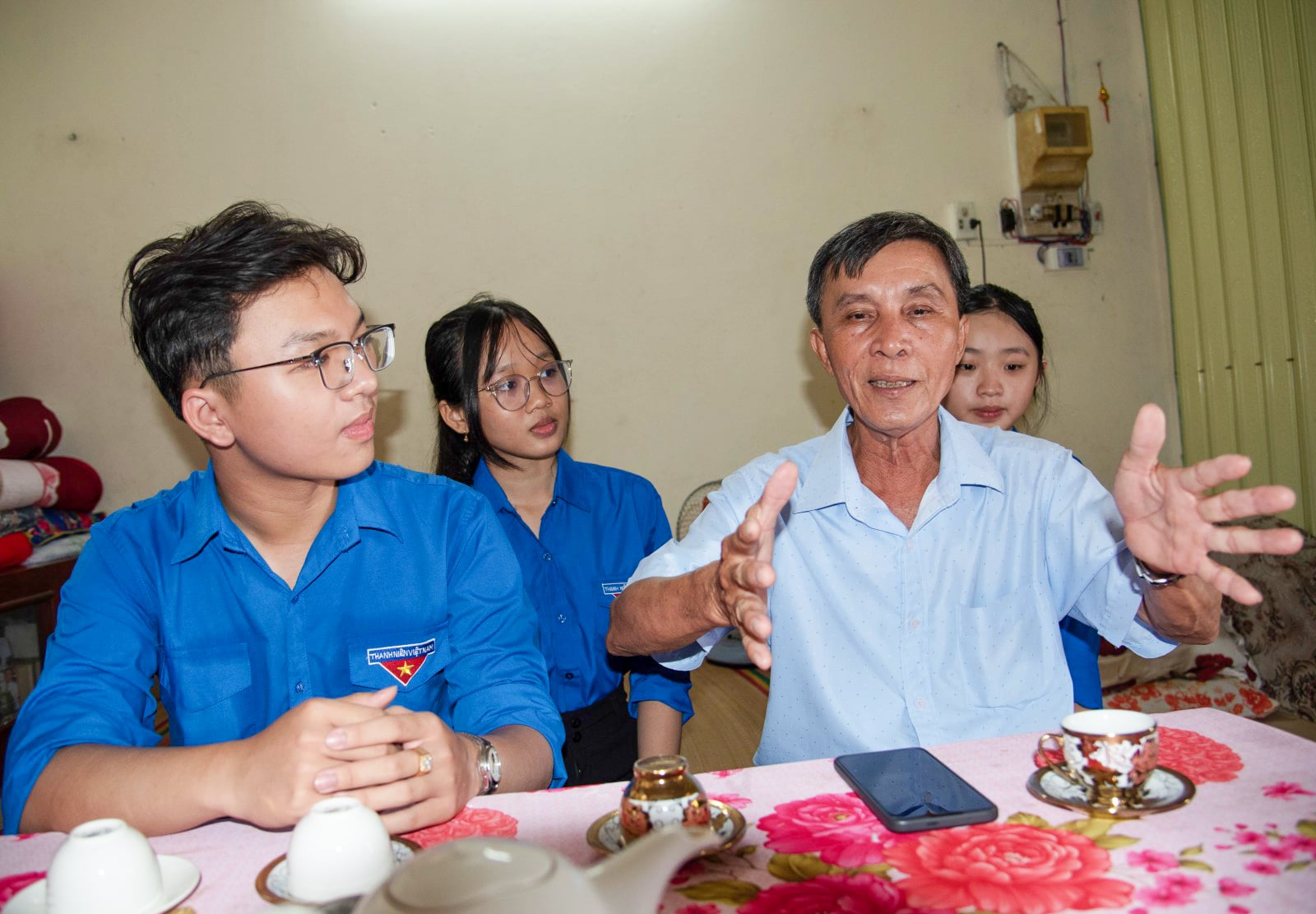
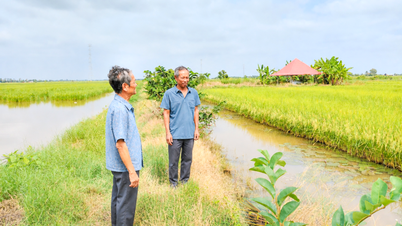
Former Youth Volunteer Corps member Nguyen Quoc Su recounts the days of filling bomb craters and clearing paths for the troops to march on .
He was born in Le Thuy district, Quang Binh province (formerly), a region rich in revolutionary traditions. His father was a guerrilla fighter during the resistance against the Americans. This family tradition instilled in the eighteen-year-old student a desire to contribute to his country.
In early 1975, while in the 8th grade, he decided to put his studies on hold to volunteer for the Youth Volunteer Force. “At that time, I only thought that the South was about to be liberated, and I had to contribute my part. Hearing news of the war through the small radio, everyone was eager to go,” Mr. Su recalled.
The days on the Truong Son trail and the Quang Tri battlefield were a series of hardships. The unit's work involved filling bomb craters, clearing the battlefield, and opening roads for the troops to march. In the middle of the vast forest, the camps were only temporarily erected under the canopy. At night, venomous snakes crawled around the sleeping areas. Meals mainly consisted of dried rations, rice balls, and spring water. They didn't dare light a fire to cook rice for fear that the smoke would become a target for enemy aircraft.
"The hardest thing was malaria. We took turns caring for them, medicine was scarce, and those who were healthy helped the weak. Yet no one thought about giving up," he recounted.
On the day the country was reunified, many people returned to their hometowns, but he continued to stay in Quang Tri Citadel until 1976 to clear mines, dig canals, and build irrigation systems to restore production. In 1977, he enlisted in the army and continued to participate in the Cambodian battlefield.
After peace was restored, he transferred to Kien Giang (now An Giang) in 1981. His soldierly qualities remained with him in his everyday life. He served for many years as Party branch secretary, village head, and is currently the head of the Veterans Association and the Red Cross branch in Hamlet 3. Mr. Su said: “In the past, we fought the enemy so that the people could live in peace. Now, helping the people to do business and escape poverty is also a way of continuing to contribute.”
The shoulders of a sixteen-year-old under the bomb rain.
In the house of gratitude that the State bestowed upon her in 2015, Ms. Quach Thi Nga , residing in Dong Quy hamlet, An Bien commune, gently turns the pages of her memories from her sixteenth year.
In 1966, a young girl from Ca Mau province, along with a few friends, decided to leave their hometown and join the Youth Volunteer Force. Some who were teaching even put everything aside to answer the call of their country. "The officers saw that I was too young and were afraid I wouldn't be able to withstand the malaria in the eastern jungle, so they encouraged me to stay, but I was determined to go," Mrs. Nga recounted.
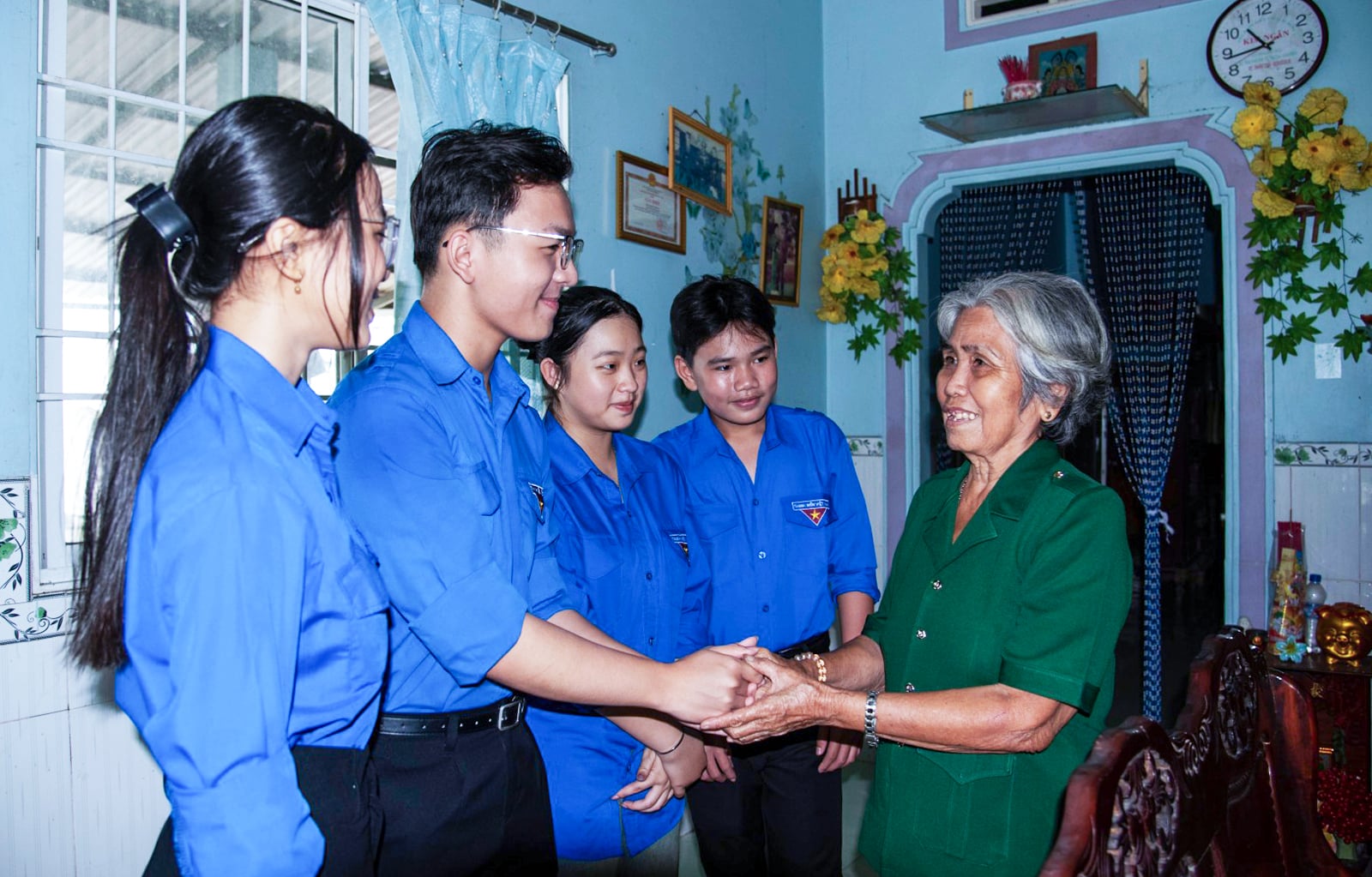
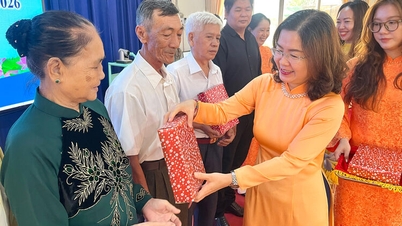
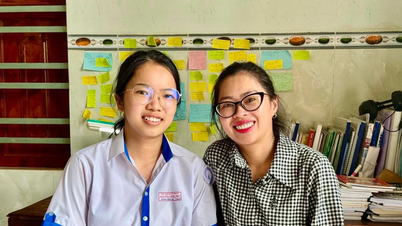
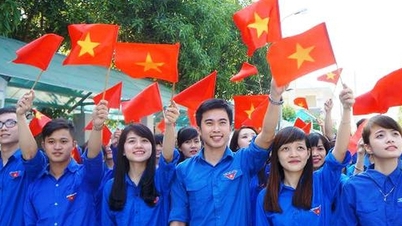
Ms. Quách Thị Nga was delighted to have young people from An Biên commune visit her.
Her unit marched on foot for a month and twenty-seven days before reaching the battlefield. The dense jungle was not only full of bombs and bullets but also plagued by persistent malaria. Hair fell out, people turned pale, and many comrades fell ill before they could even face the enemy.
Operating primarily in Tay Ninh, Binh Duong, and Cu Chi, she and her comrades lived in underground tunnels and deep bunkers. In some places, there was no water; early in the morning, they had to scoop up rainwater collected in buffalo footprints, add chemicals to filter it, and only then dared to boil it for drinking. At night, they slept only in hammocks and small tarpaulins. If not stretched properly, rainwater would seep down the tree trunks and directly into the hammocks, keeping them wet and cold all night.
Ms. Nga's duties included carrying rice, ammunition, and wounded soldiers. Each trip, her thin shoulders would carry about 20kg of supplies, traversing the jungle day and night. What she remembers most are the times she carried the wounded under bombing raids.
"The order was not to let the wounded be injured a second time. Sometimes, when shells fell, we would lie on top of the wounded to shield them with our own bodies," she recounted, her voice faltering.

"Preventing a second injury to wounded soldiers was the duty of the volunteer youth back then," Ms. Nga recounted.
There are memories that aren't found in medals, but in the melodies that accompanied youth. Ms. Nga recounted that during rest nights in the forest, after a day of carrying ammunition or tending to wounded soldiers, the young volunteers would sing.
Even now, Mrs. Nga still remembers the melody of the song "Youth Volunteers" by composer Phan Huynh Dieu. Every time she hums the lyrics about the will to overcome mountains and cross rivers and the determination to lead the way, she feels as if her entire youth is coming back to her. "Back then, listening to any song gave me more strength. I would just sing and keep going, forgetting about fatigue and fear," Mrs. Nga recalled with a smile.



The war also left her with irreplaceable losses. Her father was a Viet Minh soldier who died in 1954. Throughout the years of the resistance, she and her younger brother fought together on the battlefield without knowing whether the other was still alive or had died.
However, when asked if she regretted dedicating her youth to the war, Mrs. Nga shook her head. “If I could choose again, I would still go. Thanks to those who fell, our country has peace today.” Now, at an advanced age and with declining health, she still tends to her fields and gardens with her children and grandchildren, living a simple life like any other farmer.
The bombs and bullets have receded into the past, the Truong Son forests are now green again, and the ancient citadel of Quang Tri is covered in flowers and grass. Only the memories of the former youth volunteers remain intact, like a smoldering fire, reminding today's generation that peace has never come naturally. It is the result of the sacrifices made with the youth, sweat, tears, and blood of countless ordinary people like Mr. Nguyen Quoc Su and Mrs. Quach Thi Nga.
Source: https://baoangiang.com.vn/hoa-lua-con-trong-mat-nguoi-xua-a491151.html