

Recently, the Cardiovascular Intensive Care Unit of Military Central Hospital 108 successfully resuscitated a 19-year-old border guard soldier from Xin Cai (Meo Vac, Ha Giang ) who was suffering from acute myocarditis and was in a very critical condition.
The emergency operation was carried out spectacularly within 15 hours: at 2 PM on August 27th, the patient was transported from the Xin Cai border guard station to the Central Military Hospital 108, arriving at 5 AM on August 28th (both transportation and emergency treatment of the patient).
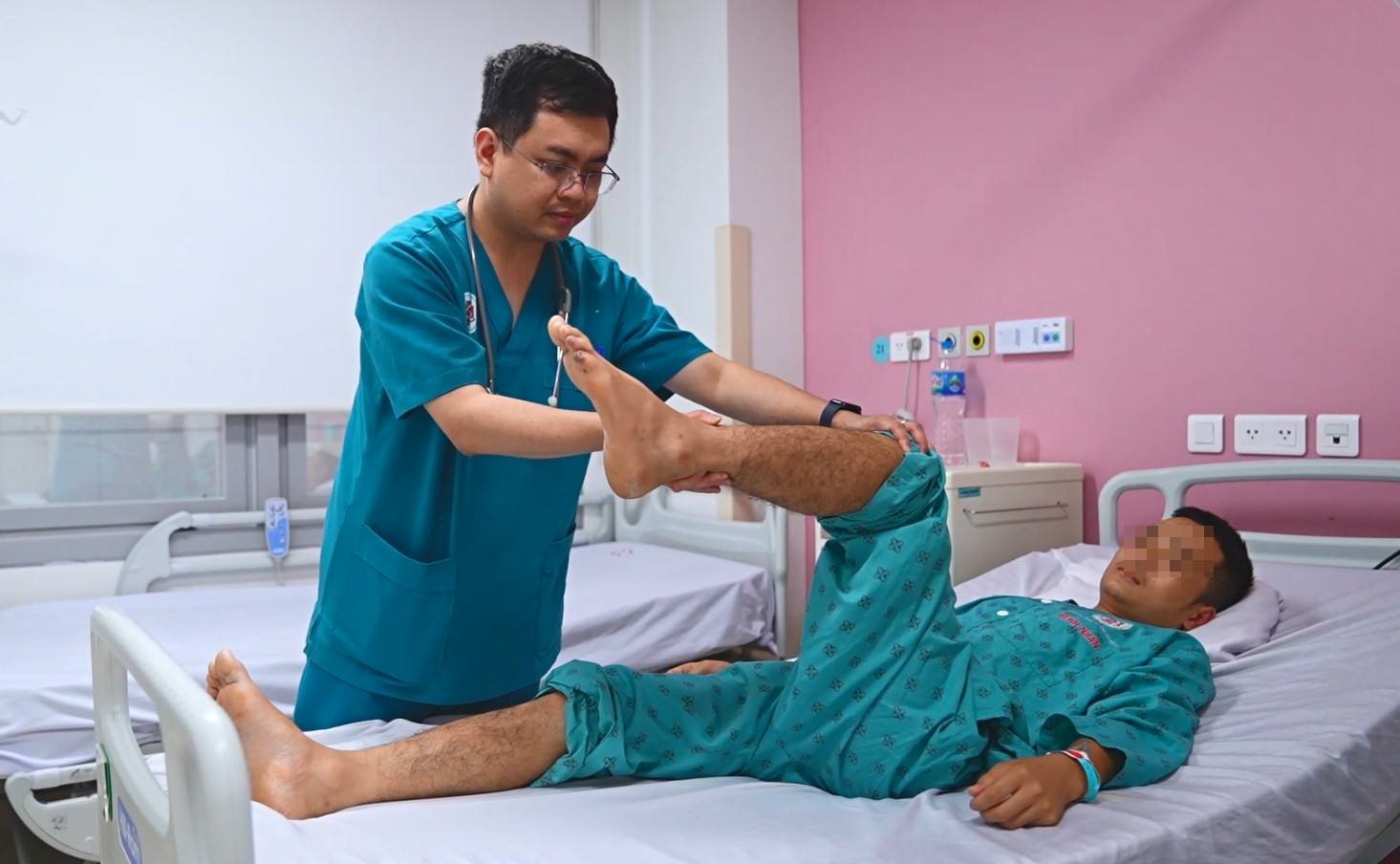
Suffering from myocarditis and transferred to Military Hospital 108 in critical condition, the 19-year-old border guard soldier was miraculously saved (photo from Military Hospital 108).
Previously, the patient had a high fever for two days, fatigue, and progressively worsening shortness of breath. They were admitted to the border guard station's infirmary for treatment with a diagnosis of acute viral infection. Their condition did not improve.
By the third day, the patient experienced severe chest pain, shortness of breath, and a tendency for blood pressure to drop to 90/40; at times, the patient had seizures.
An electrocardiogram performed at a local medical facility revealed a complex cardiac arrhythmia. The military medical corps of the Border Guard Command of Ha Giang province immediately contacted Dr. Dang Viet Duc, Head of the Cardiovascular Intensive Care Unit at Military Central Hospital 108, and received advice to urgently transfer the patient there because there was a possibility that the patient had acute myocarditis with complications of cardiogenic shock and a dangerous cardiac arrhythmia, with a very high mortality rate.
After receiving the call at 11 PM that same night, the entire cardiovascular resuscitation system was activated, reporting to the hospital's emergency response system. Doctors and nurses were mobilized to the unit immediately that night, preparing for ECMO intervention.
That night, the patient was transported by road to the Central Military Hospital 108 by his comrades, including soldiers and medical staff at the Xín Cái border guard infirmary (Mèo Vạc, Hà Giang).
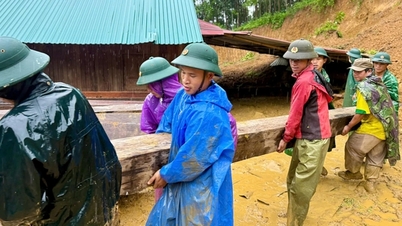
Despite hundreds of kilometers of landslides caused by weeks of heavy rain, three military medics took turns carrying their comrade through many kilometers of forest. That day, it was stormy, and there were many landslides... but with a critically ill comrade on our shoulders, we continued to cross mountains and forests to take T to the hospital for emergency treatment.
All fatigue and difficulties seemed to disappear, replaced by the camaraderie of fellow soldiers standing shoulder to shoulder, overcoming the line between life and death together.
Finally, at 5 a.m., we arrived at the entrance of the Emergency Department – Military Central Hospital 108, recalled N, one of the three comrades who carried the patient – a military medic from the border guard post.
Dr. Nguyen Thanh Huy, Department of Cardiovascular Intensive Care, Central Military Hospital 108 – the doctor directly treating the patient, said: “At 5:30 AM on August 28th, after reassessing the patient's condition and determining that this was a case of acute myocarditis with complications of complex ventricular arrhythmia, persistent ventricular tachycardia, beginning with hemodynamic instability, and at times pulseless.”
VA-ECMO was immediately initiated in the intervention room. At 6 hours, the patient underwent safe awake ECMO treatment using the world's most advanced Cardiohelp system at the time, after which vital signs gradually stabilized.
The patient's care and treatment over the next three days was relatively smooth thanks to the support of the ECMO machine. Because the patient remained fully conscious during ECMO, they were able to describe the symptoms of sudden leg pain, leading to the early detection of the acute thrombotic occlusion of the left popliteal artery;
The Department of Cardiovascular Diagnosis and Intervention has successfully performed the thrombectomy procedure.
"The patient's clinical condition improved day by day, the arrhythmias were controlled, blood pressure returned to normal, and the patient was weaned off ECMO after 3 days. He continued with rehabilitation exercises, practicing walking, and was ready to be discharged to return to his unit with his comrades," Dr. Huy continued.
"Thanks to the love and support of my comrades, from the Xin Cai border guard station to the Central Military Hospital 108, I feel like I've been 'reborn' again."
"I miss my comrades at the unit very much. After returning to the unit to continue my duties, if my health permits, I will strive my best to become a border guard officer, dedicating my whole life to the cause of protecting the country's borders," - the twenty-year-old border guard's face lit up with a bright, determined smile as he expressed his aspirations.
Compared to traditional ECMO, awake ECMO enhances the advantages of spontaneous breathing and alertness, reducing the rate of complications and mortality. According to a large, multi-center study recently published worldwide, the survival rate of patients on awake ECMO is significantly higher than on traditional ECMO, shared Dr. Dang Viet Duc, Head of the Cardiovascular Intensive Care Unit.
In the future, the awakened ECMO technique promises many prospects, delivering high efficiency and serving as a new driving force in line with modern medical trends.
Source


![[Photo] General Secretary and President To Lam meets with National Assembly delegates from ethnic minorities.](https://vphoto.vietnam.vn/thumb/1200x675/vietnam/resource/IMAGE/2026/04/20/1776696701056_a1-bnd-8331-3342-jpg.webp)

![[Image] National Assembly discusses the implementation of the socio-economic development plan.](https://vphoto.vietnam.vn/thumb/1200x675/vietnam/resource/IMAGE/2026/04/20/1776696707422_ndo_br_img-20260420-185419-jpg.webp)




































































Comment (0)