

Actively pursue digital transformation.
Over the past period, the provincial health sector has actively implemented many information technology applications in preventive health care, medical examination and treatment, and state management of health. Specifically, the VNPT -ioffice document management and operational system has been deployed from the Department of Health to all units within the sector.
Simultaneously, 100% of commune, ward, and town health stations are connected; 100% of medical examination and treatment facilities are using electronic chip-embedded citizen identity cards to replace health insurance cards; 100% of units have implemented bank-based payment of hospital fees; 100% of hospitals have deployed the Hospital Information System (HIS) software; and 100% of medical examination and treatment facilities in the province are connected, sharing, and integrating medical examination and treatment data and payment of medical expenses with the Social Insurance agency through the health insurance claims portal. An online meeting system has been established from the Department of Health to district-level units. All facilities are able to extract output data according to regulations.
Through smart applications, healthcare facilities have provided patients with comprehensive information about examination and treatment procedures and locations; administrative procedures and policies related to medical examination and treatment; simplified procedures and processes; publicly and transparently posted information for people to know and monitor; and established customer service departments to provide advice and guidance via telephone and website.
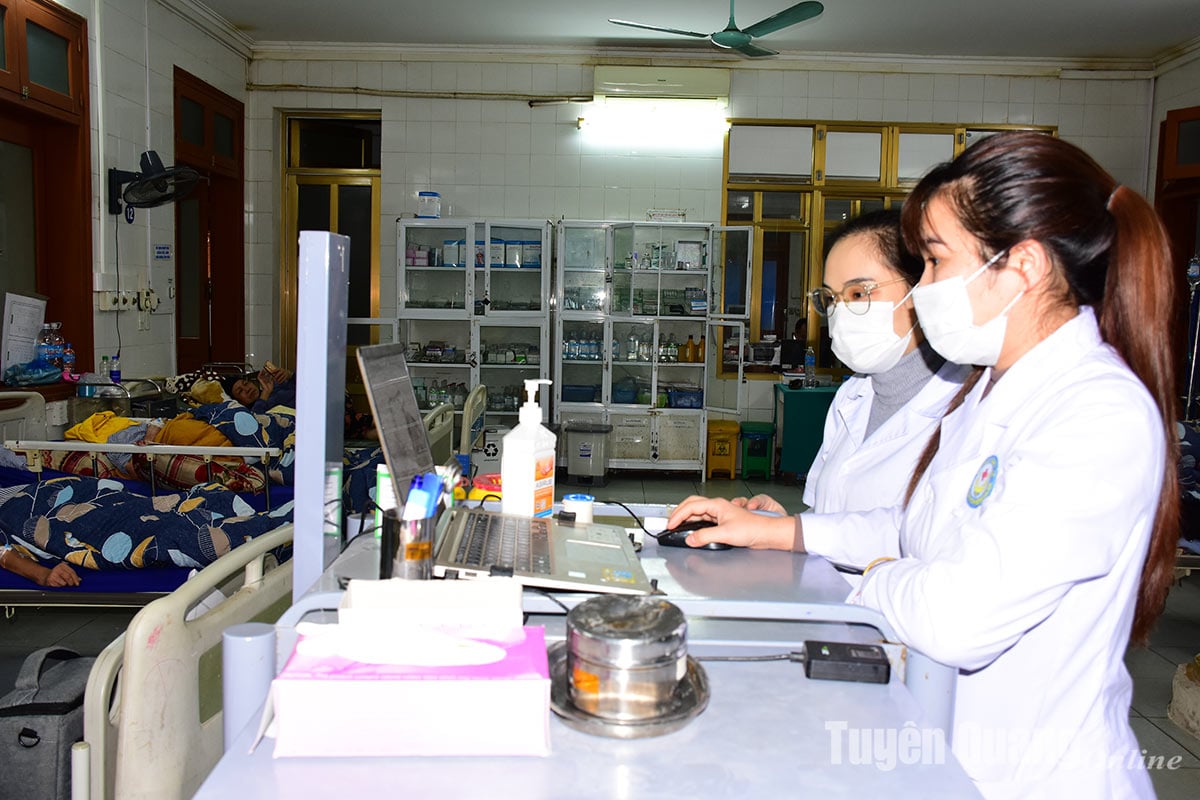
Nurses in the Intensive Care Unit at Chiêm Hóa District Health Center are using electronic medical records to administer medication to patients.
The Provincial General Hospital is currently one of the pioneering medical units in implementing digital transformation. Dr. Pham Thi Anh Tuyet, Head of the General Planning Department of the Provincial General Hospital, said: Regarding the application of IT in medical examination and treatment facilities, the hospital has 1 out of 8 groups reaching the advanced level and 5 out of 8 groups reaching the basic level.
Regarding the use of electronic health records on the VNeID application, currently 100% of hospital staff have installed the VNeID application with level 2 identification, and 20% have activated and are using it proficiently; 20% of outpatients have been informed about the benefits of using electronic health records and have been guided on how to install and use them on the VNeID application; 20% of inpatients have been informed about the benefits of using electronic health records and have been guided on how to install and use them on the VNeID application. In 2025, the unit strives to complete and put into use the Electronic Medical Record system.
Towards the development of smart healthcare.
Through the gradual acceleration of digital transformation and the implementation of electronic medical records in healthcare facilities, the health sector is also progressively building a smart healthcare system. This will enable state management agencies and healthcare units to access accurate and timely data; proactively predict and effectively prevent epidemics; coordinate out-of-hospital emergency services and address hospital overcrowding; inspect and supervise private medical practices; and improve the quality of medical examination and treatment. Digital transformation saves time and costs, reduces risks and complications during treatment, decreases administrative workload, allows healthcare staff more time for professional development, and builds an image of a civilized, modern hospital dedicated to patient care.
When a smart healthcare system is put into operation, people can easily access medical information; reduce administrative procedures, ensuring fairness in accessing medical services; avoid unnecessary medical risks such as misdiagnosis or treatment; use advanced, high-quality medical services more conveniently; and ensure transparency in payment for medical services.
The benefits of digital transformation in the healthcare sector are immense. Therefore, in the coming time, the healthcare sector will continue to promote the application and development of digital and smart technologies , contributing to building a modern, high-quality, equitable, transparent, and efficient healthcare system. This will help people easily access healthcare information to use highly effective healthcare services and receive lifelong health protection, care, and improvement.
In implementing Resolution No. 57-NQ/TW dated December 22, 2024, of the Politburo on breakthroughs in the development of science, technology, innovation, and national and health sector digital transformation, the health sector has so far advised on and finalized the Project "Digital Transformation and Smart Healthcare in the period 2025-2030 of the health sector of Tuyen Quang province"; advised on and finalized the draft Plan "Implementation of Electronic Medical Records at medical examination and treatment facilities with inpatient beds in Tuyen Quang province"; and continued to deploy digital healthcare platforms, including the electronic health record platform and the platform supporting remote medical consultation and treatment.
Along with that, the sector is implementing and perfecting electronic medical records and digital transformation at the following units: provincial-level hospitals, district-level general hospitals, and district/city health centers, following the roadmap for implementing Circular No. 46/2018/TT-BYT dated December 28, 2018, of the Ministry of Health regulating electronic medical records; meeting the criteria stipulated in Circular 54/2017/TT-BYT dated December 29, 2017, of the Ministry of Health promulgating the set of criteria for applying information technology in medical examination and treatment facilities.
With smart healthcare, medical facilities can enhance consultations with experts; connect with higher-level hospitals; and support people right from the hospital entrance, reducing unnecessary waiting times. Through electronic health records, management agencies can detect and prevent diseases effectively in the community early. Treatment facilities can provide convenient and efficient care and treatment thanks to data from previous medical examinations and treatments integrated into the electronic records.
Source: https://baotuyenquang.com.vn/huong-toi-y-te-thong-minh-209858.html


![[Photo] Prime Minister Pham Minh Chinh presides over a meeting on private sector economic development.](/_next/image?url=https%3A%2F%2Fvphoto.vietnam.vn%2Fthumb%2F1200x675%2Fvietnam%2Fresource%2FIMAGE%2F2025%2F12%2F20%2F1766237501876_thiet-ke-chua-co-ten-40-png.webp&w=3840&q=75)


























































































Comment (0)