

- Ca Mau aims to become a "green energy capital" - Final part: The key to Net Zero
- By 2050: 100% of road motor vehicles will switch to using electricity and green energy.
- Ca Mau is strong in green energy.
Location advantages and marine resources
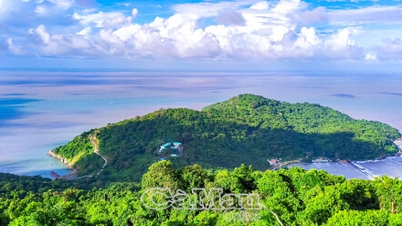
Located at the southernmost tip of Vietnam , Ca Mau not only possesses a unique geography but also advantages that few other localities have. With three sides bordered by the sea, a coastline of approximately 310 km, and a sea area of over 120,000 km², the province has favorable conditions for developing a large-scale marine economy .
The diverse ecosystem, encompassing saltwater, freshwater, and brackish water, is a valuable "natural asset," creating a unique competitive advantage for Ca Mau in attracting investment. Beyond aquaculture, this ecosystem also opens up opportunities for the development of ecotourism , environmental services, and green economic sectors.
The vast fishing grounds and abundant seafood reserves help Ca Mau maintain its position as one of the leading centers for seafood production, processing, and export in the country. This is also an important foundation for attracting investors in the fields of deep processing, cold logistics, and global supply chains.
In particular, its coastal advantages create favorable conditions for the province to develop new industries linked to the marine economy, such as offshore renewable energy, fisheries logistics services, and maritime transport. These factors are gradually making Ca Mau an important link in the region's marine economic value chain.
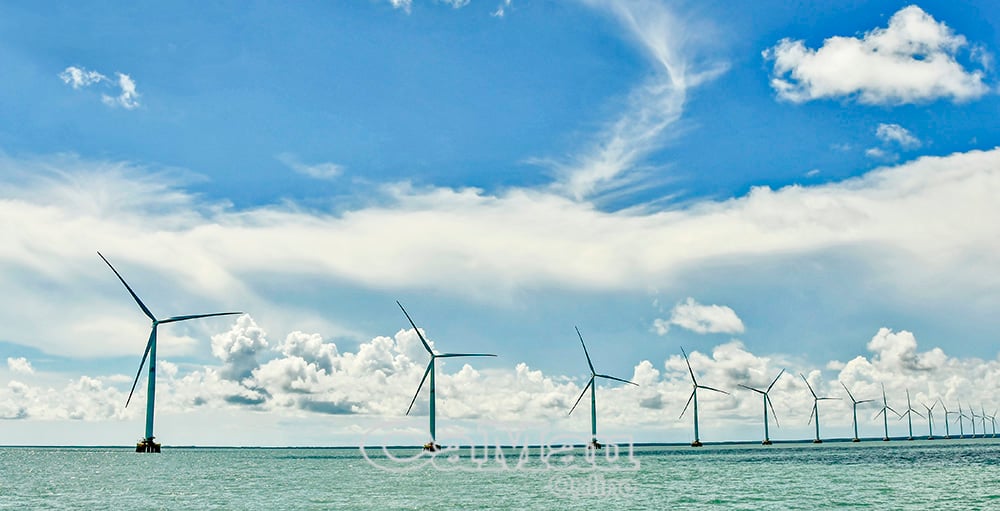 The turbine tower system of the Vien An Wind Power Plant (Phan Ngoc Hien Commune) is operating commercially, creating a new image for the energy industry and promoting the marine economy and tourism.
Green Energy Breakthrough
Amidst the global energy transition, Ca Mau is emerging as a "bright spot" thanks to its outstanding potential for renewable energy development. According to studies, the average wind speed offshore of the province reaches 6.3-7 m/second at an altitude of 80-100 m and gradually increases further from the shore, allowing the province to exploit wind power with an estimated technical capacity of over 16,000 MW.
Furthermore, with an average of 2,200-2,700 hours of sunshine per year and high solar radiation, the locality has favorable conditions for developing large-scale solar power. Notably, over 454,000 hectares of aquaculture land can be used to implement floating solar power models or solar power integrated with production, creating double value without changing land use.
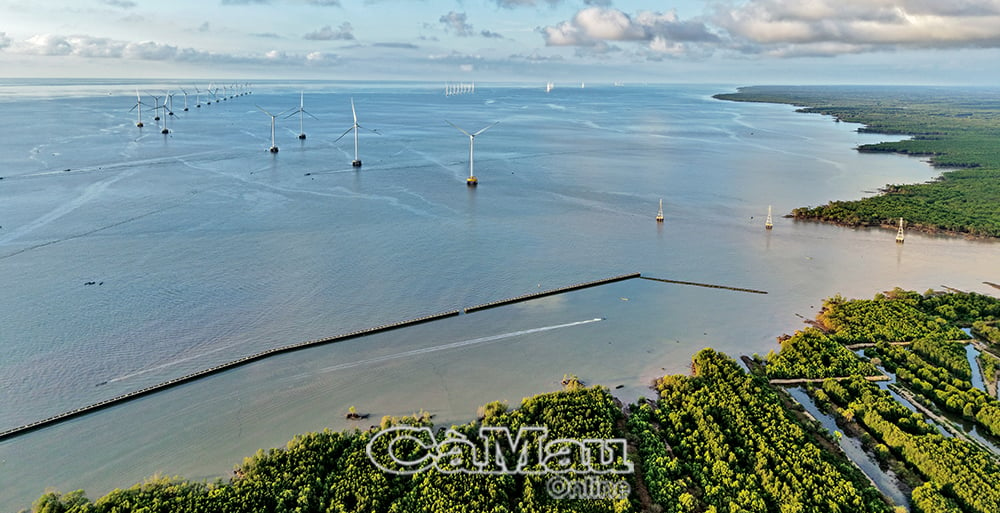 The Tan Thuan Wind Power Plant (Tan Thuan commune), viewed from the Ganh Hao estuary, symbolizes the development of the energy industry linked to the marine economy. Photo: TRAN NGUYEN
Beyond its potential, Ca Mau has established a foundation for an energy industry with a gas-electricity-fertilizer complex, including a 1,500 MW thermal power plant and a fertilizer plant with a capacity of over 1 million tons per year. Simultaneously, 16 wind power plants are in operation with a total capacity of nearly 900 MW, making a significant contribution to the national energy supply.
According to Mr. Huynh Cong Quan, the province has also planned 34 wind power projects with a total capacity of over 2,300 MW, along with the development orientation of LNG power and new forms of energy such as green hydrogen and green ammonia. This is the basis for Ca Mau to gradually become a renewable energy center of the country, attracting large corporations in the industrial and energy sectors.
Improve infrastructure and enhance the investment environment.
One of the key factors enhancing Ca Mau's investment attractiveness is its increasingly完善 infrastructure system. In recent years, the province has focused resources on investing in key transportation projects, creating synchronized connectivity within and outside the region.
Expressways such as the Can Tho - Ca Mau route, the Ca Mau - Dat Mui route, the southern coastal route, and the national highway system are gradually forming a modern transportation network. In particular, Ca Mau Airport is being upgraded, contributing to shortening the distance connecting Ca Mau with major economic centers. A notable highlight is the project for the approximately 18 km long road to Hon Khoai Island, along with the Hon Khoai dual-use general port capable of receiving large cargo ships. Upon completion, it will be an important international trade gateway, helping goods from the Mekong Delta region directly access the global market.
Infrastructure systems not only serve the development of the maritime economy but also expand opportunities to attract investment in industrial, commercial, service, and tourism sectors. Convenient connectivity helps reduce logistics costs and enhance the competitiveness of businesses.
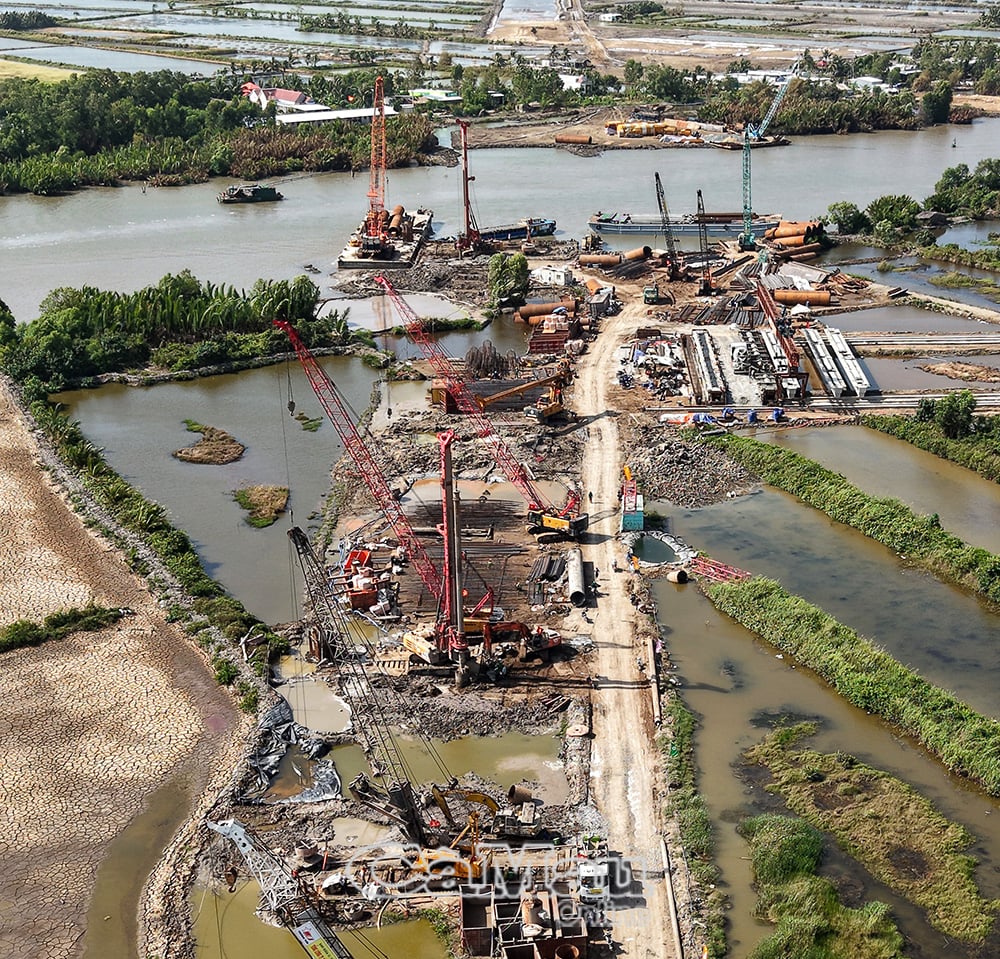 The Ca Mau - Cai Nuoc section of the expressway project.
Alongside infrastructure development, Ca Mau province places special emphasis on improving the investment environment, considering it a key factor in attracting and retaining investors. According to Mr. Huynh Cong Quan, the province is implementing a comprehensive set of solutions to simplify administrative procedures and shorten the processing time for procedures related to investment, construction, land, and the environment. The processes are made public and transparent, making it easier for businesses to access and implement projects.
Furthermore, Ca Mau has proactively prepared clean land funds and invested in synchronous technical infrastructure such as electricity, water, and telecommunications to meet the needs of investors. At the same time, many free support programs for business registration and investment project preparation have been implemented, contributing to reducing initial costs.
A notable feature is the use of local budgets to support businesses through capital allocation via the Social Policy Bank. This policy helps small businesses, cooperatives, and household businesses access preferential capital, thereby forming a supporting business ecosystem for larger projects.
In addition, the province flexibly applies investment incentive policies as stipulated by the Central Government, especially the policy of exempting land rent for projects in priority sectors. Socialized projects enjoy the preferential exemption of land rent for the entire lease period, creating a significant competitive advantage for the locality.
With outstanding advantages in resources, geographical location, infrastructure, and policies, along with the support of the local government, Ca Mau is gradually asserting its position as a strategic destination for green investors. The upcoming investment promotion conference is expected to open up new cooperation opportunities, attract high-quality capital flows, and drive Ca Mau's rapid and sustainable development, making it an important growth hub of the Mekong Delta region in the coming years.
Hong Phuong
Source: https://baocamau.vn/diem-den-cua-nha-dau-tu-xanh-a128838.html














































































Comment (0)