Today, the application of Internet of Things (IoT) technology to agricultural production is an inevitable trend.
Bộ Nông nghiệp và Môi trường•13/05/2026
In Hanoi, many smart farming and livestock models have proven effective in helping farmers optimize costs, increase productivity, and gradually form a transparent supply chain from farm to table. The city also aims to build a modern digital agriculture , applying big data, artificial intelligence (AI), and automation throughout the entire production value chain.
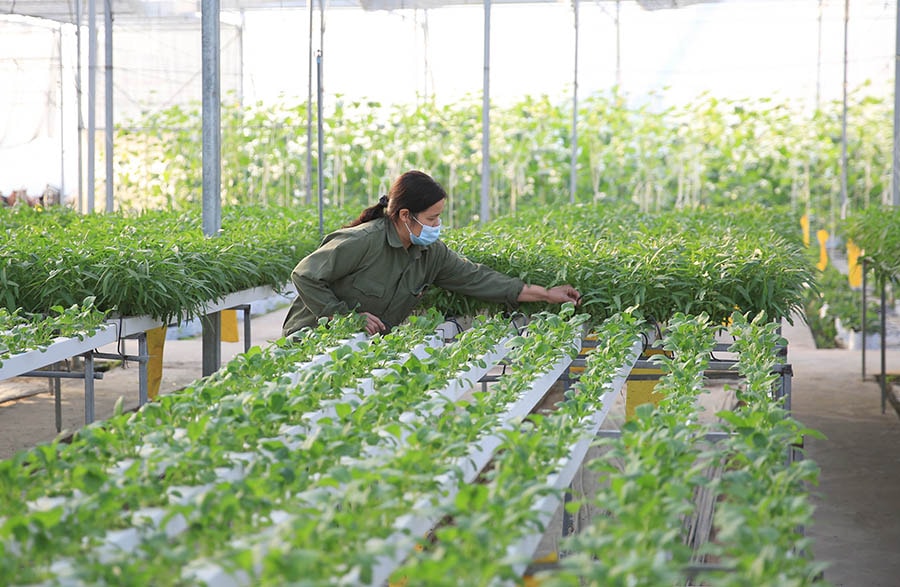
Caring for vegetables grown using hydroponics at Duc Phat High-Tech Agricultural Cooperative (Thanh Tri commune). Photo: Quang Thai
Changing agricultural production methods
Faced with market competition and increasingly demanding consumer requirements, Hanoi's agricultural sector is accelerating digital transformation, integrating high technology into production to improve economic efficiency and agricultural product quality. Among these, the Internet of Things (IoT) is considered a key solution to shift from traditional production methods to a smart, modern, and sustainable agricultural model.
In Thu Lam commune, the high-tech livestock farming model of Ngoc Mung Poultry Breeding Joint Stock Company is a prime example. According to Hoang Manh Ngoc, Director of Ngoc Mung Poultry Breeding Joint Stock Company, the entire farming and farm operation process is managed through an IoT system. From controlling the temperature of the breeding pens and incubation stations, to the feed and water systems, and monitoring environmental humidity, everything is automated and monitored directly on a smartphone.
Automating production processes also helps businesses significantly reduce labor and operating costs. “The company has an incubation facility of approximately 2,000 square meters, along with a 15,000 square meter breeding farm with about 35,000 parent chickens, combined with 7 satellite farms with a scale of about 20,000 parent chickens. Thanks to efficient operation using high technology, the farm's revenue reaches tens of billions of VND per year,” Mr. Hoang Manh Ngoc added.
Beyond livestock farming, IoT is also creating a strong transformation in vegetable production and urban agriculture. Nguyen Manh Hong, Director of Duc Phat High-Tech Agricultural Cooperative (Thanh Tri commune), shared that the cooperative has implemented a system of temperature-sensing sunshade nets, air convection fans, automatic pumping systems, and a recirculating nutrient supply and recovery system. As a result, many previously difficult-to-cultivate off-season vegetables can now thrive even in the summer, such as mustard greens, Chinese cabbage, and other high-quality leafy vegetables. Greenhouse and greenhouse vegetable farming models help plants grow faster, reduce pests and diseases, increase productivity, control quality, and yield profits approximately 10 times higher than traditional rice cultivation.
According to data from the Hanoi Department of Agriculture and Environment, there are currently 406 high-tech agricultural models in the city (including 262 crop farming models, 119 livestock farming models, and 25 aquaculture models). While not large-scale, these high-tech agricultural production models in the city have initially shown considerable economic efficiency, are well-suited to Hanoi's reality, and have affirmed their role in promoting agricultural production and achieving socio-economic benefits.
Building a synchronized digital agricultural ecosystem.
Beyond applying technology to individual models, Hanoi aims to build a synchronized digital agricultural ecosystem, using Big Data and IoT as the foundation for developing smart agriculture throughout the entire value chain.
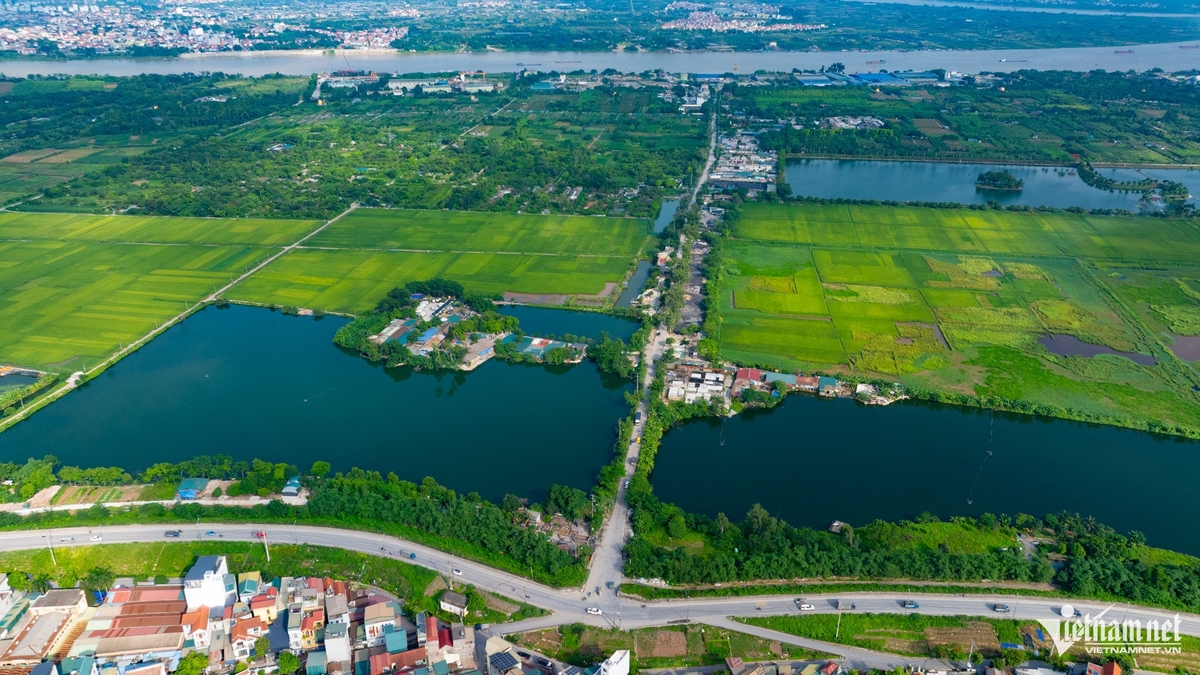
The Hanoi People's Committee has just issued a plan for applying IoT in smart agriculture in the city. Accordingly, by 2030, Hanoi aims to have 50% of concentrated commodity production areas applying IoT at a basic level; and at the same time, 80% of agricultural monitoring, forecasting, and warning activities will be carried out based on big data and IoT in real time...
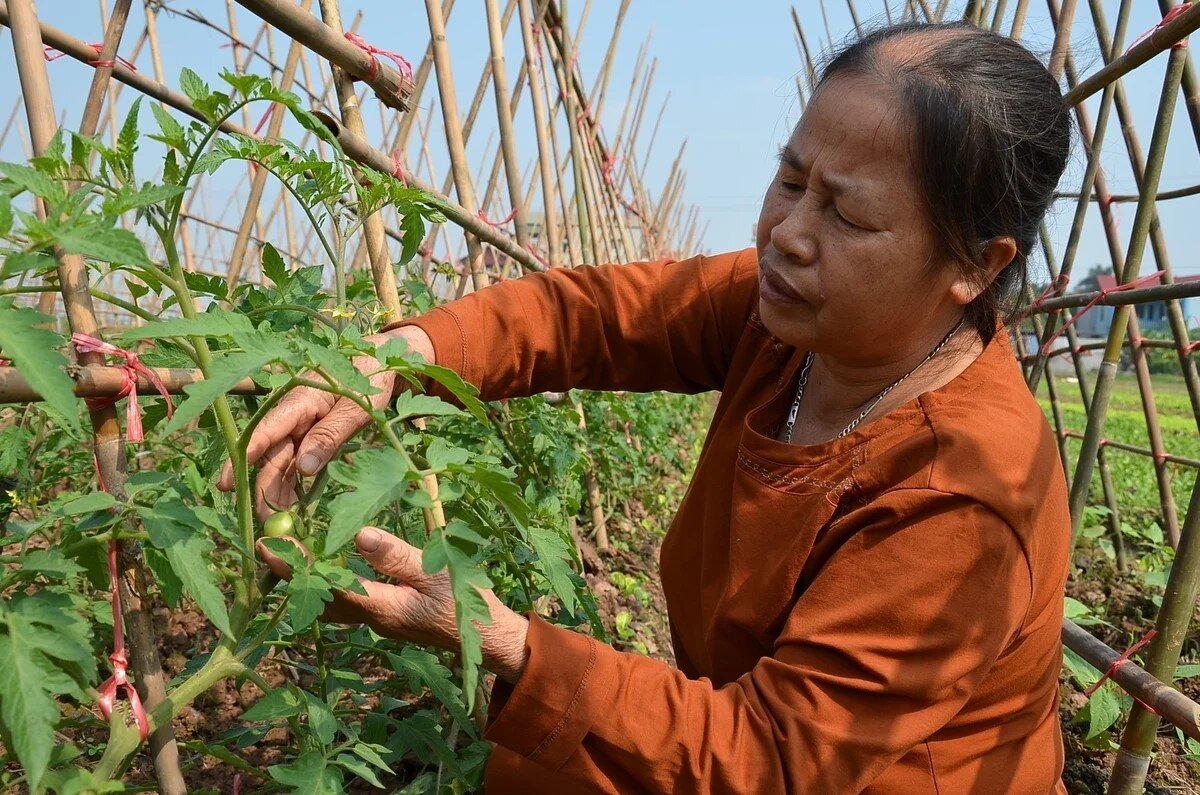
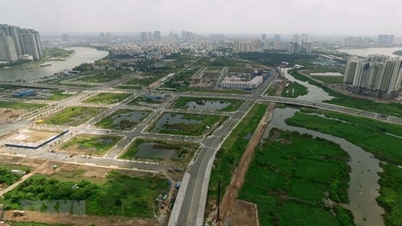
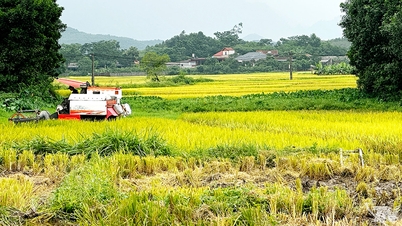
Illustrative photo/Dinh Thanh Huyen.
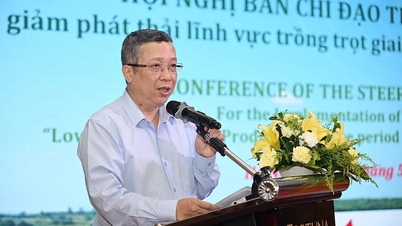
To realize this goal, Deputy Director of the Hanoi Department of Agriculture and Environment, Ta Van Tuong, said that Hanoi is building a digital agricultural data platform, integrating data from IoT sensor systems such as: soil moisture, nutrients, water environment, agricultural meteorology; connecting surveillance cameras, GPS devices (Global Positioning System) and digital maps of production areas, identification codes of production areas, livestock facilities and IoT devices; providing open APIs (Application Programming Interfaces) and a controlled data sharing mechanism to promote technology companies, research institutes and universities to develop value-added services such as pest and disease forecasting, irrigation optimization or crop yield analysis.
According to Deputy Director of the Digital Transformation Department (Ministry of Agriculture and Environment) Dang Duy Hien, smart agriculture needs to be implemented across the entire value chain, from seed selection, production, harvesting to distribution and consumption. Therefore, the application of IoT, Big Data, and Blockchain technology will help improve management efficiency, optimize resources, reduce production costs, and increase the traceability of agricultural products. The development of the IoT ecosystem in agriculture is expected to create a breakthrough in the digital transformation of Hanoi's agricultural sector.











































































Comment (0)