

Mr. Hoa's beef noodle soup stall in a small alley (Dong Da District, Hanoi ) attracts customers not only with the delicious taste of the food but also with the owner's unique "fire dance" performance.
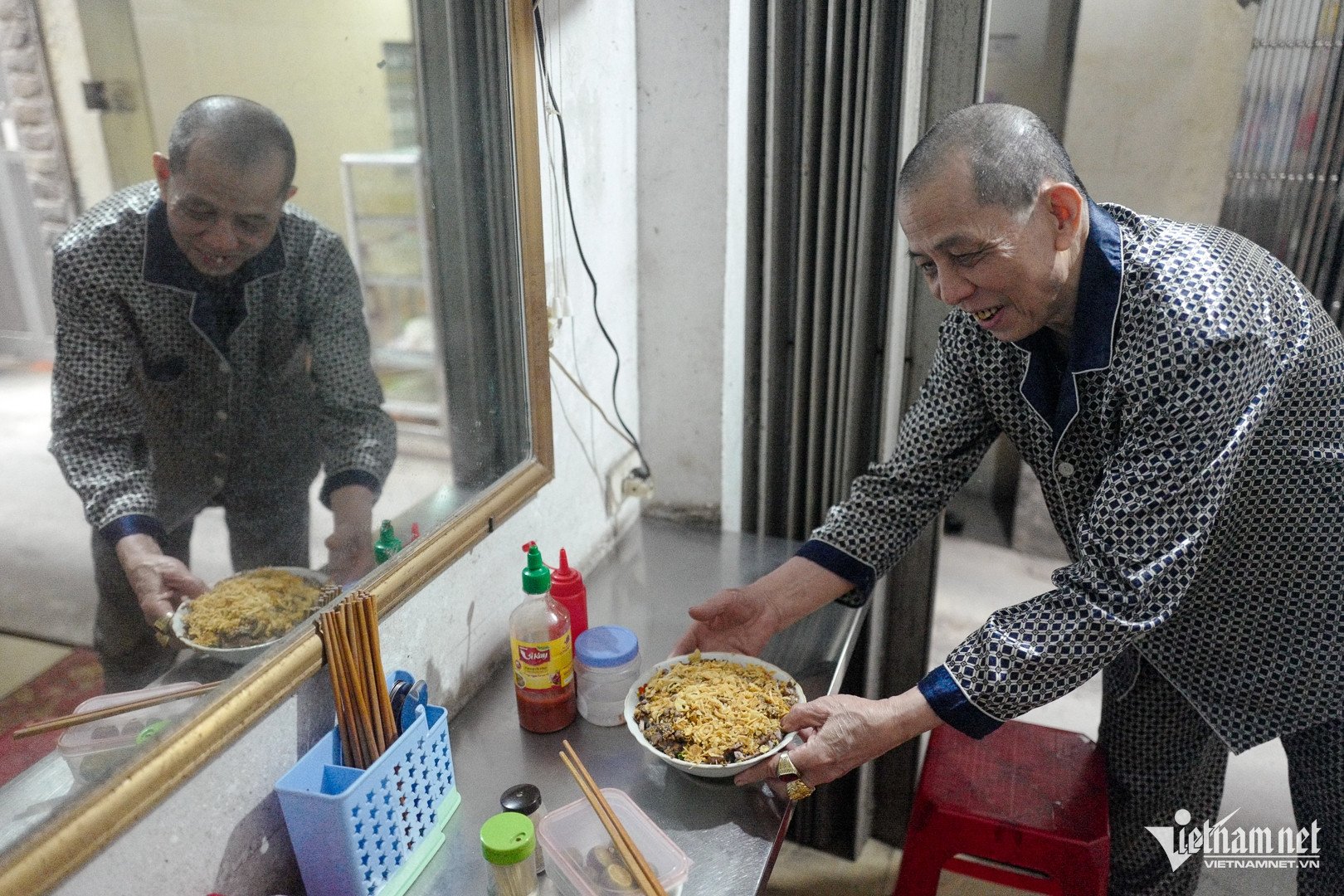
Mr. Ha Dinh Hoa's (nearly 70 years old) beef noodle soup shop is located in an alley in Khuong Thuong (Dong Da district, Hanoi). The shop is small, with an old sign, just a cupboard for ingredients, a mini gas stove, and a few sets of tables and chairs.
The alley leading to the shop is about 1.5 meters wide; motorbikes have to maneuver skillfully to pass each other or make U-turns.
However, the restaurant has been a familiar spot for many diners living around the area for 22 years, even attracting many people from far away to witness the owner's skillful fire-dancing performance.
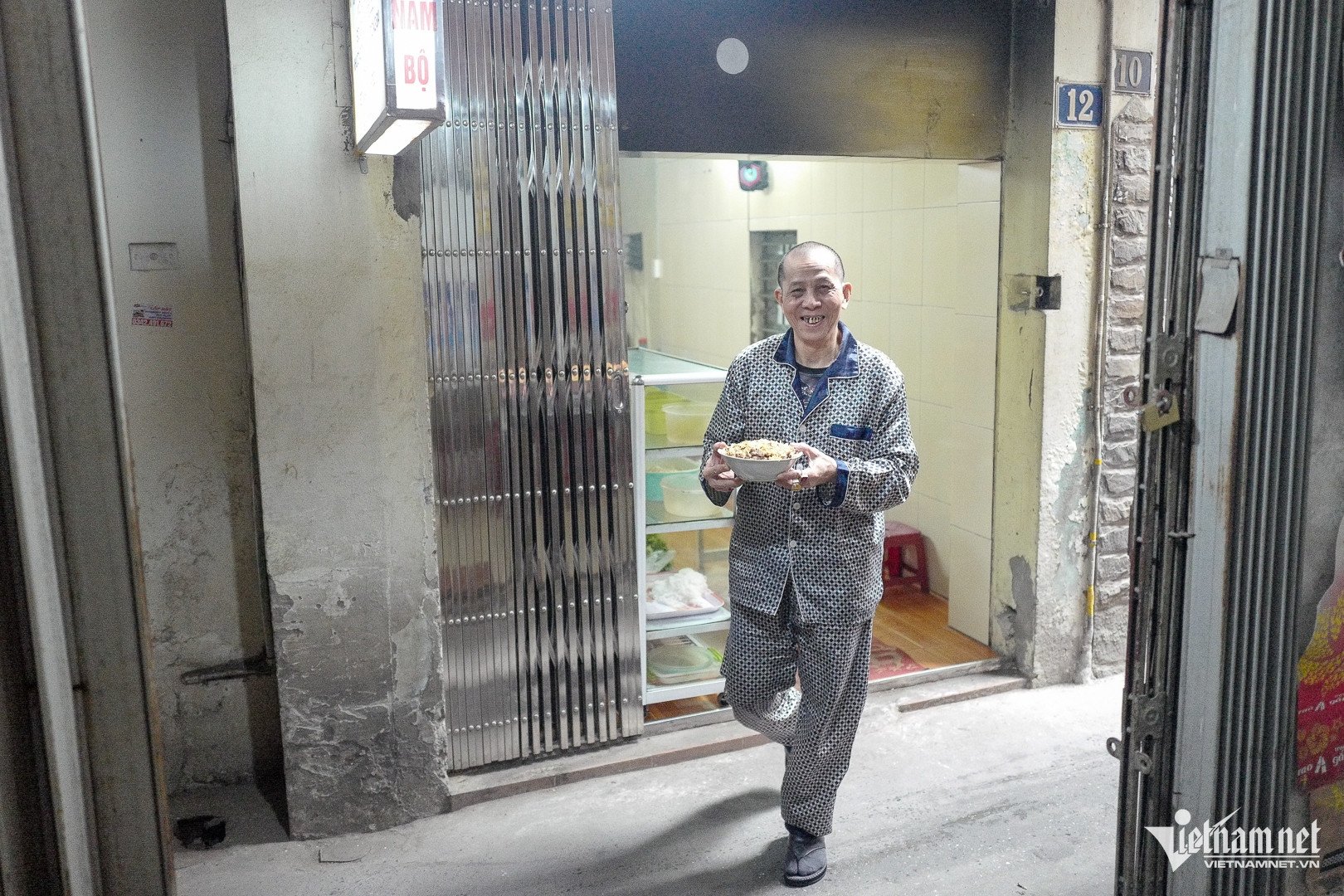
Mr. Hoa's eatery only sells one dish: beef noodle soup. Mr. Hoa said that he used to be a soldier and later worked in Ho Chi Minh City.
Here, he met a teacher who treated him like a foster son. The teacher taught him the recipe for Southern Vietnamese beef noodle soup. In the South, this dish is also known by other names such as mixed noodles, stir-fried pork noodles, etc.
Later, because his elderly parents were still living in the North, Mr. Hoa returned to Hanoi. He started a business selling beef noodle soup, and together with his wife, raised their two sons and supported their education.
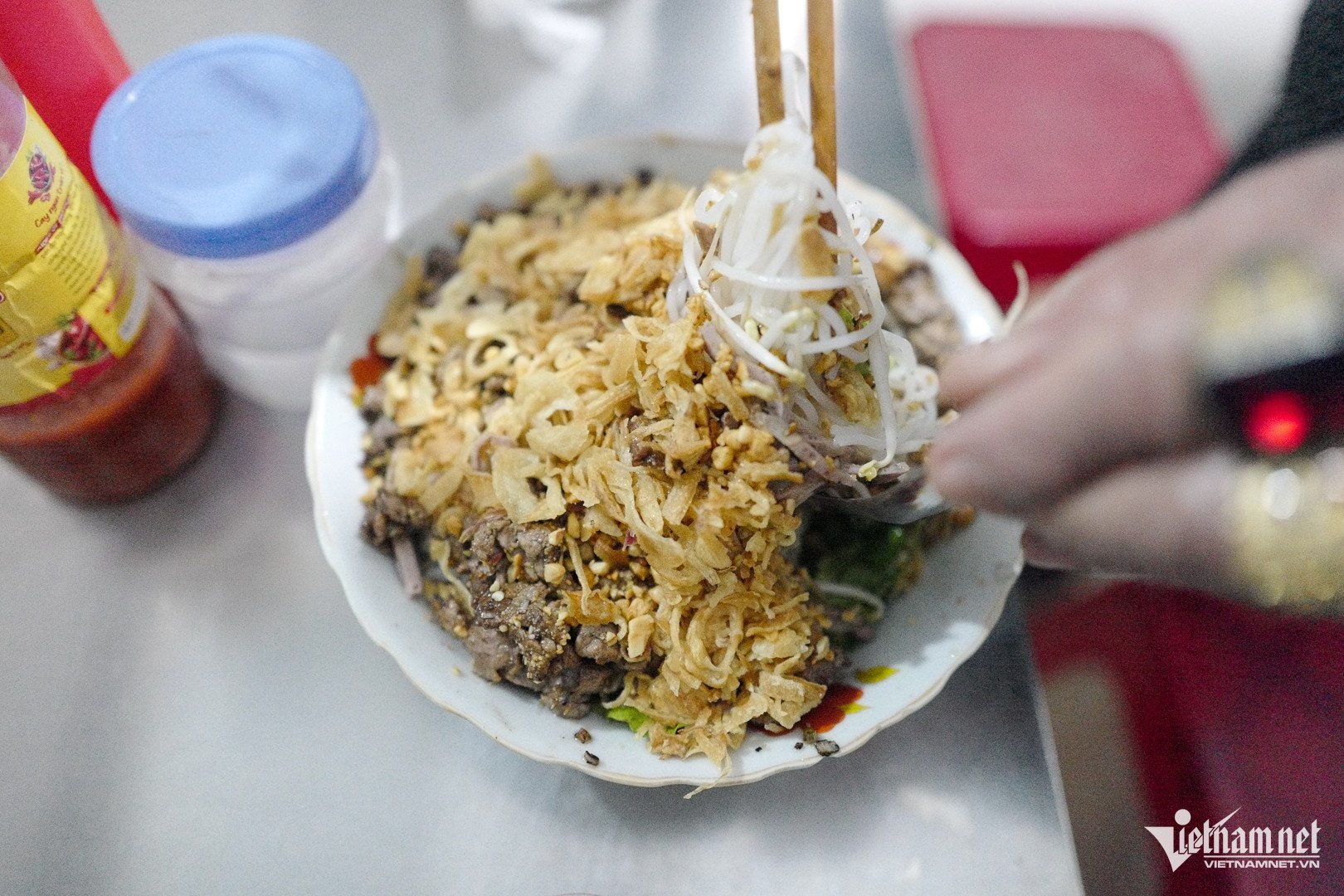
The beef noodle soup at this restaurant consists of 8 ingredients: rice noodles, lettuce, bean sprouts, shredded beef sausage, roasted peanuts, fried onions, stir-fried beef, and sauce.
In that regard, Mr. Hoa said that whether a dish is delicious or not depends on how you stir-fry the beef and make the sauce. "Previously, it took me more than three months to learn how to stir-fry beef; I had to practice repeatedly before my teacher was satisfied," Mr. Hoa said.
Every day, the couple imports beef tenderloin from a supplier that specializes in providing to supermarkets. The fresh beef, already sliced, is marinated with lemongrass upon arrival and then stored in the refrigerator.
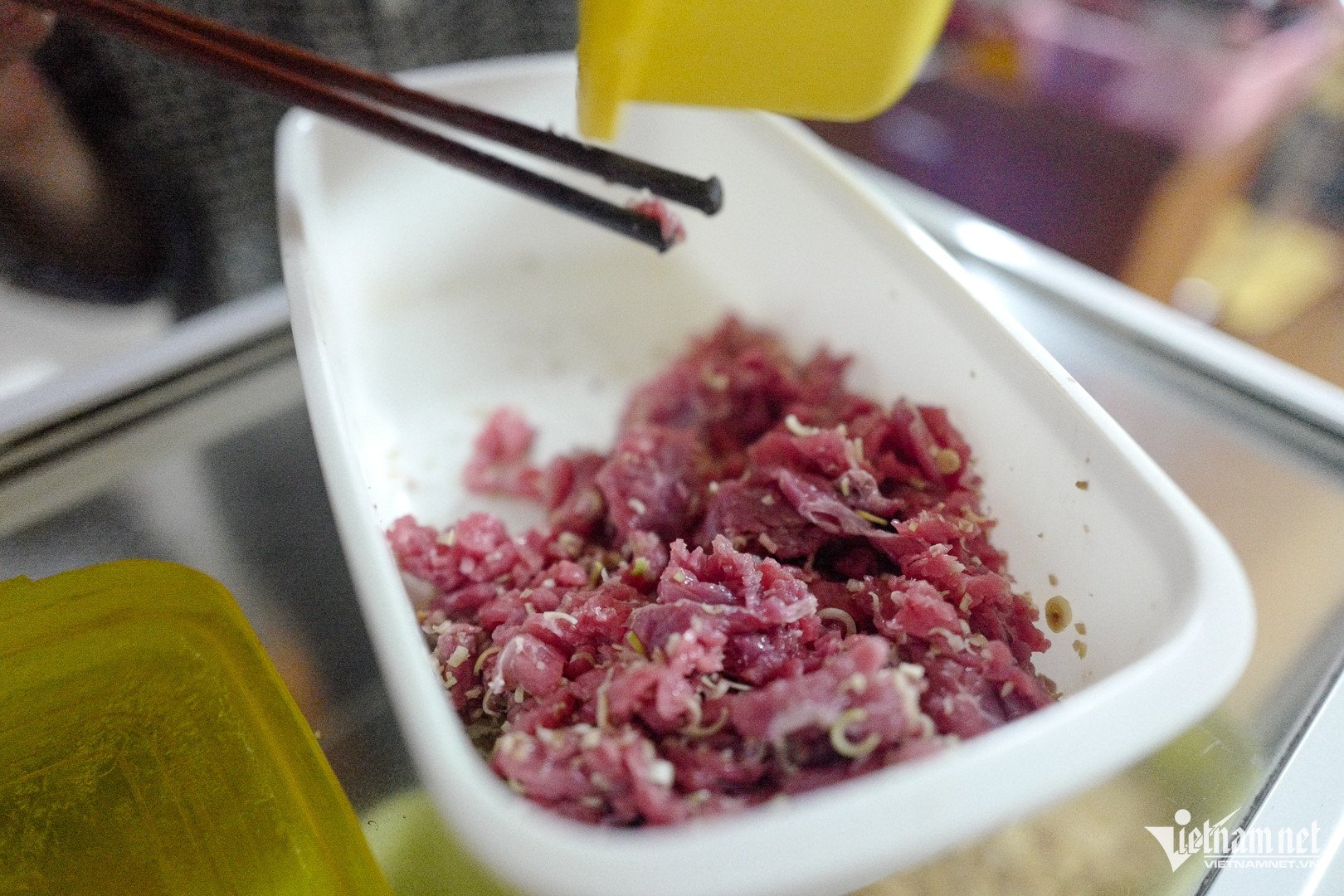
When customers order, Mr. Hoa lights the fire and stir-fries the beef. "I stir-fry it as needed to serve it, so the beef stays hot, tender, sweet, and not dry or tough," Mr. Hoa said.
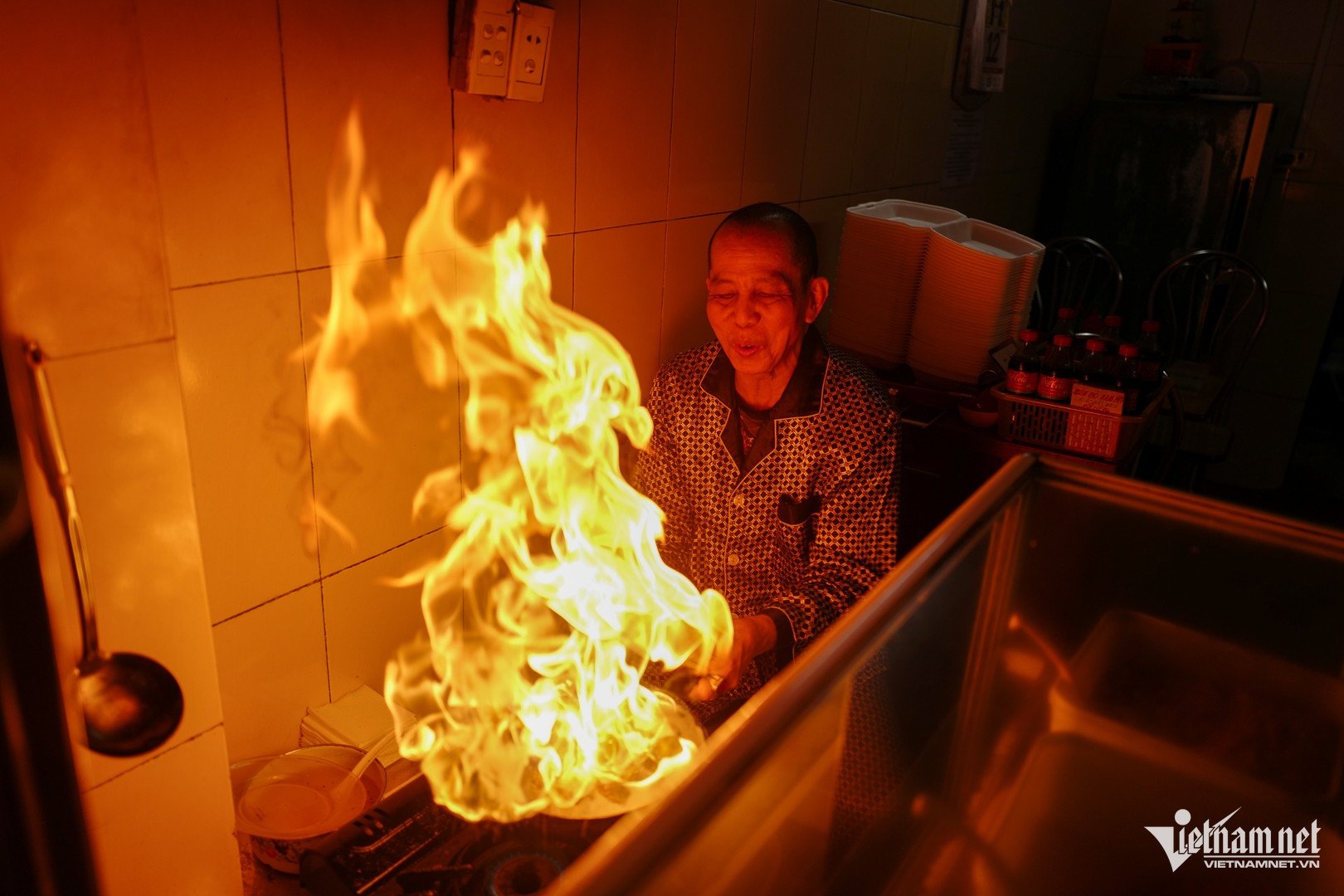
This is also when he performs his "fire dancing" skills for the diners to watch, adding to the appeal of the dish.
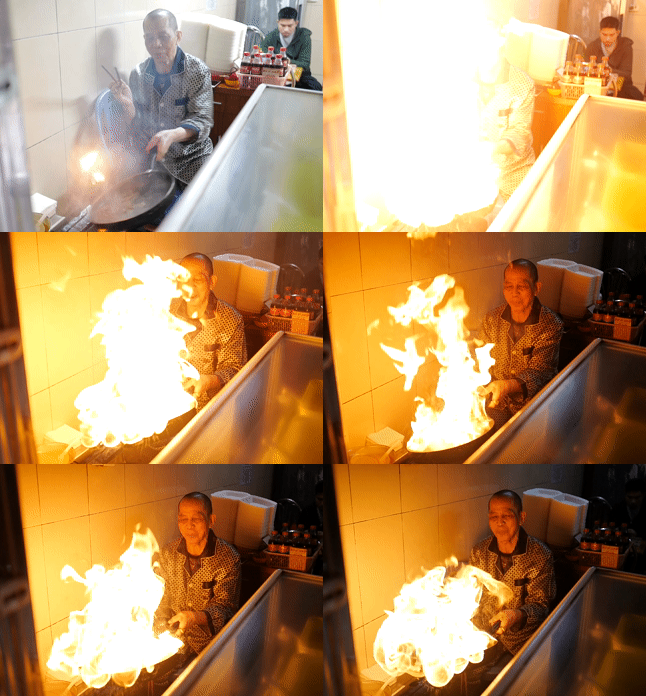
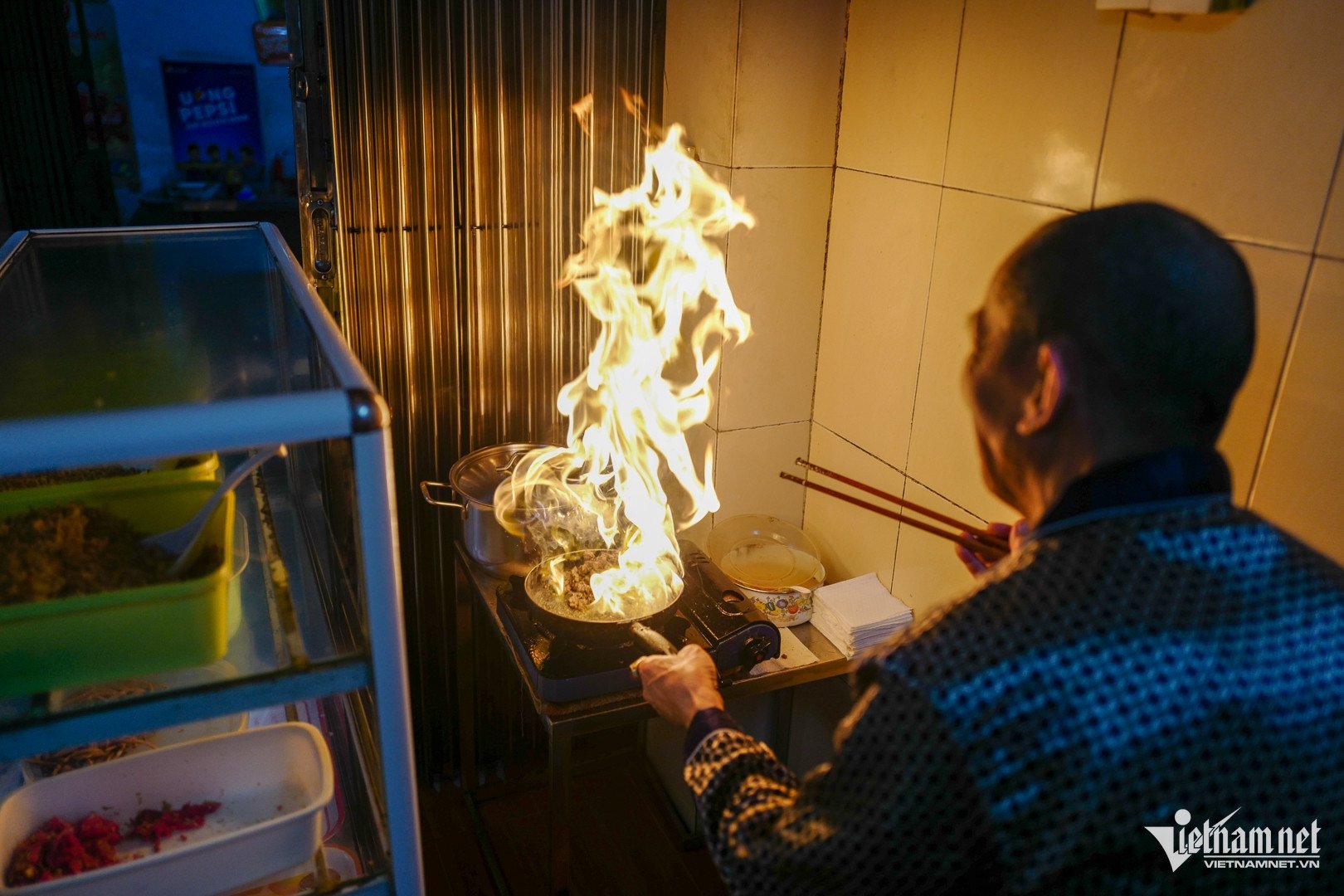
The demonstration area is located right at the entrance of the restaurant. Mr. Hoa's "props" are a mini gas stove and a small pan. When the oil in the pan is hot, he quickly adds the beef, garlic, and pepper, stirring gently with chopsticks.
Then, the owner lightly shook his wrist holding the pan handle, and the flames flared up high above his head, engulfing the pan. The beef slices sizzled in the oil, filling the kitchen with a fragrant aroma and creating a visually stunning effect of blazing fire.
"When shaking the pan, make sure the meat rotates in the correct trajectory and doesn't splatter. The flame should curl from the bottom up to concentrate on cooking the meat, not flare up too high and spread outwards."
"I use a mini gas stove because it's safer than an industrial gas stove and the temperature is just right for the dish. Without skill, chefs can easily get burned," Mr. Hoa said.
 |  |
Before stir-frying the beef, Mr. Hoa arranged chopped lettuce in a bowl, spread the rice noodles evenly, added bean sprouts and shredded beef sausage. After about 3 minutes of stir-frying, the hot beef was poured into the bowl, topped with crushed roasted peanuts, golden fried onions, and then the sauce was poured over it.
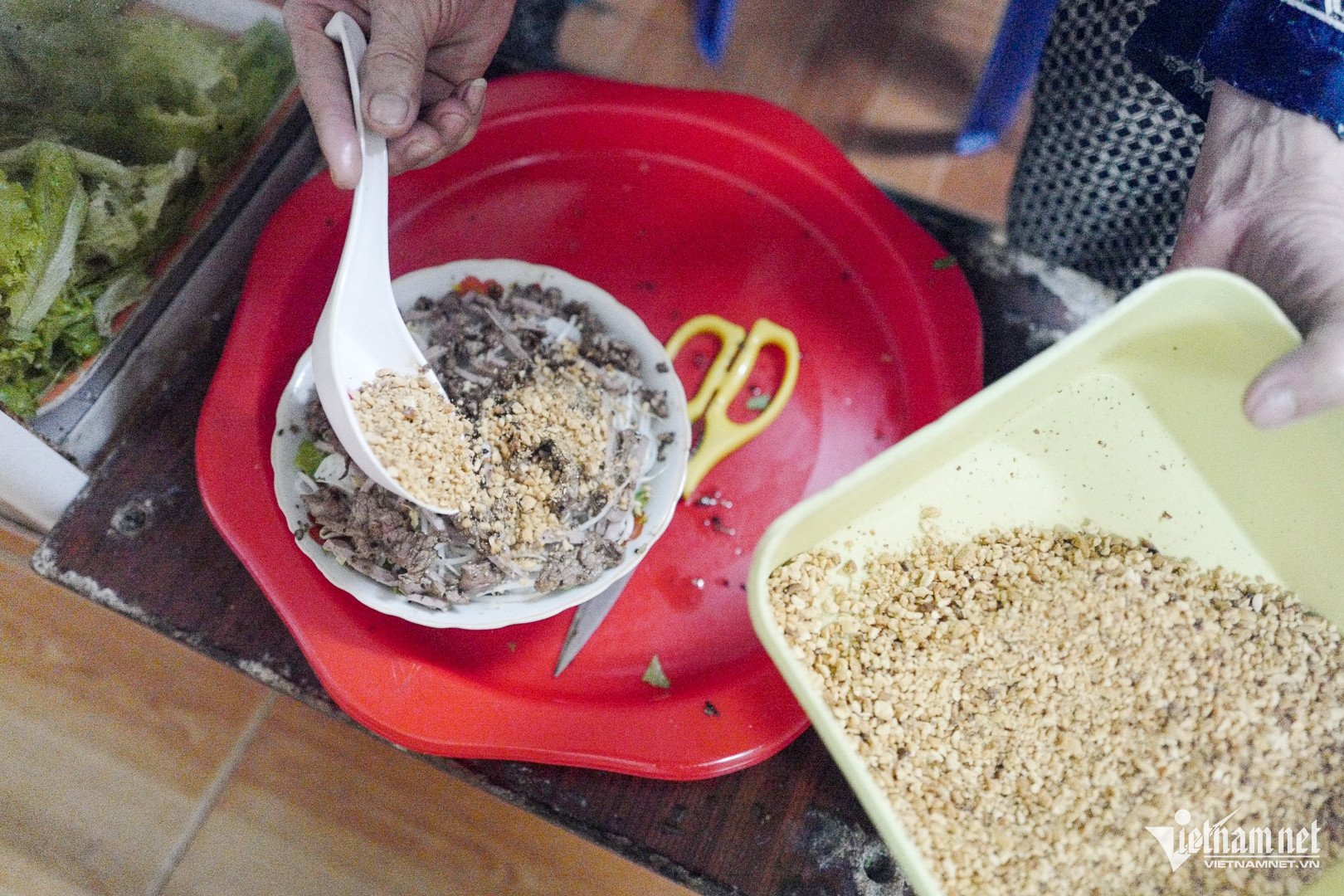
The key to the flavor of this mixed beef noodle dish is the sauce. The sauce is made from familiar ingredients such as fish sauce, vinegar, sugar, and cooled boiled water.
However, Mr. Hoa has his own recipe, in which the fish sauce must be the purest fish sauce from Phan Thiet, with the right level of saltiness but not a strong smell.
"Many people in the restaurant and service industry have approached me offering to buy the sauce recipe, but I haven't sold it. This is what my teacher told me long ago. No matter how much they offer, I will refuse; I will only pass it on to my children and grandchildren," Mr. Hoa said.
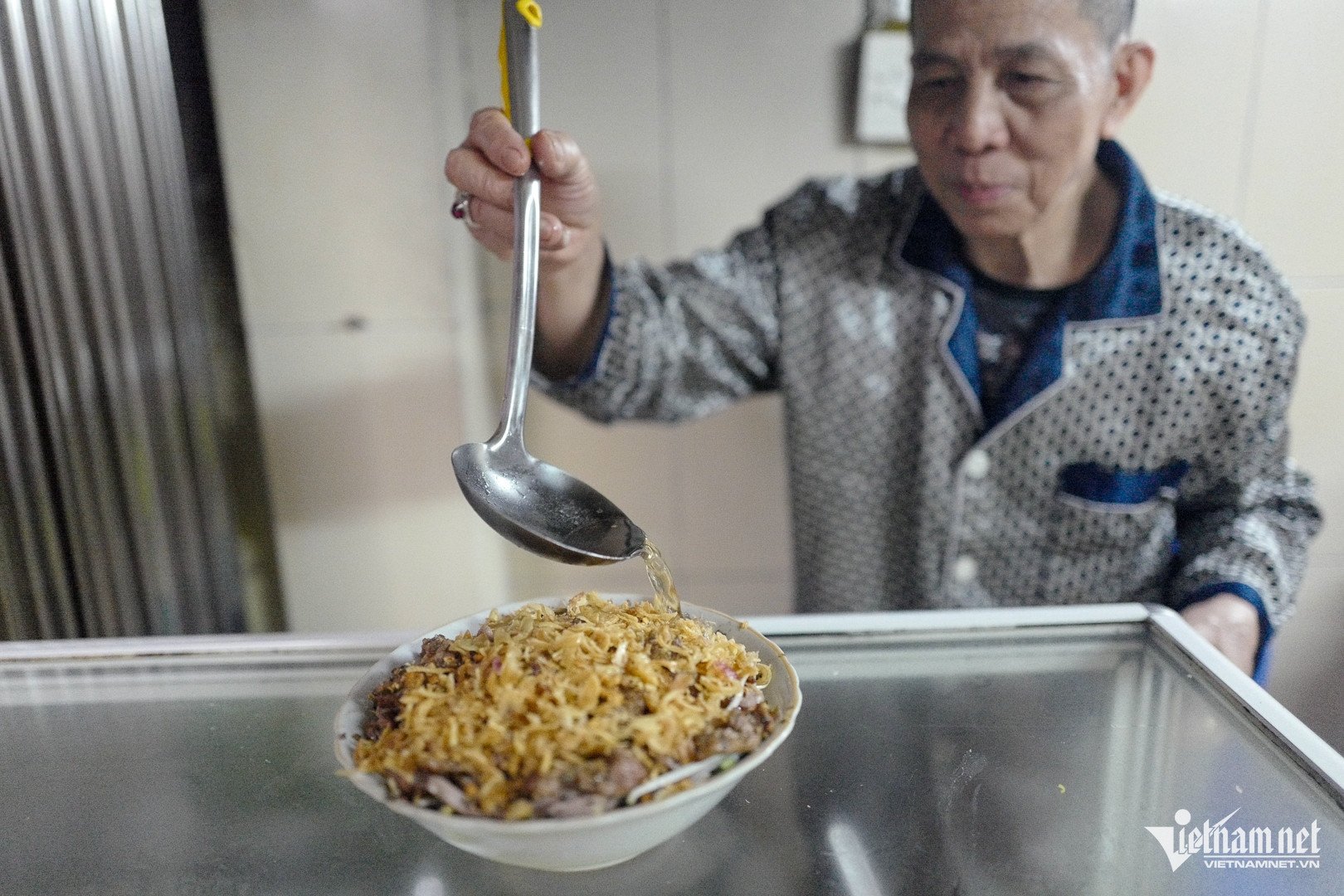
When eating, diners use chopsticks to mix everything together so that the sauce blends with the ingredients, creating a tangy, sweet, and savory flavor.
Mr. To Van Kien has been a regular customer of the restaurant for over 10 years. He says the food suits his taste, the prices are reasonable, and the owner is friendly. Therefore, despite the restaurant being small, cramped, and somewhat inconveniently located in an alley, he still visits regularly.
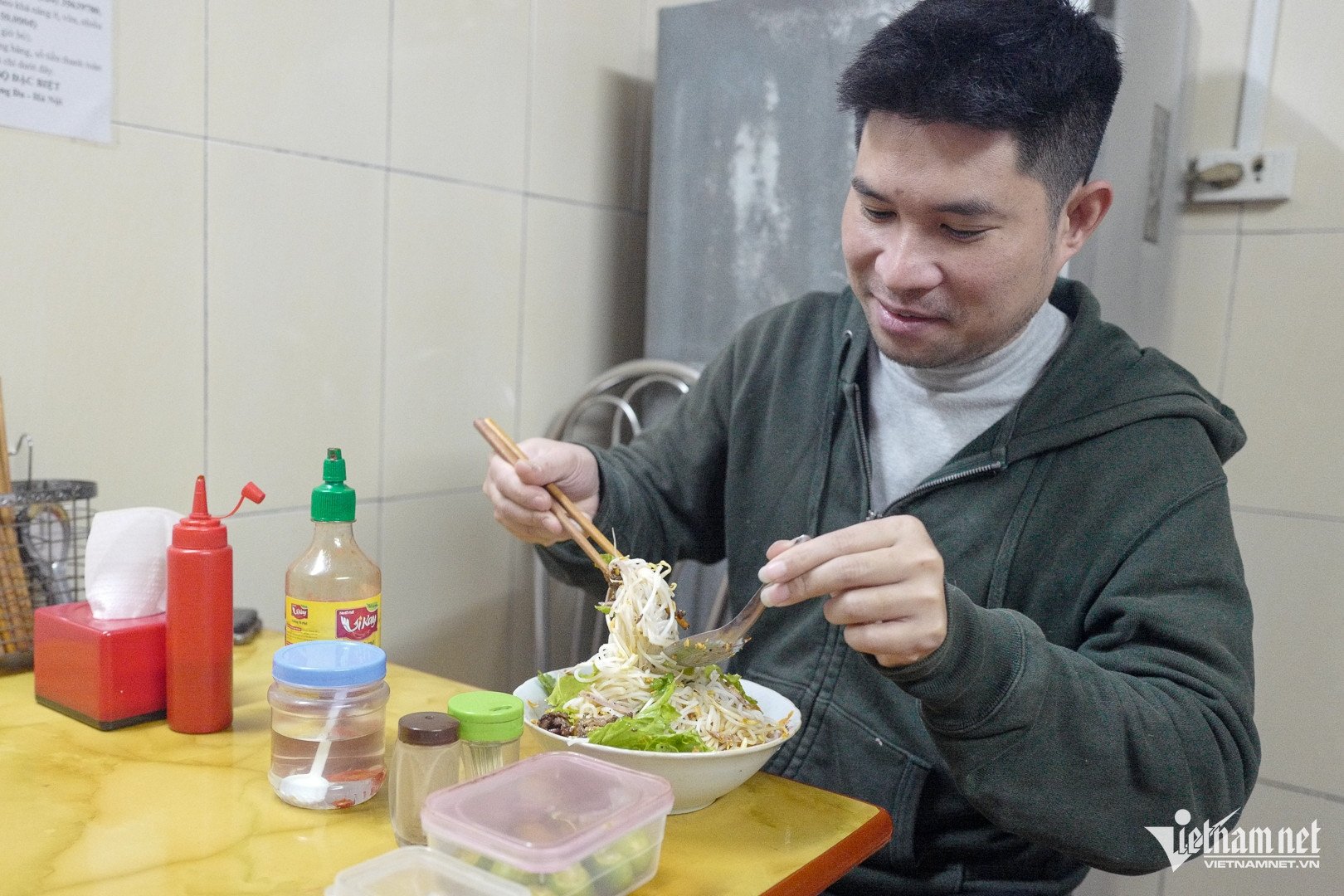
The restaurant is open from 8 am to 9 pm daily, with the busiest days being weekends and the hot summer months, when customers seek out refreshing dishes. On average, Mr. Hoa sells about 100 bowls of beef noodle soup each day.
The restaurant is rated as having palatable food, but nothing particularly outstanding or unique. The owner is friendly, cheerful, and the place is clean.
However, the restaurant is located in an alley, so there's no parking space, and the seating is cramped. If you have a big appetite, you should ask the owner for extra noodles. The restaurant is run and served by Mr. and Mrs. Hoa; there are no staff, so the service is a bit slow.
In Hanoi, there are several popular places selling Southern-style beef noodle soup, such as 67 Hang Dieu, 7 Ta Hien, 3 Ngo Huyen, 49 Tran Quoc Toan, and 17 Phung Hung (formerly Hang Phen)...
Source: https://vietnamnet.vn/khach-lach-ngo-hep-tim-chu-quan-bun-bo-mua-lua-dieu-nghe-o-ha-noi-2381991.html


![[Photo] Prime Minister Pham Minh Chinh presides over a meeting on private sector economic development.](/_next/image?url=https%3A%2F%2Fvphoto.vietnam.vn%2Fthumb%2F1200x675%2Fvietnam%2Fresource%2FIMAGE%2F2025%2F12%2F20%2F1766237501876_thiet-ke-chua-co-ten-40-png.webp&w=3840&q=75)












































































Comment (0)