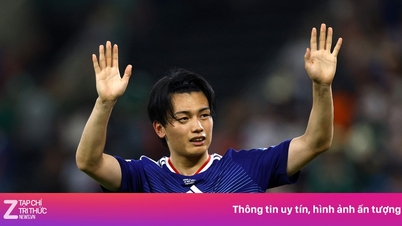
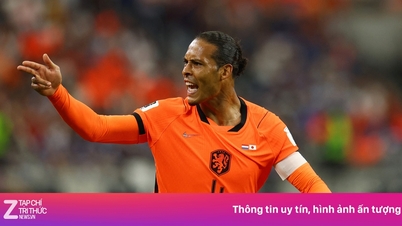
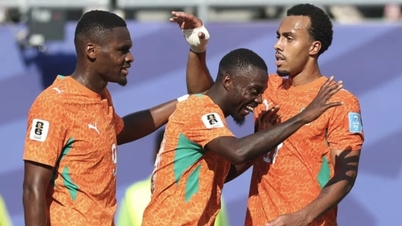
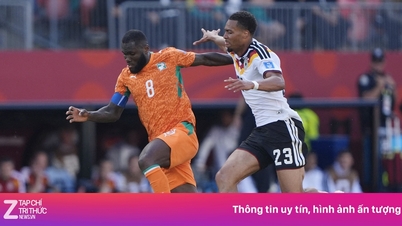
Globalization is seen as a major influencing factor, helping Asian and African teams gradually narrow the gap with European and South American football "powerhouses," as star players from South Korea, Japan, Egypt, etc., are playing for clubs in top leagues around the world such as the Premier League, La Liga, Bundesliga, or Serie A.
After accumulating experience at the highest level of competition at the club level, they will pass on the necessary lessons to their teammates when they return to wear the national team jersey.
On the other hand, hiring top coaches from Europe or South America helps Asian or African national teams adopt a scientific , disciplined playing style and better utilize their inherent strengths.


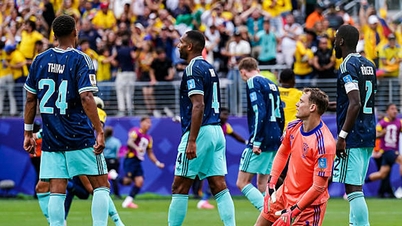
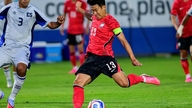
For example, the Cape Verde players put the Spanish team in a stalemate with their highly disciplined defensive system, while also making their opponents wary with their extremely quick and dangerous transitions.
Having gained access to advanced football practices from Europe and South America, Asian and African football have recognized the importance of investing significantly in sports science, nutrition, player performance data, and using science to analyze opponents' playing styles.
Furthermore, with the expansion of the number of teams participating in the World Cup Finals, not only does it provide national teams with more opportunities to gain experience, but it also motivates national federations to invest more seriously in their teams, as the chance to compete in the World Cup Finals becomes more realistic.
It's still too early to say whether Asian or African football will achieve resounding success at the 2026 World Cup, but it's clear that the gap between these footballing nations is narrowing. In the not-too-distant future, it wouldn't be surprising if a representative from Asia or Africa reached the semi-finals or final of a World Cup, provided the current pace of development continues…


Source: https://baodanang.vn/khi-cac-doi-cua-duoi-len-tieng-3340685.html
![[Image] Schools organize meetings and introduce teaching models to students admitted to grade 10.](https://vphoto.vietnam.vn/thumb/1200x675/vietnam/resource/IMAGE/2026/06/25/1782368077271_ndo_br_z7970052192242-1ec8daeb77a6eed1a4e9f58c564ddd3e-jpg.webp)
![[Photo] General Secretary and President To Lam receives Palestinian Ambassador Saadi Salama](https://vphoto.vietnam.vn/thumb/1200x675/vietnam/resource/IMAGE/2026/06/25/1782365384740_a1-bnd-9423-8322-jpg.webp)
![[Image] Ho Chi Minh City: Ma Lang area, Chicken-Rice Market about to change its appearance](https://vphoto.vietnam.vn/thumb/1200x675/vietnam/resource/IMAGE/2026/06/25/1782377698627_ndo_br_m1-jpg.webp)