Another duel
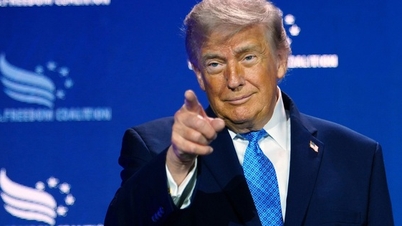
According to RIA, over the past few months, the US and Iran have entered a phase of conditional reconciliation: Media reports indicate secret negotiations, the intensity of conflict has decreased, and US President Donald Trump has begun talking about a deal as usual.
Perhaps this slow process would have continued until now, if not for two things. Israel, the country that actually launched the current campaign, once again attacked Iranian territory with drones.
And local forces, in turn, shot down a U.S. Apache helicopter. The American leader then stopped talking about a deal and returned to threats of a more powerful attack than before.
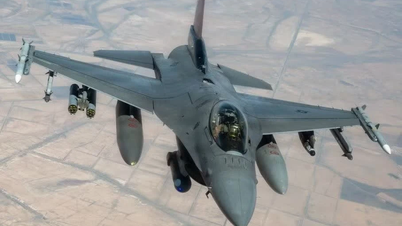
"U.S. Central Command forces have begun conducting additional strikes against multiple targets in Iran as directed by the Commander-in-Chief in self-defense," U.S. Central Command (CENTCOM) reported on the night of June 11.
The targets included missile defense and air defense systems, as well as drone control centers. The operation was reportedly limited: CENTCOM quickly reported the end of the attack.
Iran did not stand idly by while this act of aggression was taking place, and instead attacked a series of American targets in Kuwait and Bahrain.
"The air force and navy of Iran's Islamic Revolutionary Guard Corps (IRGC) carried out two waves of attacks, destroying 18 key US military targets at the Al-Salem, Ahmad al-Jaber, and Sheikh Isa air bases," Iran's Press TV reported.
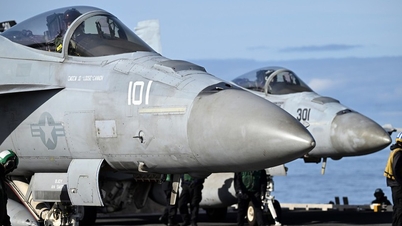
Iranian state media also reported that the country's military attacked several US warships near the Strait of Hormuz. CENTCOM denied this information. However, they did not deny that military bases in Gulf countries had been attacked.
The agreement is under threat.
Iran has warned that any ship attempting to pass through the Strait of Hormuz will be attacked. This worsens the situation on one of the world's most important oil shipping routes, a situation that had previously allowed ships from at least certain countries to pass through.


However, while Iran only issued warnings, the US proactively targeted civilian vessels. This added a geopolitical dimension to the conflict. For example, on June 10, India announced that two Indian crew members were missing after an attack on the Palau-flagged merchant ship Settabello.
However, Trump continues to assert that the US actions are a natural consequence of its policy toward Iran.
Therefore, on June 10th, the head of the White House wrote: "They delayed negotiations on a deal that could have been great for them, and now they will pay the price for it!" And after the Apache helicopter incident, US Vice President JD Vance noted that it would take several more months to reach an agreement.
Conversely, Iranian Foreign Ministry spokesman Esmail Bakaei accused the US of undermining the diplomatic process with "contradictory statements, constant shifts in positions and demands, and worst of all, violations of the ceasefire." In other words, Iran has not completely rejected negotiations, but the US is exploiting every pretext to escalate tensions.
The war will continue.
However, according to Boris Dolgov, a leading researcher at the Institute of Oriental Studies of the Russian Academy of Sciences, an agreement between the US and Iran is feasible in the long term. And notably, this agreement would primarily serve Trump's interests.
"Yes, the conflict has escalated. As for a potential agreement, some form of compromise between the parties is probably unlikely in the near future. But overall, why is the US President so insistent on this agreement?"
For him, it would be a way out of the stalemate that had formed in America. And clearly, there is a growing wave of opposition to Trump. Americans are not used to protracted wars, especially those with such futile outcomes.
"So, naturally, President Trump needs some kind of solution, and that means finding a compromise with Iran. A compromise that, in other words, will be presented to the domestic public as a victory," the expert said.
He reminded us that Israel's pressure on its "senior partners" continues to play a significant role. However, at the same time in the US, there is growing debate that the current conflict is not the fault of the Americans, but rather the fault of the Jewish state.
Therefore, an agreement between the US and Iran is still entirely possible, but not in the near future.



Semyon Bagdasarov, Director of the Center for Middle Eastern and Central Asian Studies, believes that persuading Iran will not be easy.
"There are two factions in this country. The first faction, led by President Masoud Pezeshkian, might agree to a deal if it's only to resolve the conflict and move it out of a tense phase. This is because there are serious economic problems and many other issues."
"But the real power lies in the hands of the IRGC. They believe that the US should concede to Iran's demands, not the other way around," the expert explained.
Therefore, Bagdasarov concludes, even if some kind of agreement is reached, the ceasefire may not last long. And fighting, as recent days have shown, will erupt periodically.
Source: https://giaoducthoidai.vn/khi-cuoc-chien-khong-ket-thuc-post781468.html
![[Photo] "Hanoi Lotus Festival" honors the lotus flower that has been associated with Vietnam for thousands of years.](https://vphoto.vietnam.vn/thumb/1200x675/vietnam/resource/IMAGE/2026/06/27/1782516943048_sen-ha-noi-2026-minh-duy-1-jpg.webp)