

In ancient China, bathing was considered a luxury, something only nobles and emperors could afford due to the high cost of firewood.
Because the Chinese believed the emperor was the Son of Heaven, since the Qin Dynasty, a law was enacted requiring the emperor to wash his hair every three days and bathe once a week. Failure to comply was considered blasphemy against the gods.
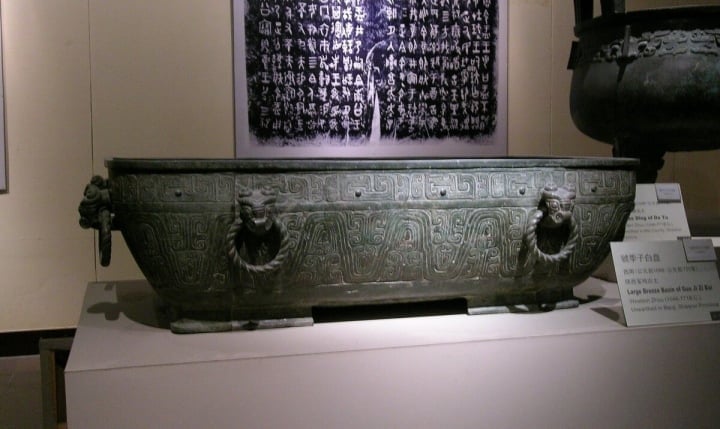
A bronze bathtub from the Western Zhou Dynasty (1046-771 BC) in the National Museum of China. (Photo: Sohu )
In ancient society, bathing was considered a sacred act. The History of Qin records that the emperor granted his ministers leave to enjoy bathing. Archaeological studies show that bronze bathtubs of various sizes existed from the Bronze Age (3500-1200 BC).
During the Qin and Han dynasties (221 BC to 220 AD), to save water and firewood, bathing pools began to appear in Chinese society, gradually forming a "culture of communal bathing".
During the Song Dynasty (960-1279), the concept of etiquette began to develop, leading people to view women bathing with or serving men during bathing as inappropriate and having a negative influence. Consequently, palace maids were no longer allowed to serve the emperor during bathing.
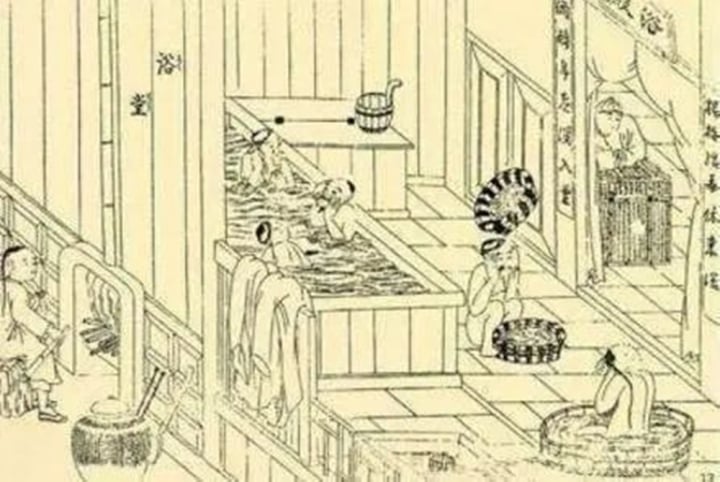
The painting depicts a public bathhouse in ancient China. ( Photo: Sohu )
Within the imperial court, the "Hun Tang Si" was established, a place specifically responsible for the emperor's bathing. This agency was in charge of transporting firewood for heating the bathwater, as well as the emperor's clothing. According to Qing Dynasty historical records, this agency was not permitted to allow women to serve the emperor during bathing; only eunuchs were allowed to do so.
According to historians, the prohibition against palace maids serving the emperor during bathing stemmed from two reasons. Firstly, women were considered weak and unable to carry heavy loads of water. Secondly, the emperor was considered the true Son of Heaven and was not allowed to have children with commoner women. Therefore, to maintain the pure bloodline of the royal family, palace maids were forbidden from serving him.
HONG PHUC (Source: 163.com)
Beneficial
Emotion
Creative
Unique
Wrath
Source

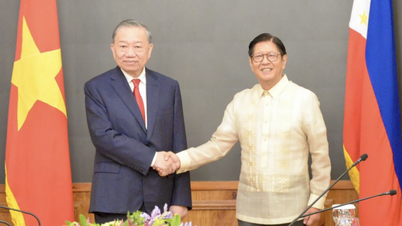
![[Photo] General Secretary and President To Lam and the President of the Philippines hold talks.](https://vphoto.vietnam.vn/thumb/1200x675/vietnam/resource/IMAGE/2026/06/01/1780286997787_anh-man-hinh-2026-06-01-luc-11-09-43.png)

































































Comment (0)