

Fertilizers are exempt from value-added tax: When and who benefits?
According to Law No. 71/2014/QH13 amending and supplementing several articles of tax laws, fertilizers are exempt from Value Added Tax (VAT). Currently, the National Assembly is considering a proposal to bring fertilizers under VAT with a rate of 5%. There are many conflicting opinions on this proposal. So what is the essence of the issue?
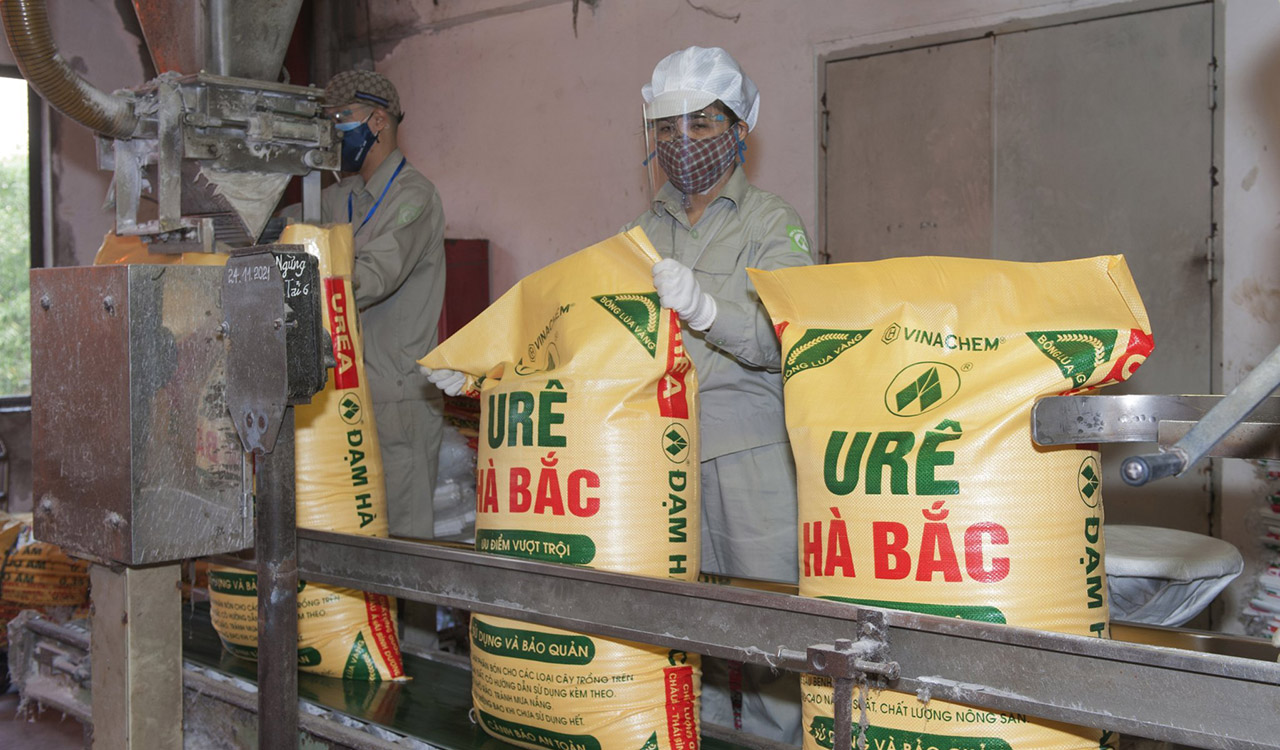 |
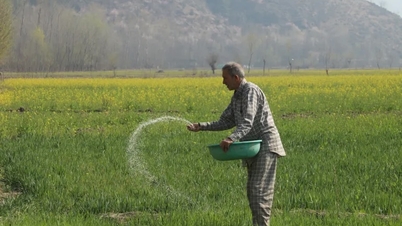
| Photo: Duc Thanh |
The impact of value-added tax on selling prices.
The shift from being subject to a 5% VAT rate to being exempt from VAT might seem beneficial to businesses and farmers at first glance, but that's not necessarily true.
Previously, fertilizer production was subject to a 10% input tax and a 5% output tax. However, input taxes were deductible and even refundable if they exceeded output taxes. Now, with the new regulations, businesses are no longer allowed to deduct input taxes and must account for them as expenses. This could significantly increase the production and business costs of fertilizer companies, ultimately impacting the final selling price to farmers.
In theory, changing fertilizers from a product subject to a 5% VAT rate to a VAT-exempt product could lead to two contradictory possibilities: 1) a reduction in the selling price, and 2) an increase in the selling price to the end buyer. This depends on the proportion of input costs subject to a 10% VAT rate in the product's selling price structure (excluding VAT).
If this proportion is low, for example 10%, and the remaining 90% of the selling price is made up of items not subject to VAT, such as imported fertilizers (e.g., urea, potassium, and phosphate used in NPK fertilizer production), wages, machinery depreciation, and business profits, then not having to pay VAT at a rate of 5% on the selling price will result in a lower selling price compared to when a 5% output VAT is applied and input VAT is deductible (because input VAT is negligible).
This happens with businesses that specialize in using imported single-nutrient fertilizers (which are not subject to VAT) as raw materials to simply mix and produce NPK products, a process often referred to as "basic" or "easy" technology.
Conversely, if that proportion is high, 50% or more of the selling price, which is common among fertilizer manufacturers in Vietnam using raw materials, supplies, energy, equipment, etc., subject to a 10% input VAT, then the input VAT is greater than the 5% output VAT. Therefore, exempting the 5% output VAT but not allowing the 10% input VAT deduction will increase the cost compared to when fertilizers are subject to a 5% VAT (because businesses receive a partial VAT refund since the output VAT is lower than the input VAT).
If production costs increase while selling prices remain the same, businesses suffer losses. If they want to maintain profits, they have to increase selling prices, and farmers are the ones who suffer. If the burden is shared, both sides suffer, each losing a little. Only imported goods benefit.
On the other hand, due to rising costs, investors will hesitate to invest in domestic fertilizer production, especially high-tech projects, because they are not eligible for VAT refunds on factories, equipment, and raw materials. This leads to a situation where the domestic fertilizer industry loses its momentum as its products become less competitive compared to imported goods, and risks being defeated by imported products in its own market.
What will happen if a 5% VAT is applied to fertilizers?
If fertilizers were moved from being exempt from VAT to being subject to VAT at a rate of 5%, the situation would be completely reversed.
Now, businesses importing fertilizers will have to pay a 5% VAT tax upon import, increasing costs by 5% compared to before, and consequently raising the selling price to farmers.
Conversely, businesses that produce using domestic raw materials and supplies will receive a partial VAT refund because the 5% output tax is lower than the 10% input tax, leading to lower production costs and a corresponding reduction in selling prices to farmers.
Thus, imposing a 5% VAT will increase the price of imported goods and decrease the price of domestic goods, bringing both to a common level due to the 5% tax rate. This creates a level playing field for competition between domestic and foreign goods, resolving the inconsistency that has existed for the past 10 years: imported goods have gained an advantage over domestic goods thanks to our own policies. Furthermore, the budget shortfall from domestic goods will be partially offset by the VAT revenue from imported goods.
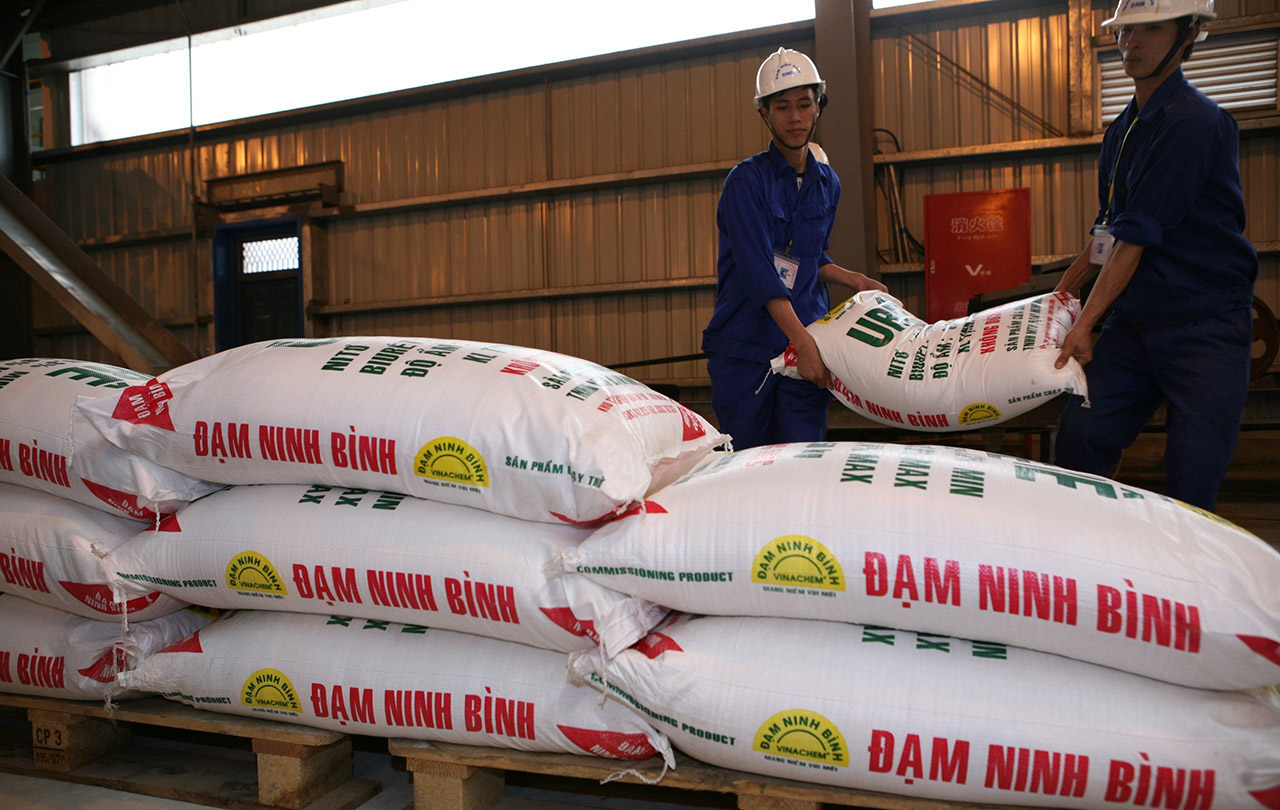 |
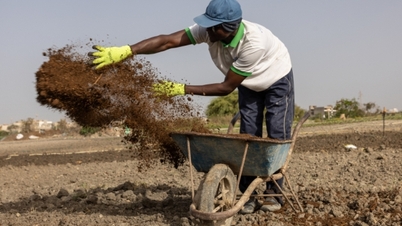
| Photo: Duc Thanh |
Is there any guarantee that domestic businesses will reduce the selling price to farmers?
Some people are concerned that while imposing a 5% VAT on fertilizers might help businesses reduce costs, it's not certain that businesses will lower their selling prices, and farmers will still not benefit.
In fact, this concern is no different from the concern that when the National Assembly agrees to reduce VAT from 10% to 8%, there is no guarantee that businesses will also reduce selling prices to consumers. Recent experience has shown that this concern is unfounded.
Value Added Tax (VAT) is an indirect tax; businesses only collect it on behalf of the State from consumers. Therefore, there's no reason for them to foolishly increase prices before VAT (the portion they are entitled to) to pocket that 2% VAT from buyers. If they prioritize short-term gains over long-term benefits, they will likely fail to sell their goods due to higher prices compared to other businesses. The competitive mechanism forces businesses to bring prices to a common level, consisting of the price before VAT (the business's share) plus the legally mandated VAT (the State's share).
Therefore, the Government has grounds to continue proposing to the National Assembly to consider extending the reduction of VAT to 8% until the end of 2024.
When persistently advocating for the inclusion of fertilizers in the Value Added Tax (VAT) scheme with a tax rate of 5% or, even better, 0%, domestic fertilizer manufacturers and their representatives, the Vietnam Fertilizer Association, must have had solid grounds. When the Government submitted the draft amendment to the Value Added Tax Law to the National Assembly, it must have considered the issue comprehensively, thoroughly, and carefully. The ball is now in the court of the National Assembly representatives, who will press the button to vote on the bill.
Source: https://baodautu.vn/phan-bon-khong-chiu-thue-gia-tri-gia-tang-khi-nao-va-ai-duoc-loi-d218458.html
















































































Comment (0)