Football is a team sport . No team can go far without cohesion, discipline, and a spirit of sacrifice for one another. That is a truth that has been repeated many times by generations of players and coaches.
But there are also times when all eyes are on exceptional individuals.
The 2026 World Cup is delivering moments like that.
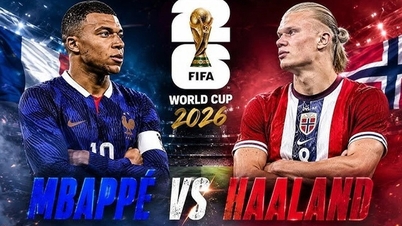
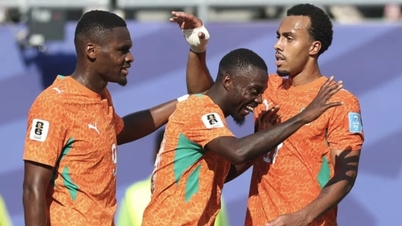
From the goals of Kylian Mbappé and Erling Haaland to Lionel Messi's historic hat-trick, the tournament is demonstrating the special appeal that superstars bring. At the same time, the contrasting performances of Messi and Cristiano Ronaldo reflect a larger story: world football is entering a transitional phase between generations.
Mbappé was one of the most outstanding players in the early stages of the tournament.
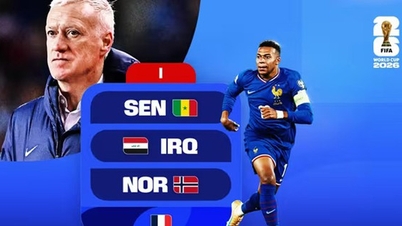
The French striker scored two goals in France's 3-1 victory over Senegal. The first came from a cool finish after a pass from Michael Olise. The second was a decisive shot from outside the penalty area, extinguishing any hope of a comeback for the opposition.
This World Cup is a high-pressure one for Mbappé. The 2018 champion and 2022 runner-up entered the tournament amidst debates about his recent form. However, in just one match, he has largely dispelled those doubts.
If Mbappé represents speed and explosiveness, then Haaland embodies power and fearsome goal-scoring ability.


In the match against Iraq, the 1.95m tall Norwegian striker only needed minutes to make his mark by scoring the opening goal before capitalizing on a defensive error to complete his brace. The 4-1 victory not only marked Norway's memorable return to the World Cup after nearly three decades, but also officially propelled Haaland onto the biggest stage in world football.
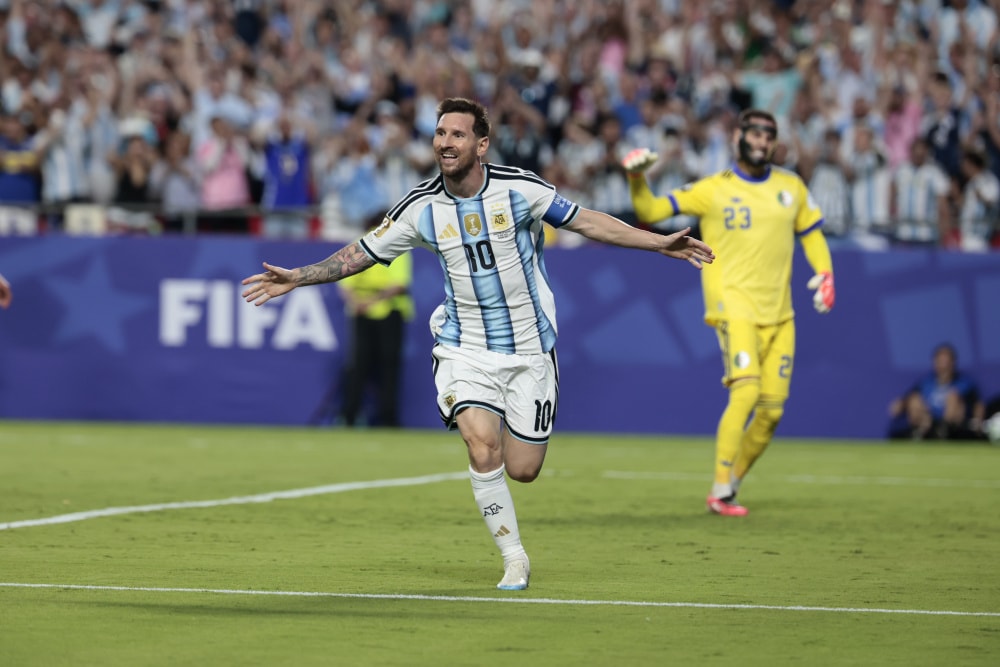
However, the person most frequently mentioned remains Lionel Messi.
At 38 years old, after nearly two decades of conquering every prestigious title and fulfilling his dream of winning the World Cup in 2022, Messi should have nothing left to prove. Yet, the Argentine superstar continues to create moments that leave fans in awe.
After a goal was disallowed for offside, Messi went on to score three goals against Algeria, showcasing the qualities that have made him famous: technique, cunning, and the ability to capitalize on rare opportunities.
Messi's hat-trick brought his total number of goals in World Cups to 16, equaling the record of German legend Miroslav Klose.
But the 2026 World Cup is not just about the shining stars. The tournament is also showing clear signs of a transitional period.
While Messi continues to lead Argentina with outstanding performances, Cristiano Ronaldo is experiencing increasingly difficult matches in the Portuguese national team. At 41, the five-time Ballon d'Or winner no longer maintains the same level of influence as during his prime, although he remains a major icon of world football.
The contrast between Messi and Ronaldo reflects the inevitable nature of elite sports. At the same time, the rise of Mbappé and Haaland shows that world football is entering a new chapter, as the next generation gradually becomes the face of the beautiful game.
The performances of Mbappé, Haaland, and Messi are not just about technical skill. They also reflect a reality that FIFA understands very well: superstars remain the most important factor in creating the appeal of the World Cup.
The 2026 World Cup will be the first time the tournament has been expanded from 32 to 48 teams. This larger scale allows FIFA to access more markets and broaden the influence of football globally. However, this decision has also sparked debate about the quality of play, as the gap in skill levels between teams may become more pronounced.

In this context, top stars play an even more crucial role. They not only deliver goals, but also create stories, moments, and emotions that captivate millions of viewers watching the league.
Fans may debate the tournament format, the number of participating teams, or FIFA's commercial decisions. But ultimately, what makes the World Cup the most anticipated sporting event on the planet is its ability to produce world-class performances on the pitch.
Amidst a World Cup that is changing in scale and format, the biggest stars of world football remain the focus. But the 2026 World Cup is also witnessing a remarkable transition, as the generation of Messi and Ronaldo gradually gives way to successors like Mbappé and Haaland. And it is this intersection between the two generations that is creating one of the most compelling stories of this year's tournament.
Source: https://hanoimoi.vn/khi-nhung-ngoi-sao-giu-lua-cho-world-cup-1208051.html
![[Image] Schools organize meetings and introduce teaching models to students admitted to grade 10.](https://vphoto.vietnam.vn/thumb/1200x675/vietnam/resource/IMAGE/2026/06/25/1782368077271_ndo_br_z7970052192242-1ec8daeb77a6eed1a4e9f58c564ddd3e-jpg.webp)
![[Photo] General Secretary and President To Lam receives Palestinian Ambassador Saadi Salama](https://vphoto.vietnam.vn/thumb/1200x675/vietnam/resource/IMAGE/2026/06/25/1782365384740_a1-bnd-9423-8322-jpg.webp)

![[Image] Ho Chi Minh City: Ma Lang area, Chicken-Rice Market about to change its appearance](https://vphoto.vietnam.vn/thumb/1200x675/vietnam/resource/IMAGE/2026/06/25/1782377698627_ndo_br_m1-jpg.webp)