

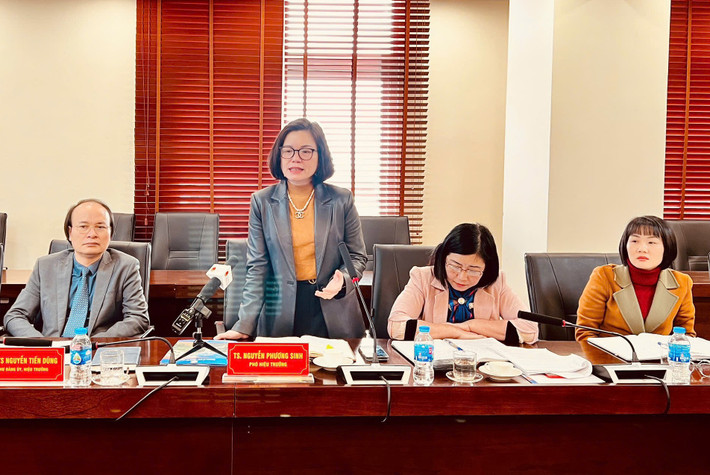
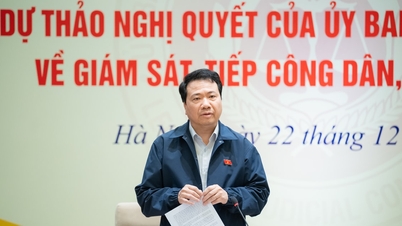
On the morning of March 31st, the Supervisory Delegation of the National Assembly Standing Committee worked with the University of Medicine and Pharmacy, Thai Nguyen University, on the implementation of policies and laws on the development and utilization of human resources to meet the requirements of socio-economic development, especially high-quality human resources, in the period 2021-2024. Mr. Lam Van Doan, Vice Chairman of the Committee on Culture and Social Affairs, chaired the meeting.
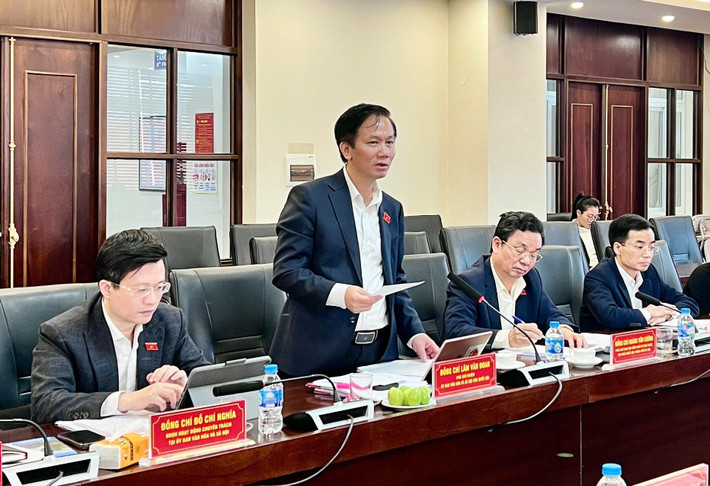
Even with attractive compensation packages, it's still difficult to attract talent.
According to the report, the policies for attracting, recruiting, and utilizing faculty members at the University of Medicine and Pharmacy are stipulated in the regulations on training and professional development of officials and employees and the internal expenditure regulations of the university, which are revised and supplemented annually to suit the reality. These policies are generally considered to be better than those of other universities within Thai Nguyen University and some other medical and pharmaceutical universities nationwide.
Specifically, the budget includes incentives to attract staff to the university (Master's degree holders: VND 100,000,000/person; PhD holders: VND 400,000,000/person); monthly support for highly qualified teaching staff as stipulated by Thai Nguyen University (Professors: VND 1,200,000/person/month; Associate Professors, Senior Lecturers: VND 900,000/person/month; PhD holders: VND 600,000/person/month); and monthly support for tuition fees, accommodation, and travel expenses for staff attending training courses to improve their professional qualifications.
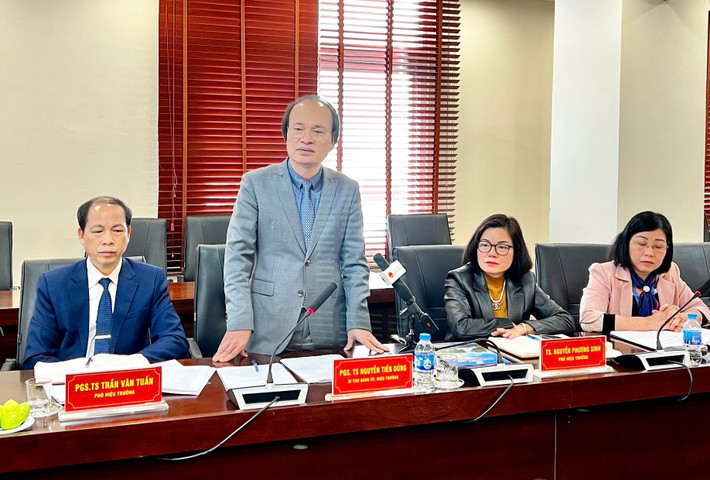
In addition, the university also provides incentive bonuses for staff who complete doctoral studies: for doctoral students who successfully defend their dissertations at the university level on time (according to the Decision on sending them to study): 50,000,000 VND/person; and bonuses for staff who meet the standards for titles recognized by the State Council for Academic Titles: Professor: 100,000,000 VND/person; Associate Professor: 60,000,000 VND/person.
However, to date, the University of Medicine and Pharmacy, Thai Nguyen University, has not been able to recruit highly qualified healthcare professionals. According to Dr. Nguyen Phuong Sinh, Vice Rector of the university, the reasons include reluctance to pursue postgraduate studies due to limited salaries; and the significant disparity in salaries and initial incentives for lecturers and highly qualified faculty between public medical and pharmaceutical universities and private higher education and healthcare institutions.
The limitations in facilities and equipment that prevent lecturers from developing their scientific research capabilities and implementing techniques to serve the community, compared to private hospitals and higher education institutions, and between local and central levels, are also reasons why the University of Medicine and Pharmacy in particular, and public medical and pharmaceutical universities in general, find it difficult to attract highly qualified lecturers.
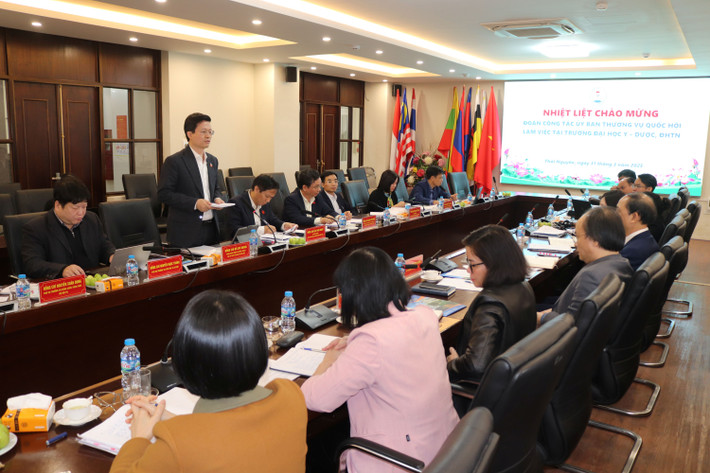
Many regulations make admissions difficult.
The University of Medicine and Pharmacy, Thai Nguyen University, is a training institution for medical personnel at the undergraduate and postgraduate levels; conducting scientific research and transferring medical and pharmaceutical technology; supporting the development of the healthcare system; and providing services to meet the healthcare needs of the people of the Northern Midlands and mountainous regions and the entire country. To date, the University has trained nearly 40,000 high-quality medical professionals. Many of its alumni have been and are currently working in healthcare, especially for ethnic minorities, at all levels, from the grassroots to the central level.
Currently, the University has a training capacity of nearly 11,000 students across 9 undergraduate programs, 43 postgraduate programs, and hundreds of short-term training/refresher programs, aiming to regularly update and improve the skills of healthcare personnel in the provinces.
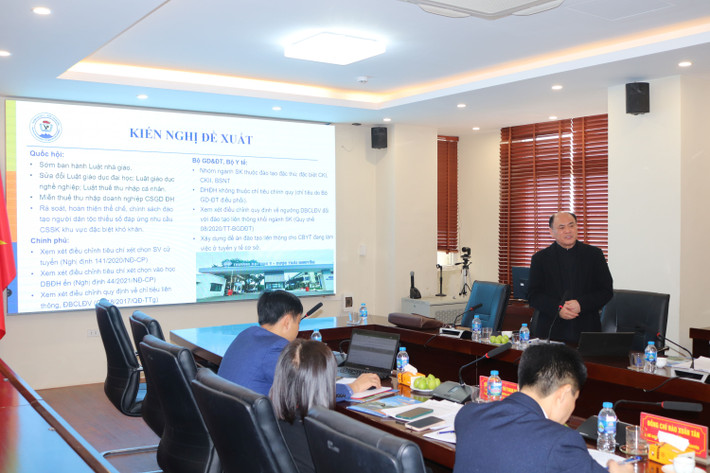
According to Dr. Nguyen Quang Manh, Head of the Training, Science and Technology Department, the university's admissions process is currently facing difficulties due to some unsuitable legal regulations. For example, pre-university admissions are conducted according to Article 4 of Government Circular No. 44/2021/ND-CP dated December 8, 2020 (selection), and the admission quota is included in the overall admission quota. Therefore, pre-university candidates have a lower chance of being admitted compared to regular students.
According to Article 9 of Circular 08/2022/TT-BGDĐT, the entrance requirements for health-related fields are: a) Grade 12 academic performance rated "good" or higher, or a high school graduation exam score of 8.0 or higher for Medicine, Dentistry, and Pharmacy; b) Grade 12 academic performance rated "fair" or higher, or a high school graduation exam score of 6.5 or higher for Nursing, Preventive Medicine, Midwifery, Dental Prosthetics Technology, Medical Laboratory Technology, Medical Imaging Technology, and Rehabilitation Technology. This regulation is not suitable for healthcare workers currently working at health stations in particularly difficult mountainous areas.
Article 5 of Circular No. 18/2017/QD-TTg of the Prime Minister stipulates that the quota for full-time and part-time articulation programs should not exceed 20% of the full-time enrollment quota, which is also not suitable for the needs of articulation training in the health sector, especially in the mountainous areas of Northern Vietnam…
Improving policies for training healthcare personnel from ethnic minority groups.
To meet the healthcare needs of the people, especially in the Northern Midlands and mountainous regions, the University of Medicine and Pharmacy proposes that the Government review and improve the institutional framework and policies for training healthcare personnel from ethnic minority groups.
Regulations regarding salaries and other benefits need to be adjusted to reflect the training duration and the specific nature of the profession for lecturers in the health sector, as they simultaneously perform the duties of lecturers and healthcare professionals involved in examinations, treatment, and public health services.
Review and adjust the criteria for selecting ethnic minority students for government-sponsored scholarships, and the criteria for selecting students for preparatory university programs under the government-sponsored scholarship program as stipulated in Decree No. 141/2020/ND-CP.
The Ministry of Education and Training is requested to study and develop a plan for integrated training between intermediate, college, and university levels for healthcare professionals working at the grassroots level. Regarding pre-university enrollment, it should not be included in the regular enrollment quota and a specific enrollment mechanism should be in place.
Add health-related training institutions to the group of specialized training institutions. Adjust the entrance requirements for transfer students in Medicine and Dentistry to better suit healthcare workers currently working at health centers in particularly difficult mountainous areas...
On behalf of the Supervisory Delegation, Vice Chairman of the Committee on Culture and Social Affairs Lam Van Doan highly praised the efforts and achievements of the University of Medicine and Pharmacy over the past nearly 60 years, training medical staff not only for Thai Nguyen but also for the provinces in the Northern Midlands and mountainous regions. The university has also implemented policies to attract high-quality human resources, which are considered far superior to many other higher education institutions...
In the context of rapidly developing science and technology, the demand for human resource training is increasing. Sharing the difficulties faced by the university in training in the specialized field of healthcare, the Supervisory Delegation hopes that the University of Medicine and Pharmacy will continue to uphold its traditions, fulfill its mission of training medical personnel; conduct scientific research and transfer medical and pharmaceutical technology; support the development of the healthcare system, and provide services to meet the healthcare needs of the people of all ethnic groups in Thai Nguyen and the region, ensuring both quantity and quality.
The school's recommendations, especially regarding amendments to legal regulations, will be compiled by the research team during the process of preparing the monitoring report and refining policies and laws in the fields of Education, Health, etc.
Source: https://daibieunhandan.vn/kho-tuyen-dung-giang-vien-trinh-do-cao-khoi-nganh-suc-khoe-post408856.html













































































Comment (0)