

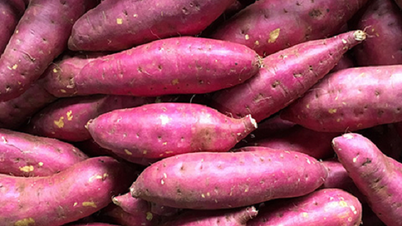
Sweet potatoes are a familiar food to most Vietnamese people. In our country, there are many varieties of sweet potatoes grown throughout the country, such as white sweet potatoes, purple sweet potatoes, and yellow-fleshed sweet potatoes.
According to Dr. Nguyen Viet Hoang, former Deputy Director of Tue Tinh Hospital in Hanoi , as shared in the Health & Life magazine, sweet potatoes are considered a common food but possess many excellent values. Sweet potatoes are rich in essential nutrients such as manganese, calcium, vitamin A, vitamin B, and choline. Sweet potatoes also contain many antioxidants, making them very good for health.
100g of fresh potatoes contain 109 calories, 24.6% starch, and 4.17% glucose. Fresh potatoes also contain 1.3% protein, 0.1% fat, minerals such as manganese, calcium, and copper, and vitamins A, B, and C.
How much sweet potato is too much to eat?
Some nutritionists suggest that if you eat more than one potato a day, you should consider varying your intake to get a wider range of nutrients.
Meanwhile, some experts suggest that the high beta-carotene content in sweet potatoes may cause the skin to turn orange if consumed in excessive amounts.
Whether red, white, or purple sweet potatoes, you should always eat them with the skin on. This not only saves you time peeling, but also provides excellent nutritional benefits.
Therefore, eat sweet potatoes in moderation. Limit yourself to 2-3 sweet potatoes per week and supplement your diet with other foods to ensure nutritional balance.
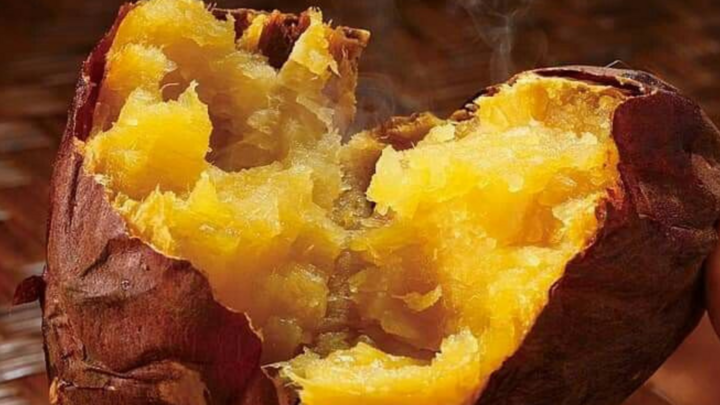
You should only eat 2-3 potatoes per week and supplement with other foods to maintain a balanced diet (Image: Pinterest).
Who shouldn't eat sweet potatoes?
Sweet potatoes are a familiar food enjoyed by many because of their high nutritional value, low cost, and ease of consumption and preparation. However, eating sweet potatoes isn't good for everyone, and some people may even find them dangerous.
The person is hungry.
According to an article on the Vinmec International General Hospital website, sweet potatoes are not good to eat on an empty stomach. This is because sweet potatoes can increase acid production in the stomach. If you have stomach problems, you should not eat sweet potatoes on an empty stomach.
Sweet potatoes contain a lot of sugar. Eating a lot of them, especially on an empty stomach, can increase gastric acid secretion, leading to heartburn, bloating, and acid reflux. To alleviate this, you should boil the sweet potatoes and their water thoroughly, or add a little alcohol during cooking to break down the enzymes in the sweet potatoes.
Drinking ginger water can help reduce bloating. Additionally, when you're hungry and your blood sugar is low, eating sweet potatoes can lower your blood pressure, causing fatigue.
People with kidney disease
Dr. Pham Viet Hoang, former Deputy Director of Tue Tinh Hospital in Hanoi, shared in the Education and Times newspaper that people with kidney disease should absolutely avoid eating sweet potatoes because they contain a lot of fiber, potassium, and vitamin A. When the kidneys are weak, their ability to remove excess potassium is limited, which can cause dangerous side effects such as heart rhythm disorders and heart weakness.
People with poor digestive systems
People with poor digestion, who frequently experience bloating and abdominal distension, should avoid eating too much sweet potato because it increases gastric acid secretion, causing heartburn, acid reflux, and further bloating.
People with stomach problems
Eating sweet potatoes on an empty stomach can easily stimulate gastric acid secretion, affecting the digestive function of the stomach. In particular, people with stomach-related diseases, or those with weak digestive function, who are prone to stomach pain, gastritis, and chronic gastritis, should avoid eating sweet potatoes to prevent worsening their condition.
Source















































































![[Photo Gallery] Dong Nai bursts with Christmas colors](https://vphoto.vietnam.vn/thumb/402x226/vietnam/resource/IMAGE/2025/12/23/1766504555135_2509973652807063001_2_20251223201437_20251223212305.jpeg)



















Comment (0)