Avoid direct contact with mice.
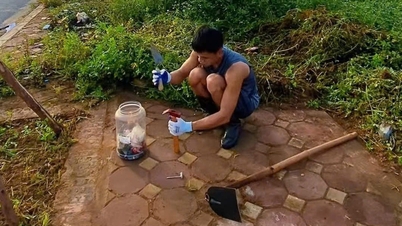
Associate Professor Tran Dac Phu, advisor to the Vietnam Center for Emergency Response to Public Health Events and former Director of the Department of Disease Prevention ( Ministry of Health ), advises people to avoid direct contact with rats. If contact is unavoidable, they should wear masks and gloves and wash their hands with soap. Infection can occur through inhaling dust containing urine, feces, or dried saliva from infected rats, or through direct contact with rat waste followed by touching the eyes, nose, or mouth, or through rat bites (less common). However, rats carrying the virus usually do not show symptoms. Some rare strains can be transmitted from person to person.

Infectious diseases such as Hanta virus need to be detected promptly and treated individually.
PHOTO: HUONG GIANG
According to Associate Professor Tran Dac Phu, the health sector needs to strengthen border health quarantine measures such as inspecting ships to prevent the spread of Hanta virus from abroad into Vietnam, and eradicating rats on ships if present… "The risk of cases from abroad entering Vietnam, as well as the risk of the appearance and increase of Hanta virus cases domestically, is very low," Associate Professor Phu stated.
In Vietnam, according to information from the surveillance system, Hantavirus belongs to the group of diseases under surveillance, and has been recorded in rats at some points, but Hantavirus has different subgroups. It has not yet been confirmed that the Hantavirus in Vietnam belongs to the same group as the virus that caused illness among passengers on the MV Hondius cruise ship (departing from Argentina on April 1st).
Hantavirus diversity
According to the Bach Mai Institute of Tropical Medicine ( Hanoi ), Hantavirus is a group of RNA viruses belonging to the Hantaviridae family, within the Bunyavirales order, representing one of the most serious public health challenges related to zoonotic infectious diseases. The classification of Hantavirus is closely related to the geographical region and clinical characteristics they cause.


Old World Hantaviruses , prevalent in Asia and Europe, include the Hantaan (HTNV), Seoul (SEOV), Puumala (PUUV), and Dobrava (DOBV) strains, which primarily cause hemorrhagic fever with renal syndrome (HFRS).
Conversely, typical "New World" Hantaviruses in the Americas include Sinus Nombre (SNV) and Andes (ANDV), which are the causative agents of Hantavirus pulmonary syndrome (HPS or HCPS).
This diversity reflects a long process of co-evolution between viruses and specific host species, where each Hanta virus strain is typically associated with a particular rodent species.
Clinical manifestations depend on the strain of virus contracted:
HFRS typically progresses through five stages: 1/ Fever: sudden high fever, headache, back pain, flushed face; 2/ Hypotension: shock, thrombocytopenia; 3/ Oliguria: acute renal failure, high proteinuria; 4/ Polyuria: significant increase in urine output as kidney function recovers; 5/ Recovery: may last for several months.
The progression of HCPS syndrome is as follows: the initial stage presents with flu-like symptoms (fever, muscle pain); the acute phase involves extremely rapid progression of acute respiratory failure, non-cardiac pulmonary edema, hypotension, and cardiogenic shock. The mortality rate is as high as 40-50%.
Do not touch live or dead rats, their feces, urine, saliva, or nests directly with your hands.
When cleaning areas with signs of rodent infestation: open windows for ventilation, wear gloves and a mask; spray areas with droppings, urine, or nests with a disinfectant solution or regular cleaning solution before cleaning. Do not sweep dry, and do not use vacuum cleaners or blowers, as these can disperse fine dust containing pathogens into the air, potentially infecting those who inhale it.
Wash your hands with soap after cleaning, handling garbage, contact with rats, or in high-risk areas.



Seal any gaps to prevent mice from entering the house; set traps when necessary; store food and water in airtight containers; collect garbage daily to avoid attracting mice.
After contact with rats or areas containing their droppings, urine, or nesting sites, if symptoms such as fever, chills, headache, dizziness, muscle pain, nausea, vomiting, abdominal pain, or diarrhea appear, people should immediately go to a medical facility and clearly report the risk of contact with rats to receive timely examination and treatment.
(Source: Department of Disease Prevention - Ministry of Health)
Source: https://thanhnien.vn/khuyen-cao-phong-benh-do-virus-hanta-185260508165621616.htm