

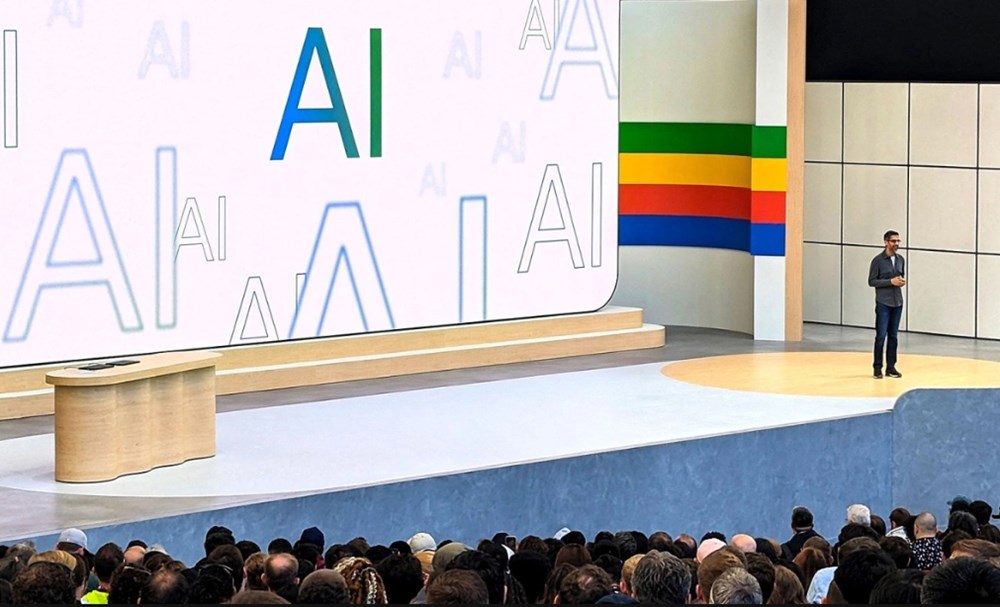
A new study published in the American journal Harvard Business Review reveals a noteworthy fact: instead of simply making life easier, AI can create significant mental stress for its users.
A senior engineering manager involved in the study described it this way: "I had one tool to help me weigh technical decisions, another to help me draft and summarize. I kept switching between them, scrutinizing every little detail. But instead of working faster, my mind started to feel overwhelmed. Not physically tired, just... overloaded."
A survey of approximately 1,500 workers conducted by a team of experts from Boston Consulting Group and the University of California, USA, revealed that about 14% of participants had experienced mental burnout from working with AI tools.
They described a range of symptoms such as a buzzing or hazy head, headaches, difficulty concentrating, slower decision-making, and increased error. Julie Bedard, CEO of Boston Consulting Group, called these "early warning signs" that expectations about AI-driven productivity may need to be readjusted.
The study uncovered an interesting paradox: AI can both reduce and increase human fatigue. When used to handle repetitive tasks, AI significantly reduces stress. However, when workers have to constantly monitor or work with multiple AI tools simultaneously, mental stress increases dramatically.
Bedard explains that AI expands human capabilities, increasing workloads and the scope of responsibility, but this expansion can quickly become excessive, causing those tasks to exceed the brain's processing capacity.
This isn't the only study on the paradox in AI usage. Last month, experts at the Haas School of Business at the University of California published an eight-month study on how AI is changing work habits at a US technology company with about 200 employees.
The results showed that the job became more stressful for three main reasons: employees had to handle more tasks simultaneously, took on more responsibilities, and worked longer hours.
The annual Work Reimagined Survey conducted last November by the US auditing firm EY with 15,000 workers in 29 countries and territories also showed that nearly two-thirds of participants believed their workload had increased significantly in the past 12 months.
According to Kim Billeter, head of global human resources consulting at EY, the survey doesn't directly indicate that AI increases workload, but workplace anxieties about AI—such as fear of skill obsolescence, lack of training, and uncertainty about the technology's impact—are putting pressure on workers to perform better. "This confusion and fear of falling behind is exhausting many people," Billeter explained.
In light of these findings, experts suggest a more realistic view of the impact of AI on workers. Many previous predictions suggested that this technology would allow fewer employees to accomplish more in less time.
However, according to Bedard, if AI is driving workers to brain overload, organizations need to reconsider these predictions. Her research with colleagues also indicates that leadership and employee training play a crucial role, with less brain overload occurring in employees whose managers proactively utilize AI appropriately. "We need to redesign how we work, not simply keep what we did yesterday and just introduce AI," she stated.
Source: https://baovanhoa.vn/nhip-song-so/kiet-suc-vi-tro-ly-ai-210636.html





















![[Photo] A vibrant celebration of generations of Nhan Dan Newspaper staff](https://vphoto.vietnam.vn/thumb/1200x675/vietnam/resource/IMAGE/2026/03/11/1773228432744_cb-75-nam-7-7034-jpg.webp)





































































Comment (0)