

Putting the resolution into practice.

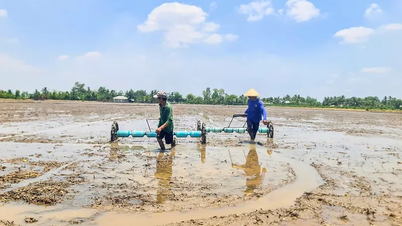
Promoting the application of mechanization in production, freeing up labor, saving costs, and improving production efficiency are in line with modern agriculture (Photo: Harvesting spring rice in Ban Nguyen commune).
Adapting to the new context
The changing domestic and international context necessitates improving the quality of "agriculture, farmers, and rural areas" development, aiming towards building an ecological agriculture, modern rural areas, and civilized farmers. The Party and State have consistently maintained a consistent viewpoint on agriculture, farmers, and rural areas; and have issued many important policies, strategies, and guidelines to affirm the role and position of this sector in the country's development process.
On January 28, 2026, the Phu Tho Provincial Party Committee issued a plan to implement Conclusion No. 219-KL/TW dated November 26, 2025, of the Politburo on continuing to implement Resolution No. 19-NQ/TW of the 13th Central Committee of the Communist Party of Vietnam on agriculture, farmers, and rural areas until 2030, with a vision to 2045, in Phu Tho province.
In the province, agricultural production will continue to face difficulties and challenges due to climate change, natural disasters; increasingly complex and unpredictable plant and animal diseases; deeper international economic integration, trade conflicts between major economies, and the increased use of technical barriers and trade safeguard measures by many countries to protect domestic production, especially the increasingly high demands for food quality and safety.
Furthermore, there is a tendency for labor shortages in the agricultural and rural sectors; the market for agricultural products is unstable; and while small-scale and fragmented production has been addressed, it still does not meet the requirements of large-scale commodity production. Investment resources for agriculture and rural areas, as well as linkages between agricultural production and consumption, still face many difficulties.
In this context, the province continues to identify agriculture, farmers, and rural areas as having a long-term strategic position, serving as an important foundation for ensuring macroeconomic stability and sustainable development. Farmers are at the center, the subject, the driving force, and the resource of the reform process; their skills and material and spiritual lives are increasingly improving; and they are gradually taking control of the agricultural and rural development process.
Comprehensive agricultural development continues to be identified as a key task; a strong shift towards a commodity-based production mindset; restructuring the industry towards green, organic, circular, low-emission agriculture, applying high technology, and protecting the ecological environment; maximizing the potential and advantages of each locality; ensuring food security and creating a favorable environment to attract investment in agriculture and rural areas.
Furthermore, the development of agriculture, farmers, and rural areas is closely linked to strengthening social governance; ensuring social order and stability in rural areas; and protecting the legitimate rights and interests of people, businesses, and other entities involved in agricultural development.

Developing agricultural economy in conjunction with ecotourism development is a suitable direction to enhance the effectiveness of new rural development and the OCOP program (Photo: Developing cage fish farming in conjunction with tourism in Hoa Binh reservoir).
The province has also identified rural development as oriented towards modernity and sustainability; building civilized farmers; developing new-style cooperatives; creating a green, clean, beautiful, safe living environment rich in national cultural identity; improving people's lives; reducing multidimensional poverty; protecting the ecological environment; and ensuring national defense and security.
The development of agriculture and rural areas continues to be closely linked with urban development and the effective operation of the two-tiered local government model; mobilizing and effectively utilizing investment resources; enhancing competitiveness in the context of international integration; proactively preventing and mitigating natural disasters; strengthening resource management and effectively responding to climate change.
Continue to implement solutions that are quick, accurate, and effective.
Agricultural development in the province after the merger has the advantage of having pre-existing production zone plans for each agricultural product segment, which are gradually being perfected. These plans orient new growth drivers and values for rapid and sustainable development based on digital transformation and green transformation. Mechanisms and policies from the central and provincial governments continue to be reviewed and evaluated for timely amendment, improvement, and supplementation, creating momentum to promote agricultural and rural development.

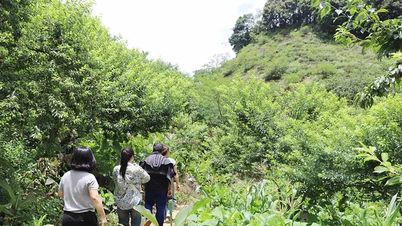
Developing OCOP products from characteristic crops and livestock, building brands to expand consumption markets, and creating jobs for rural workers (Photo: A part of the raw material area of Tam Dao Golden Flower Tea Co., Ltd. in Tam Duong Bac commune).
To effectively implement Resolution No. 19-NQ/TW, Phu Tho province has set many specific goals such as: an average annual growth rate of 3.5-4% in the added value of the agriculture, forestry, and fisheries sector during the 2026-2030 period; the proportion of the agriculture, forestry, and fisheries sector accounting for approximately 8.3% of GRDP; grain production reaching over 1.3 million tons; ensuring local food security and improving food quality. The province strives to achieve, by 2030, a labor force ratio in agriculture of approximately 18%; over 85% of communes meeting the new rural standards; and essentially eliminating extremely difficult communes and villages, and eliminating poor households according to the multidimensional poverty standard for the 2021-2025 period.
Comrade Nguyen Van Quan shared: “Before the merger, the Provincial Party Committees of Vinh Phuc, Phu Tho, and Hoa Binh provinces all directed their agricultural departments to develop action plans to implement Resolution No. 19-NQ/TW. The key tasks identified were: perfecting mechanisms and policies for developing ecological agriculture, modern rural areas, and civilized farmers; promoting digital transformation and innovation; attracting investment resources for agriculture and rural areas; building new rural areas in conjunction with urbanization; promoting the consumption of agricultural, forestry, and aquatic products; and strengthening international integration.”
During the 2025-2030 term, the Agriculture and Environment sector will focus on implementing circular agriculture development programs, integrating multiple values for key agricultural products and specialties associated with the development of OCOP (One Commune One Product) and agricultural tourism; effectively implementing the National Target Program on building new rural areas and sustainable poverty reduction for the 2026-2030 period; and implementing policies to support production development under national target programs.
To achieve the set goals, the province continues to promote the restructuring of the agricultural sector towards increasing added value and sustainable development associated with building new rural areas; strongly developing key products and products with competitive advantages; forming concentrated production areas; strengthening linkages between production and processing industries, services, and tourism; building brands and promoting products. At the same time, it will develop large-scale, specialized commodity production areas; apply advanced processes and standards; ensure food safety; and move towards green, organic, circular, low-emission, and environmentally friendly agriculture.

Building a collective economy, creating jobs and stable income for farmers in rural areas is one of the main solutions for developing rural agriculture (Photo: Members of Do Xuyen Safe Vegetable Cooperative, Lien Minh commune, tending to safe vegetables).
The province continues to promote the development of science and technology, innovation, and digital transformation in accordance with Resolution No. 57-NQ/TW of the Politburo; prioritizing the application of high technology, biotechnology, and environmentally friendly production technologies. Alongside this, it aims to replicate effective economic models; develop appropriate forms of production organization in rural areas; focus investment resources on key and distinctive product groups; effectively mobilize social resources to invest in the development of agricultural and rural infrastructure, irrigation, and disaster prevention; and enhance the capacity to respond to climate change and protect the environment.
The building, expansion, and improvement of value chains in agricultural production continue to be emphasized; the development of the collective economy is linked to the development of OCOP products.
Resolution No. 19-NQ/TW has truly created new momentum for agricultural and rural development. With existing potential and advantages, along with the province's synchronized support mechanisms and policies, agriculture in the ancestral land region is aiming for modern, sustainable, smart development and high added value in the future.
Quan Lam
Source: https://baophutho.vn/ky-iii-dong-luc-moi-cho-tam-nong-253487.htm














































































Comment (0)