

Increased liquidity pressure
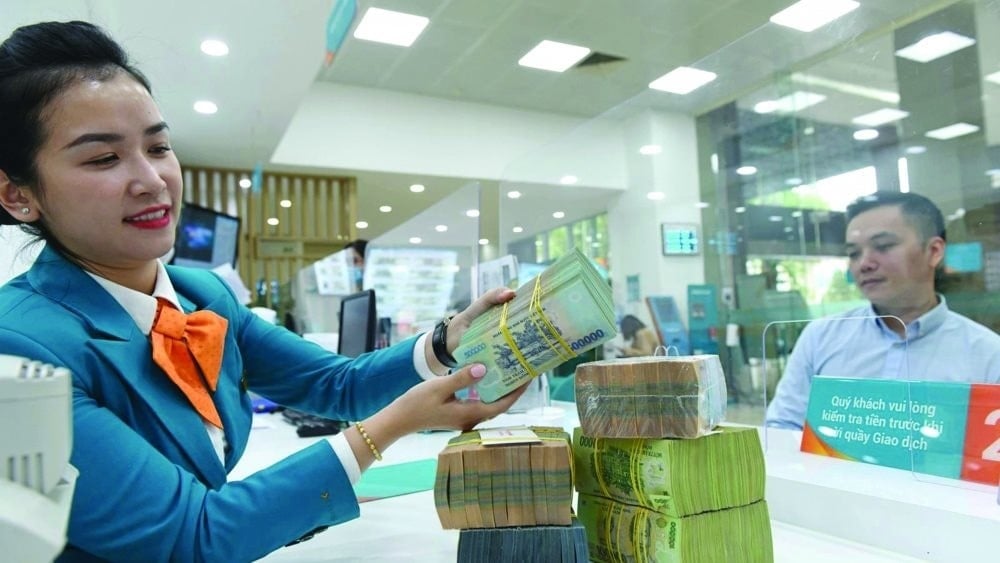
According to the State Bank of Vietnam, as of November 27th, outstanding credit in the entire economy reached over 18.2 million billion VND, an increase of 16.56% compared to the end of 2024 – a high increase compared to the same period in recent years. Meanwhile, deposit growth has slowed considerably, increasing liquidity pressure in the banking system, especially during the peak period at the end of the year.
Market developments indicate that deposit interest rates have started to rise again. Statistics from the Vietnam Banking Association (VNBA) show that in November alone, 22 commercial banks adjusted their deposit interest rates upwards, with common increases ranging from 0.1% to 0.3 percentage points. Some large banks raised interest rates for 6-12 month terms to approximately 4.8-5.2% per year. This trend continued in December with a series of banks announcing further increases in deposit interest rates. Notably, recently, four state-owned commercial banks – Agribank , BIDV, Vietcombank, and VietinBank – simultaneously increased deposit interest rates by 0.5% per year across various terms. This move is considered inevitable given that credit growth is much faster than deposit growth, forcing large banks to participate in maintaining capital stability.
 |
| Lending interest rates will remain stable to support the economy. |
Although deposit interest rates have tended to rise, the State Bank of Vietnam has recently managed monetary policy proactively, flexibly, and positively to support businesses, people, and the economy.
Right in the first quarter of the year, the State Bank of Vietnam kept policy interest rates at low levels, while directing credit institutions to implement various solutions to stabilize deposit interest rates, reduce operating costs, and lower lending interest rates.
This effort has yielded clear results. By the end of October, the average lending interest rate for new transactions had decreased to 6.88% per annum, while the average deposit interest rate remained at approximately 4.22% per annum (as of October 10, 2025). Maintaining low lending interest rates is considered a crucial driver of demand and the economy's ability to absorb capital, creating a foundation for the strong credit growth seen in recent years.
Current market prices are still lower than in the past.
In its updated Banking sector report, Vietcap Securities stated that the increase in interest rates by state-owned banks was not surprising, given that private banks had already raised rates and the State Bank of Vietnam (SBV) had increased the OMO interest rate by 0.5 percentage points. However, Vietcap emphasized that current interest rates remain historically low. Accordingly, the 12-month deposit interest rates of Vietcombank, BIDV , and VietinBank increased from 4.6-4.7%/year to approximately 5.2%/year, but are still 0.3-0.4 percentage points lower than the low point during the Covid-19 period of 2020-2021 and about 1.6 percentage points lower than pre-Covid levels. "The current absolute interest rate level is still supportive of the economy," Vietcap assessed.
According to Vietcap, the current pressure to raise interest rates is under control, and the State Bank of Vietnam (SBV) is expected to continue maintaining its loose monetary policy stance to support the Government's 10% GDP growth target for 2026. In the short term, Vietcap believes that the SBV is actively supporting system liquidity, and historically, the tension usually eases from March, after the Lunar New Year holiday.
In the medium term, liquidity will continue to improve thanks to factors such as the Fed's interest rate cutting trend; accelerated disbursement of public investment; banks diversifying their deposit channels; and the return of household businesses and traders to depositing money into the system as they adapt to new regulations on taxes and electronic invoices.
From a management perspective, Ms. Ha Thu Giang, Director of the Department of Credit for Economic Sectors (State Bank of Vietnam), stated that the banking system is under significant pressure to provide medium and long-term capital, especially for key national projects, while the corporate bond and securities markets have not fully played their role as channels for long-term capital mobilization. This continues to place a heavy burden on the banking system, thereby creating considerable pressure on capital mobilization.
Mr. Tran Ngoc Bau, CEO of WiGroup, predicts that deposit interest rates will continue to rise in the coming period due to seasonal liquidity demand before Tet; limited supplementary capital channels, making deposit mobilization the optimal option; and the system's deposit structure, with nearly 80% being maturities under 6 months, meaning each increase usually lasts 3-6 months.
Despite a slight increase in deposit interest rates, fundamental factors suggest that lending interest rates remain low thanks to the flexible management of the State Bank of Vietnam, the remaining room for maneuver from lower input costs compared to the past, and the need to support economic growth.
In fact, throughout 2025, the State Bank of Vietnam continuously directed credit institutions to reduce costs, improve operational efficiency, and create conditions for lowering lending interest rates for priority sectors, production and business activities, and growth drivers.
Considering all factors, the current interest rate hike primarily reflects short-term capital supply and demand pressures and seasonal factors, while the underlying policy remains geared towards stability and growth support.
Therefore, according to experts, it can be affirmed that interest rates are rising but are not yet a cause for concern. The important thing is to continue closely monitoring market developments, the flexible management of the State Bank of Vietnam, and the efforts of banks in balancing capital sources to ensure the safety of the system while maintaining stable interest rates, supporting businesses and the economy in the coming period.
Source: https://thoibaonganhang.vn/lai-suat-tang-nhung-van-chua-dang-lo-ngai-175606.html























































































Comment (0)