

The officials... are so different!
This is the whispered observation among employees about those who have changed significantly for the worse since becoming managers or bosses. In reality, many people were very good employees, sociable, respectful, caring, and helpful to their colleagues; but once they become bosses, they gradually change. Initially, they interact less with subordinates, becoming increasingly distant, cold, and indifferent. Some managers even turn away from former colleagues, acting as if they don't know them; in situations where interaction is necessary, they offer a perfunctory handshake, give brief answers, or even adopt a condescending and arrogant tone. Meanwhile, they become subservient, obsequious, and flattering towards their superiors.
"The 'bosses are so different' also lies in the fact that, as employees, they often shared the difficulties and hardships of their colleagues in life and work, criticized their superiors for not promptly addressing problems and shortcomings, and for not having adequate policies and benefits to care for the workers; not a few even boldly declared: 'If I were the boss, things would be different...'. However, once they become bosses, they forget everything; they ignore subordinates' suggestions. Some new bosses don't even care about resolving the legitimate opinions and aspirations of the workers as much as the old bosses did, only focusing on personal gain. This 'too different' makes subordinates and workers feel discouraged, lose faith, and lose motivation to strive."
 |
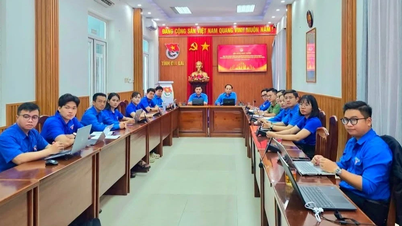
| Illustration photo: Chinhphu.vn |
It's a responsibility to do, not a favor.
A phenomenon that urgently needs to be addressed and rectified is that some officials do not fully understand their responsibilities and obligations. Instead of caring for and resolving the legitimate rights and interests of their subordinates and employees, they assume that subordinates must beg and plead, while superiors have the right to "bestow favors" and refuse them if they don't like them. This is one of the leading causes of "lobbying," leading many employees and workers, even against their will, to find ways to approach, flatter, and cater to their superiors in order to gain their favor and receive their attention and "assistance."
The fact that bosses feel entitled to "bestow favors" has serious consequences. It not only creates a widespread form of corruption and malpractice through lobbying, but also leads to internal disunity, negative attitudes among employees, and even self-transformation and self-evolution. Furthermore, it hinders the development of organizations, units, and businesses because it creates negative competition: talented and virtuous individuals who don't know how to "lobby" are not valued by their superiors; those who have to "lobby," once they become bosses, will try to "recoup their investment," only "bestowing favors" on subordinates who serve them, and the cycle of "lobbying" continues...
Some managers, upon becoming bosses, suddenly adopt a cold and aloof attitude towards their subordinates and employees. Former colleagues often whisper about them: "A cold and aloof boss makes subordinates afraid; they have to flatter and fawn over them to receive attention and help. If they were friendly, approachable, impartial, and objective in fulfilling their responsibilities... where would the money come from?!"
Being distant from the people leads to many mistakes.
As cadres and Party members, everyone surely knows President Ho Chi Minh 's saying: "A hundred times easier tasks are impossible without the people's support, but a thousand times harder tasks can be accomplished with the people's participation." This is a valuable lesson, a profound admonition from Uncle Ho to the cadres and Party members about the importance of "putting the people first." Even easy tasks cannot be accomplished without the people's consensus, support, and participation. Conversely, with the people's agreement and contribution, even the most difficult tasks can be successfully completed. According to him, "the people have a hundred ears and a thousand eyes," because the people are everywhere and can quickly detect right and wrong, good and bad, so no one can hide wrongdoing from the people. Therefore, leaders must respect, listen to, trust, and promote the role of the people. To combat bureaucracy, corruption, and waste, democracy must be practiced; the people must be informed, consulted, and able to inspect and supervise. Practicing democracy is also the driving force for the development of society as well as each organization.
However, there are still many officials who are distant from the people, who do not truly listen to their subordinates and workers, leading to a lack of understanding of reality in order to issue appropriate, effective, and feasible policies; in some cases, they even issue "unrealistic" regulations that are opposed by public opinion because they cannot be implemented in real life, leading to mistakes and failures.
Over time, we have learned many lessons regarding this issue, such as: Some BOT toll stations (to recoup investment for infrastructure construction and upgrade projects) were placed in the wrong locations, failing to consider public opinion, leading to strong public backlash, the suspension of toll collection, or relocation of the stations. Some BOT projects even faced investigations and penalties for violations. The policy to restrict motorbikes from entering Hanoi's inner city (2017-2021) to reduce traffic congestion and environmental pollution also failed to adequately consult public opinion and lacked suitable alternative public transportation options, making it unfeasible.
On a smaller scale, there are many autocratic and patriarchal officials who disregard the opinions of subordinates and workers, leading to many erroneous and ineffective decisions. Most reprehensible is the evaluation, utilization, and appointment of officials based on personal feelings, without consulting or respecting the opinions of subordinates. In reality, many people "talk big but do little," fawning over and flattering their superiors, pretending to be very good to win their favor and get promoted; however, they fail to fulfill their roles as officials, their moral character is unworthy, causing resentment and fostering negative thoughts. In evaluating and appointing officials, if those in authority prioritize considering work performance and sincerely seek the opinions of subordinates and workers, and thoroughly analyze information, they will know the truth and avoid mistakes.
To truly gain the respect and trust of subordinates and workers, each official needs to regularly and seriously self-reflect and correct their own shortcomings. The best way to do this is to be close to and sincerely listen to the opinions of subordinates and workers. It's understood that officials have many tasks and relationships to deal with, leaving little time to meet and interact with subordinates and the public. However, if officials are truly dedicated and competent, and genuinely committed to the common good, they will find appropriate ways to earn the respect and trust of their subordinates, avoiding becoming officials who are "indebted" to the workers and criticized by the public.
LAM SON
*Please visit the section on Protecting the Party's Ideological Foundation to view related news and articles.
 |
Source: https://www.qdnd.vn/phong-chong-tu-dien-bien-tu-chuyen-hoa/lam-can-bo-dung-mac-no-nguoi-lao-dong-826530


















































































Comment (0)