


This shift has not only accelerated the pace of technological innovation, but more importantly, has fundamentally changed the role of science and technology in national development strategies and ensuring national self-reliance.
In many developed countries, although different in model, they all share a common principle: developing strategic technology using a systems approach, with clear roles and close coordination between the State, businesses, and research institutes and universities. The State plays a facilitating, guiding, and investing role in high-risk, long-term stages; businesses are the central actors in commercialization and scaling up; and the system of research institutes and universities plays a foundational role in knowledge, core technologies, and training high-quality human resources.
Vietnam is in the early stages of building its capacity to master strategic technologies. Total spending on research and development (R&D) currently only reaches about 0.5 to 0.6% of GDP, significantly lower than many countries. According to data from the Ministry of Science and Technology , the state budget remains the main source of investment, accounting for over 75% of total spending on basic research, while the private sector and public-private partnerships contribute about 20 to 25%. This structure indicates that market incentives for strategic technology research and development are not yet strong enough to drive long-term programs.
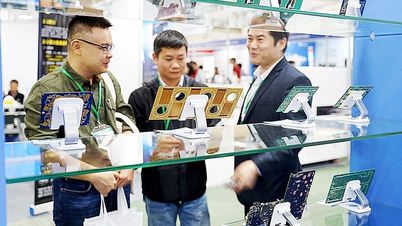
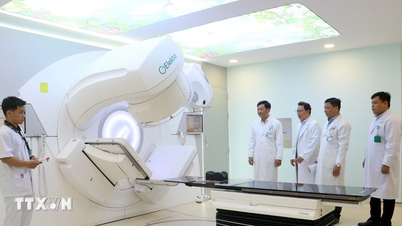
Vietnam has also established a network of research institutes, universities, and laboratories in many key fields, accumulating capacity for foundational research, applied research, and human resource training, especially in the fields of information technology, automation, materials, biology, and high-tech agriculture . However, the capacity to master core technologies remains limited, and research activities mainly focus on improving, adapting, and applying technology rather than creating core technologies capable of leading the value chain.
In 2024, out of a total of 4,430 patents granted, only 308 belonged to Vietnamese individuals. The majority of domestic inventions originated from the public research sector and focused on fulfilling scientific and technological tasks, while foreign inventions concentrated on foundational technologies with commercialization potential and global competitiveness.
According to experts, Vietnam needs to shift from an organization based on units and sectors to one based on strategic technology chains, ensuring continuous connectivity from foundational research, application-oriented research, technology development to testing, commercialization, and scaling up to improve investment efficiency.
This also involves establishing an inter-sectoral coordination mechanism, linking science and technology policies with industrial, investment, training, and market development policies, while creating conditions for the genuine participation of businesses. The roles of stakeholders need to be "appropriate," with businesses playing a central role in commercialization and scaling up; the State focusing on institutional creation, guidance, and investment in high-risk, long-term areas; and research institutes and universities focusing on foundational research, core technologies, testing, and training high-quality human resources...
The research and training network needs to be reorganized to form competency clusters and centers of excellence in strategic technology fields to create leading nuclei. The research and training system needs to be more closely linked to businesses and the market through task design based on practical needs, with early business involvement and mechanisms for co-investment and sharing of research and testing infrastructure.
Source: https://nhandan.vn/lam-chu-cong-nghe-chien-luoc-post945090.html
![[Photo] Prime Minister Pham Minh Chinh presides over meetings of the Government Standing Committee to discuss several important issues.](https://vphoto.vietnam.vn/thumb/1200x675/vietnam/resource/IMAGE/2026/03/16/1773674631996_ndo_br_img-5789-jpg.webp)
![[Photo] Secretary of the National Assembly Party Committee, Chairman of the National Assembly presides over the fourth meeting of the National Assembly Party Committee Executive Board.](https://vphoto.vietnam.vn/thumb/1200x675/vietnam/resource/IMAGE/2026/03/16/1773656046264_ndo_br_bnd-0533-jpg.webp)

![[Photo] General Secretary To Lam receives the Chinese Ministers of Foreign Affairs, National Defense, and Public Security attending the Conference on the “3+3” Strategic Dialogue Mechanism](https://vphoto.vietnam.vn/thumb/1200x675/vietnam/resource/IMAGE/2026/03/16/1773659640884_a1-bnd-0963-2144-jpg.webp)
![[Photo] Prime Minister Pham Minh Chinh receives the Ministers of Foreign Affairs, Defense, and Public Security of China.](https://vphoto.vietnam.vn/thumb/1200x675/vietnam/resource/IMAGE/2026/03/16/1773659638054_ndo_br_dsc-4386-6157-jpg.webp)
![[Photo] Prime Minister Pham Minh Chinh holds a phone call with Angolan President João Manuel Gonçalves Lourenço](https://vphoto.vietnam.vn/thumb/1200x675/vietnam/resource/IMAGE/2026/03/16/1773674632171_ndo_br_dsc-4772-jpg.webp)









![[Photo] Prime Minister Pham Minh Chinh presides over meetings of the Government Standing Committee to discuss several important issues.](https://vphoto.vietnam.vn/thumb/402x226/vietnam/resource/IMAGE/2026/03/16/1773674631996_ndo_br_img-5789-jpg.webp)
![[Photo] Prime Minister Pham Minh Chinh holds a phone call with Angolan President João Manuel Gonçalves Lourenço](https://vphoto.vietnam.vn/thumb/402x226/vietnam/resource/IMAGE/2026/03/16/1773674632171_ndo_br_dsc-4772-jpg.webp)

















































Comment (0)