

Witnessing a new wave of inflation, the Russian Central Bank (CBR) raised interest rates by another 100 basis points on September 15.
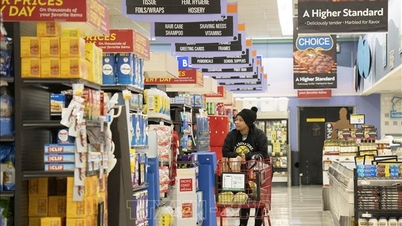
Food and other basic commodity prices in Russia are soaring. According to government data, in August, fruits and vegetables were 20% more expensive than the same period last year, while chicken and eggs also rose by 15% and 12% respectively. Overseas travel is nearly 40% more expensive after the ruble's sharp depreciation this year.
According to an August survey by the polling organization FOM, parents reported that spending on uniforms and children's clothing had increased to an average of 15,000 rubles, equivalent to about $156, up from 10,000 rubles last year.
Overall, inflation last month reached 5.2%, double the 2.3% recorded in April. To curb rising prices, on September 15, the Russian Central Bank (CBR) raised its key interest rate from 12% to 13%.
Just last month, the CBR also sharply raised interest rates by 350 basis points (3.5%), aiming to prevent a ruble sell-off. The Russian central bank said further rate hikes were possible because "significant inflationary risks have emerged" in the economy .
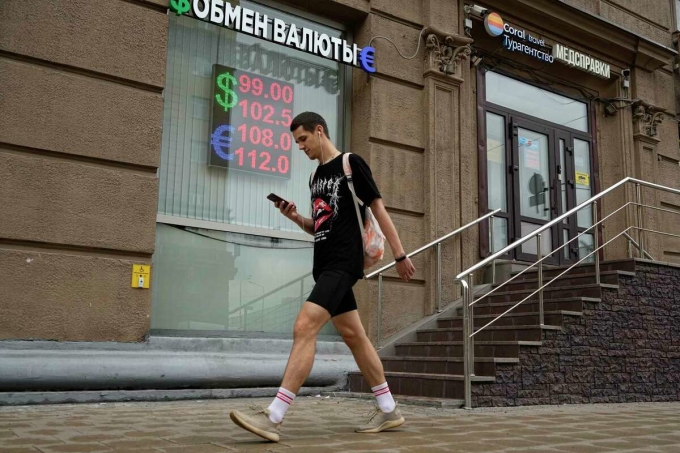
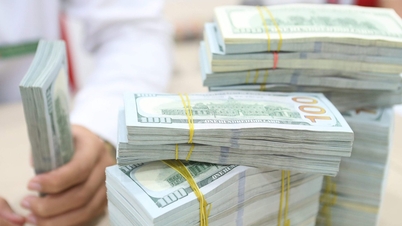
A man walks past a currency exchange point in Moscow on August 14. Photo: AP
The ruble's depreciation, booming military spending, and persistent labor shortages have contributed to the recent surge in prices. Russia experienced a period of high inflation last year after Western sanctions were imposed. However, prices subsequently cooled temporarily.
The resurgence of inflation is a major concern for the government, which is seeking to protect its citizens from the effects of sanctions. The Russian economy has weathered its most difficult periods thanks to massive government spending and the Kremlin's ability to find new trading partners.
Speaking at the Economic Forum on September 12, Russian President Vladimir Putin said that if the government did not intervene, it would lead to uncontrolled inflation. "The reality is that it is impossible to make business plans under conditions of high inflation. There are no good or very good decisions here, only difficult decisions," he stated.
Many challenges still lie ahead. According to a central bank survey, Russian businesses' inflation expectations in September were at their highest level since the surge triggered by sanctions last year.
Sergey Shagaev, a 49-year-old driver in Saransk, a city about 640 km southeast of Moscow, said his family has had to cut back on meat consumption and vacations. "Now we have no money left for food and housing. Everyone I know is poorer," he said. Previously, Sergey Shagaev's family used to vacation in Türkiye twice a year. "But now we've forgotten where Türkiye is," he joked.
According to a July survey by research firm Romir, one in five Russians plans to cut spending on food and other essential goods. Around 28% are looking for additional work.
In larger cities, where wages are higher, inflation is felt through more expensive imported goods. Dmitriy, a 25-year-old programmer living in St. Petersburg, says the prices of designer clothes, cars, and electronics have risen sharply due to the depreciating ruble. His income, however, has remained unchanged.
"If the ruble continues to depreciate, I might consider working remotely to receive foreign currency or transferring to Europe," he said. Russian consumers are also searching for discounted items, from backpacks to ketchup, on the social media platform Telegram. The federal antitrust agency recently ordered electronics retailers to keep prices of basic products such as televisions, washing machines, and coffee makers unchanged.
The impact of the CBR's monetary tightening to curb inflation and maintain the ruble's value may be limited. The large interest rate hike in August came after Russian politicians publicly criticized the central bank's policy as too loose, only temporarily boosting the currency. The ruble is still down more than 20% against the USD and euro this year. The CBR previously estimated that for every 10% ruble depreciation, inflation would rise by one percentage point, as ruble-denominated imports become more expensive.
Prior to the Ukraine conflict, the CBR influenced the ruble's value by using its reserves to intervene in the currency market. They also encouraged foreigners to buy ruble-denominated assets, such as government bonds, at higher interest rates. But Western sanctions have weakened those instruments. The ruble's value is now primarily supported by Russian energy sales revenue.
Dietmar Hornung, Deputy Managing Director at Moody's Investor Service, said higher interest rates "are probably the only leverage they (CBR) have at the moment." "But the effect, especially given the constraints of the Russian economy, is minimal," he said.
Rising inflation is further widening the gap between rich and poor. Wealthy Russians have been transferring billions of dollars into offshore bank accounts since February 2022, and those savings are worth more as the ruble depreciates.
"Rising inflation only harms those with lower incomes," said Sofya Donets, a Russian economist at Renaissance Capital. She predicts that weaker demand and less government stimulus following the presidential election will bring inflation in Russia down to 4% by the second half of 2024.
Phiên An ( according to WSJ )
Source link






























































































Comment (0)