

From the end of February 2026, as the conflict escalated, investors predicted that gold would surge, as has been seen in history. However, a completely opposite scenario has unfolded. After the trading session on May 19th, the price of gold continued to weaken and retreated to new lows yesterday.
The shock from inflation and interest rates.
The reason for this sharp drop is not due to gold losing its safe-haven value, but rather inflation. According to newly released data, inflation in the US in April reached 3.8%, the highest level since May 2023.
The Producer Price Index (PPI) also recorded its sharpest increase since the beginning of 2022, reflecting the strong price pressures spreading from energy costs.
The main reason stems from oil prices – the "nightmare" of every economy . Conflicts in the Middle East have pushed Brent crude oil prices above $100 per barrel, creating a global input cost shock. Escalating inflation has forced the US Federal Reserve (Fed) to change its stance.
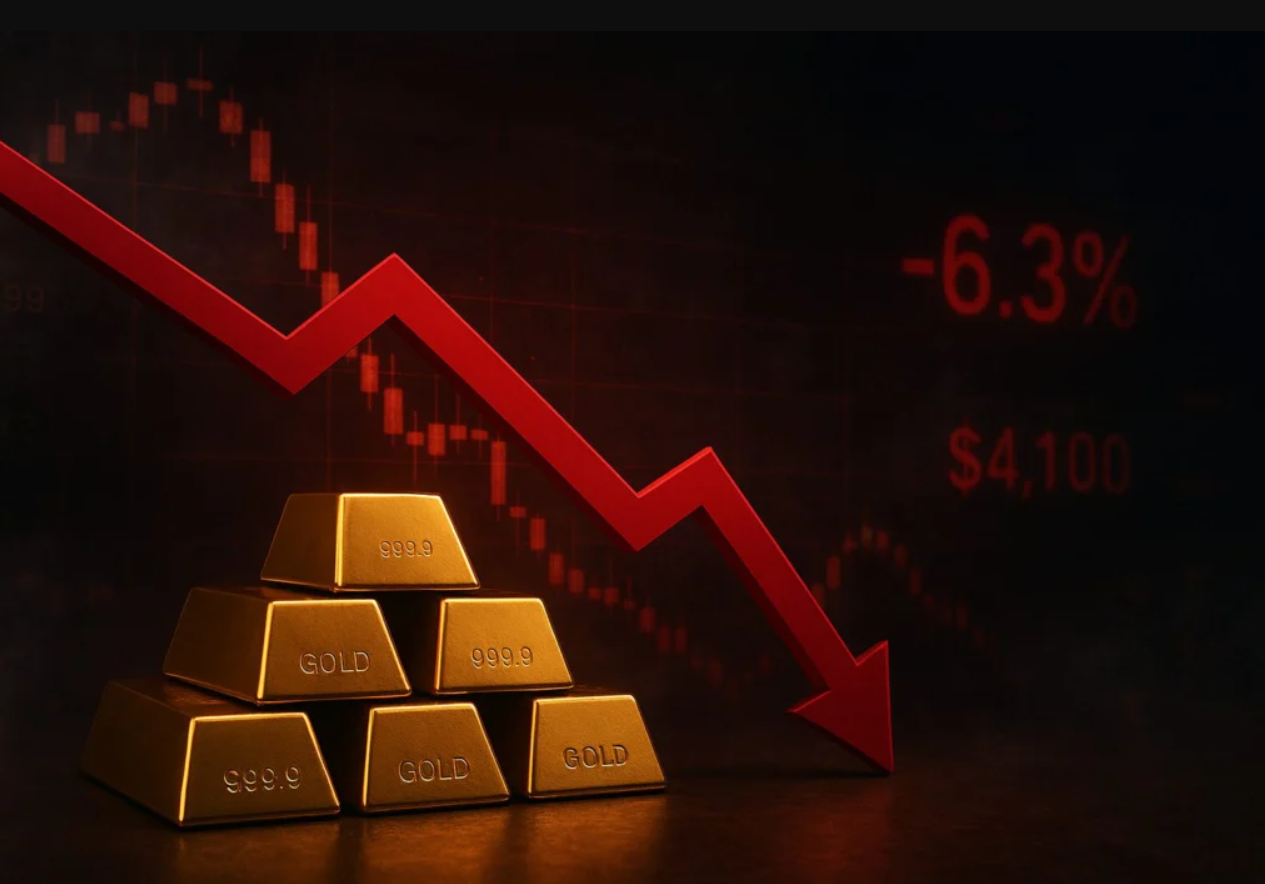
Expectations for the Fed to cut interest rates in 2026 have now weakened considerably. Instead, the market is betting on the possibility that the Fed will raise interest rates again.
This prospect makes any investor wary. As a result, the US dollar strengthens, while US government bond yields rise.
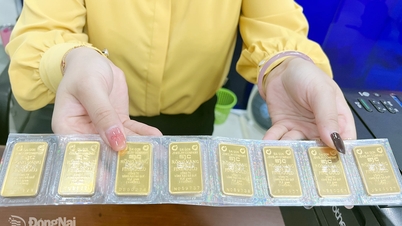
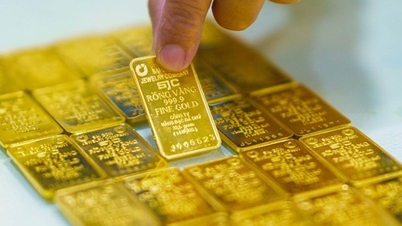
Paper gold is being sold off, while real gold continues to attract investment.
The interest rate mechanism is "tightening" the grip on gold. Because gold is a non-interest-bearing asset, holding the precious metal becomes less attractive when bank interest rates and bond yields rise.
Institutional investors are withdrawing heavily from gold ETFs. Specifically, according to data from the World Gold Council (WGC), the first quarter of 2026 saw outflows of 16 tonnes of gold ETFs in North America, ending a nine-month streak of consecutive capital injections.
More notably, March 2026 alone saw a global net outflow of approximately $12 billion – the highest in history for capital flowing out of gold ETFs.
CME Group's FedWatch tool shows a 39% probability that the Fed will raise interest rates in December.
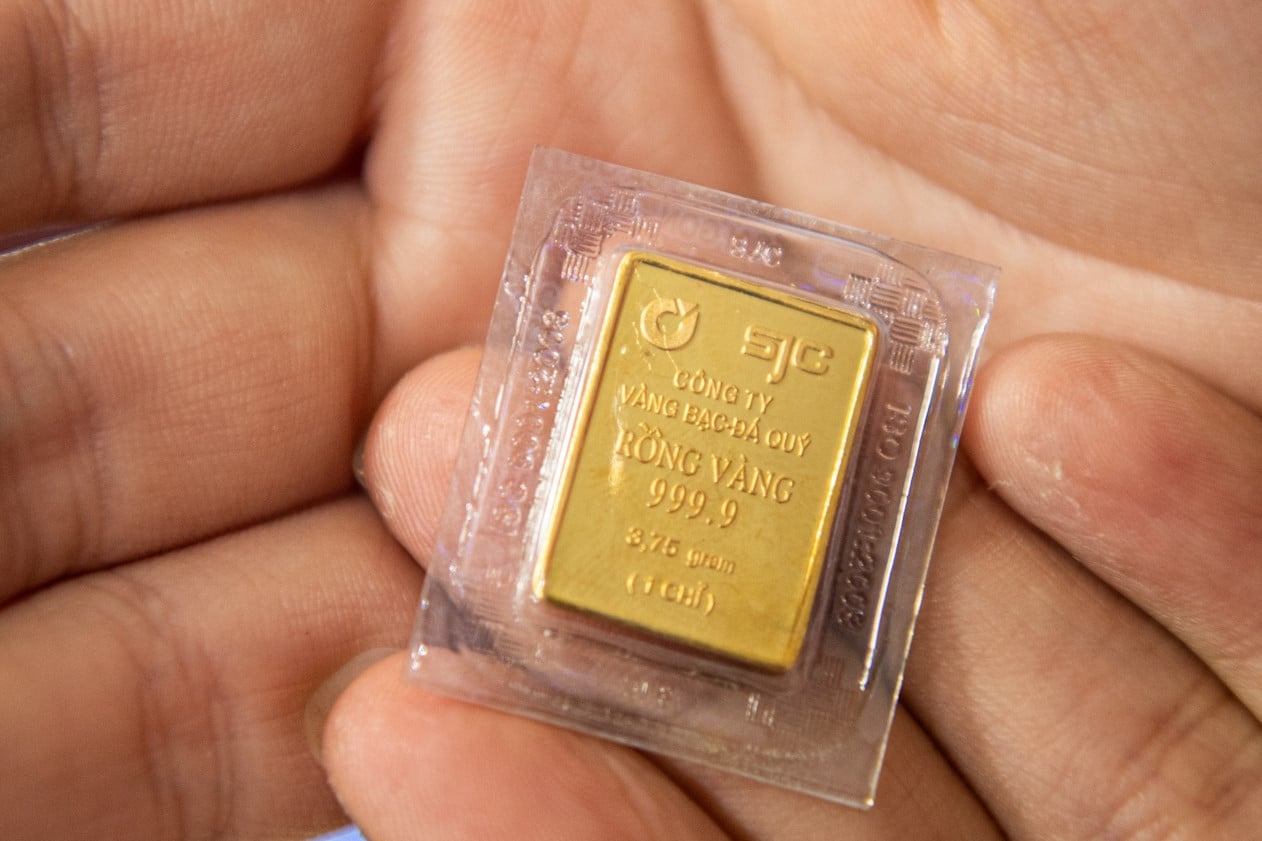
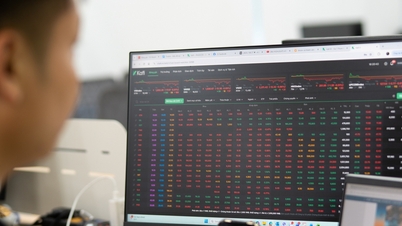
However, the story becomes even more dramatic when looking at the distinction between "paper gold" (futures contracts, ETFs on the Comex exchange) and "real gold" (gold bars, gold rings).
While institutional investors dumped "paper gold" on the Comex exchange, individuals and small investors in Asia continued to quietly buy physical gold. According to the World Gold Council (WGC), global demand for gold bars and coins in the first quarter of 2026 reached 474 tonnes – the second highest level in history, with China and India leading the way.
This reflects the continued strong demand for physical gold from individuals and retail investors at low price levels, a stark contrast to the sell-off in the derivatives market.
This contrast suggests that the pressure is currently primarily in the "paper gold" market, where derivative assets are being sold off to cover margin calls, rather than in the demand for holding physical gold.
What does the future hold for precious metals?
Looking at history, gold has experienced similar sharp declines in 1974-1976 and 2008. In late 1974, gold lost as much as 41% of its value as the US economy faced stagflation.
However, in the following two years, the price of gold surged by more than 340%. A similar story unfolded after the 2008 crisis.
Major banks like JPMorgan and Goldman Sachs maintain a long-term optimistic outlook, forecasting year-end prices of $6,300 and $5,400 per ounce, respectively.
The reason lies in the pressure of the US budget deficit. With a deficit of up to $1.9 trillion per year, the Fed cannot maintain excessively high interest rates indefinitely in the long term because it would stifle the economy and cause the cost of repaying the national debt to explode.
Right now, global central banks, led by China and India, are still net buyers of gold to reduce their dependence on the US dollar.
Despite India raising import taxes on gold to control imports, demand for the precious metal in the country remains high. This move demonstrates that gold's appeal to the real economy remains very strong.
In the short term, gold may face further pressure as inflation continues to rise. However, if a "stagflation" scenario occurs, meaning high inflation is accompanied by slowing growth, the Fed will be unable to raise interest rates further. That's when gold, as an inflation hedge, will once again shine.
The current sell-off may simply be a sharp correction in the financial markets. History shows that gold often comes under pressure when interest rates rise, but it has also repeatedly recovered strongly after periods of monetary tightening.
According to The Hindu Business Line, The Trading Economics
Source: https://vietnamnet.vn/vang-bi-ban-thao-kich-ban-dao-lon-moi-quy-tac-2517794.html

![[Image] Pleasant weather helps students enter the 10th grade entrance exam with confidence.](https://vphoto.vietnam.vn/thumb/1200x675/vietnam/resource/IMAGE/2026/05/29/1780034401612_ngay-1-thi-lop-10-minh-duy-8-5009-jpg.webp)



![[Photo] Ba Lang An Lighthouse - the "eye of the sea" amidst the "rock museum" of Quang Ngai province.](https://vphoto.vietnam.vn/thumb/1200x675/vietnam/resource/IMAGE/2026/05/29/1780038698840_anh-man-hinh-2026-05-29-luc-14-10-42.png)































































































Comment (0)