

 |
| Investors abandoned tech stocks as US bond yields soared, dragging Wall Street into the red. |
Wall Street closed in the red on May 19th (US time) as investor caution continued to mount amid persistent inflationary pressures and US Treasury yields reaching their highest levels in over a year. The decline was concentrated primarily in the technology sector, which had previously led the US market to numerous all-time highs.
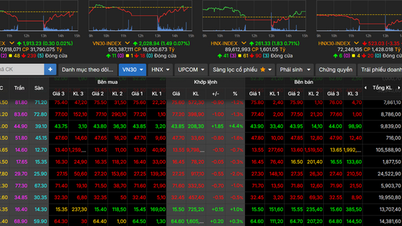
At the close of trading, the Dow Jones Industrial Average fell 322.24 points, or 0.6%, to 49,363.88 points. The S&P 500 lost 49.44 points, or 0.7%, to 7,353.61 points. Meanwhile, the Nasdaq Composite saw the biggest drop, losing 220.02 points, or 0.8%, to 25,870.71 points.
This also marks the third consecutive day of declines for the S&P 500 since the index set a new all-time high last week. The Russell 2000, representing smaller-cap stocks, also fell 1%, indicating widespread selling pressure across the market.
The negative performance on Wall Street occurred as the yield on 10-year US Treasury bonds surged to 4.687%, its highest level since January 2025, before easing slightly to around 4.66% by the end of the session. The sharp rise in yields reflects expectations that inflation in the US may remain high for an extended period, especially as energy prices remain high due to geopolitical tensions in the Middle East.
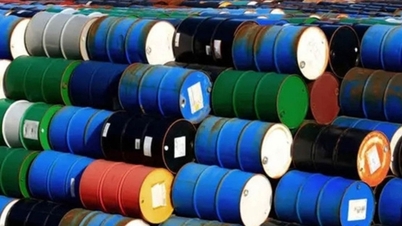
Investors are currently particularly concerned about the risk of a prolonged conflict involving Iran disrupting global oil supplies. Although Brent crude fell slightly by 0.73% during the session, prices remained above $110 per barrel as the market closely monitored developments surrounding the Strait of Hormuz, a vital energy shipping route for the world .
The latest statement from US President Donald Trump indicates that Washington has not ruled out the possibility of resuming military action against Iran if negotiations fail. Meanwhile, US Vice President JD Vance stated that both sides have made some positive progress and neither wants to see the conflict escalate again.
However, uncertainty surrounding the prospects for peace continues to keep global financial markets on the defensive. Michael James, head of equity trading at Rosenblatt Securities, noted that as long as there are no clear signals of a ceasefire or a stabilization agreement in the Middle East, oil prices and bond yields will remain high, putting significant pressure on equities.
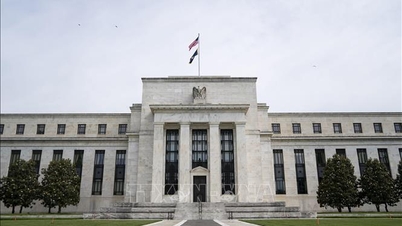
Another factor contributing to cautious market sentiment is the possibility that the Federal Reserve may maintain its tight monetary policy for longer than expected. Some investors have even begun considering the scenario where the Fed continues to raise interest rates if inflation does not fall as expected.
According to CME Group's FedWatch tool, the probability of the Fed raising interest rates by 25 basis points in December has now risen to 41.7%, while the probability of a 50 basis point increase has jumped to 15.7%, significantly higher than the 4.7% recorded a week ago. This reflects the rapid shift in market expectations following a series of data showing that price pressures have not yet truly eased.
Rising bond yields have strongly impacted technology stocks, the sector most sensitive to interest rates. Semiconductor and artificial intelligence stocks have all corrected as investors intensified profit-taking after a prolonged period of rapid growth since the end of March.
Technology and media services were the two sectors dragging down the S&P 500 index the most. Meanwhile, the energy sector also experienced significant volatility as the oil market fluctuated amid unclear diplomatic signals between the US and Iran.
Investors are also currently focusing their attention on the upcoming earnings report from NVIDIA, a company considered a symbol of the global AI wave. Nvidia's results are expected to significantly impact the short-term trend of semiconductor stocks as well as the entire Nasdaq index in the coming period.
Despite the sharp market correction in recent sessions, US stocks have maintained relatively positive gains since the beginning of 2026. The Nasdaq is currently up more than 11%, the S&P 500 is up about 7.4%, while the Dow Jones is up nearly 3%. This suggests that the long-term trend of the market has not been broken, although short-term volatility is increasing significantly under the influence of inflation, bond yields, and geopolitical tensions.
In the current climate, analysts believe investors will continue to closely monitor bond yields, oil prices, and the latest Fed policy meeting minutes for further clues about future interest rate direction. If inflationary pressures persist, Wall Street is likely to face significant volatility in the short term.
Source: https://thoibaonganhang.vn/pho-wall-do-lua-vi-noi-lo-lam-phat-va-lai-suat-182245.html
![[Photo] General Secretary and President To Lam works with the Party Committee of the Ministry of Health on the work of Vietnamese traditional medicine.](https://vphoto.vietnam.vn/thumb/1200x675/vietnam/resource/IMAGE/2026/05/20/1779294323718_a1-bnd-2978-3319-jpg.webp)
![[Image] "Journey of Hope" promotes the organ and tissue donation movement in Vietnam.](https://vphoto.vietnam.vn/thumb/1200x675/vietnam/resource/IMAGE/2026/05/20/1779294400833_1-8910-jpg.webp)



![[Photo] National Assembly Chairman Tran Thanh Man working with the Standing Committee of the National Assembly's Delegation Affairs Committee.](https://vphoto.vietnam.vn/thumb/1200x675/vietnam/resource/IMAGE/2026/05/20/1779294340023_ndo_br_1-1691-jpg.webp)


























































































Comment (0)