

Travel is an opportunity to relax, explore, and experience new things. However, more and more tourists are becoming victims of sophisticated scams, turning their dream trips into sad memories.
Scams not only cause financial losses but also inflict emotional distress and erode trust among travelers. In the context of authorities striving to clean up the online space, eliminate fake accounts, and severely punish fraudulent activities, each consumer needs to proactively equip themselves with knowledge and skills to become a "wise" traveler.
Common scams
In May 2025, the Lang Son Provincial Police discovered and dismantled a fraud ring that used a scheme involving cheap, high-discounted resort bookings to lure people into making deposits, then misappropriating the money.
Having gained experience working for fraudulent companies in Cambodia in 2024, these individuals created fake Facebook fan pages resembling those of companies and tourist destinations, and ran extensive advertising campaigns on social media to attract potential customers.
When someone interacts or comments, the perpetrators proactively send private messages, images of tourist destinations, and offer prices lower than the market rate, enticing customers to "close the deal" and transfer money. In just 15 days, this ring defrauded approximately 80 victims of over 250 million VND.
This is just one of many scams related to tourism. Common tactics include advertising surprisingly cheap tours with "one-of-a-kind" promotions to trick customers into paying deposits or full payments upfront. After receiving the money, the scammers may cancel the tour, change services, or disappear without a trace. Numerous "ghost hotels" are created on fake booking platforms, causing tourists to lose money without receiving the service.
Scammers exploit the gullibility of customers by creating fake websites and fan pages impersonating reputable tourism businesses, using deceptive discount and promotional schemes to trick customers into transferring deposits in advance, thereby stealing their money. This not only negatively impacts the image of the tourism industry but also causes public outrage.
Ms. Dao Thi Kim Lan (representative of Royal Tour) shared that there are many websites and Facebook accounts online that exploit travel information to scam people. The desire for cheap deals and a lack of experience in verifying information are the necessary and sufficient conditions that cause tourists to fall into these scams.
According to expert Vu Ngoc Son (National Cybersecurity Association), the common thread in scams involving cheap tours and airline tickets is that fraudsters thoroughly exploit users' desire for discounts. These scammers don't need sophisticated cyberattack techniques; they primarily target the common desire for cheap tickets, nice hotel rooms, and good service during peak seasons. They then create appealing scenarios through fan pages and websites, using fake images and information, gradually leading users to "voluntarily" fall into their trap.
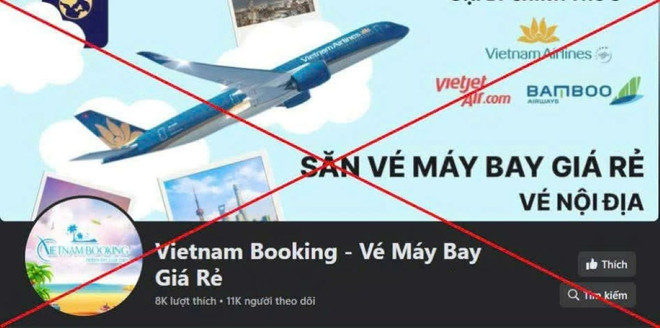
In reality, even frequent travelers with experience booking tours online can easily be deceived by "unbelievable but believable" promotions. Notably, even Facebook pages with a blue verification badge – considered a sign of a page's credibility – can be fake. This is because scammers can buy genuine verified fan pages, then rename them to the name of a reputable travel company to deceive users. This is a major loophole in social media management that many users are unaware of.
Another common scam involves sending fake links through platforms like Zalo, TikTok, and Telegram, accompanied by attractive promotional offers. When users click on these links, their devices may be infected with spyware, allowing scammers to remotely control them and withdraw money directly from their bank accounts.
Skills to avoid scams
As a traveler who had an unpleasant experience booking tours online, Ms. Kieu Lien ( from Thanh Hoa ) shared: "After many exchanges, including messages, photos, and even direct phone calls, I trusted and booked a Da Lat tour through Facebook at a cheaper price than many other places. But after transferring the deposit, I couldn't contact the Facebook account and discovered I had lost money because I booked a fake tour. This resulted in the cancellation of my trip, along with the fear of being scammed whenever I search for travel information online."
To protect themselves from these sophisticated scams, tourists need to be aware of some important points. First, thoroughly research the travel company and tour, choose reputable agencies with good reviews on websites such as TripAdvisor, Google Reviews, or seek advice from acquaintances.
Before the service is clearly confirmed, customers should not pay 100% or transfer money to a personal account. Instead, they should pay in installments and request a detailed contract or confirmation document; carefully check hotel and service information through reputable booking websites, read reviews and look at actual photos from users, choose to verify information through multiple channels, and do not rush to transfer money just to secure an attractive price.
In response to the increasing number of scams exploiting the tourist season, the Vietnam National Tourism Administration has requested local tourism departments and departments of culture, sports, and tourism to proactively implement awareness campaigns to educate businesses and the public about new forms and tactics of fraud; and to strengthen inspection and monitoring to promptly detect and handle violations. Emphasis is also placed on reviewing and preventing fake websites and fan pages, and strictly punishing those involved in scams.
Tourism service businesses should enhance their sense of responsibility in protecting customers, regularly detect and coordinate the handling of fake social media pages, refrain from spreading misinformation, and strengthen security measures to avoid being impersonated.

The agency also advises tourists to carefully research information about tourism service providers before booking and paying, and to only book services on official websites and fan pages provided by tourism management agencies or through reputable booking platforms.
Fraud in tourism is a serious problem that has been widely warned about by authorities to protect the rights and safety of consumers. However, in addition to the efforts of managers, each tourist needs to proactively raise their awareness and equip themselves with knowledge and skills to identify risks.
In the digital age, where information spreads rapidly and is easily exploited, consumer vigilance is the most effective shield against sophisticated scams. Be a smart consumer, so that every trip is a memorable experience, not a lesson in "losing money and losing trust."
Source: https://www.vietnamplus.vn/lam-the-nao-de-khach-du-lich-tranh-cac-chieu-tro-lua-dao-tinh-vi-post1045810.vnp
































































































Comment (0)