

From the transformation of Maldives...
The island nation of Maldives is located in the Indian Ocean, with an area of less than 300 km² . Before Covid-19, this island nation welcomed nearly 2 million tourists annually, including many world- famous celebrities. More than 100 luxury resorts have been built on over 1,200 large and small coral islands, along with countless services to satisfy the needs of every travel enthusiast.
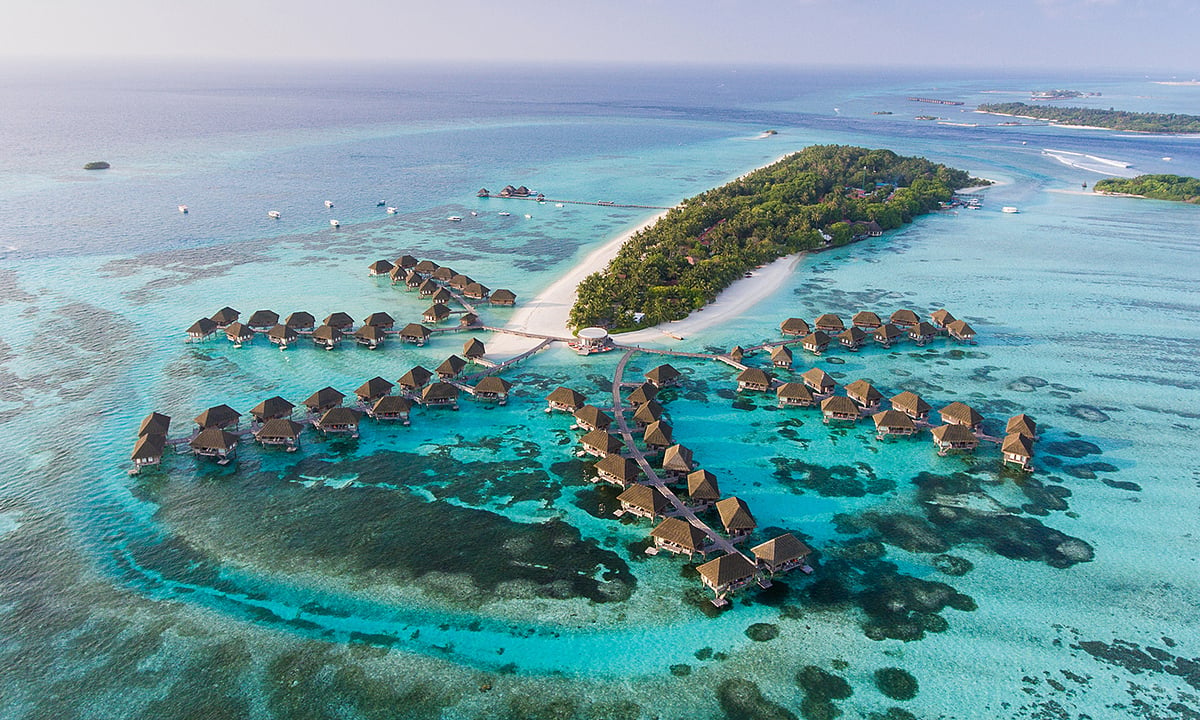
The Maldives attracts tourists not only with its natural beauty but also with its excellent tourism and resort products.
According to data from Michigan State University (USA), tourism contributes 28% of the Maldives' total gross domestic product. This is also the highest contribution of tourism to the economy in the world. However, few people know that the Maldives didn't have its first resort until 1972, and at that time, this world-famous resort island didn't even have a pier; tourists had to wade through waist-deep water to reach the shore.
With no banks, no airport, and no telephones, relying only on radio or Morse code for communication, experts from the United Nations Development Programme (UNDP) have concluded that the Maldives cannot develop tourism due to its extremely poor infrastructure.
Back then, the first "VIPs" who came here weren't allowed to participate in kayaking sessions or take speedboat trips to other islands for starry-sky dinners. All experiences were limited to… fishing and sunbathing.
However, the products, experiences, luxurious and high-class resorts, and even underwater restaurants have transformed the Maldives from a pristine, uninhabited island into a destination that every traveler in the world dreams of visiting at least once.
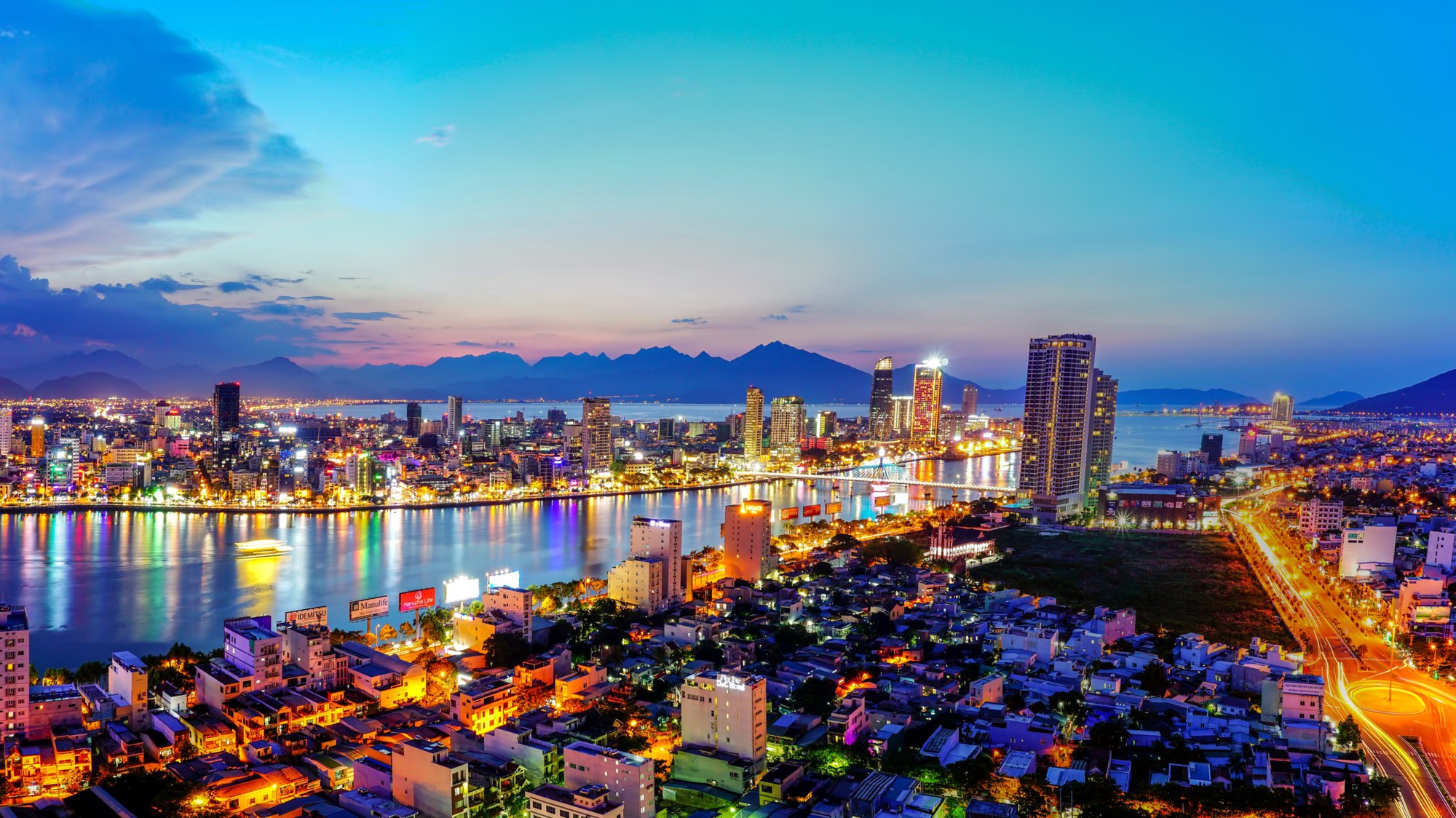
Da Nang is thriving thanks to its focus on tourism development.
...to the "story" of Da Nang
Similar to the Maldives, looking at the development of tourism in Da Nang today, few would imagine that just over a decade ago, Da Nang was merely a transit point for tourists on their journey to explore two Central Vietnam heritage sites: Hue and Hoi An - Quang Nam.
The city, with its breathtaking beaches, numerous historical sites, and famously delicious food, wasn't enough to keep visitors staying for long periods or returning repeatedly. In the early 2000s, Da Nang's tourism industry welcomed fewer than half a million visitors. However, when the city shifted its investment focus to tourism, inviting large investors to create new products, a different Da Nang emerged along the Han River.
One after another, world-class tourism projects and products have been created. Sun Group has brought to the city Sun World Ba Na Hills – a world-leading theme park; a “collection” of high-class accommodations such as InterContinental Danang Sun Peninsula Resort, Premier Village Danang Resort, Novotel Danang Premier Han River Hotel, Mercure Danang French Village Bana Hills Hotel… along with Asia Park and Ba Na Hills Golf Club. Other investors have also added to Da Nang a system of luxurious resorts and other entertainment facilities.
From a "poor fishing village" on the Han River, Da Nang has become a leading experiential tourism destination in Central Vietnam.
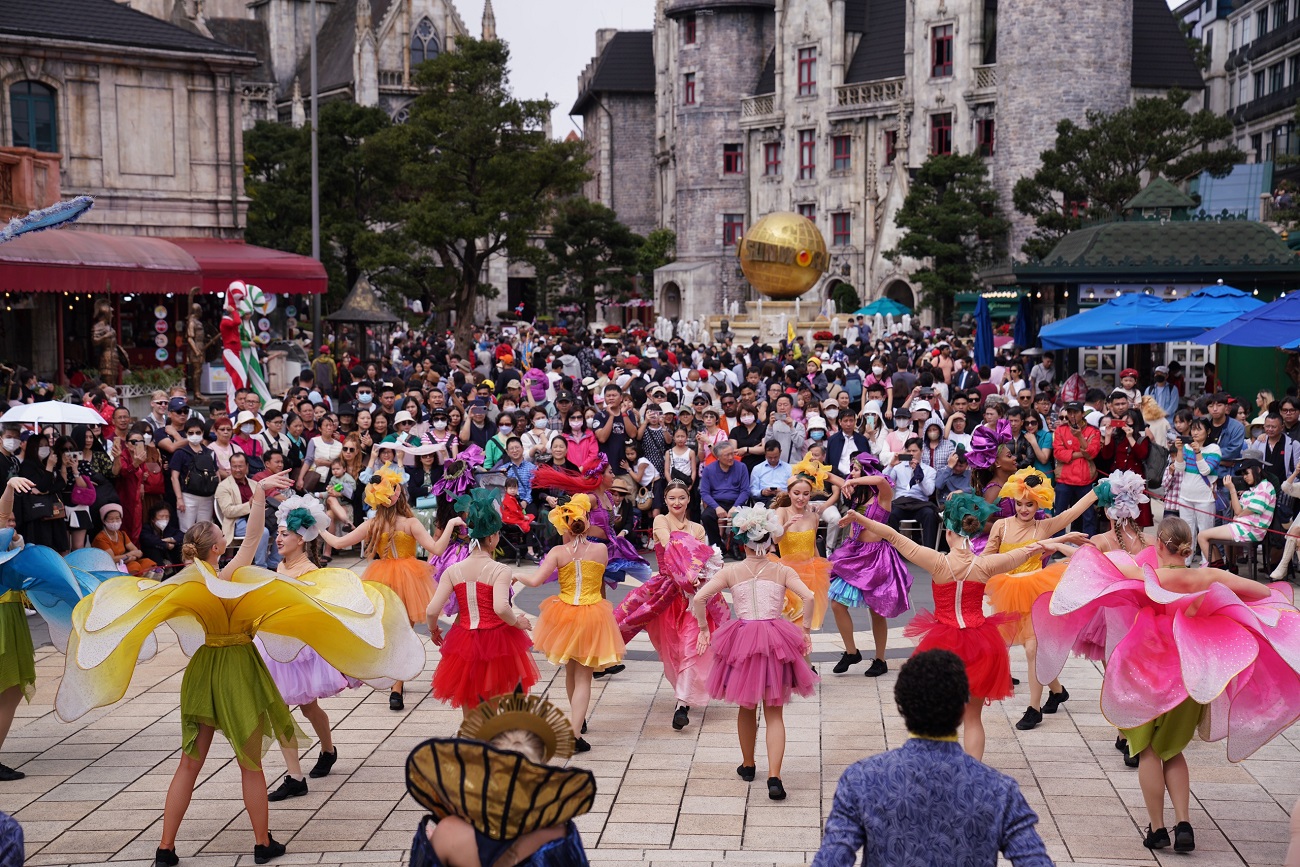
A range of attractive tourism products helps Da Nang attract tourists. In the photo: Spring Festival show on Ba Na Hill.
According to the Da Nang Department of Tourism, from 2013 to 2019, the average length of stay for tourists reached over 5% per year. In 2019, the average length of stay for tourists was 2.68 days (2.9 days for international tourists, 2.35 days for domestic tourists). The average growth rate of tourists reached nearly 18%. This is a dream rate for many destinations.
The city is also constantly adding new, iconic tourist attractions to draw visitors for photo opportunities, including the Golden Bridge on Ba Na Hill, the Carp-to-Dragon statue, APEC Park, and the Dragon Bridge with its water and fire displays every weekend. It's no exaggeration to say that Da Nang is one of the destinations with the most diverse range of tourist products in the country, satisfying the entertainment and experiential needs of tourists of all ages, genders, religions, and nationalities.
Da Nang's tourism revenue in 2018 reached 24,000 billion VND, an increase of more than 34 times compared to 2007. Average spending per visitor to the city on the Han River also increased correspondingly by 4.5 times. This would certainly not have been possible if Da Nang had continued to focus solely on tourism by charging entrance fees to scenic spots or attracting visitors only to swim at My Khe beach, enjoy local specialties, visit Non Nuoc stone village, Son Tra peninsula, or climb Ba Na hill to drink iced tea and eat boiled corn, as was the case before 2009.
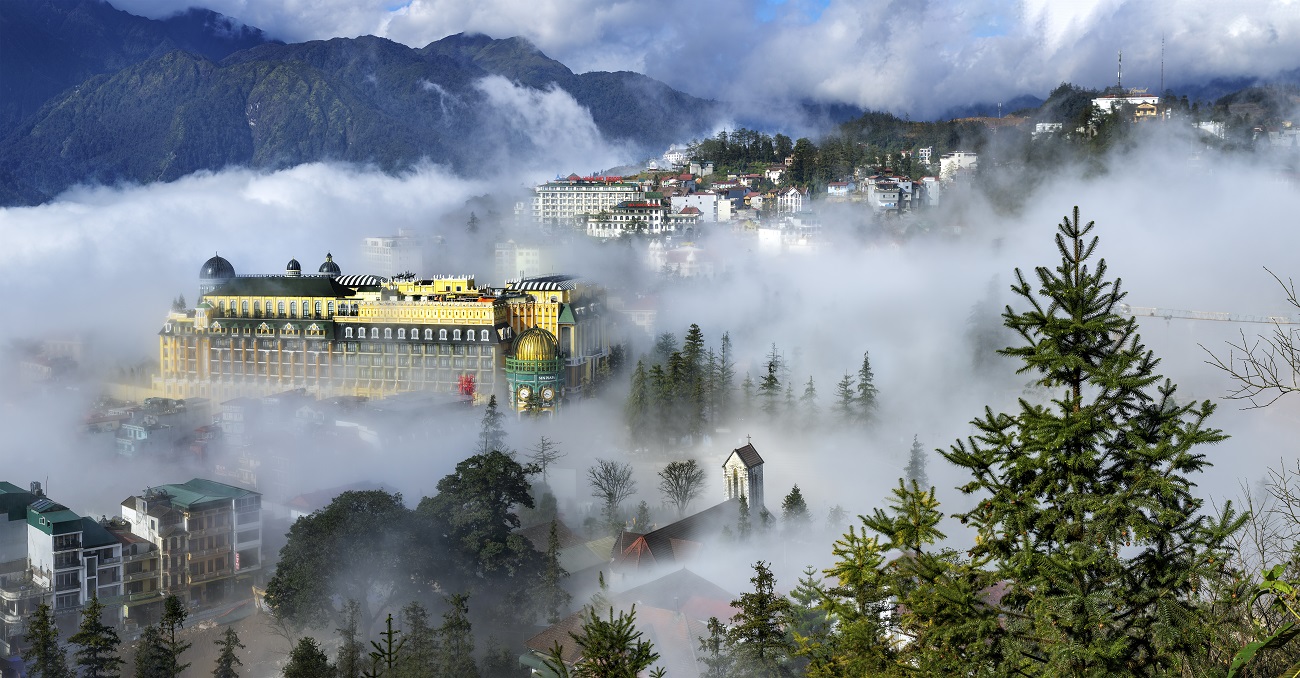
The unique range of tourism products gives visitors even more reasons to spend money when visiting Sa Pa.
Unique products will entice customers to "open their wallets".
Dr. Nuno F. Ribeiro, Senior Associate Dean of the Tourism and Hospitality Management Department at RMIT University Vietnam, stated at a tourism seminar organized by the Investment Newspaper in March that most tourists are not just looking for a trip, but an experience. The richer and higher quality that experience, the more enjoyable it is for tourists, making them want to return and explore further, and more willing to spend money.
Sa Pa is a prime example. Before 2015, tourists visiting Sa Pa would only stay for no more than three days before running out of places to see. At that time, the town in the mist only attracted couples seeking a quiet, romantic getaway in homestays, or backpackers looking for unique local culture in the villages of Northwest Vietnam.
On average, each tourist spent only about 800,000 VND when visiting Sa Pa in the 2010s. This figure increased to 2.9 million VND in 2019, when Sa Pa attracted major investors such as Sun Group, creating increasingly attractive products and experiences for tourists. These include the cable car line that holds two world records, the Sun World Fansipan Legend cultural tourism complex, the longest mountain railway in Vietnam, the Muong Hoa railway, and Hotel de la Coupole - Mgallery (the first international 5-star hotel in Sa Pa), along with many festivals and events reflecting the unique identity of the highlands such as the "Dance on the Clouds" art show, the "Horse Racing on the Clouds" race, the Northwest Flute Festival, the Rhododendron Festival, etc.
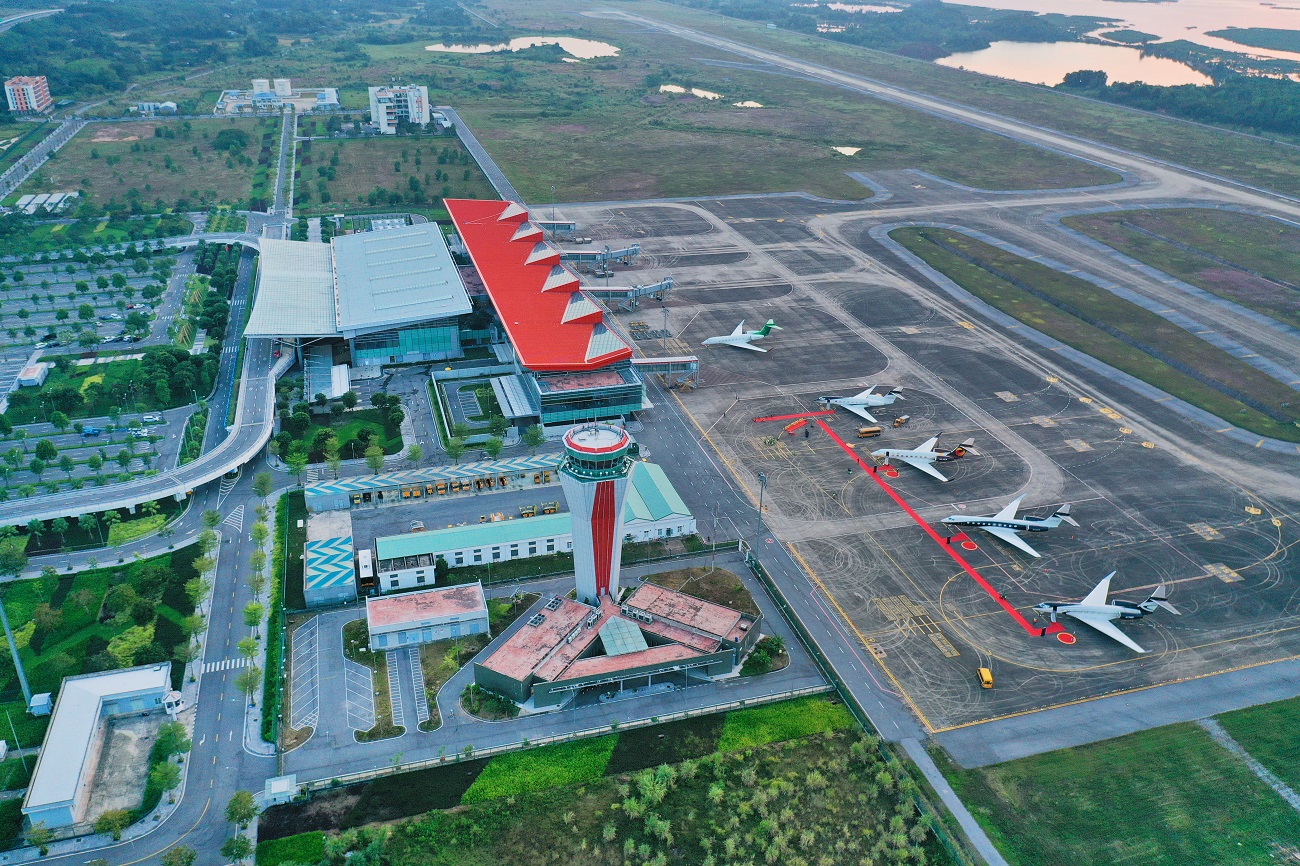
Van Don International Airport is invested in by Sun Group in Quang Ninh province.
Mr. Ha Van Thang, Director of the Lao Cai Department of Tourism, assessed: “This is a series of products and projects with close connections, from the magnificent spiritual structures on the high mountains, the cable car line, the mountain railway to the Hotel de la Coupole accommodation facility and cultural products, all of which are very high-class and appreciated by tourists. They are invested in synchronously, creating unique tourism products for Sa Pa.”
Another destination in Northern Vietnam that has "surpassed itself," not resting on its laurels as a World Heritage site, is Quang Ninh. In 2019, the total number of tourists visiting Quang Ninh reached over 14 million, a three-fold increase compared to 2009. Revenue also increased correspondingly by 10.5 times, reaching nearly 29,500 billion VND.
The above results are thanks to the significant transformation of Quang Ninh's tourism industry, with a synchronized transportation system encompassing air, water, and land routes, and numerous high-class entertainment and resort facilities. The investment and creation of diverse and rich tourism products by large corporations such as Sun Group and Vingroup are the core factors driving the growth of Quang Ninh's tourism.
Each destination possesses unique natural, cultural, and historical potential. However, these are only necessary factors. In the development of tourism, the sufficient factor that allows localities to extract every last penny from tourists while still ensuring their happiness lies in the quality of tourism products and services.
Source link

























![[VIMC's 40-day rapid rollout] VOSA accelerates the deployment of a comprehensive logistics solution for HODA.](https://vphoto.vietnam.vn/thumb/402x226/vietnam/resource/IMAGE/2025/12/23/1766473634002_vosa-23-12-25-2_upscayl_2x_remacri.jpeg)





![[Photo] Closing Ceremony of the 15th Conference of the Central Committee of the 13th Party Congress](https://vphoto.vietnam.vn/thumb/402x226/vietnam/resource/IMAGE/2025/12/23/1766462841764_a1-bnd-3731-1647-jpg.webp)




















Comment (0)