

|
The 2024 Chicago Auto Show at McCormick Place in Chicago, USA. (Photo: Xinhua News Agency) |
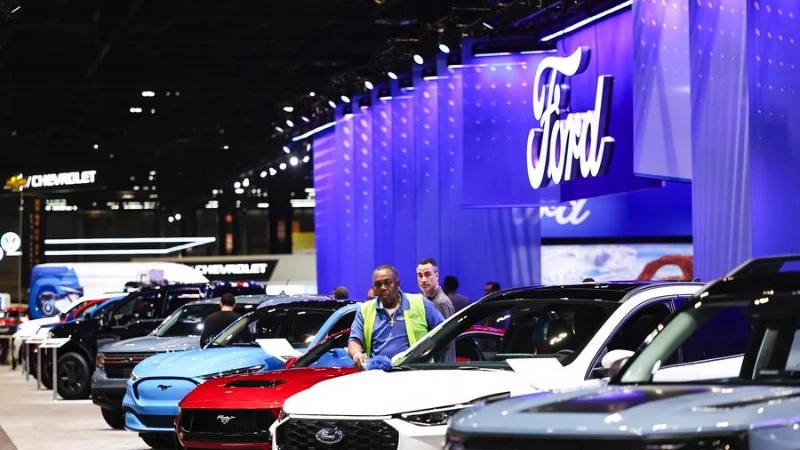
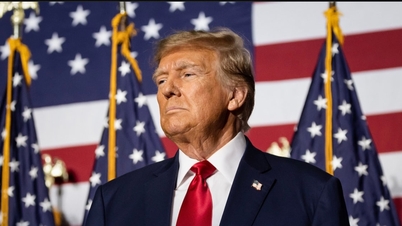
"We will impose a 25% tariff on all cars not made in the United States" - a statement by US President Donald Trump at an event in the Oval Office on March 26 (local time), fulfilling his long-standing promise to domestic voters.
According to White House Press Secretary Will Scharf, the new policy will apply to all passenger cars and light trucks manufactured overseas and is expected to generate more than $100 billion annually for the federal budget.
Once a symbol of American industrial power , the US automotive industry has gradually weakened due to competition from Japan, South Korea, and more recently, China. The new tariffs are not only aimed at protecting giants like Ford and GM, but are also seen as a lever to revitalize domestic production.
This is also part of the Trump administration's 2.0 effort to revive manufacturing, assert economic sovereignty , and reduce dependence on global supply chains.
|
Port of Los Angeles, California, USA. (Photo: Xinhua News Agency) |
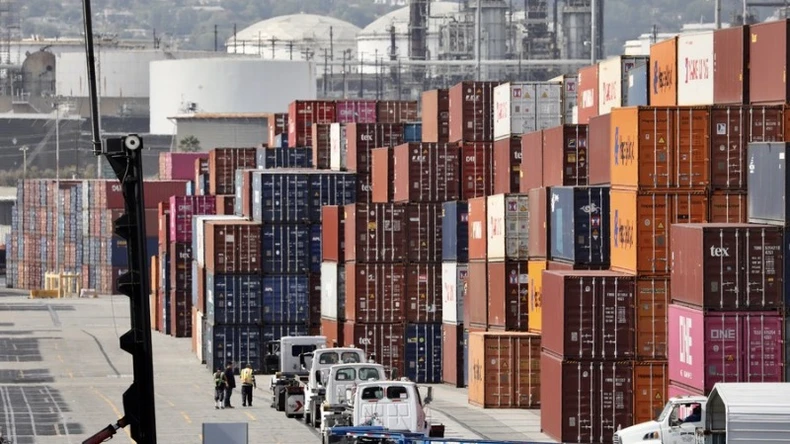
In a newly released industry analysis report, Tokyo-based Monex Financial Group stated that recent US tariffs on imported steel and aluminum, effective March 12th, have begun to disrupt global supply chains and trade flows. The addition of a 25% tariff on automobiles is expected to significantly impact pricing and supply. Industry forecasts suggest the new tariffs could increase the average price of a car in the US by up to $3,000, leading to a decline in overall market sales in 2025.
Canada, one of the largest suppliers of automobiles to the United States, is considering stronger retaliatory measures. Xinhua, citing Canadian media reports, said that Prime Minister Mark Carney's government is considering various options to retaliate against US tariffs. Speaking during a campaign rally, Carney called the new tariffs a "direct attack" on Canadian workers, regardless of how they are implemented.
|
Canadian Prime Minister Mark Carney (Photo: Xinhua) |
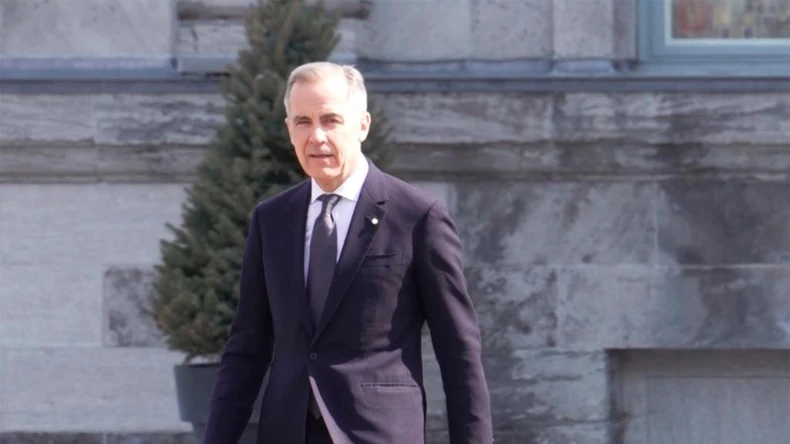
Earlier, he announced a CAD 2 billion (USD 1.4 billion) strategic response fund to support the domestic automotive industry. This fund will be used to enhance competitiveness, protect jobs, train skills, and build a strong domestic supply chain. According to local media, Carney also pledged to prioritize Canadian-made vehicles if elected in the April 28 election.
In Europe, European Commission President Ursula von der Leyen expressed "deep regret" over the US decision to impose tariffs.
“ The automotive industry is a driving force for innovation, playing a central role in competitiveness and creating high-quality jobs. The transatlantic supply chain is deeply integrated ,” she said in an official statement.
|
European Commission President Ursula von der Leyen. (Photo: Xinhua) |

EU President Ursula von der Leyen also warned that the new tariffs would not only harm businesses but would be “worse for consumers” in both the US and the European Union (EU). The EU affirmed that it would continue to seek solutions through dialogue while protecting its economic interests.
From an expert's perspective, Professor Holger Goerg, an international economist at Kiel University (Germany), argues that the US economy will be the most severely affected by these new tariff policies. According to him, tariffs will increase inflation and reduce competitiveness, while signs of weakness in the US economy are becoming increasingly apparent, such as rising prices and a declining stock market.
Immediately after the tariff announcement, the shares of many US-listed automakers fell sharply. Investors feared a new shock to the automotive industry, which has already suffered significant disruption under Trump's trade policies.
Source: https://nhandan.vn/lan-song-phan-ung-sau-quyet-dinh-ap-thue-o-to-nhap-khau-cua-my-post868166.html






















































































Comment (0)