

These are people of Vietnamese origin who migrated here more than 500 years ago and are now settled in the Tam Dao area (part of Giang Binh commune, Dong Hung town, Guangxi province, China), more than 25 km from the Mong Cai border gate of Vietnam.
"Are you Kinh people?"
As soon as we arrived at the An Nam communal house in the Van Vi fishing village, Mrs. To Tiet came and firmly grasped our hands, asking clearly, "Are you Kinh people?" Having said that, she quickly turned to call her husband, children, and neighbors to come out and chat.
Everyone was buzzing as if they had just received good news. Even from the far end of the village, two elderly women, over 80 years old, hobbled towards the village square with their canes to meet us. "Are you Vietnamese visiting?", "Are you Kinh people visiting other Kinh people?"... these were the questions the two old women kept asking.
We told them that we lived in Ho Chi Minh City, more than a three-day drive from the Chinese border. But none of them knew; they had only heard that hundreds of years ago, their ancestors originated from Do Son ( Hai Phong City), went fishing at sea, and then followed the tides to this land, where now more than 20,000 people of Vietnamese origin have settled and established their lives.
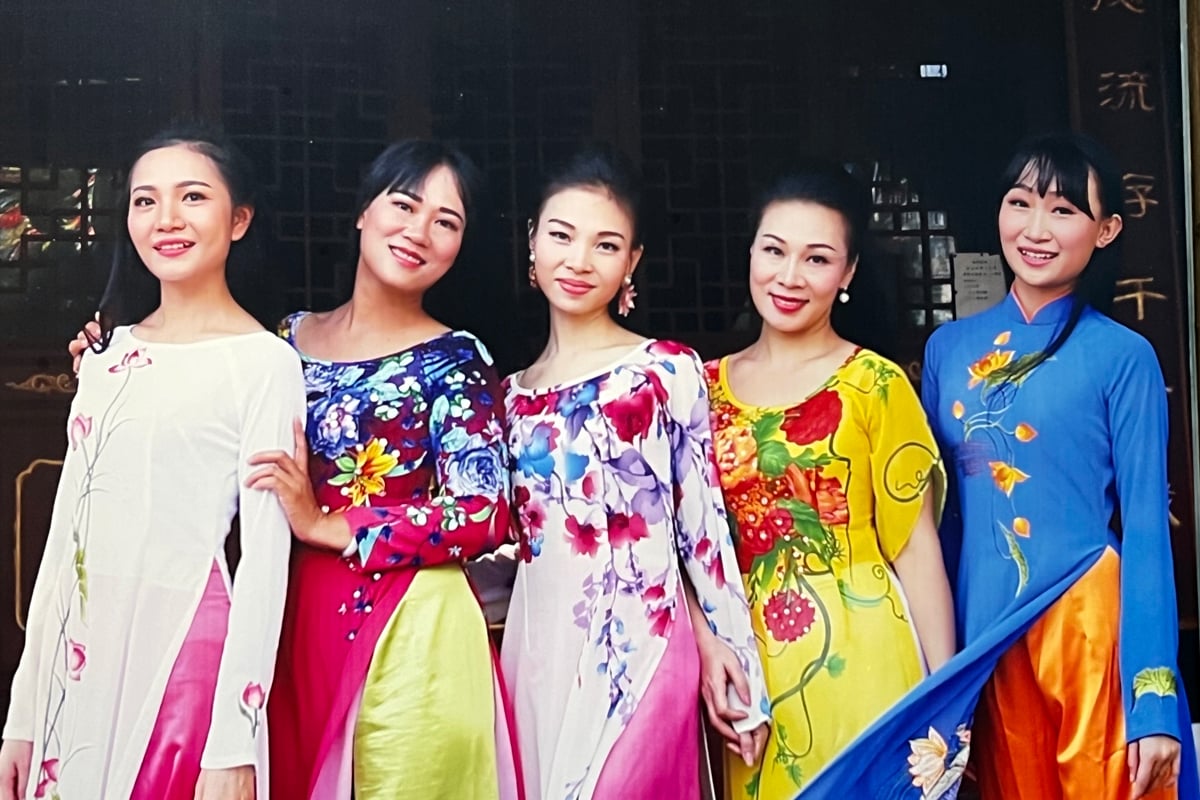
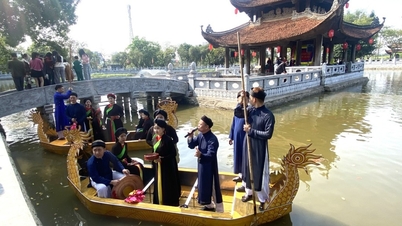
Kinh people sing Quan Ho folk songs from Bac Ninh and speak Vietnamese in China.
"We don't know much about Vietnam. But if any Vietnamese people come here, they have to stay and treat us to a meal. So they can speak Vietnamese for us to hear. They have to speak a lot so we don't forget Vietnamese," Mrs. Tiet enthusiastically invited.
Unable to refuse, we nodded in agreement to stay and have a meal with the villagers. While waiting for everyone to get ready, we borrowed electric motorbikes to explore the Kinh village. The further we went, the more surprised we were to find that everything was just like a rural village in the Northern region of Vietnam.
At the edge of the village stood a communal house, next to a well and a familiar bamboo grove. Every fifteen households or so, there was a garden where rice, potatoes, and other crops were grown. Women wearing conical hats tilled the soil and conversed with each other in their ancestral dialect.
Stopping in front of a grocery store, we noticed signs selling Vietnamese goods such as cigarettes, coffee, and even chili sauce. Ms. Do Tu, the owner, came out and proudly showed off a bottle of fish sauce recently imported from across the border: "The villagers here produce fish sauce and use it to season all their dishes. We import more from Vietnam to prepare for the rough sea season when there won't be enough fish to make fish sauce."
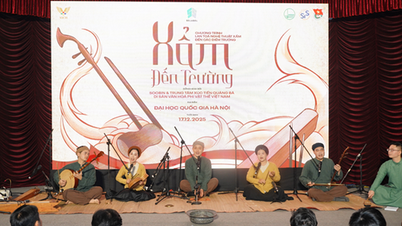
According to Ms. Tu, despite the passage of hundreds of years, all aspects of life here remain unchanged. More than 15 years ago, before the development of smartphones, people imported cassette tapes recording lullabies and Quan Ho folk songs to sell. "My generation and generations before us were lulled to sleep by folk songs sung by our parents. Many people can play Vietnamese musical instruments," Ms. Tu recounted.
Don't forget the Vietnamese language.
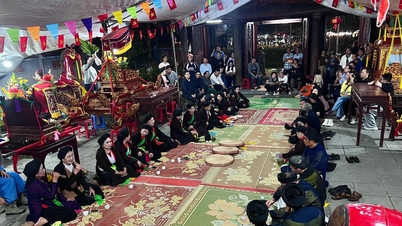
Indeed, when we returned to the village square for lunch, the villagers had already brought out their zithers, ready to perform. Without a hint of hesitation, Mrs. Tiet stood in the middle of the square and sang in her simple voice: "Lovers take off their clothes for each other, then go home and lie to their father and mother... saying, 'Oh, oh, I've crossed the bridge, love, love, love, the wind blows away...'"
As soon as she finished the song, she switched to playing the zither, performing the Bắc Ninh Quan Họ folk song "Climbing Mount Thiên Thai".
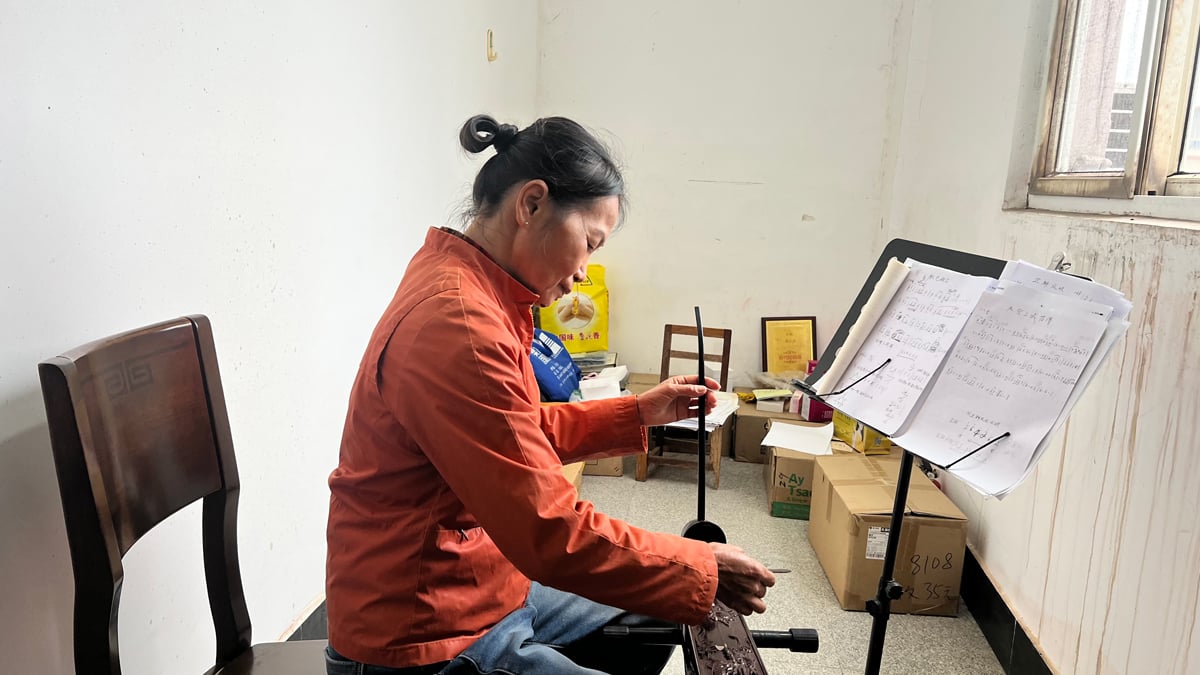
Ms. Tô Tiết, a 10th-generation member of the Kinh ethnic group in China, plays the bầu (a type of Vietnamese stringed instrument).
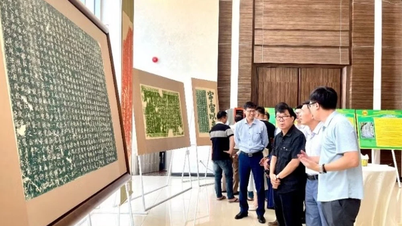
To learn more about the origins of Vietnamese people in China, we visited the Kinh Ethnic Museum, which is managed by Guangxi Province.
At the museum entrance stands a statue of a couple fishing at sea, symbolizing the early days of Vietnamese settlement; inside, it recreates scenes of processions, kitchens, and Vietnamese specialties… It takes almost an hour to read and learn all the information in the museum. The museum is open every day of the week and there is no entrance fee.
Mr. Li Xian, the museum caretaker, said that in the past, the people we met were called Annamese or Vietnamese, but now they are officially called Kinh people. This is one of the smallest ethnic minorities in China.
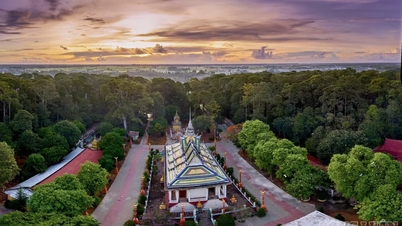
According to legend, in ancient times, twelve ancestral Vietnamese families migrated following fishing currents and divided themselves among three islands named Van Vi, Son Tam, and Vu Dau. Gradually, these three islands were filled in, forming the Tam Dao peninsula as it is today.
Mr. Hien said that the local authorities have recently allowed schools in areas inhabited by the Kinh ethnic group to include Vietnamese in their curriculum. It's not a compulsory subject, but almost every child registers for extra classes. "Since they already communicate with their parents in Vietnamese at home, the children learn very quickly when the teacher teaches," Mr. Hien said.
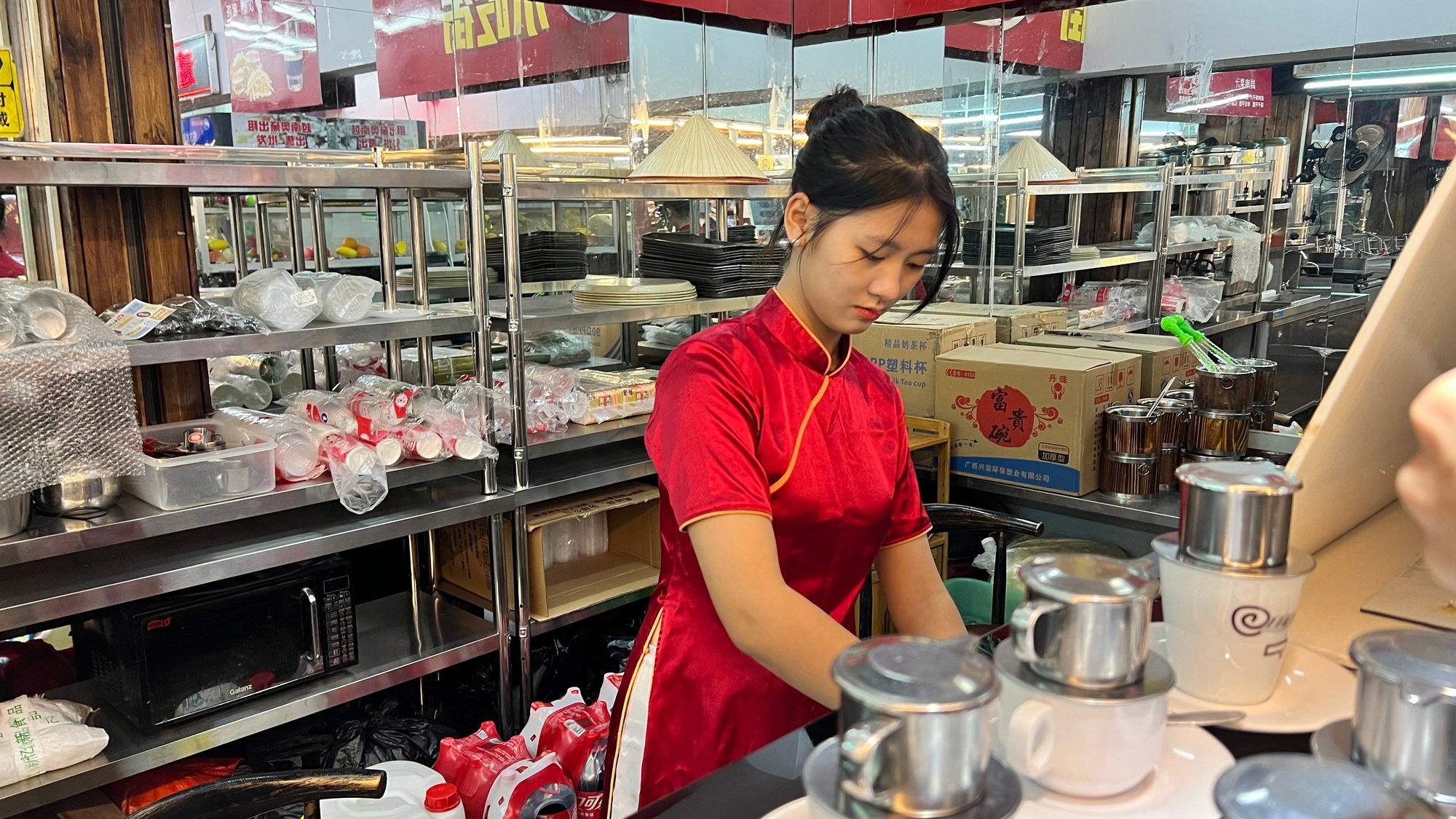
Young people in Tam Dao also preserve the Vietnamese language.
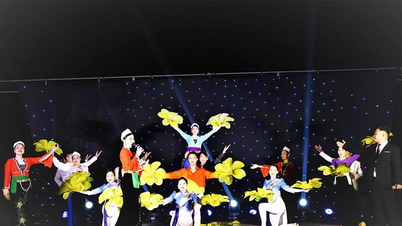
Not only do the locals strive to preserve their language, but every year they invite elders from Tra Co (Mong Cai City, Quang Ninh Province) to Tam Dao to guide them in organizing festivals and temple ceremonies. There are four major festivals each year, and these are occasions for people to come together to celebrate and pray for good fortune.
According to statistics, in Tam Dao there are more than 120 Kinh people who can play traditional Vietnamese musical instruments, and more than 400 books recording the treasure trove of folk literature, including many folk songs, proverbs, and fairy tales…
As we said goodbye to Tam Dao, we noticed a banyan tree in front of the village that was probably several hundred years old. The locals named it the Nam Quoc tree, as a reminder to future generations not to forget their national origins.
The journey isn't difficult!
We were among the first groups of tourists to arrive in China by land after the country tightened border controls for three years due to the COVID-19 pandemic. To visit the Kinh ethnic minority communities, all you need to do is register for a border pass through Mong Cai (Quang Ninh province) on the National Public Service Portal for 50,000 VND.
After crossing the border at Dongxing (China), we took a bus to Wanwei Beach for 10 yuan (approximately 35,000 VND). At the beach, there were dozens of stalls selling food and drinks. Almost all of them were Kinh people and spoke Vietnamese; notably, some were wearing traditional long dresses and simple village attire from Northern Vietnam.
Source










































![[Video] Sunset at Lap An Lagoon – Where the sun sets over the fishing nets](https://vphoto.vietnam.vn/thumb/1200x675/vietnam/resource/IMAGE/2026/05/31/1780192137701_beach-landscape-sea-water-nature-grass-745871-pxhere-com.jpeg)
































Comment (0)