

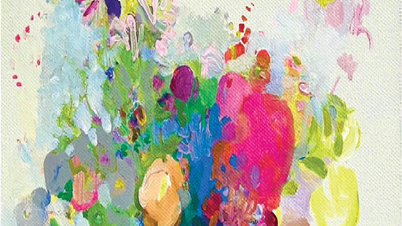
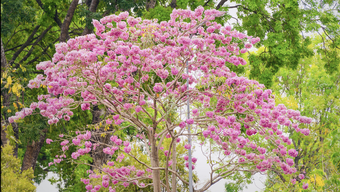
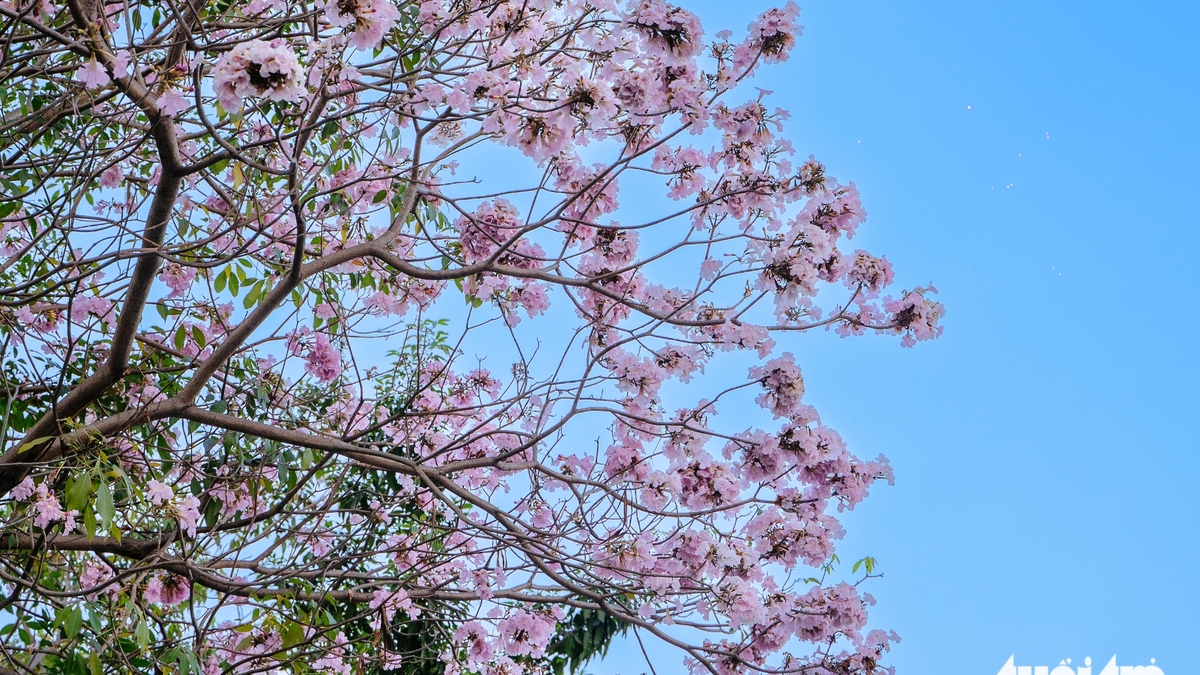
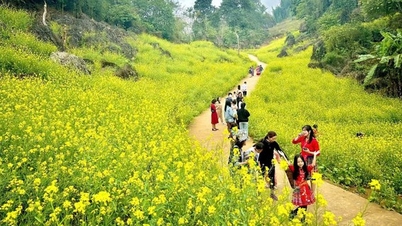
In the last month of winter, the riverside fields are ablaze with the golden color of rapeseed flowers. The crape myrtle trees at the edge of the village shed their blossoms, turning the country roads purple. In the gardens, pomelo trees have begun to bud, revealing their white flowers, while peach trees shyly await their bloom. The wind is still chilly but not biting. A light drizzle falls like mist. Along with the colors of the flowers, the plants, the gentle breeze, and the light rain, these sounds, unique to the old countryside, seem to be bustling and eagerly calling for spring to arrive.
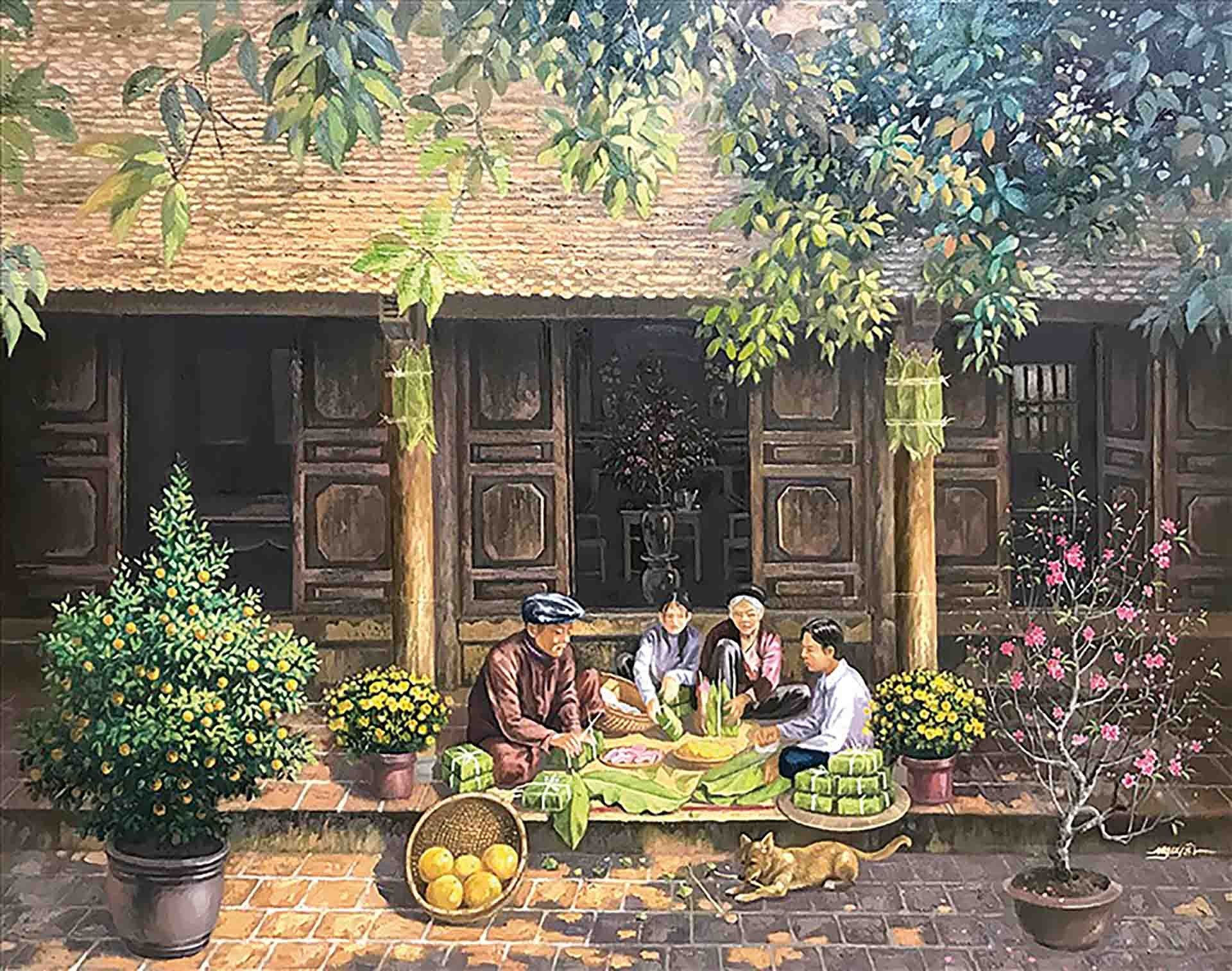 |
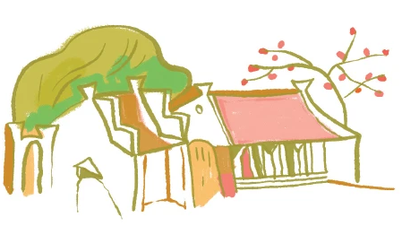
| Images of the end of the year are familiar in the memories of Vietnamese people. (Illustration by Tran Nguyen) |
On a busy December morning, people call out to each other as they head to the fields early to finish planting the last rows of rice seedlings for the winter-spring crop, digging up the potato mounds before Tet, and preparing the soil for planting eggplant... Although bustling and hurried, everyone is cheerful and excitedly discussing the prices of goods at each Tet market in the region. They wait for the day they can finally stop their hurried work in the fields, wearing straw hats, before going shopping for Tet together.
On December nights, the clattering sound of water-pumping wheels fills the air. In front of the village communal house, the village shrine, and the ancestral temples, there are fish ponds – formed by people using excavated earth to build foundations – so on December nights, from one end of the village to the other, the hurried sound of these water-pumping wheels resonates. People pump water at night to catch fish in time for the early morning market to earn money for Tet (Lunar New Year) preparations and to avoid embarrassment with the children who might steal the fish, their relatives and fellow villagers.
The annual fish-stealing game was incredibly fun, happening only once a year, so the children eagerly awaited it. During school days, even when their mothers called them hoarsely, they would sleep in. But on those December nights, every boy would be wide awake by the clattering sound of the water-scooping wheel. They longed for dawn to come so they could wade through the mud to catch fish, laugh and play to their heart's content, bicker and argue, and scream in pain from being pinched by crabs.
In the early morning of the twelfth lunar month, the villages echoed with the squealing of pigs. Normally, only occasionally would a family sell a pig to cover the expenses of weddings, funerals, and other celebrations. But in the last days of the twelfth lunar month, every household would sell their pigs to prepare for the three days of Tet (Lunar New Year). Some families would share the meat with neighbors and relatives, while others would sell to pig traders. The squealing of pigs throughout the village heralded a bountiful Tet in the countryside of those days.
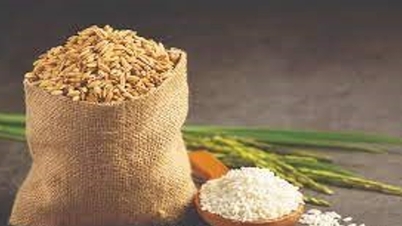
The nights of the twelfth lunar month resound with the humming of rice mills and the pounding of pestles pounding rice, as carefully selected grains are stored throughout the year to become rice for Tet (Lunar New Year), sticky rice for making steamed rice, sweet soup, and rice cakes for making banh chung and banh tet. Even further, this ensures that in the first lunar month, people can relax without having to use mills and pestles, yet still have rice to eat and bran to feed their new pigs.
The twelfth lunar month brings a different sound to the village streets. It's not the familiar clatter of wooden clogs or the shuffling of "Gia Dinh" shoes worn by village officials during their meetings at the communal hall, but rather the clicking of Western-style shoes and the rhythmic clicking of modern clogs worn by those returning home for Tet (Lunar New Year). This unusual sound increases each year, making the village Tet celebrations more colorful and culinaryly richer than in previous years.
December brings a bustling sound to the sugarcane fields. People call out to each other, the sound of knives chopping sugarcane, the clatter of ox carts carrying sugarcane to the molasses pressing mills and to the Tet (Lunar New Year) markets in the region. Sugarcane not only provides molasses for spring, a refreshing drink for summer, and decorative elements for the autumn moon-gazing feast… Sugarcane is also an indispensable offering in the traditional Tet celebrations of the countryside. Bundles of neatly trimmed green leaves are placed on either side of the altar, serving as "carrying poles" for ancestors to carry offerings from their descendants after the New Year's pole is lowered.
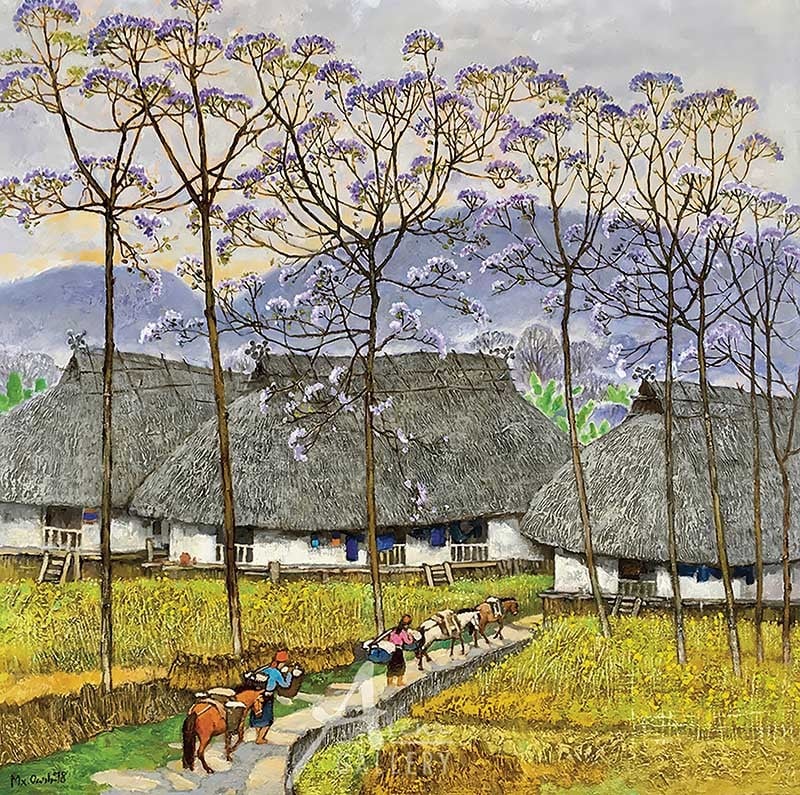 |
| In the last month of the year, the crape myrtle trees at the edge of the village display their purple blossoms. (Illustration by Mai Xuan Oanh) |
In the twelfth lunar month, the molasses mill at the end of the village echoed with the creaking sound of a rudimentary sugarcane press. The sugarcane juice trickled into the pot, and the buffalo's heavy breathing filled the air as it silently circled the machine, pulling the lever. The atmosphere of the village in the twelfth lunar month seemed to thicken into a golden, glistening molasses. Molasses was used to make sticky rice cakes, thorny cakes, and sweet soups. It was also eaten with sticky rice cakes, glutinous rice cakes, and steamed rice cakes… Molasses was indispensable during the Tet (Lunar New Year) celebrations in the countryside back then.
For hungry children, honey was incredibly "impressive." Lying in a straw bed with the adults watching the pot of rice cakes simmering, they were given a fragrant roasted sweet potato and some leftover honey from making sweet soup. They immediately thought of the "month of honey" that the adults were discussing in the twelfth lunar month – the month they got to eat sweet potatoes dipped in honey. Who needed to understand the deeper meaning? There were sweet potatoes and honey in the folk game: "Nu na nu nong/ The drain is inside/ The bee is outside/ Sweet potato dipped in honey…"!
In the old days, the twelfth lunar month in the countryside was bustling and noisy until the 23rd day. After the day of sending the Kitchen God to heaven and the ceremony of erecting the New Year's pole, these sounds no longer echoed around the village bamboo groves but seemed to have been refined into a graceful, soaring melody on the New Year's poles planted in front of each house. It was the harmonious blend of earthenware chimes, fired bells, and offerings hanging around the poles, the rustling of green bamboo leaves at the top of the poles, and the fluttering of red banners bearing blessings in the fresh breeze…
Carried by the wind, the sky suddenly rises high. Flocks of small swallows soar and glide, weaving their wings. The rosy sunlight of December heralds the arrival of spring.
Source






















![[Photo] A vibrant celebration of generations of Nhan Dan Newspaper staff](https://vphoto.vietnam.vn/thumb/1200x675/vietnam/resource/IMAGE/2026/03/11/1773228432744_cb-75-nam-7-7034-jpg.webp)
























































Comment (0)