

The General Statistics Office of the Ministry of Finance announced on the morning of March 6th that the increase in food prices, dining out, and transportation services due to increased shopping and travel demand during the Lunar New Year (Year of the Horse) is the main reason for the 1.14% increase in the Consumer Price Index (CPI) in February 2026 compared to the previous month; a 1.19% increase compared to December 2025; and a 3.35% increase compared to the same period in 2025. On average, in the first two months of 2026, the CPI increased by 2.94% compared to the same period last year; core inflation increased by 3.47%.
Compared to the previous month, the CPI in February 2026 increased by 1.14% (1.12% in urban areas; 1.17% in rural areas) due to price increases in major consumer goods and services.
In the 1.14% increase in the CPI in February 2026 compared to the previous month, all major consumer goods and services saw price increases. Accordingly, the General Statistics Office pointed out the factors contributing to the CPI increase in the first two months of 2026: the price index for food and food services increased by 4.46%, contributing 1.6 percentage points to the overall CPI increase; in particular, the price index for pork increased by 8.49% due to supply shortages while consumer demand was high during holidays and Tet (Lunar New Year); and the price index for fresh poultry increased by 4.42%.
The housing and construction materials price index increased by 5.6% due to rising input material prices such as sand and stone, and rental prices, contributing 1.27 percentage points to the overall CPI increase; in particular, the household electricity price index increased by 5.61% due to increased electricity demand and the adjustment of the average retail electricity price by EVN effective May 10, 2025.
The price index for the education group increased by 3.17%, contributing 0.19 percentage points to the overall CPI increase, due to tuition fee adjustments by some private and independent schools in the 2025-2026 school year. The price index for the culture, entertainment, and tourism group increased by 1.71%, contributing 0.05 percentage points to the overall CPI increase. The price index for the medicine and medical services group increased by 0.83%, contributing 0.04 percentage points to the overall CPI increase.
Besides the factors that contributed to the CPI increase, there were also factors that reduced the CPI in the first two months of 2026, such as: the transportation group index decreased by 3.48%, contributing to a 0.35 percentage point decrease in the overall CPI, with gasoline and diesel prices falling by 9%.
The price index for the information and communication group decreased by 0.26%, contributing to a 0.01 percentage point decrease in the overall CPI, due to a drop in the price of older generation phones as businesses implemented discount programs to stimulate demand for smartphones that had been on the market for some time.

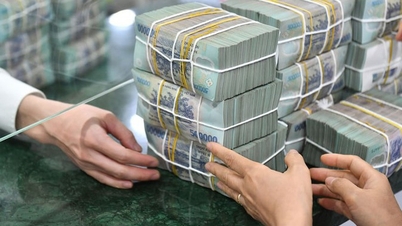
The Consumer Price Index (CPI) in February 2026 increased by 1.14% compared to the previous month. (Illustrative image.)
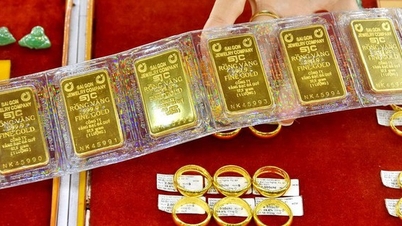
The General Statistics Office also stated that domestic gold prices fluctuated in the same direction as world gold prices. As of February 28, 2026, the average world gold price was $5,023.09 per ounce, an increase of 6.12% compared to the previous month. This was due to the continued increase in demand for safe-haven assets amidst prolonged economic and geopolitical uncertainties, particularly trade tensions and concerns about global economic growth. Simultaneously, capital continued to flow into large gold funds, and the cooling of US Treasury bond yields increased the attractiveness of gold to investors, thus driving the upward trend in gold prices during the month.
Domestically, the increased demand for gold as a lucky charm on the God of Wealth Day after the Lunar New Year contributed to a 11.42% increase in the gold price index in February 2026 compared to the previous month; an 88.42% increase compared to the same period last year; a 17.01% increase compared to December 2025; and an average increase of 82.67% in the first two months of 2026 compared to the same period in 2025.
The US dollar price index fell by 0.89%. As of February 28, 2026, the US dollar price index in the international market reached 97.31 points, down 0.81% from the previous month, mainly due to the relative weakening of the USD as some key currencies recovered. In addition, more stable market sentiment and the trend of reallocating investment capital to other regions reduced the short-term demand for holding USD, thus causing the USD index to decline during the month.
Domestically, the US dollar price index in February 2026 decreased by 0.89% compared to the previous month; increased by 2.31% compared to the same period last year; decreased by 1.18% compared to December 2025; on average for the first two months of 2026, the US dollar price index increased by 2.74% compared to the same period in 2025.
The General Statistics Office also indicated that core inflation in February 2026 increased by 0.82% compared to the previous month and by 3.74% compared to the same period last year. On average, in the first two months of 2026, core inflation increased by 3.47% year-on-year, higher than the 2.94% increase in the overall CPI. This is mainly due to the fact that food and energy prices, while contributing to a decrease in the overall CPI, have been excluded from the calculation of core inflation.
Source: https://vtv.vn/cpi-thang-2-tang-114-100260306100302014.htm
































































































Comment (0)