

 |
Leica remains a prominent player in the high-end digital camera segment. Photo: FT . |
More than a century after helping to shape modern photography, Leica, the long-established German camera brand, is seeking to adapt to a world where smartphones have become the most popular photographic device. For Leica's leadership, the company's survival depends on leveraging its heritage as a foundation for growth in the new technological era.
In 2025, a 102-year-old Leica camera prototype sold for €7.2 million ( $8.4 million ), demonstrating the brand's strong appeal to collectors. However, Leica Camera CEO Matthias Harsch warned that over-reliance on the past "always carries risks." Speaking to the Financial Times , he said the company is working to rebuild a business that was on the verge of collapse two decades ago.
Leica revolutionized photography with its 35mm camera, launched in 1925. However, by the early 2000s, the company nearly went bankrupt as its high-end film cameras couldn't compete with cheaper digital cameras from Canon, Nikon, and Sony. 2005 marked its most difficult period, as the German camera giant lagged behind in its digital transformation.
The turning point came when Austrian investor Andreas Kaufmann began acquiring shares in 2004 and became a key figure in the restructuring process. Under his leadership, Leica invested heavily in digital cameras and high-end optical equipment, while selectively leveraging its heritage.
One of the pillars of this strategy is the M rangefinder camera line, first launched in 1954 and reborn with modern technology. In 2008, Leica introduced a 50mm lens capable of exceeding the resolution of the human eye, with a retail price of over 12,000 euros ( US$14,000 ). The company also made headlines by going against the trend, releasing cameras with monochrome sensors or even without a display screen.
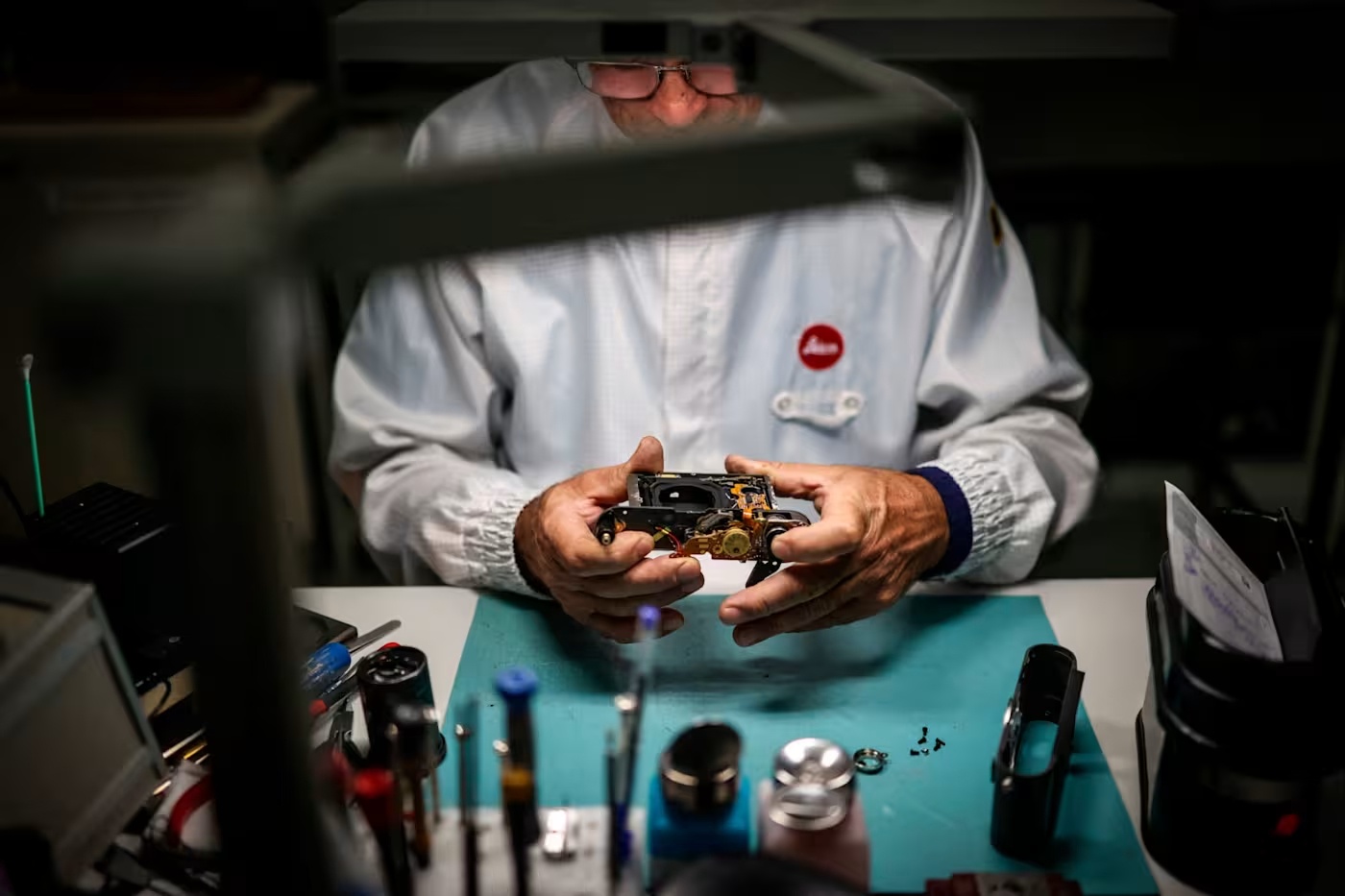 |
Attention to detail has contributed to Leica's success in the smartphone era. Photo: AFP . |
These bold choices have yielded tangible results. Leica's revenue reached a record €596 million in the fiscal year ending in March, an 8% increase from the previous year. This contrasts sharply with the €94 million of 2004-2005. While not disclosing profits, management stated that the company is achieving its highest profitability ever.
Leica currently accounts for approximately one-quarter of global sales in the segment of cameras priced above 4,000 euros ( 4,600 USD ). The company's products are recognized for their combination of Bauhaus design and high-quality craftsmanship. The latest M model is priced at around 8,000 euros ( 9,330 USD ), excluding lenses.
With the rise of smartphone cameras, Leica is not standing idly by. The company has partnered with Chinese manufacturers such as Huawei and Xiaomi to develop apps that give smartphone photos a "Leica feel." The company has also expanded into areas such as high-end watches and eyewear, although its camera segment still accounts for about 80% of its revenue.
Source: https://znews.vn/leica-hoi-sinh-manh-me-post1619226.html
![[Photo] A vibrant celebration of generations of Nhan Dan Newspaper staff](https://vphoto.vietnam.vn/thumb/1200x675/vietnam/resource/IMAGE/2026/03/11/1773228432744_cb-75-nam-7-7034-jpg.webp)




























































































Comment (0)