

- Affirming its position as a leading educational institution .
- Proactively implementing Circular 11 - improving the quality of preschool education in Ca Mau.
- Ca Mau seeks solutions to improve the quality of education in the digital age.
- Highlights of cutting-edge education
Initial results
The period 2022-2025 has seen many positive milestones in cooperation between the two sides, gradually affirming their role as a bridge between scientific research and local development practices. The two sides have jointly implemented 11 provincial-level science and technology projects, with a total budget of over 14 billion VND, along with 14 grassroots-level projects. These figures not only demonstrate investment efforts but also reflect a shift from research to application.
In the agricultural and fisheries sectors, considered the economic pillars of Ca Mau, many models have been applied with clear effectiveness. Super-intensive shrimp farming achieves a yield of 42.8 tons/ha/season; the striped snakehead fish model yields 30-44 tons/ha; and the freshwater fish farming model, covering 300 hectares, produces 90 tons/season. Alongside these achievements, dozens of training courses and technology transfer programs have been conducted for hundreds of farmers, spreading knowledge and improving production capacity.
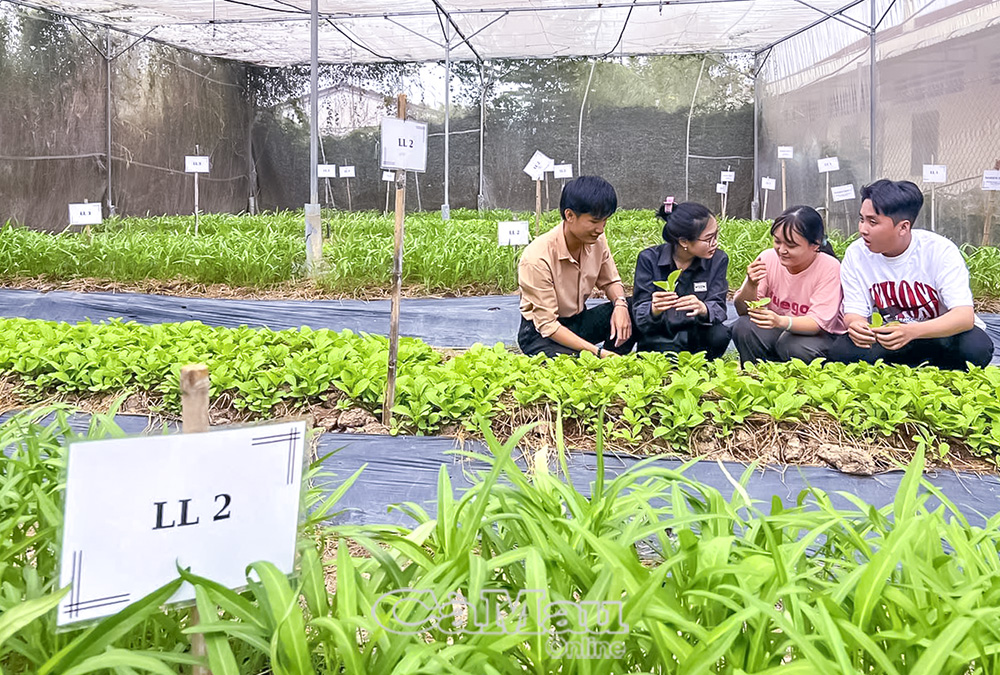 Students at Bac Lieu University familiarize themselves with high-tech agricultural models through conducting scientific research projects on organic vegetable production. Photo: HUU THO
In the field of training, human resource development has been strengthened, with 1,077 university graduates, 447 master's degree holders, 12 doctoral degree holders, and tens of thousands of people receiving professional and foreign language training. This is an important resource to supplement the province's human resource system, creating a foundation for sustainable development.
International cooperation activities have also left their mark, with many foreign student and scholar delegations coming to study and conduct research, contributing to promoting the local image. However, it must be acknowledged that the scope of cooperation is still not commensurate with the potential; the content is mainly limited to a few topics and projects, and the depth of the linkages has not been fully exploited. This necessitates repositioning the relationship in a more strategic, comprehensive, and long-term direction, as a foundation for strong breakthroughs in the coming period.
Strategic, comprehensive alliance
The cooperation agreement between the two parties for the period 2026-2030 is defined with a long-term vision, aiming for comprehensive development in many areas: training high-quality human resources; developing science and technology, innovation and digital transformation; promoting economic sectors; strengthening international integration and improving the effectiveness of community service.
Both sides agreed to closely coordinate in training and developing personnel; developing new technologies and high-tech agriculture; promoting research, transfer, and commercialization of scientific products; and connecting the innovation and startup ecosystem. This is not only a technical orientation but also reflects a shift from "isolated" cooperation to "ecosystem" cooperation.
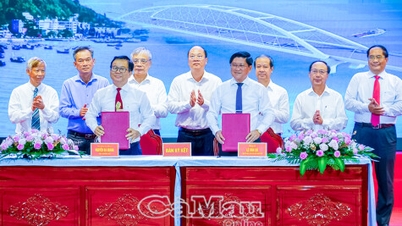
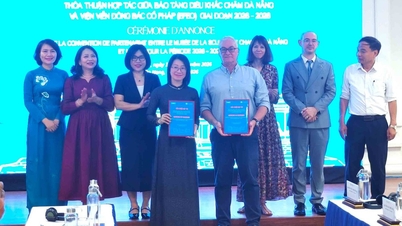
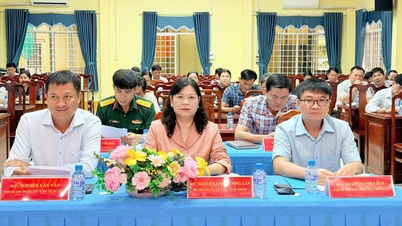
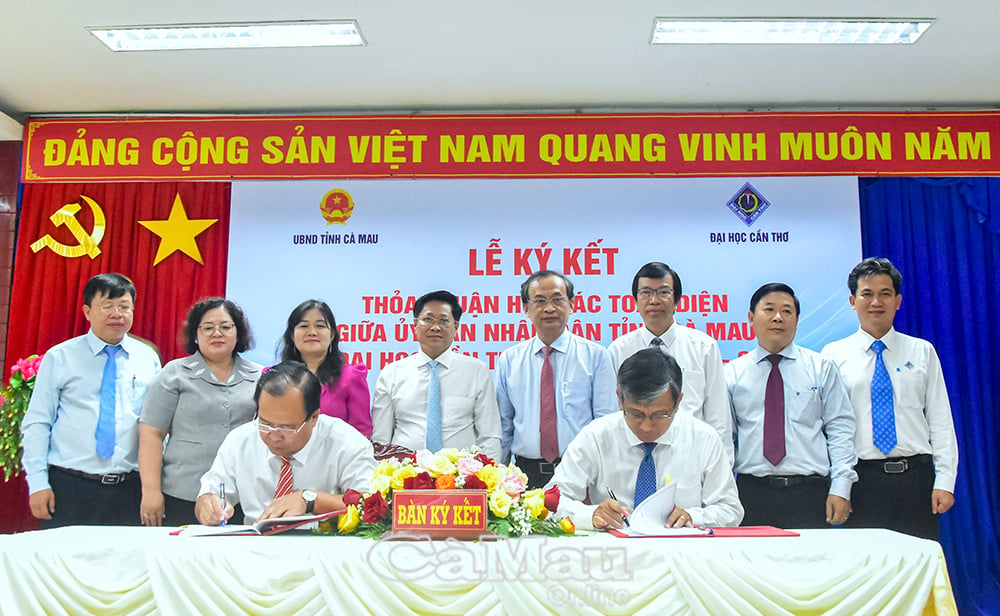 The two sides signed a comprehensive cooperation agreement in the presence of delegates.
Associate Professor Tran Trung Tinh, Rector of Can Tho University, stated that the university currently offers 127 undergraduate programs, 52 master's programs, and 25 doctoral programs, with approximately 46,000 students enrolled, including 3,858 students from Ca Mau province. The faculty comprises over 1,100 lecturers, with 58.4% holding doctoral degrees, including more than 200 professors and associate professors. Notably, 86 lecturers are from Ca Mau, creating a crucial resource for connecting and effectively implementing cooperation between the two sides.
Ca Mau, the southernmost province of Vietnam, possesses significant development potential but also places high demands on science and technology and a high-quality workforce. Therefore, strengthening linkages will help address practical challenges and shape the goals of training highly skilled human resources in the future, while effectively utilizing programs and resources invested in education.
On the local side, Mr. Nguyen Minh Luan, Member of the Standing Committee of the Provincial Party Committee and Vice Chairman of the Provincial People's Committee, acknowledged that the results of cooperation in the past period have not met expectations, but they serve as a foundation for greater determination in the new phase. The province aims for deeper cooperation with concrete results; focusing on developing human resource training projects, especially in the field of science and technology; emphasizing practical training and improving foreign language skills for teachers; and implementing training based on needs and commissioning projects for sectors with shortages. Following the signing, the province also hopes that Can Tho University will support the development of comprehensive scientific projects to serve the development of its strengths.
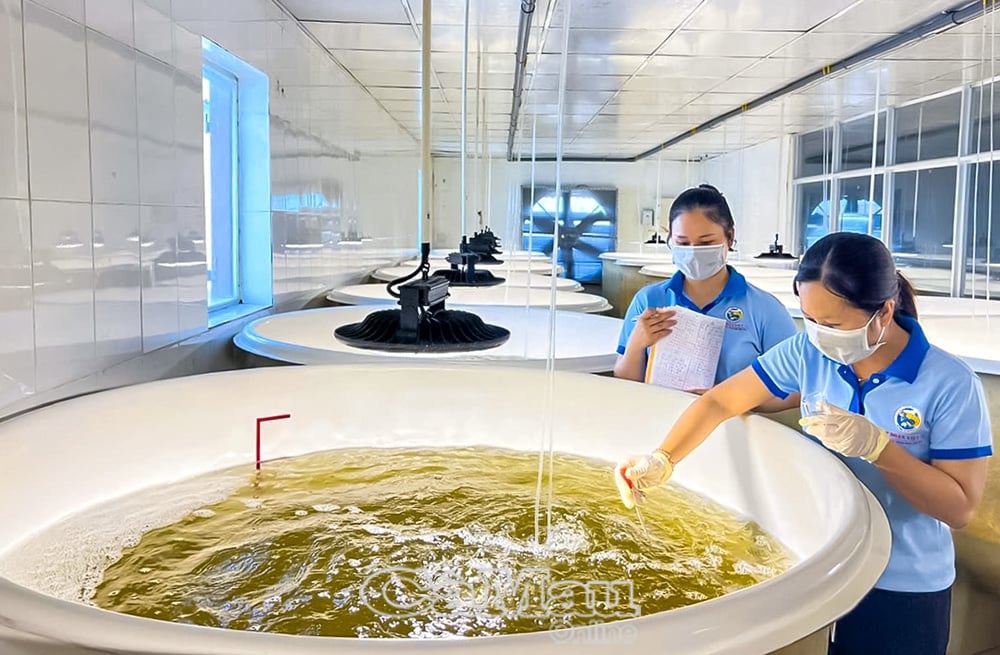 In the coming period, the province will continue to create conditions for officials to participate in training programs at the School of Fisheries - Can Tho University to improve their research and management capabilities. (In the photo: Technicians of Viet-Australia Bac Lieu Company inspect algae for high-tech shrimp farming). Photo: HUU THO
The signing ceremony serves as an important foundation for departments, localities, and businesses of Ca Mau province and units under Can Tho University to concretize the cooperation content and effectively implement the pillars of socio-economic development of the province in the coming time, aiming for rapid, sustainable development and deep integration.
Kim Truc
Source: https://baocamau.vn/lien-ket-chien-luoc-toan-dien-a128487.html




























































Comment (0)