

- Proudly continuing the historical legacy of the 80th anniversary of the Battle of Giong Bom.
- When history and literature "step out" from the pages of a book.
- Check out the historical price growth of Vinhomes Grand Park over the past year at MuonNha.com.vn if you're looking to invest in the project.
From traditional historical sites…
Ca Mau is not only famous for its golden forests and silver seas, but also for being a land that bears witness to many glorious victories. From the Dam Doi - Cai Nuoc - Cha La historical site, the site of the 1954 North Vietnam troop assembly point, Vam Lung Wharf, to the Xeo Duoc Provincial Party Committee base or Hon Da Bac..., each place preserves the memory of a time of war and fire.
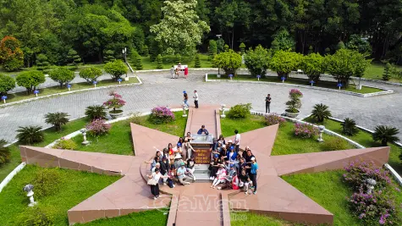
In May, the Dam Doi - Cai Nuoc - Cha La historical site welcomes many groups of students and youth union members who come to offer incense and learn about history through the exhibits and documents on display. Located in a rural area rich in revolutionary traditions, this place is not only a tourist attraction but also a vivid testament to the resounding victories of the army and people of Ca Mau in the resistance war against the US to save the country. In particular, the site commemorates the battles that annihilated enemy sub-districts and districts in late 1963, contributing to the failure of the US-puppet regime's "helicopter assault" and "armored vehicle assault" tactics.
 Young people from the Provincial People's Procuracy learn about history through war relics, fostering national pride at the "red address" of Dam Doi - Cai Nuoc - Cha La.
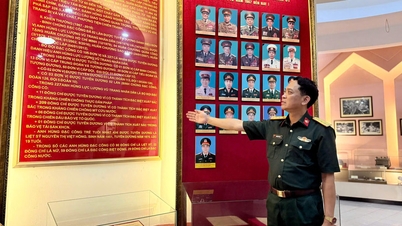
Through dioramas recreating battles, rudimentary weapons, and numerous valuable images and documents, the site vividly portrays the resourcefulness, courage, and unwavering will of the army and people of Ca Mau during the fierce years of war.
“Every time I come here, I feel even more proud of my homeland’s revolutionary traditions. The images of the battle help me understand that to have the peaceful life we have today, our ancestors had to sacrifice so much blood, sweat, and tears,” shared Nguyen Ngoc Linh Trang from An Xuyen ward.
 The historical sites of Dam Doi - Cai Nuoc - Cha La are bustling with students seeking to reconnect with their roots during the month of May.
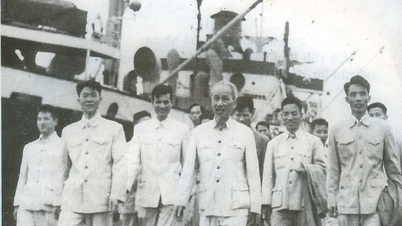
Located on the southern bank of the Ong Doc River, the 1954 North Vietnam Regrouping Train Site is also bustling with young people visiting. This is where the largest troop movement after the 1954 Geneva Agreement took place – a momentous historical event, symbolizing the aspiration for peace and unwavering faith in the reunification of North and South Vietnam.
The highlight of the historical site is the majestic monument depicting a ship sailing out to sea, evoking poignant farewells filled with a sense of responsibility and patriotism among the soldiers and people of Southern Vietnam.
3. 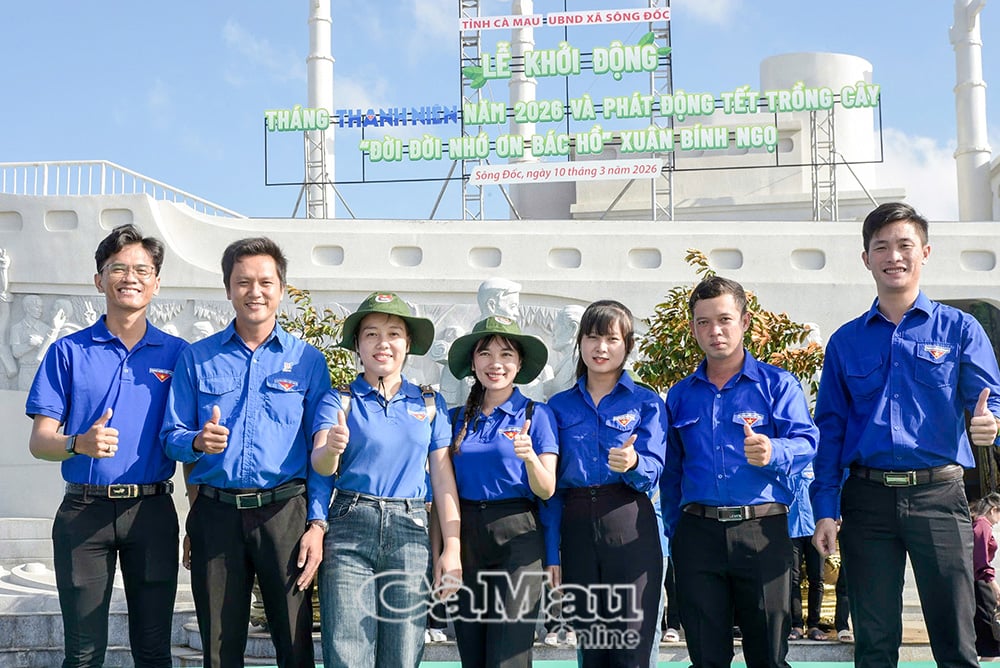 Standing before the symbol of the ship sailing out to sea, today's young generation understands even more deeply the aspiration for peace and the unwavering belief in the reunification of the nation.
Standing before this deeply moving historical site, Nguyen Phuong Nam (Thoi Binh commune) expressed: “I learned about the legend of our ancestors who boarded the ships during the regrouping years ago through books. Today, visiting the historical site and seeing the artifacts firsthand, I am even more impressed by the unwavering will of the previous generation. This trip has helped me realize that history is not dry and boring at all, but very close and sacred.”
…Arriving at the special “classroom” in the middle of the forest village.
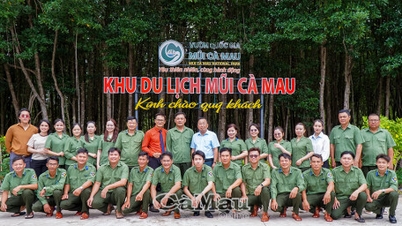
Beyond just historical sites, tourist areas in Ca Mau today have cleverly integrated traditional education into nature experiences. In Da Bac commune, the iconic "forest village" model of the Ca Mau - ECO eco-tourism area has become an ideal destination for students.
This space authentically recreates the arduous fighting life of our soldiers and people, clinging to the land and forests. Through images steeped in history, students not only get to visit but also learn the most vivid historical lessons.
 In May, many groups of students flocked to the "forest village" in Ca Mau - ECO to experience a "special class" - a place that vividly recreates the life of our soldiers and people who lived and worked in the forest in the past.
Tran Hue Nhu (Phong Dien Secondary School) shared: “Seeing the images and artifacts recreated in the Forest Village space, I truly understood the memories of a time of hard work but heroism. Through the Forest Village space, I learned more about the traditions of my homeland, and my national pride was multiplied many times over.”
Sharing the same sentiment, Tran Le Tien Quoc (Phong Dien Secondary School) expressed: “These field trips make history lessons in class more vivid. I feel I need to be more responsible in my studies to be worthy of the sacrifices of previous generations.”
 Through firsthand observation of the artifacts and symbols at the Forest Village, the students' national pride and sense of responsibility are nurtured and strengthened.
In May, the golden sun gently shines on the historical sites in the southernmost region of the country. The journey to rediscover history for the future leaders of the nation is not just a sightseeing and experiential trip, but a continuation of the flame of tradition. From historical relics to "classrooms in the forest," these sites have been and continue to nurture patriotism, helping the younger generation confidently move forward on the path of contributing to and building their homeland.
Hong Nghi - Tien Luan
Source: https://baocamau.vn/tim-ve-lich-su-a128939.html
![[Photo] Capturing the moment the tide recedes at Yen Binh Son rapids - a million-year-old scenic spot in Quang Ngai.](https://vphoto.vietnam.vn/thumb/1200x675/vietnam/resource/IMAGE/2026/05/19/1779175463885_yen9-1199-jpg.webp)

![[Photo] National Assembly Chairman Tran Thanh Man attends the groundbreaking ceremony for the National Highway 1A spatial axis project.](https://vphoto.vietnam.vn/thumb/1200x675/vietnam/resource/IMAGE/2026/05/19/1779161360398_ndo_br_bnd-1412-jpg.webp)




































































Comment (0)