

 |
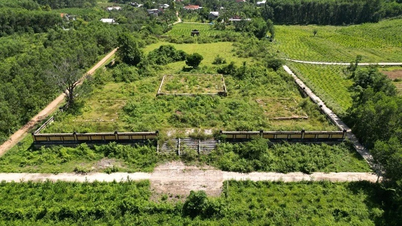
| The quality of timber from planted forests is constantly improving, contributing to an increase in the economic value of forests. |
Increasing economic value from forests
Over the past period, all levels of government and local authorities in the city have focused on directing and implementing comprehensive solutions to develop and transform acacia plantations for small-scale timber production into plantations for large-scale timber production. This has been achieved through extending the production cycle, applying appropriate silvicultural techniques, and guiding people to participate. As a result, the area of acacia plantations for large-scale timber production in the city has reached over 14,000 hectares, basically exceeding the set plan. This result contributes to improving the quality of planted forests, increasing the economic value of forests, and creating a foundation for sustainable forestry development in the future.
Specifically in 2025, with the strong involvement of the government, departments, organizations, and associations at all levels, and the increasingly active participation of local communities, forest resource management work was basically achieved and exceeded the plan. Specifically, the entire city planted over 6,534 hectares of concentrated forest, exceeding the plan by 5.4%; the volume of timber harvested from planted forests reached 594,957 m³, exceeding the plan by 8.2%; forest management and protection contracts covered over 175,853 hectares, exceeding the plan by 6.6%; natural regeneration covered over 597 hectares, exceeding the plan by 19.4%; and units carried out forest care on over 6,247 hectares...
Mr. Le Ngoc Tuan, Head of the Hue City Forest Protection Department, said: Currently, the area of forest in the city that has been granted FSC sustainable forest management certification has reached 15,008.87 hectares. This result reflects the efforts of all levels, sectors, and forest owners in implementing sustainable forest management solutions, contributing to improving forest quality, protecting the ecological environment and biodiversity. At the same time, expanding the area of sustainably certified forest creates favorable conditions to increase the economic value of planted forests, increase access to the market for legally sourced timber, and meet the requirements of timber processing and export businesses.
Building on the achievements, in 2026, the city's functional departments set a goal to increase the productivity and quality of planted forests towards large-scale timber production and environmental sustainability, striving to achieve and maintain the city-wide forest cover rate. Specifically, they aim for a timber harvest of 600,000 m³ from planted forests; a pine resin harvest of 420 tons; a seedling production of 20 million trees; sustainable forest management linked to FSC certification on 2,000 hectares; and utilizing the existing 315 hectares to expand the area for planting medicinal plants under the forest canopy by an additional 10-15% each year to generate additional revenue beyond timber…
Contributing to the city's growth goals.
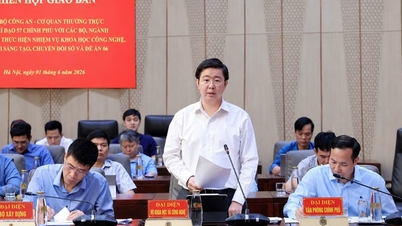
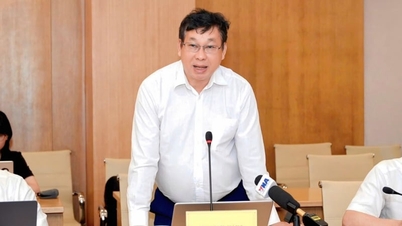
According to Mr. Nguyen Dai Anh Tuan, Deputy Director of the Department of Agriculture and Environment, the current requirement for the city's forestry sector is to decisively and comprehensively implement tasks and solutions to firmly protect the existing forest area, improve forest quality, and develop forestry in a sustainable direction, maximizing the multi-purpose nature of forests. In particular, there needs to be a strong shift in mindset from forest management and protection to management and protection linked to sustainable forest economic development, contributing to the city's goal of achieving double-digit growth.
The advantages are clear, but Mr. Nguyen Dai Anh Tuan believes that developing large-timber plantations and sustainable forest management in the area still faces many difficulties due to the long business cycle and large investment capital requirements. Meanwhile, the current production scale is still small and scattered, and the cost of obtaining and maintaining forest certification is high, leading to uneven expansion of sustainably managed forest areas. On the other hand, the linkages between forest planting, harvesting, processing, and consumption of forestry products are still not strong; the processing industry is mainly preliminary processing with low added value, failing to create a strong impetus for the development of stable and sustainable raw material areas.
To address this issue, according to Mr. Nguyen Dai Anh Tuan, relevant departments and agencies need to actively advise on and implement the Sustainable Forestry Development Program and the plans for developing large-timber plantation forests for the period 2026-2030, the project on developing the multi-purpose value of forest ecosystems by 2030 and with a vision to 2050 in the city. At the same time, they should promote policies to build standardized agricultural and forestry raw material areas to create advantages for the production and business of plantation forests, especially large-timber plantation forests associated with sustainable forest certification.
Source: https://huengaynay.vn/kinh-te/gan-bao-ve-voi-phat-trien-kinh-te-rung-ben-vung-165799.html


















































































Comment (0)