

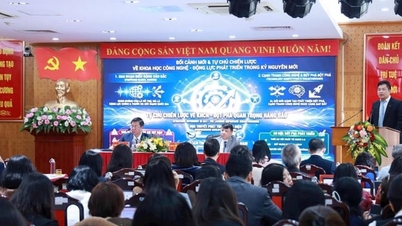
Yesterday (December 15th), the 2023 Annual Scientific Conference was held at Hanoi National University. At the conference, delegates from the Vietnam Academy of Science and Technology, the Vietnam Academy of Social Sciences, Hanoi National University, Ho Chi Minh City National University, and the Ministry of Science and Technology exchanged and discussed solutions, and offered suggestions for improving the legal framework on science and technology and innovation.
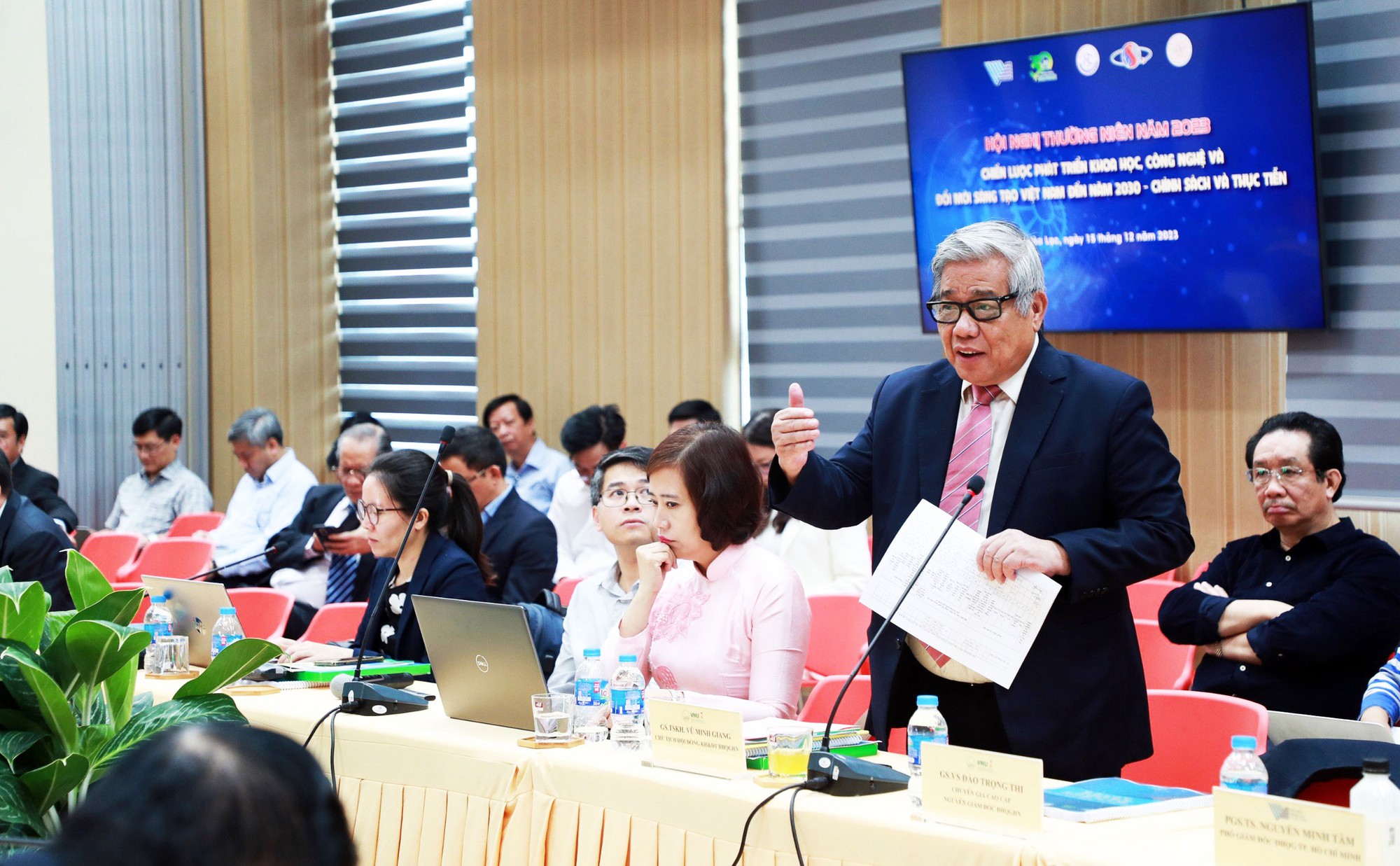
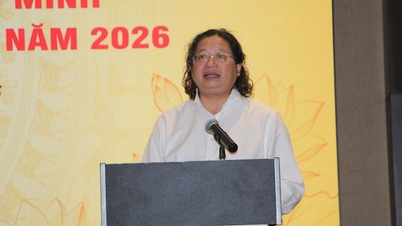
Professor Vu Minh Giang (Scientific Council, Vietnam National University , Hanoi ) speaking at the conference.
PROPOSAL FOR AMENDING AND SUPPLEMENTING REGULATIONS ON INVESTMENT AND FINANCE
According to Mr. Nguyen Hoang Minh, Deputy Minister of Science and Technology, in order to implement the strategy for the development of science and technology and innovation until 2030, the two academies need to focus on building themselves into the foundation and pillars of Vietnam's science and technology sector, paying attention to developing a number of science and technology organizations and fields to reach regional and world-class levels such as mathematics, physics, chemistry, life sciences, earth sciences, and marine sciences... The two national universities, on the other hand, have the responsibility of being leading institutions in the higher education system, achieving advanced levels, ranking among the top in Asia, and supporting the university system nationwide so that universities truly become centers of scientific research and technological development, and sources of knowledge for science and technology and innovation activities.
Mr. Nguyen Nam Hai, Director of the Planning and Finance Department (Ministry of Science and Technology), shared some proposals for drafting a law amending and supplementing certain articles of the Law on Science and Technology to institutionalize the policies and guidelines of the Party and the State, perfect the legal framework, and address shortcomings in the practical implementation of the Law on Science and Technology.
Accordingly, one of the proposed amendments and additions concerns regulations on investment and finance for the development of science and technology and innovation, such as revising the regulation that average spending on science and technology over a 5-year period should not be less than 2% of the total state budget expenditure; and perfecting regulations on the allocation, use, and management of funds for science and technology tasks using state budget funds. Funding allocation must be timely and consistent with the progress of commissioning and approving science and technology tasks by state management agencies. The Ministry of Science and Technology also plans to propose adding a provision to the law regarding the allocation of contingency funds to ensure timely implementation of science and technology tasks in unexpected, urgent, and critical situations.
DECLINE IN HIGH-QUALITY HUMAN RESOURCES
According to Associate Professor Tran Tuan Anh, Vice President of the Vietnam Academy of Science and Technology, one of the current challenges in human resource development at the academy is the concern about the decline in high-quality human resources. The "brain drain" is a major challenge in many of the academy's leading science and technology sectors due to competition from the private sector, large companies, and corporations in the science and technology field.
The academy's scientific staff has remained largely stable but unevenly distributed across fields, primarily concentrated in a few key basic research areas and some member research institutes with strengths in basic research. The number of professors and associate professors in technology and applied research fields is trending downwards.
The main reasons stem from problems in the mechanisms, policies, and human resource compensation in the public sector. On the other hand, recruitment into permanent positions is trending downwards due to the academy's requirement to streamline its workforce; the number of graduates in natural sciences, especially basic sciences, is decreasing, and the overall quality is uneven, making recruitment difficult.
Associate Professor Ta Minh Tuan, Vice President of the Vietnam Academy of Social Sciences, believes that the State needs a policy to allocate additional staff to scientific research institutions; granting these institutions the autonomy to decide on the number of staff for recruitment and utilization of science and technology researchers, ensuring effectiveness and efficiency. Attention should be paid to avoiding reductions in staffing at institutions and research institutes specializing in science and technology, strategic research, and policy. Annual staffing quotas should be based on evaluation criteria regarding quality, competence, output, and specific contributions in the performance of duties and tasks, linked to the practical situation.
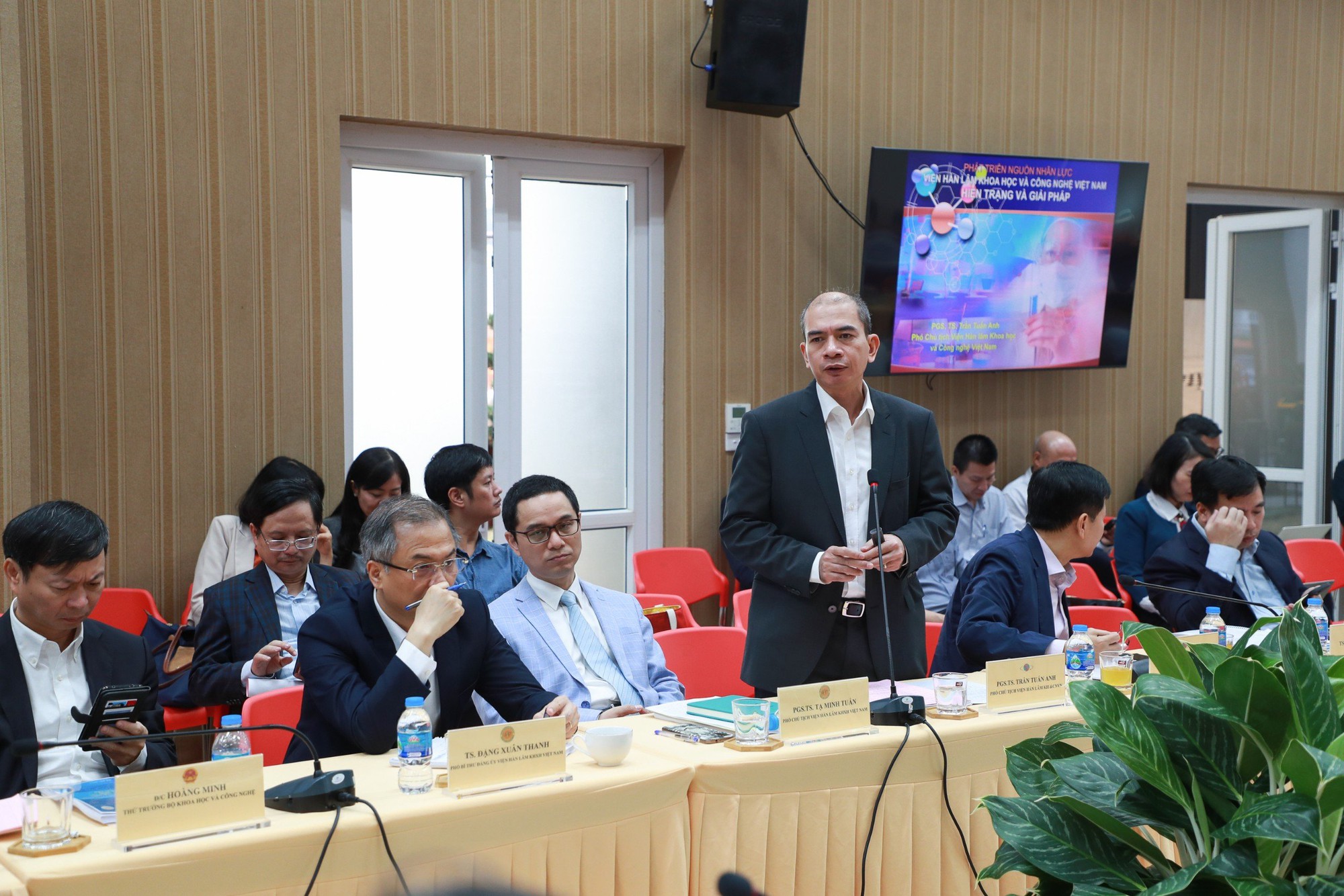
Associate Professor Tran Tuan Anh, Vice President of the Vietnam Academy of Science and Technology, delivered a speech at the conference.
P. DEVELOPMENT OF SCIENCE AND TECHNOLOGY NEEDS TO BE SUCCESSFUL
Associate Professor Ta Minh Tuan also suggested the need to reform policies for basic research, research on the system of policies serving the country, and encourage the interconnected transfer of highly qualified human resources. First and foremost, this involves reforming the management mechanism of the National Science and Technology Development Fund (NAFOSTED), through which the State's investment resources for important basic research are currently channeled.
Associate Professor Tuan shared: "The biggest obstacle currently related to the fund's operation is the mechanism for managing the funds allocated to the fund. According to the State Budget Law and Government Decree 19 issued in 2021, NAFOSTED cannot operate under the fund mechanism but must switch to a public service unit model, with its operating and management budget having to be transferred to a mechanism of annual planning and budget allocation."
Meanwhile, research projects should be conducted regularly, not waiting for approval and funding allocation according to annual plans like administrative and public service agencies. Therefore, a financial regulation for the fund needs to be developed that is appropriate to the specifics of scientific research, ensuring the fund operates according to its model as a research funding agency. The mechanism of expenditure allocation and post-auditing should be strengthened, accepting the risks and delays in scientific research."
Professor Vu Minh Giang (Science Council, Vietnam National University, Hanoi) suggested establishing the following three principles for the development of science and technology: substance, aiming for international standards, and contributing to the development of Vietnam's own science and technology sector. Of these, substance is the "red thread" running through all three principles. "We are a nation increasingly accelerating the process of integration, but we must ensure that what we call international integration is truly substantive. Often, it's merely a formality; publishing this or that paper is sometimes just a formality," Professor Giang stated.
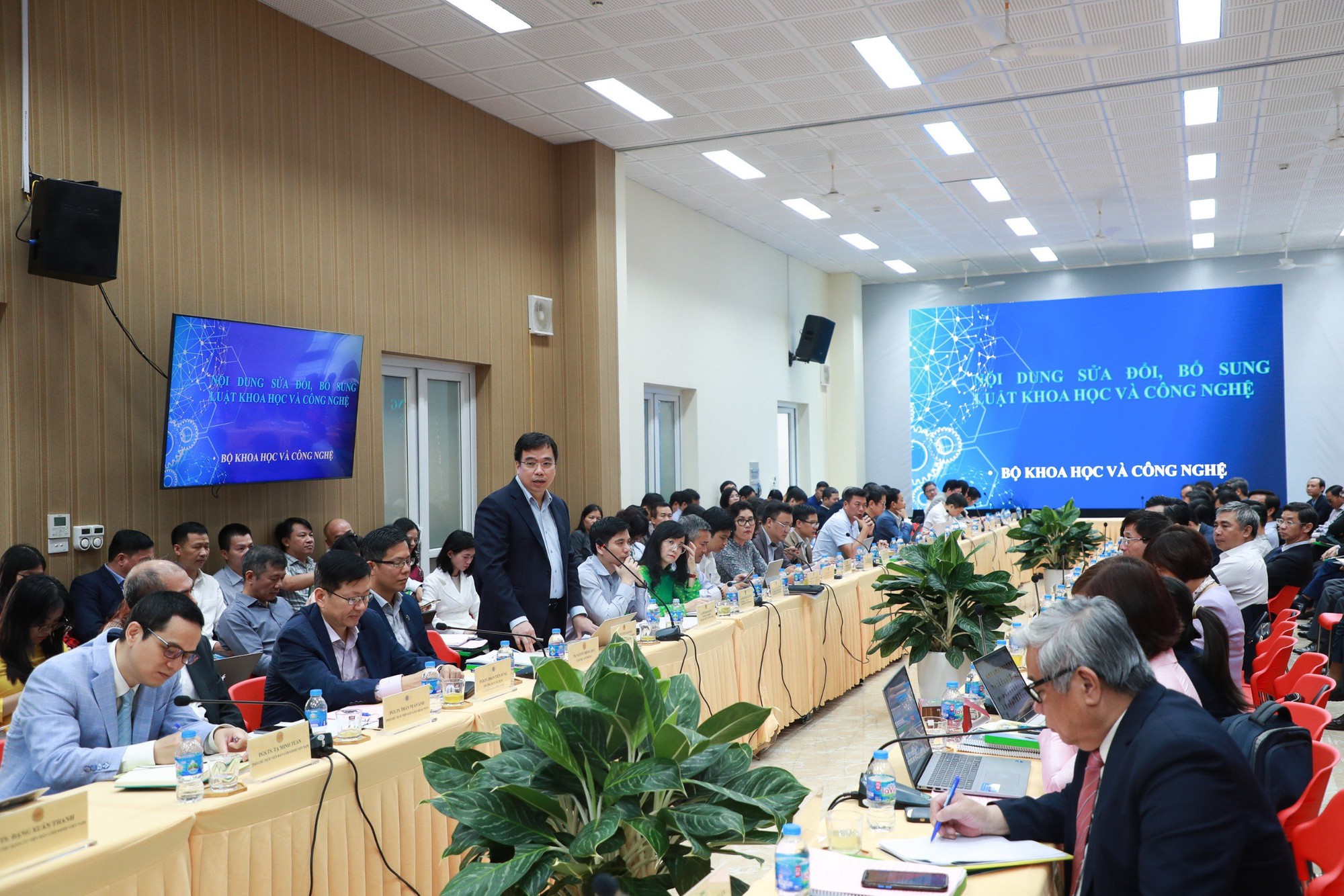
Mr. Nguyen Nam Hai, Director of the Planning and Finance Department (Ministry of Science and Technology), shared some proposals for drafting the Law amending and supplementing certain articles of the Law on Science and Technology.
Professor Giang analyzed: "In the last 5 years, we have been promoting international publications. I don't dare discuss other fields, but only the one closest to me, and I see some problems. Firstly, while the number of international publications has increased overall, not a single journal has met international standards, except for a few already existing journals at the Vietnam Academy of Science and Technology, Hanoi National University... This means we encourage our colleagues to spend money trying to publish articles abroad. They have the technology to get their journals listed in ISI/Scoupus. Is this really meeting international standards, or is it just a formality? It's time to reconsider the issue of international publications."
The purpose of the collaborative program
According to Mr. Huynh Thanh Dat, Minister of Science and Technology, the purpose of the cooperation program for the period 2021-2025 between the Ministry of Science and Technology and four major scientific research institutions, including two academies and two national universities, is to provide policy advice, guide the development of science and technology, innovation, and human resources, and make recommendations to competent authorities for consideration; share information on outstanding research and training achievements and products; and exchange and discuss strategies, development plans, operational directions, and difficulties and obstacles faced by the institutions to strengthen coordination and linkages for mutual development; and build a model of cooperation between leading research and training institutions in the country to leverage their collective strength in solving important national issues.
Over the past two years, the agencies have closely coordinated in the development and implementation of the National Science and Technology and Innovation Strategy to 2030. Simultaneously, many national-level science and technology programs to 2030 have been developed through consultation, thereby mobilizing the strengths of numerous scientists at the country's four leading research institutions.
Source link

![[Photo] Prime Minister Pham Minh Chinh presides over a meeting on private sector economic development.](/_next/image?url=https%3A%2F%2Fvphoto.vietnam.vn%2Fthumb%2F1200x675%2Fvietnam%2Fresource%2FIMAGE%2F2025%2F12%2F20%2F1766237501876_thiet-ke-chua-co-ten-40-png.webp&w=3840&q=75)

![[Photo] Prime Minister Pham Minh Chinh presides over the conference announcing the establishment of the International Finance Centre in Vietnam.](/_next/image?url=https%3A%2F%2Fvphoto.vietnam.vn%2Fthumb%2F1200x675%2Fvietnam%2Fresource%2FIMAGE%2F2025%2F12%2F21%2F1766309817714_ndo_br_dsc-3400-jpg.webp&w=3840&q=75)



























































































Comment (0)