

Potential of native plants
Around April each year, the dry, calm weather is the season when wild pineapple forests (also known as thorny pineapples) grow, bearing ripe, bright yellow fruits hanging from the branches. At that time, many women on the island carry baskets to pick the ripe fruits, dry them, and sell them to local restaurants and eateries for making pineapple wine; this provides them with additional income.
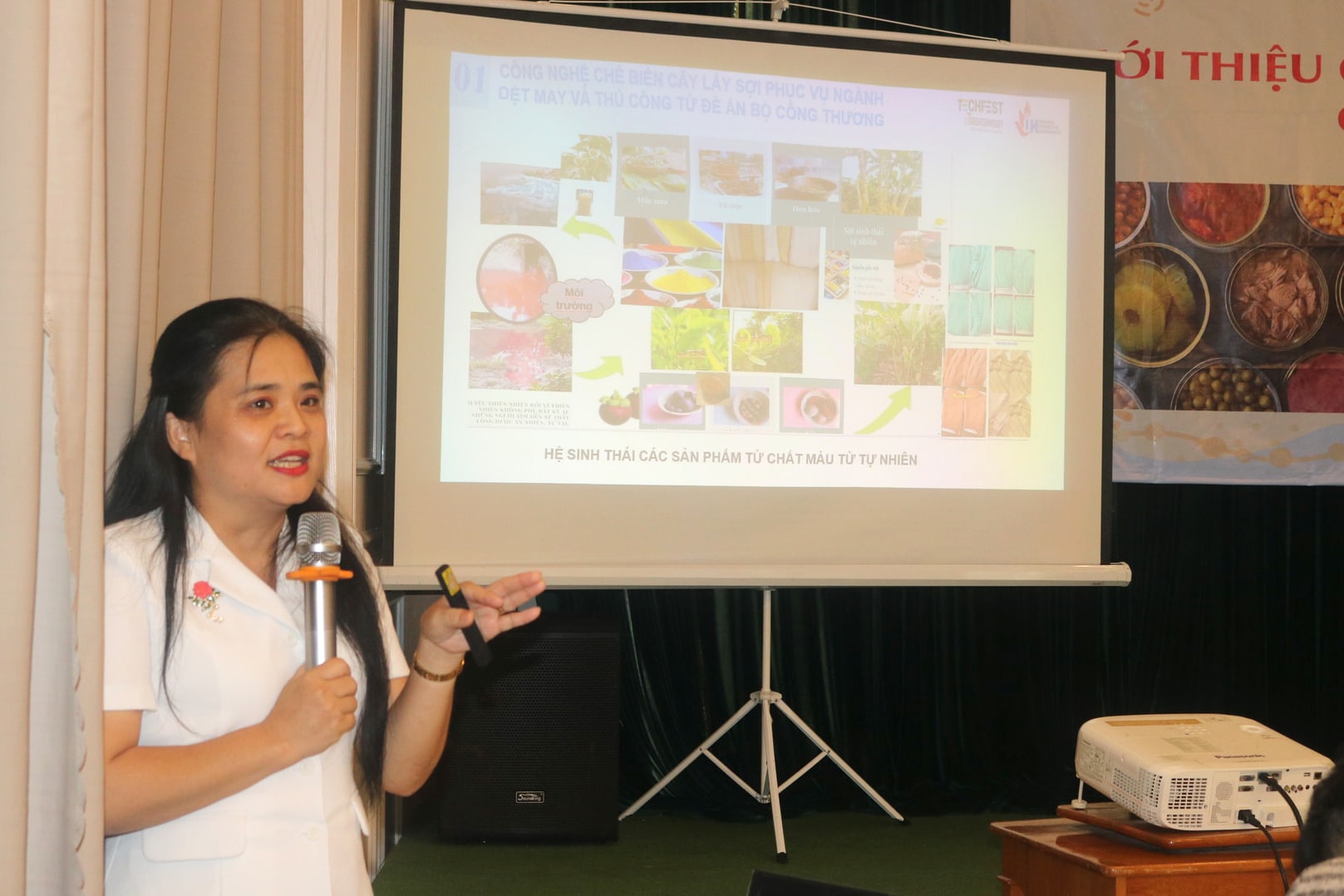
During her trip to Phu Quy Island in April this year, Dr. Pham Thi Hong Phuong (Senior Advisor - Center for Innovation, Entrepreneurship & Technology Transfer, Ho Chi Minh City University of Industry) was captivated by the scenery of the lush green pineapple hills and ripe, juicy fruits. The trip provided a vivid and practical basis for her presentation to numerous departments and members of the Phu Quy Women's Union about a model for utilizing native plants to process textiles from waste materials such as the stems, branches, and roots of wild pineapples on the island.
That training session was organized by the Union of Science and Technology Associations of Binh Thuan (formerly) in coordination with the People's Committee of Phu Quy district at that time, creating more opportunities for organizations and women members to access new skills using the native wild pineapple plant in the sunny and windy remote island region.
Dr. Hong Phuong shared: “The vast, lush green hills of wild pineapple on the island are a unique native plant found nowhere else, perfectly suited for processing into soft silk. For a long time, women in the northern part of the island have been harvesting the roots of the wild pineapple plant to weave handcrafted rattan hammocks; a few still practice this craft. Currently, many women are harvesting ripe fruit to sell to food processing facilities and restaurants that use it to make medicinal wine for the increasing number of tourists visiting the island. This unique native plant, when properly processed through collaborative investment by women's organizations and members on the island, will create jobs for many people and bring significantly higher economic value.”
Diverse tourism products
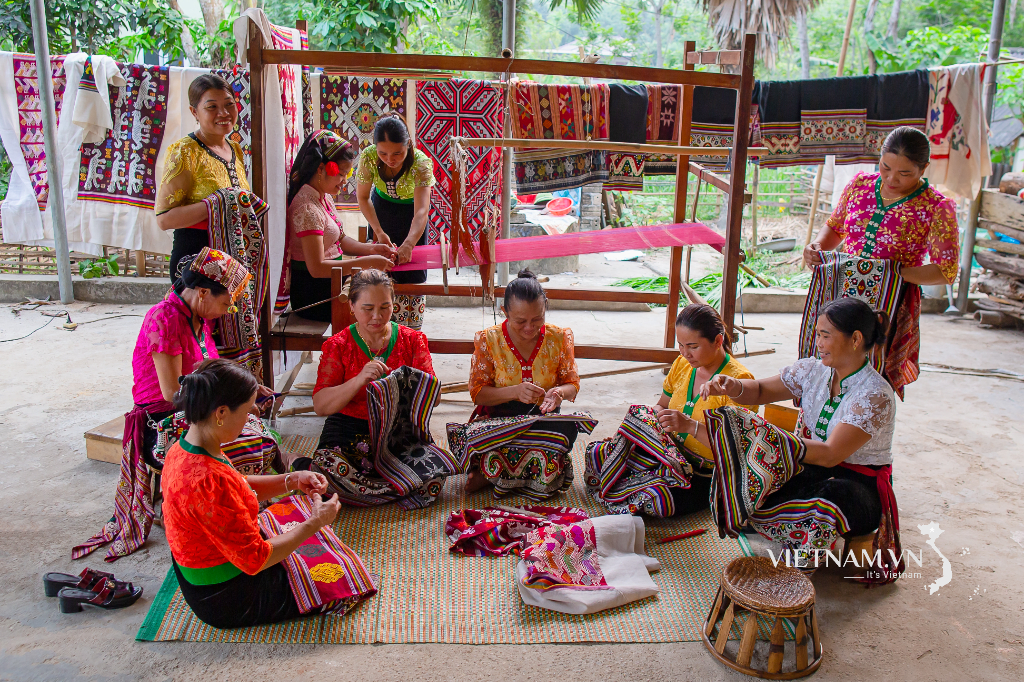
Previously, following a project commissioned by the Department of Industry (Ministry of Industry and Trade), Dr. Pham Thi Hong Phuong, a native of Ham Kiem commune, successfully researched and developed a machine for stripping the fibers from the stems, branches, and roots of wild pineapples, producing fibers of the correct length and thickness—a process very difficult to achieve manually. Subsequently, the pineapple fibers were processed in a special closed-loop system to modify some components in their structure. The cellulose content was increased to a level sufficient for spinning into threads, allowing for the weaving of soft, lustrous silk fabric. The trial ratio preserved the unique characteristics of wild pineapple silk while maintaining the softness and smoothness of the finished fabric. Fabrics woven from pineapple fibers have been sold in some places in Vietnam and Taiwan (China).
“Now that we have machines to strip fibers from pineapple stems and spin them for weaving, we hope to transfer this technology to organizations and individuals who need it for commercial production, utilizing the abundant local wild pineapple stems, branches, and roots in the Phu Quy Special Economic Zone. The pineapple fiber fabric products will later be showcased at hotels and restaurants on the island, or resorts along the southeastern coast of Lam Dong province, for domestic and international tourists to visit, learn about, and purchase; contributing to the preservation of local culture and diversifying island tourism products,” shared Dr. Hong Phuong.
Dr. Hong Phuong added: “Organizations and individuals, especially in the Phu Quy Special Economic Zone, interested in a startup model using these raw materials can contact the Department of Science and Technology to collaborate with us on technology transfer. We will also connect with businesses to help consume Phu Quy silk products.”
Source: https://baolamdong.vn/lua-mem-tu-dua-dai-phu-quy-414769.html
![[Photo] National Assembly Chairman Tran Thanh Man working with the Standing Committee of the National Assembly's Delegation Affairs Committee.](https://vphoto.vietnam.vn/thumb/1200x675/vietnam/resource/IMAGE/2026/05/20/1779294340023_ndo_br_1-1691-jpg.webp)

![[Image] "Journey of Hope" promotes the organ and tissue donation movement in Vietnam.](https://vphoto.vietnam.vn/thumb/1200x675/vietnam/resource/IMAGE/2026/05/20/1779294400833_1-8910-jpg.webp)
![[Photo] General Secretary and President To Lam works with the Party Committee of the Ministry of Health on the work of Vietnamese traditional medicine.](https://vphoto.vietnam.vn/thumb/1200x675/vietnam/resource/IMAGE/2026/05/20/1779294323718_a1-bnd-2978-3319-jpg.webp)





















































Comment (0)