

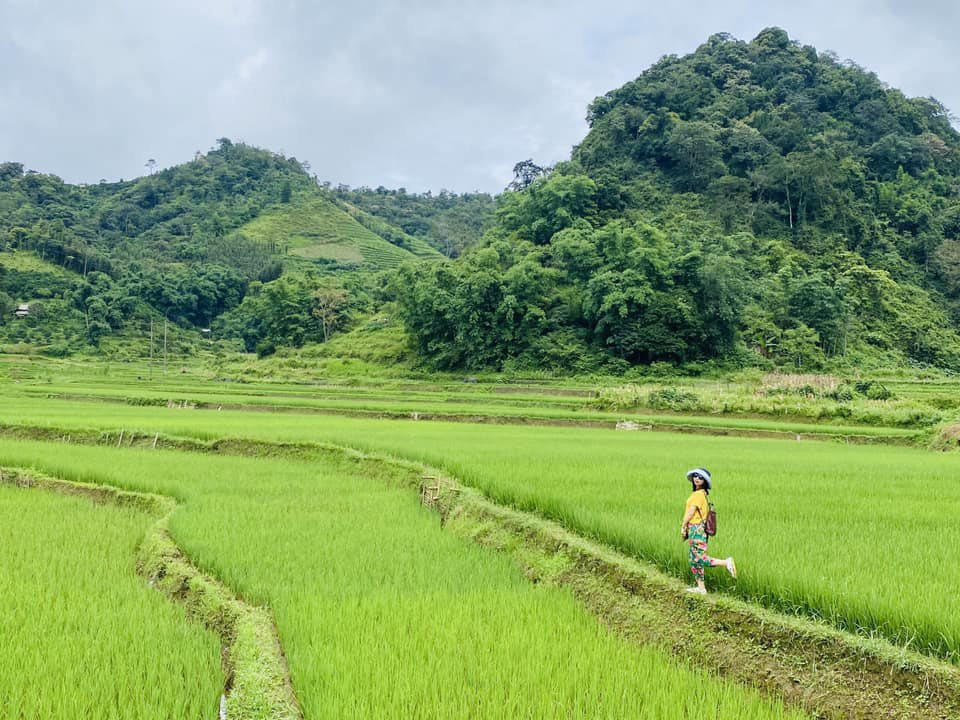
According to experts, in addition to objective factors such as the rugged geographical location, uneven population distribution, and low educational levels in some areas, there are also causes stemming from limitations in the management of some localities and the community's awareness of leveraging the inherent strengths of ethnic groups through the preservation of cultural identity.
Thoroughly understanding the Party and State's guidelines and policies on cultural revival and development, in recent years, many localities have focused their policies on planning orientation, support, and attracting investment; calling on people to work together to preserve their ethnic identity in order to improve their lives, transform the economy from purely agricultural to tourism and services to create a "driving force" for the Northwest region to break through.
Lesson 1: From the "gateway to the Northwest"
Considered the "gateway to the Northwest" and bordering Hanoi – a major tourist center of the country – Hoa Binh is seen as a "gateway" luring tourists to a paradise of rich cultural identity and enchanting landscapes in Northwest Vietnam. From here, the advantages for developing green tourism and community-based tourism, thanks to the diverse cultural identities of the ethnic groups, are unleashed, becoming a piece in the colorful tourism picture of the northern mountainous region.
The light source at the "roof of the Muong land"
At dawn, the hamlet of Chien in Van Son commune, Tan Lac district, was bustling with the sounds of people calling out to each other as they headed to work in the fields. Opening the window at Thu Bi homestay, the early morning scenery was peaceful and pristine. It's no wonder that many tourists come here to experience the feeling of "slow living." Community tourism, a nascent development in Chien hamlet, offers hope for helping the locals escape poverty.
Van Son commune is about 20km from National Highway 6. The mountain road, though small, has recently been repaired, making travel generally quite convenient. Deputy Chairman of Tan Lac District People's Committee, Le Chi Huyen, enthusiastically introduced: "Up in Chien hamlet - Van Son, the climate is like Sa Pa, Da Lat, or Tam Dao; you can experience all four seasons in a single day."
Xóm Chiến is a small, unspoiled Mường village with over 70 households. Located 1,000 meters above sea level, it is still largely covered in forest, creating a unique natural ecosystem. Even on a late summer afternoon, the weather is cool and crisp, a stark contrast to the scorching heat in the center of Tân Lạc district.
According to cultural officials in Tan Lac district, Chien hamlet is one of the rare villages that still preserves the traditional stilt houses of the Muong people, and has been selected as a pilot model for community tourism based on preserving ethnic identity. Currently, there are three families in Chien hamlet operating homestays: Hai Than, Thu Bi, and Xuan Truong.
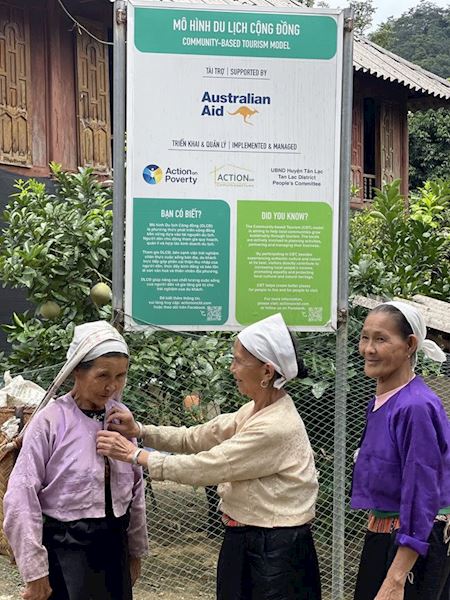
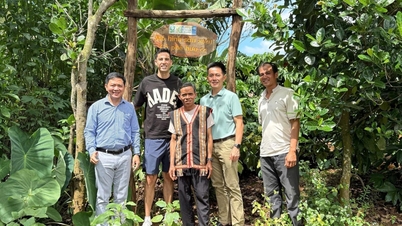
Mr. Ha Van Bi, born in 1986, is a quick-witted and adaptable person. In 2019, when the AOP (an Australian non -governmental organization) supported a project to improve sustainable livelihoods through community tourism development in Tan Lac district and selected Chien hamlet to build a community tourism destination, Mr. Bi pioneered tourism. He used all his savings and borrowed an additional 150 million VND to renovate his stilt house to make it suitable for hosting guests.
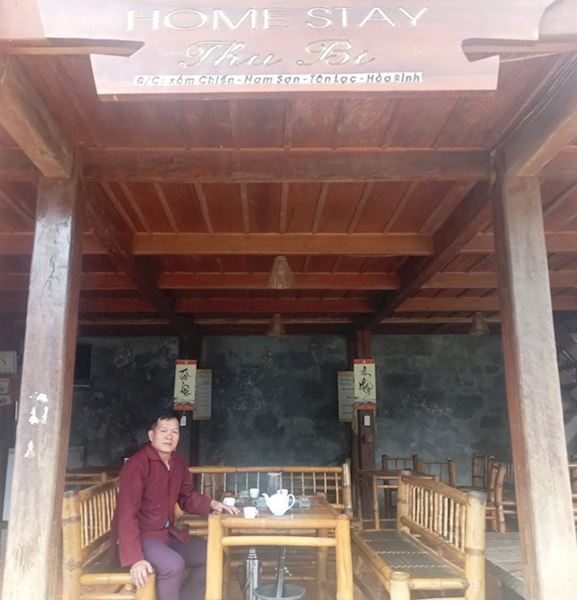
“Our stilt house was old and had many leaks. I reinforced the house, built an additional toilet, and repainted the doors. The AOP organization supported us with curtains, mattresses, and training on how to provide service and cook for guests,” Bi recounted.
Initially, with no guests, Bi and his family were very worried. Fortunately, a few months later, a Western tourist on a backpacking trip visited Chien village and stayed overnight at Thu Bi's homestay. The whole village welcomed their first foreign guest, feeling both happy and anxious. "We had never hosted guests before, and suddenly we had a Frenchman. Everyone was flustered and worried. I used Google Translate and gestures to communicate with him. He understood and was very comfortable with the way we welcomed him. Luckily, technology helped us feel more confident," Bi shared.
Following a chance visit by a foreign tourist, information about the community-based tourism village of Chiến spread on social media. The Mường people in Chiến village began to shift their mindset towards tourism. They started to familiarize themselves with technology and service etiquette for welcoming guests. Several families, such as Xuân Trường and Hải Thạn, switched from farming to providing services. After initial hesitation, homestay owners now know how to create Facebook fan pages to promote the tourist destination and their accommodation.
The success of Chien village owes a great deal to the government's contributions, from "hands-on guidance" onwards. Bui Minh Hong, Head of the Culture and Information Department of Tan Lac District, shared that when choosing Chien village as the pilot location for community tourism, she and other officials from Tan Lac commune regularly visited the village to hold meetings with the residents. The more than 30km of mountain road from the district to the commune became a familiar route. Even on days with urgent matters, despite the late hour, Ms. Hong would still travel alone to the village on her motorbike.
“Community tourism requires the people to work together and benefit. We are building a community service model, where some families specialize in accommodation, others in providing food or experiential services… When benefits are shared, the people will be more united,” said Ms. Bui Minh Hong.
After nearly four years of operation, the Chiến hamlet community tourism project, although still in its nascent stage with many services lacking and landscapes needing improvement to become more attractive, has been positioned and named on the tourism map of Hoa Binh province.
The Muong people in the village believe that community-based tourism is a way for them to escape poverty and have a more sustainable life.
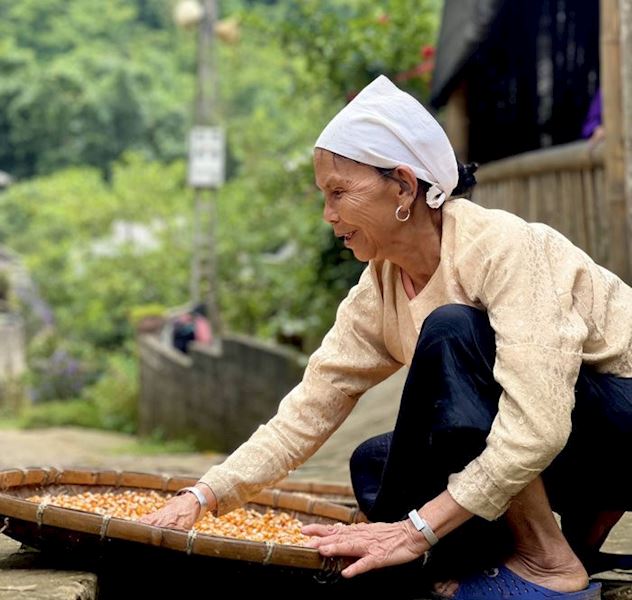
Ms. Dinh Thi Dang, over 70 years old, shared that she had spent her whole life just leading buffaloes to plow fields and work on the farm, which was extremely hard work. Since the whole village was shown how to do tourism, her family has had an easier time.
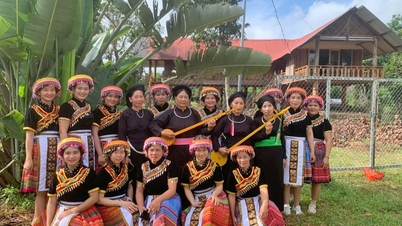
"The arrival of tourists has made the village more joyful. People learn to sing, dance, and perform art to welcome guests. They still work in the fields during the day, but at night they become artists. The villagers have earned money from serving tourists," Mrs. Dang confided, her eyes shining with happiness.
"In Decision No. 1719/QD-TTg dated October 14, 2021, of the Prime Minister, 'Approving the National Target Program for Socio-Economic Development of Ethnic Minority and Mountainous Regions for the period 2021-2030, Phase I: from 2021 to 2025,' it is identified that preserving and promoting the beautiful cultural identity of ethnic minorities, while simultaneously eliminating outdated customs and practices and linking them with tourism development, is one of the 10 key projects. This demonstrates the Party and State's concern for preserving and promoting the cultural identity of ethnic groups in socio-economic development and national stability." |
Escape poverty through a change in mindset.
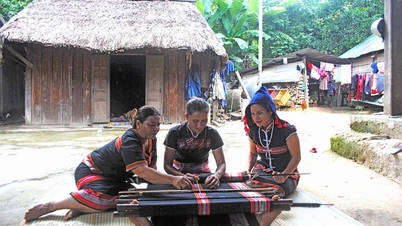
According to statistics, six main ethnic groups live together in Hoa Binh province, the most numerous being the Muong people, accounting for 63.3%. Hoa Binh province is considered the cradle of the ancient Muong people, with four Muong groups: "Bi, Vang, Thang, and Dong," and the "Hoa Binh culture." Many artistic and cultural values of the Muong people, such as folk songs, gong music, shamanic rituals, and the epic "Creation of the Earth - Creation of the Water," are still preserved and highly valued within the diverse ethnic cultures of Vietnam. This provides Hoa Binh with the potential to create its own unique identity in developing community-based tourism.

According to Bui Xuan Truong, Deputy Director of the Department of Culture, Sports and Tourism of Hoa Binh province, many community-based tourism villages of the Muong people are becoming new destinations attracting tourists, such as: Chien Hamlet (Van Son, Tan Lac), which is unique with its mountainous terrain and cool climate; the Hoa Binh Lake area has community-based tourism villages such as Ke Hamlet, Da Bia tourist site of the Muong people in Ao Ta (Da Bac district), Ngoi Hoa Hamlet (Tan Lac district), Tien Hamlet, Giang Mo village (Cao Phong district)...
Tourism and services are bringing a new life to the Muong people in tourist villages. Many households have escaped poverty, and some have even achieved a comfortable life thanks to welcoming tourists. The mindset and work ethic of the Muong people in many villages have changed. They proactively update information, promote destinations, and introduce their ethnic culture to tourists.
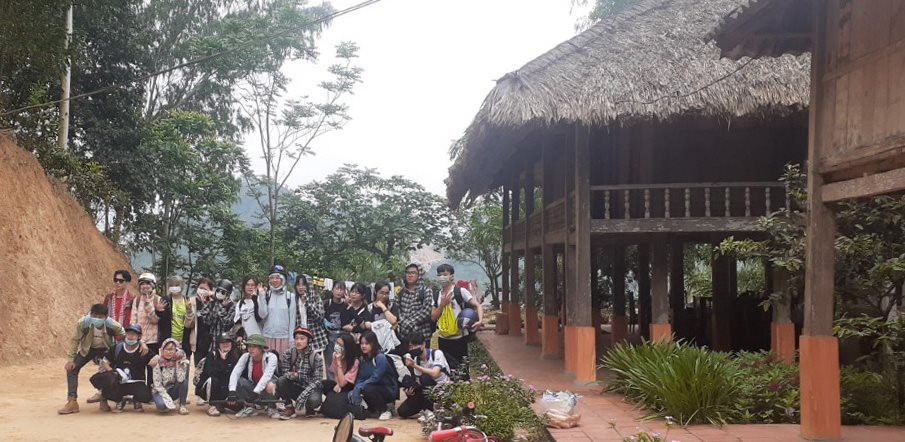
Ngoi Village (Suoi Hoa Commune, Tan Lac District) has become a popular tourist destination for international visitors in recent years. The lives of the Muong ethnic minority households have completely changed since the entire village started engaging in tourism. In 2016, the Hoa Binh Provincial People's Committee recognized Ngoi Village as a Muong ethnic minority community-based cultural tourism destination. Previously, 100% of the Muong people here relied on farming and fishing on Hoa Binh Lake for their livelihood. Currently, seven households in the village are involved in community tourism, welcoming visitors.
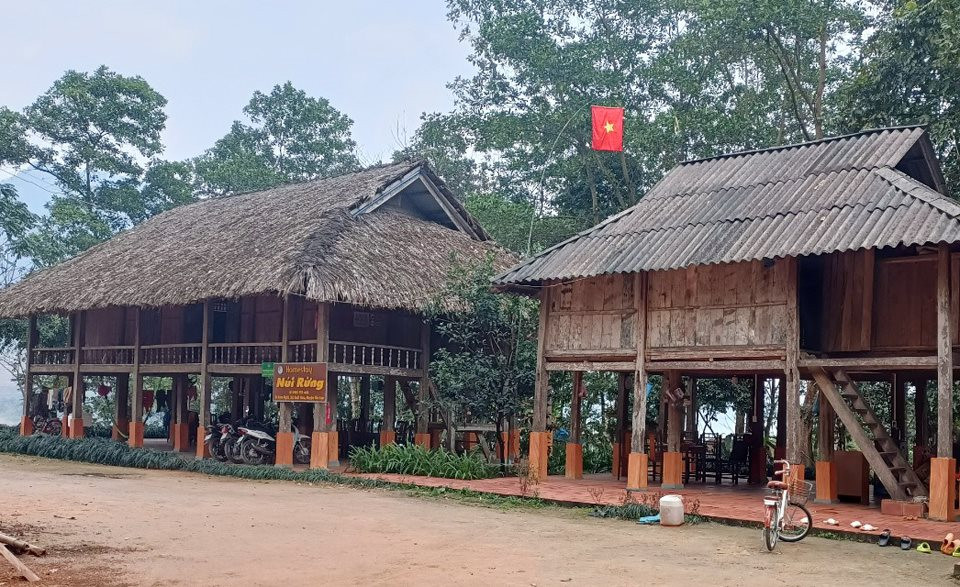
“Before, we only did agriculture, and just having enough to eat each day was a blessing. Since we started tourism, life has become more stable. Families are more conscious about preserving the landscape, disposing of trash properly, and planting more flowers and trees,” said Bui Manh, owner of a homestay in Ngoi village. |
Speaking with reporters, the Chairman of the People's Committee of Suoi Hoa commune, Bui Van Mui, shared that the success of tourism development in Ngoi village is due to the enthusiastic participation of the local people. The households here still maintain traditional stilt houses and many traditional ways of life such as fishing on the lake and farming. “The lives of the people here were very difficult before, but since some pioneering households switched to community tourism, the appearance of the village has gradually changed, and the number of poor households has decreased to 27.7%. Tourism in Ngoi village is oriented towards development in conjunction with preserving cultural identity and protecting the ecological environment,” Mr. Bui Van Mui said.
Speaking about the local changes since the focus shifted towards promoting tourism, Vice Chairman of Tan Lac District People's Committee Le Chi Huyen expressed that the success of the district's development strategies has initially changed the mindset and service practices of the ethnic minority people. The changes in the Muong ethnic villages are creating a new vitality for the local economy, in what was once the ancient land of Muong Bi, the cradle of the famous Hoa Binh culture.
"Hoa Binh province is developing a project to preserve and promote the cultural values of the Muong ethnic group and the 'Hoa Binh Culture' for the period 2023-2030. The project aims to research, preserve, and promote the cultural heritage and fine traditions of the Muong people. It also aims to promote and introduce the land and people of Hoa Binh, develop unique tourism products to attract domestic and international tourists, and contribute to socio-economic development." |
Source

![[Image] A brilliant symphony and explosive power in the skies of Da Nang.](https://vphoto.vietnam.vn/thumb/1200x675/vietnam/resource/IMAGE/2026/05/31/1780196945787_anh-man-hinh-2026-05-31-luc-10-08-51.png)











![[Video] Sunset at Lap An Lagoon – Where the sun sets over the fishing nets](https://vphoto.vietnam.vn/thumb/340x192/vietnam/resource/IMAGE/2026/05/31/1780192137701_beach-landscape-sea-water-nature-grass-745871-pxhere-com.jpeg)




































































Comment (0)