

A sleepless night in the lychee orchard.
Around two in the morning, under the dim moonlight, I joined the villagers of Muoi hamlet, Giap Son commune (Luc Ngan district) as they climbed the hill to pick lychees. The flickering lights from the villagers' flashlights across the orchards created a fascinating effect. The murmuring of conversations, the calls to each other, and the chirping of insects dispelled the silence of the night.
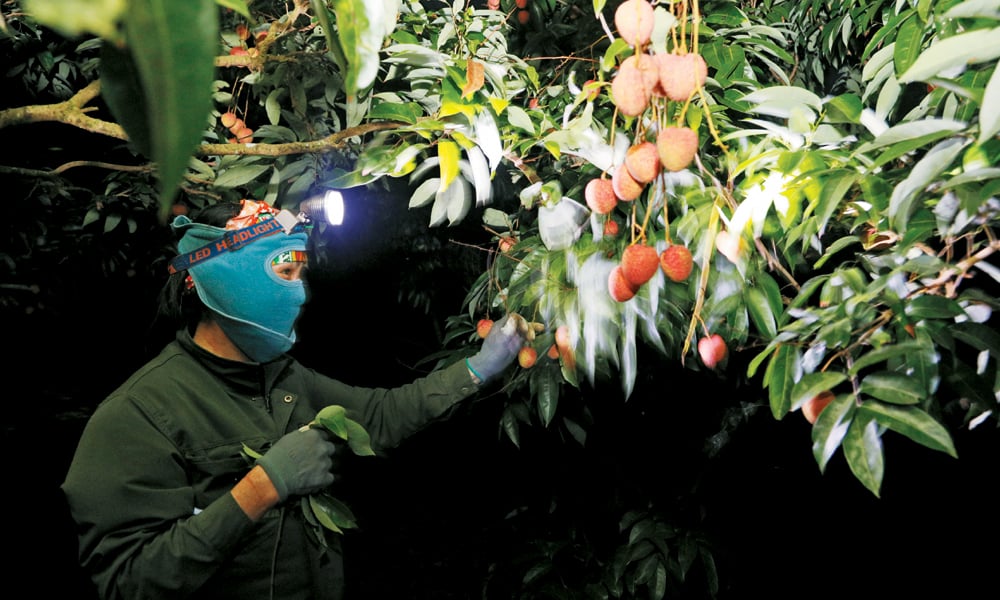 |
People in Muoi village, Giap Son commune, are harvesting lychees. |
Tonight, like many other families in the lychee-growing region, Mr. Tran Van Kien's family of nine went up the hill to harvest lychees. Their equipment included flashlights, plastic baskets, and a motorbike loaded with several large crates. Not only the adults, but also Mr. Kien's grandchildren, who are on summer vacation, came up the hill to help with the harvest. Everyone had their own task; the children and the elderly stayed below, stripping leaves, sorting, bundling, and transferring the lychees into crates, while the faster, stronger people took on the task of climbing the trees to pick the lychees and cutting the stems. In the middle of the night, with only the dim light, everyone performed the tasks quite professionally, so by 5 a.m., the large crates were full of lychees.
Mr. Kien shared: “My family has over 270 lychee trees. This year, despite the drought at the beginning of the season, the trees still bore abundant, beautiful fruit, which sold at a high price. Moreover, the harvesting period in my orchard is very short (only about 20 days), so the family had to mobilize all manpower to focus on harvesting. Usually, the whole family has to go pick lychees from 2 am, averaging about 700 kg sold per morning.”
When he had enough lychees, weighing 300 kg in a basket, Mr. Kien transported them by motorbike about 4 km to a weighing station in Phi Dien town to sell to traders. According to Mr. Kien's experience and that of other lychee growers in Luc Ngan, harvesting early results in better-looking, fresher fruit, making it more convenient for traders who usually buy early in the morning. Therefore, even with the same orchard, if he sells later, when traders have already gathered enough fruit, the price is usually lower, or even difficult to sell. Harvesting at night also helps avoid the intense heat of summer. This year, the lychee crop is abundant, with relatively uniform quality, no stem borers, and better appearance. With a basket of early-harvested lychees weighing about 300 kg, Mr. Kien sold them at 28,000 VND/kg, earning over 8 million VND.
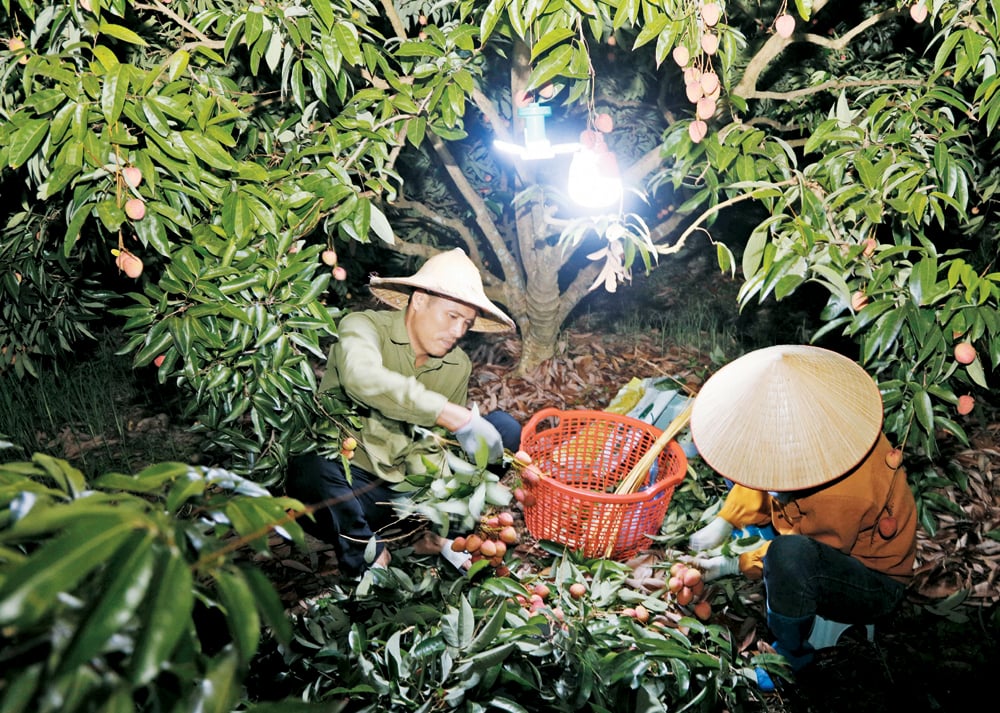 |
People in Muoi village, Giap Son commune, use lamps to harvest lychees. |
In the fields below, as the moon set and dawn broke, Mr. Truong Van Hai's family, also from Muoi village, prepared to transport nearly 200 kilograms of lychees to a weighing station on National Highway 31 to sell to traders for export. To harvest this basket of lychees, all three members of Mr. Hai's family had stayed up all night. "After selling the first batch, we'll go home for breakfast and then get some sleep. Around 3 PM, we'll go back to the orchard to pick another batch to sell in the afternoon to small trucks coming into the village to buy and distribute domestically. We work hard all year taking care of the trees, but there are only about 20 days for harvesting. If we don't hurry, the lychees will spoil, rot, or fall off, so no matter how tired we are, we have to keep going," Mr. Hai shared.
Harvesting lychees at night presents farmers with numerous difficulties and dangers, such as broken branches from climbing trees, mosquito and insect bites, and even risks during storms and thunderstorms. Despite these challenges, under seasonal pressure, every family must allocate manpower or hire additional workers to quickly harvest the lychees, while also providing protective equipment such as clothing, shoes, gloves, and raincoats for the harvesting process.
Wishing for a smooth and successful lychee season.
For lychee growers in Luc Ngan, June is perhaps the most special time of the year, not only because it's the busiest and most arduous time, but also because their daily routines seem to be turned upside down by the harvest season. It's also the season of joy, of delicious, sweet fruits ready for harvest, and consequently, each family receives additional income. Therefore, staying up late and sleeping less than usual is understandable. Despite working at night, enduring the sweltering weather, and sometimes even missing breakfast, the members of Mr. Kien's and Mr. Hai's families, as well as many other households in the lychee-growing region, still wear bright smiles, simply because after selling each basket of lychees – the fruits of their labor – they will earn millions of dong.
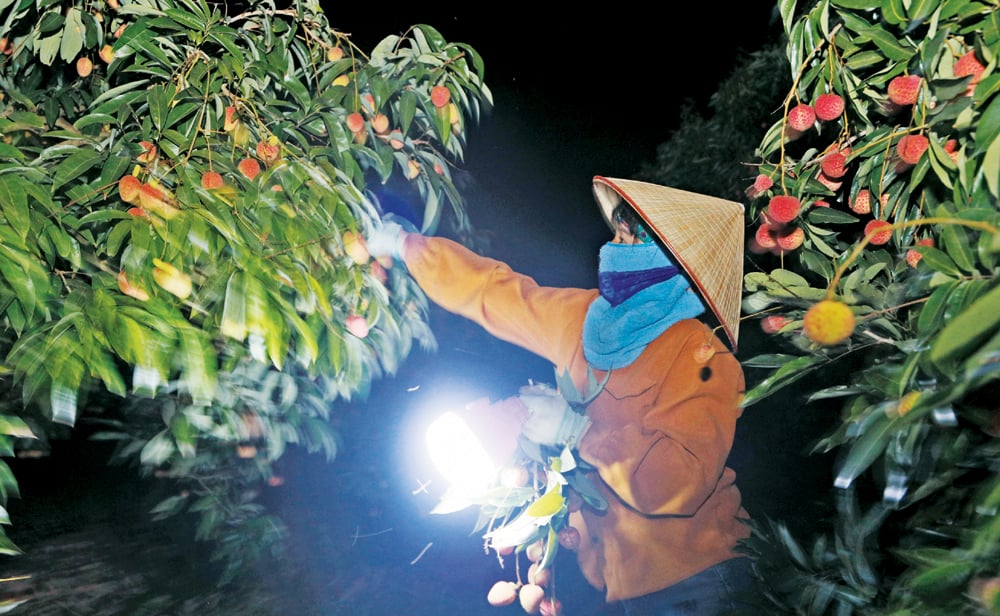 |
Orchard owners in Luc Ngan are enjoying a bountiful harvest season. |
While farmers in the orchards spend all night harvesting fruit, at lychee collection points near National Highway 31, traders and workers also stay up late packing goods to load onto trucks for distribution. Under the sweltering summer heat, strong young men diligently carry boxes of lychees and blocks of ice onto trucks to ensure timely delivery to customers. This bustling work often continues until midnight.
| In 2025, the lychee growing area in Luc Ngan district reached over 10,300 hectares, with a significant increase in production compared to previous years. The harvesting season is quite short, starting from the beginning of June to the end of July, leading to significant time pressure and requiring farmers to harvest urgently. |
According to historical records, the first lychee tree took root in Luc Ngan in 1953 and has continued to thrive ever since. Over time, lychee has remained a top priority in agricultural development, contributing to poverty reduction and ultimately enriching farmers. Through many ups and downs, the people of Luc Ngan, with their diligent hands, creative minds, and unwavering determination, have preserved and developed this crop into a renowned Vietnamese agricultural brand exported to dozens of countries worldwide . Luc Ngan lychee has been granted geographical indication and registered trademark protection in Laos, Cambodia, South Korea, China, Japan, Singapore, Australia, and the United States.
This year, the total lychee growing area in Luc Ngan district reached over 10,300 hectares, with a significant increase in production compared to previous years. The area producing according to VietGAP standards is over 6,900 hectares (reaching 66.96% of the total area). However, the lychee harvesting season is quite short, starting from the beginning of June to the end of July, leading to significant time pressure and requiring farmers to harvest urgently.
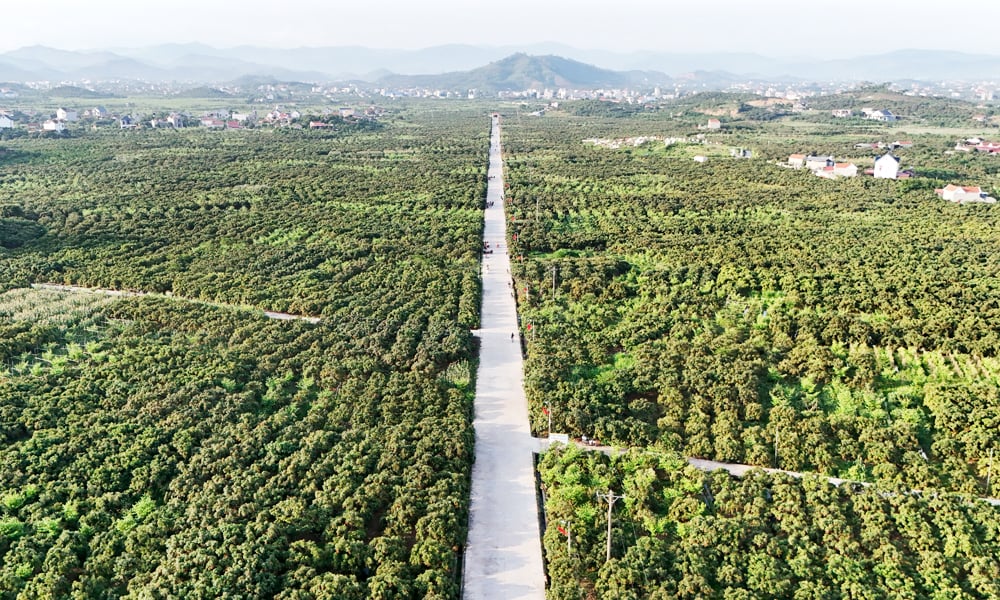 |
Early morning in Luc Ngan lychee-growing region. |
Mr. Dao Cong Hung, Acting Chairman of the People's Committee of Luc Ngan District, said: "The lychee ripening season has become the most vibrant and eagerly awaited season of the year in Luc Ngan. Lychee farmers are truly professional gardeners, creating products of superior quality and safety. Currently, many businesses are registering to purchase and sign contracts for the consumption of Luc Ngan lychees for export and domestic consumption. From the beginning of the season until now, the entire district has harvested and consumed about 8,000 tons of fresh fruit, of which more than 60% is consumed domestically, and the rest is exported at relatively high prices. The district's functional agencies are always actively supporting farmers in harvesting and selling lychees."
A bustling, vibrant, yet joyful atmosphere of the lychee harvest permeates every home, every village, and every face of the farmers in Luc Ngan. Harvesting takes place from midnight until the trucks carrying lychees arrive at the weighing station early in the morning. Though arduous, the stable selling price provides added motivation for farmers to persevere in their orchards, cherishing their lychee trees.
Only after spending a night harvesting lychees with the locals can one truly appreciate the immense love for their homeland behind the sweet flavor of this fruit. Countless drops of sweat and hard work have been poured into this endeavor, bringing hope for a more prosperous and fulfilling life. Surely, these "artisans" of the orchards will continue to write many more proud stories about this fruit tree.
Source: https://baobacgiang.vn/luc-ngan-nhung-dem-khong-ngu-postid419936.bbg














































































Comment (0)