Why do scientists change the southernmost landmark every year?
The South Pole is constantly shifting due to ice sheet movement and changes in the Earth's magnetic field, affecting the planet's geography.
Báo Khoa học và Đời sống•12/01/2026
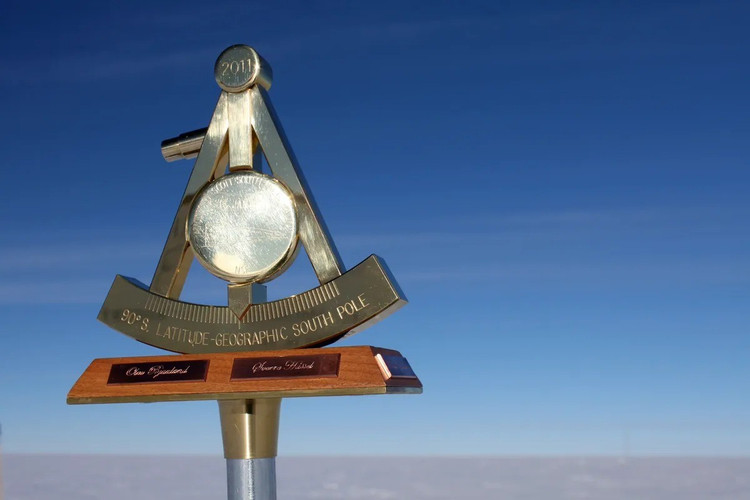
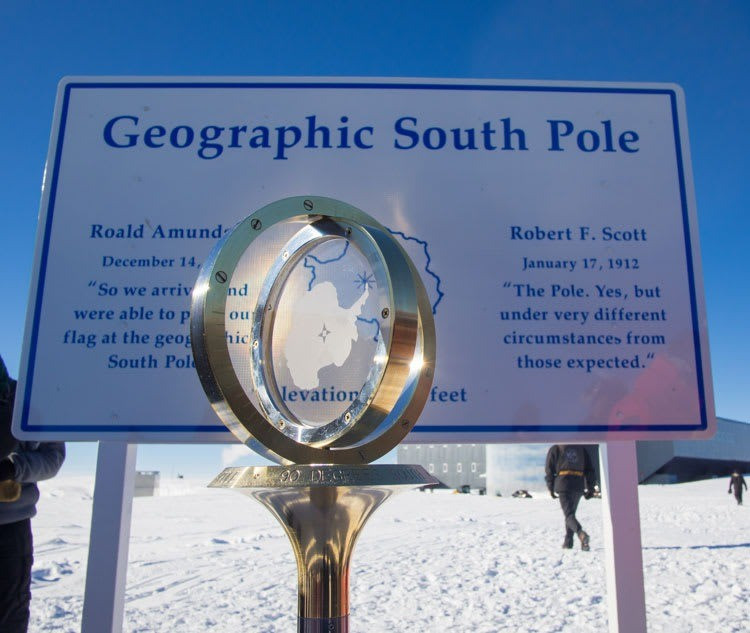
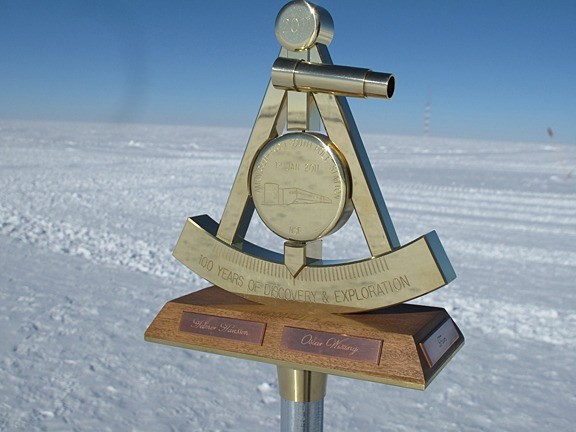
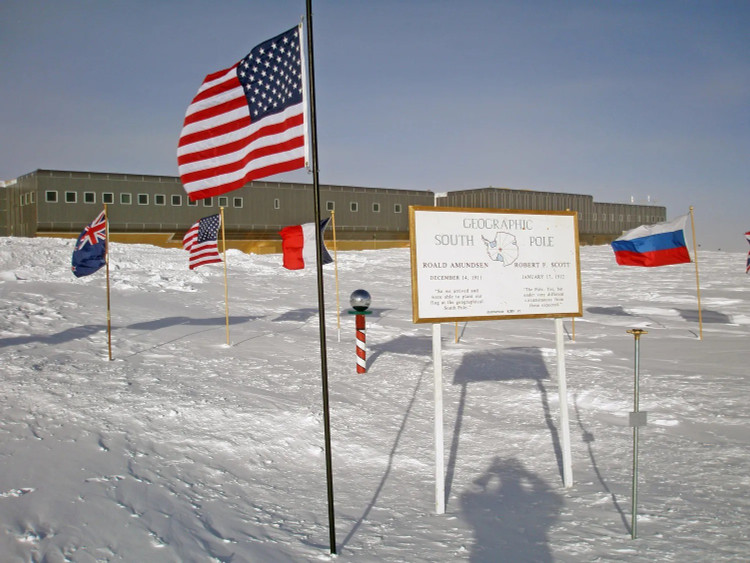
The geographical south pole is located at the southern end of the Earth's axis, almost exactly in the middle of Antarctica. This location does not coincide with the magnetic and geomagnetic south poles, which are related to the planet's magnetic field and are located off the Adelian coast and near the Russian Vostok research station, respectively. Because the Earth's magnetic field changes with the movement of the planet's core, these two poles also constantly change positions. Image: Eli Duke via Flickr (CC BY-SA 2.0). Technically, the geographical south pole doesn't move, but the marker in the ice above it does. Because the ice drifts about 10 meters each year, at the beginning of each year, the research team at the Amundsen-Scott South Pole Station (USA) carefully surveys the area and repositions the marker. Photo: NSF/S. Richter.
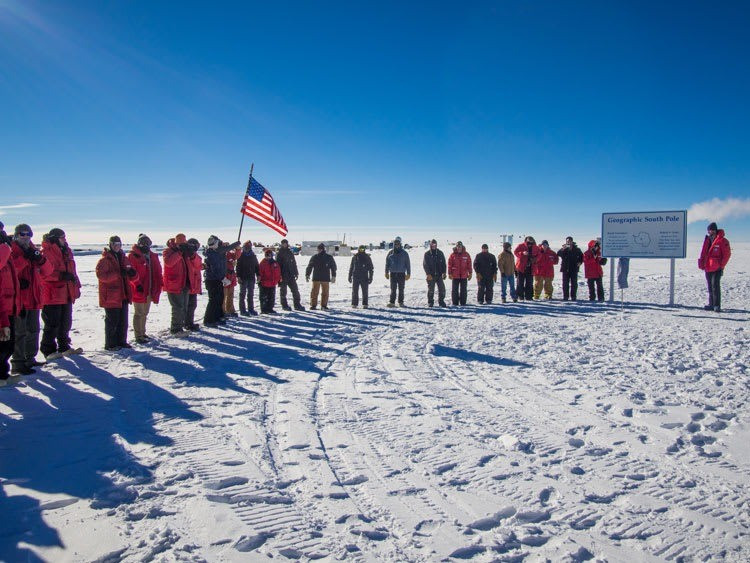
The old landmark was dismantled and stored in a display case inside the station. The new landmark was unveiled in a small ceremony attended by researchers, technicians, and support staff. Photo: NSF/S. Richter.
The Amundsen-Scott South Pole Station, operated under the U.S. Antarctic Program, is located deep within Antarctica at 90 degrees south latitude, atop an iceberg approximately 2,835 meters above sea level. Photo: Nick Strehl / NSF.
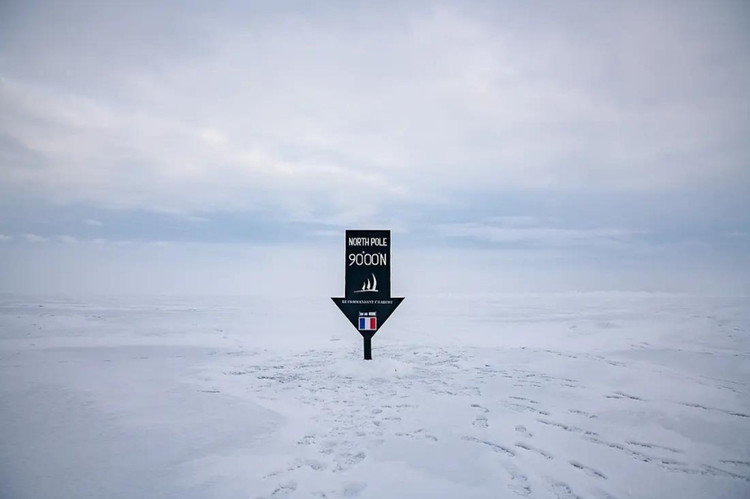
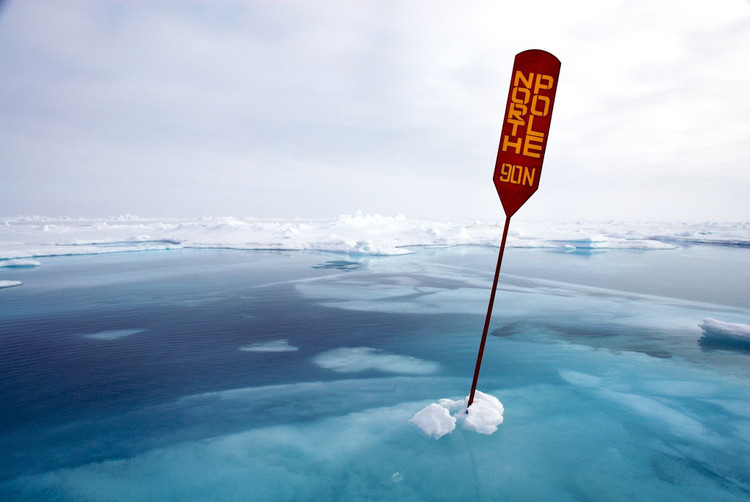
The station is named after two explorers who raced to the South Pole: Roald Amundsen (Norway) and Robert Scott (England). Amundsen's team won, reaching the finish line on December 14, 1911. Meanwhile, Scott's team reached the finish line on January 17, 1912. Photo: coolantarctica.com. According to scientists , the Antarctic ice sheet is essentially a very slow-moving river of ice, flowing from the center of the continent toward the sea. Warming ocean waters are eroding the ice along the coast, destabilizing some glaciers. If these glaciers collapse, global sea levels could rise and have serious consequences. Photo: Facebook | The Antarctican Society/Photo by Sven Lindstrom On the other side of the globe, the geographical North Pole presents no problem with a landmark. There is no rock or solid ice there, so there are no fixed markers. Photo: waterproof-expeditions.com.
The geographical northernmost point lies in the Arctic Ocean, covered by constantly floating sea ice that breaks apart and reforms, moving with the wind and ocean currents. Photo: Getty. Readers are invited to watch the video : Behind the success of scientists. Source: VTV24.


 Báo Khoa học và Đời sống•12/01/2026












![[GALLERY] The super-cheap Claude AI API turns out to be selling user data.](https://vphoto.vietnam.vn/thumb/402x226/vietnam/resource/IMAGE/2026/05/25/1779691077049_cl-6-png.webp)
















































































Comment (0)